


Brass Lighting Stand
A brass lighting stand brings height and warm metallic reflection to a room, ranging from small tabletop candlesticks to tall floor lamps.
Brass Lighting Stand
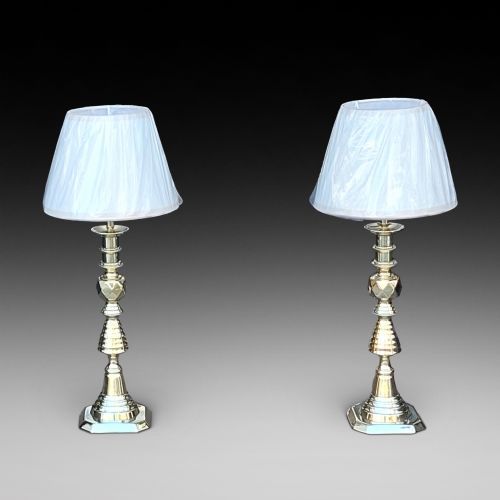
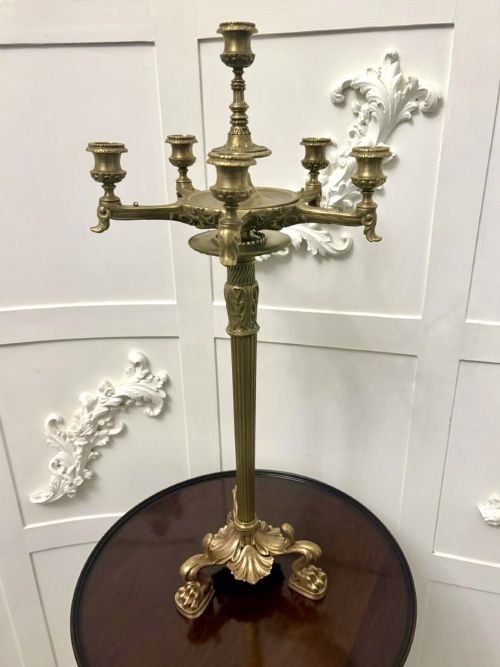
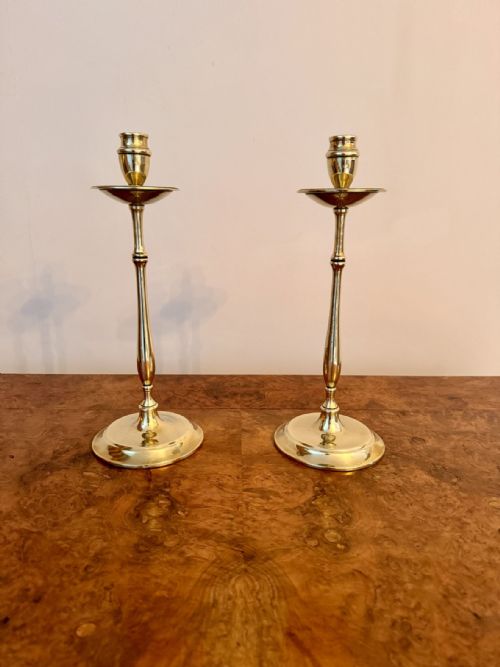
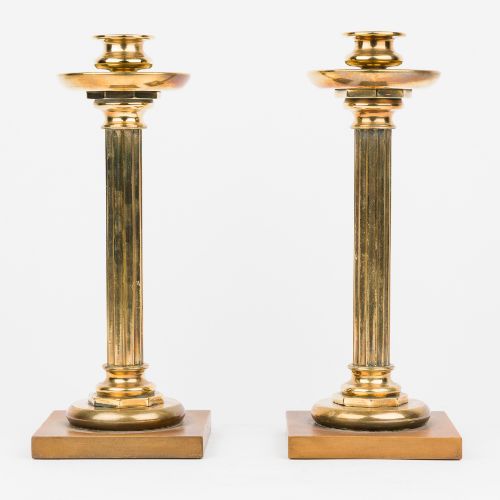
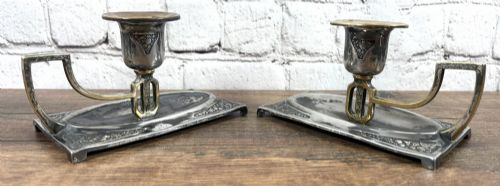
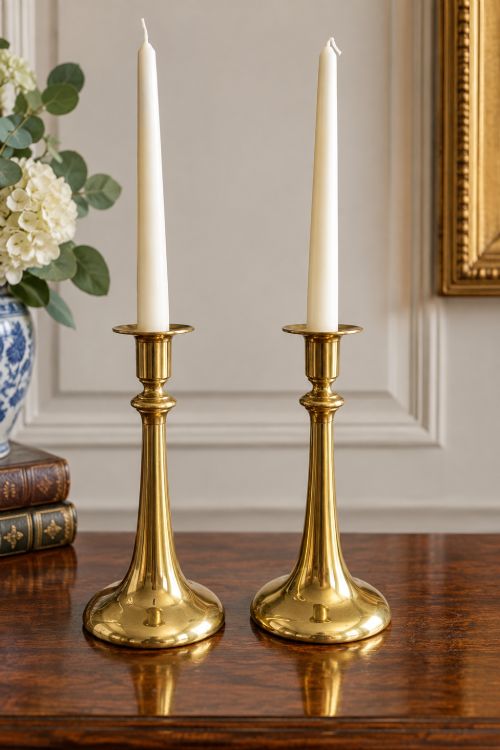
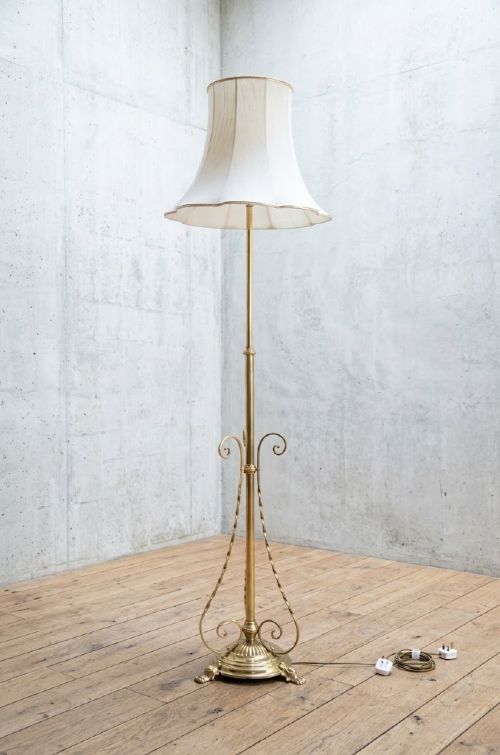
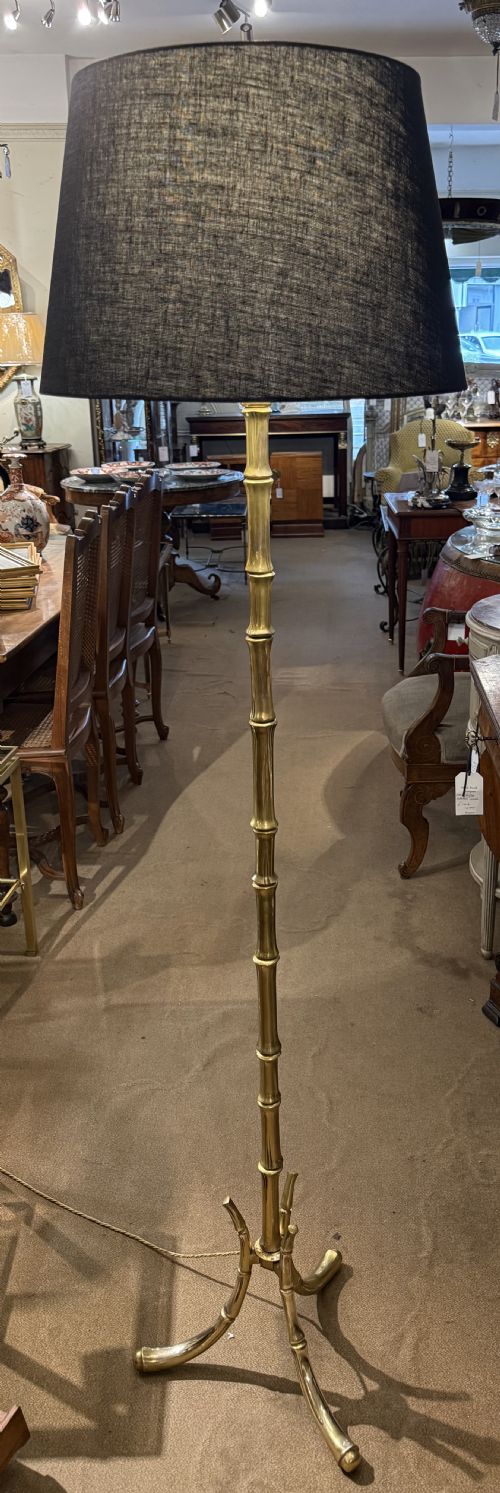
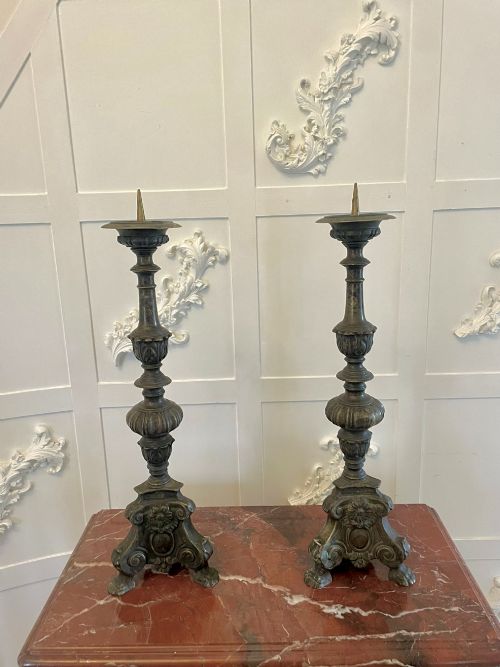
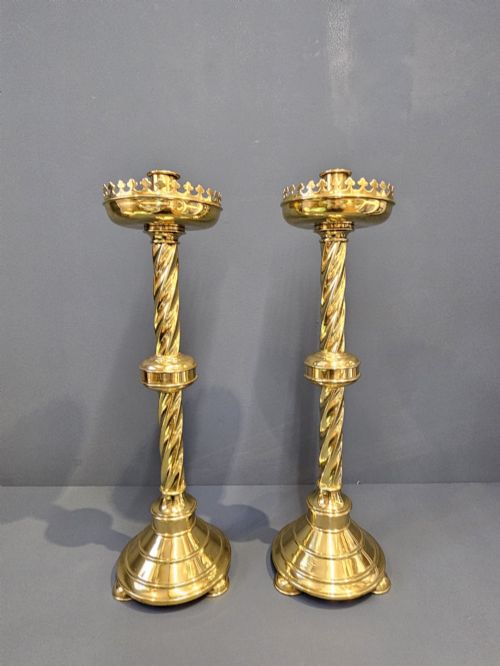
A brass lighting stand encompasses a wide variety of functional pieces, from Georgian and Victorian candlesticks to tall standard lamps and floor lamps designed for oil or electricity. The selection includes tall church prickets, heavy desk students' lights and sculptural pairs cast as animals or classical figures.
Most items date from the eighteenth and nineteenth centuries, with notable examples spanning the Georgian, Victorian, Edwardian and Arts and Crafts periods. Buyers frequently encounter adjustable standards and multi-armed candelabra alongside simpler domestic candlesticks.
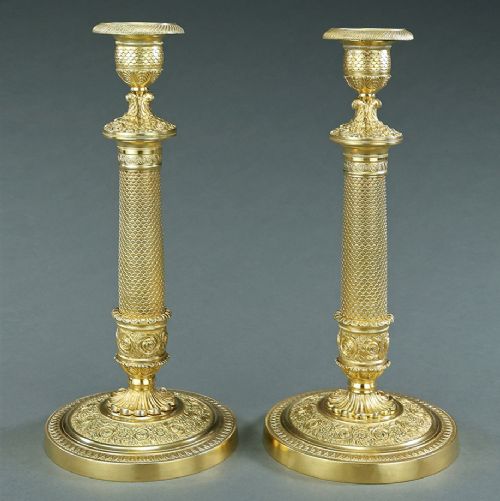
Regional variations and international influences appear across the selection, featuring French Empire designs, Venetian gilt bronze work and Indian Bidri ware pieces alongside traditional English domestic forms.
Materials and construction
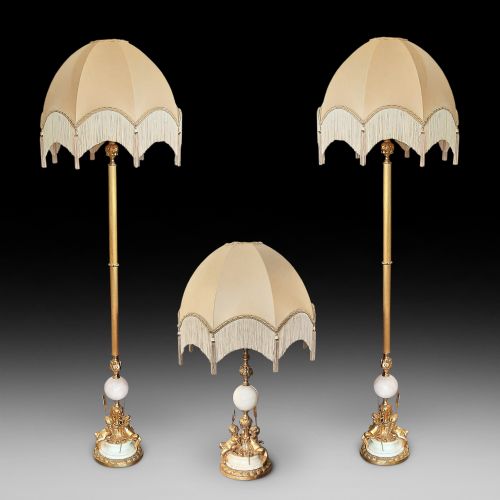
Makers utilised cast brass, seamed sheet brass, gilt bronze and ormolu, frequently combining metal components with mahogany, wood, onyx, fabric and copper. Heavy casting allowed for intricate figural or botanical details, while seamed construction was common in earlier domestic candlesticks.
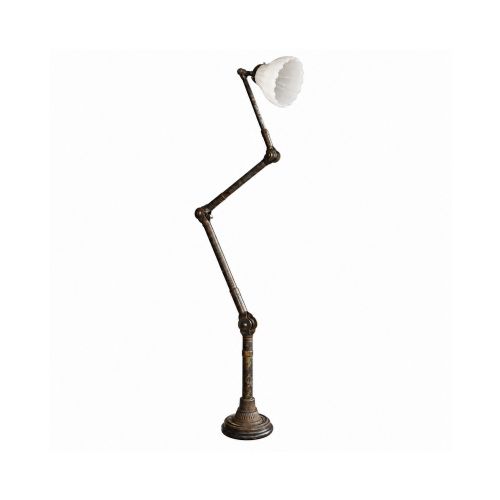
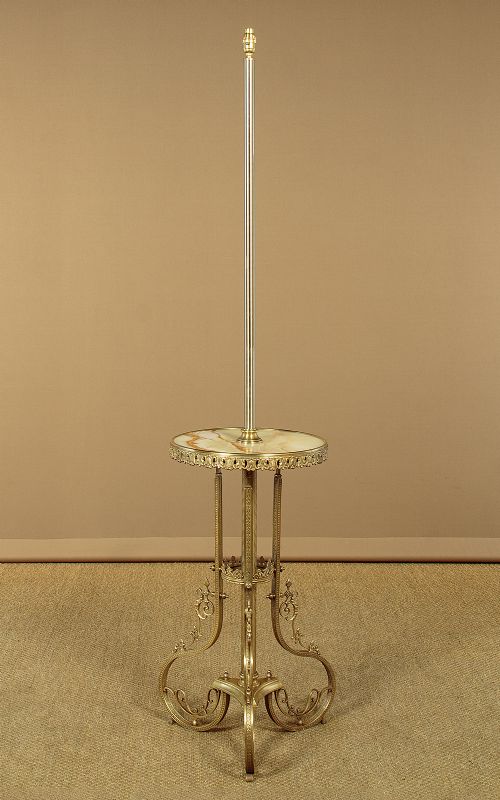
Many tall floor lamps and standard lamps incorporate mechanical adjustments such as telescopic height extension and sliding arms. Surface finishes range from high-polish gilding to patinated dark bronze and champleve enamel detailing.
Squirrels scamper among cast bronze tree branches and terriers stand at attention on bases, proving that lighting stands have long embraced animal companionship.
Craftsmanship and design
Quality depends upon the crispness of the casting and the weight of the metal used in the standard or base. Finer examples display carefully hand-chased surface ornament, robust joints on adjustable mechanisms and well-balanced proportions.
The sophistication of the design dictates distinction, separating standard production pieces from sculptural works featuring figural elements, animal motifs or complex multi-armed arrangements.
Maison Bagues·Barbedienne
The Brass Lighting Stand Glossary
- Pricket
- A candlestick featuring a sharp upward-facing metal spike designed to impale the base of a candle, commonly seen on church and altar pieces.
- Ormolu
- Finely ground high-carat gold-mercury amalgam applied to a bronze base, creating a rich golden surface finish popular in decorative lighting.
- Seamed brass
- Metal formed by rolling sheet brass into a tube and soldering or brazing the joint down the side, typical of eighteenth-century manufacturing.
- Bidri ware
- Metalwork originating from India involving a dark alloy inlaid with contrasting sheet metal such as silver or brass.
- Campana
- A classical bell-shaped vessel form frequently utilised for the candle socket or cup on decorative stands.
Brass Lighting Stand: Frequently Asked Questions
Can I convert an old oil lamp to electricity?
Many Victorian and later standard lamps designed for oil have been successfully converted to electric lighting while retaining their original telescopic brass stands.
Careful conversion preserves the structural integrity of the adjustable height mechanism and the original patination of the metalwork.
What is the difference between a standard lamp and a candlestick?
A standard lamp or floor lamp is a tall freestanding lighting stand designed to illuminate a room from floor level, often incorporating adjustable arms or shades.
Candlesticks and candelabra are shorter tabletop or altar pieces intended to hold one or multiple wax candles for direct illumination.
How should I clean polished brass?
Maintenance depends upon whether the metal retains an original historic patina or has been previously polished to a bright finish.
Gentle dusting with a soft dry cloth preserves patination, avoiding harsh chemical abrasive cleaners that strip the surface character.