


Brass Jardiniere Pedestal
A brass jardiniere pedestal lifts potted greenery onto a sturdy timber or metal column for display.
Brass Jardiniere Pedestal
A brass jardiniere pedestal combines a decorative metal planter with a matching stand to elevate plants within a room. When hunting for a brass jardiniere pedestal, buyers encounter pieces configured as plant stands, wine coolers, peat buckets, and fitted planters.
The objects span Georgian, Victorian, and Edwardian periods, alongside later 20th-century examples. Materials alternate between brass vessels and columns built from mahogany, oak, walnut, satinwood, or cast iron.
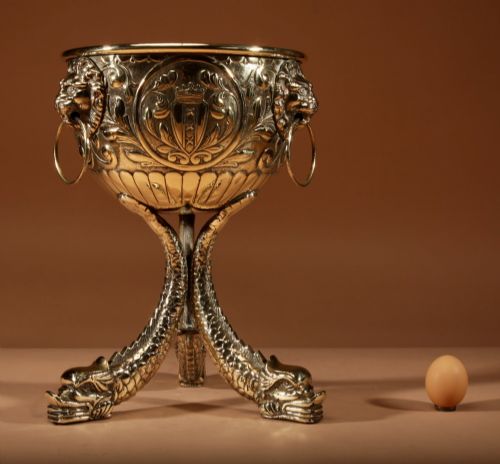
Makers adapted these stands in various revival styles, including Regency, Louis XVI, Renaissance, Gothic, and Art Nouveau. The resulting forms range from simple coopered oak barrels to elaborate embossed dinanderie vessels.
Materials and Construction
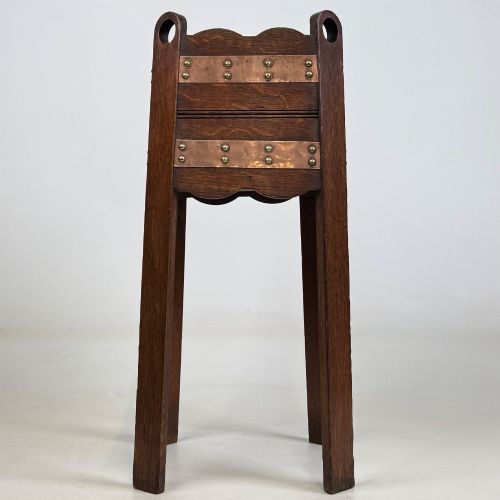
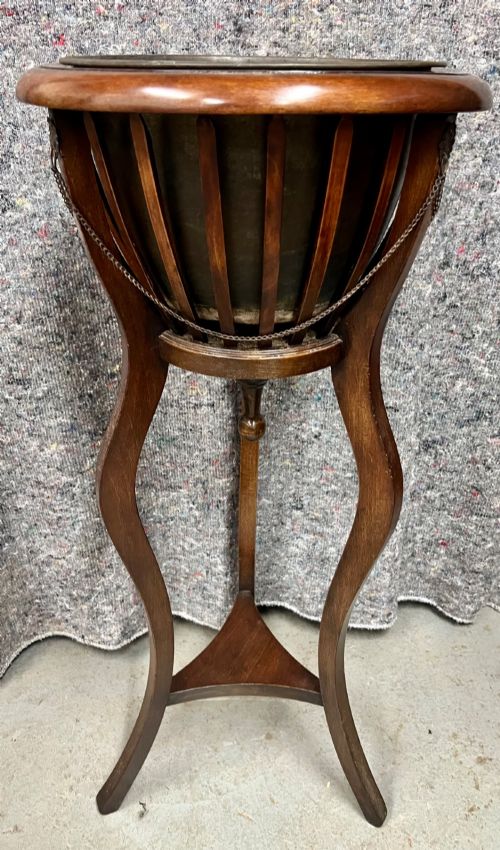
Craftsmen utilised cabinet timbers such as mahogany, oak, and walnut to build the support columns, often employing coopered staves or fine boxwood inlay. Metal components rely on cast brass, pressed brass sheets, and heavy iron bases.
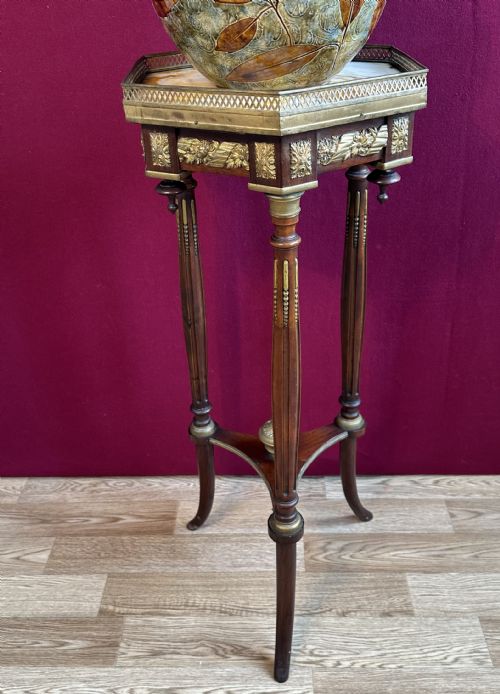
Surface ornamentation involved embossing, hammering, and casting to create intricate patterns on the metal planters. Timber sections received French polishing or relied on the natural grain of the wood, sometimes complemented by inset marble or onyx tops.
One exceptional mahogany tea stove doubles politely as a knitting basket.
Distinctions in Quality
Quality rests on the crispness of the cast or embossed brass decoration and the structural integrity of the supporting column. Finer pieces demonstrate careful joinery in the timber stands, such as precise cooperage on oak barrels or crisp inlay on mahogany columns.
The relationship between the planter and its stand dictates overall harmony; original pairings exhibit unified design proportions and matching period characteristics. Heavier gauge metals and genuine marble or onyx inserts further distinguish superior examples from lighter commercial production.
The Brass Jardiniere Pedestal Glossary
- Dinanderie
- Heavy brass or bronze ware produced in Europe, often featuring embossed or engraved surface patterns. The term originates from the Belgian town of Dinant, a historic centre for brass work.
- Coopered
- Woodwork constructed from curved staves bound together with metal hoops, traditionally used for barrels and buckets. Oak and other timbers were shaped this way to hold metal liners.
- Jardiniere
- An ornamental pot or stand designed to hold a plant or flowers indoors. They appear in ceramic, metal, or wood, frequently paired with dedicated pedestals.
- Tea stove
- A domestic metal vessel originally utilised for keeping tea warm, often repurposed or styled similarly to small peat buckets and plant holders. These items share the same cylindrical proportions seen in many plant stands.
- Regency
- An English architectural and decorative style spanning the early 19th century, known for classical restraint and revival motifs. Pieces from this era often incorporate dark mahogany and restrained brass mounts.
Brass Jardiniere Pedestal: Frequently Asked Questions
What is a brass jardiniere pedestal used for?
These pieces function primarily as decorative stands to display potted plants, ferns, or floral arrangements at an elevated height within domestic interiors. Historically, similar vessels also served as wine coolers or peat buckets for household fires.
Today, they act as focal points in drawing rooms, hallways, or conservatories. Their dual construction of a plant container atop a sturdy column allows greenery to be showcased clearly.
How do I identify the period of a stand?
Dating relies on observing the combination of timber types, construction methods, and stylistic revival motifs. Georgian and Regency pieces favour mahogany and walnut with clean classical lines, while Victorian and Edwardian examples often introduce heavy cast brass or elaborate embossed surfaces.
Examining the underside, screw types, and wood patination helps narrow down the manufacturing era. Comparing the decorative details against known revival styles provides further clues to the date of origin.
Are the planters removable from the pedestals?
Many designs feature a distinct vessel resting upon a separate column or tripod base, allowing the planter to be lifted off independently. Other pieces are constructed as a single integrated unit where the container is permanently fixed to the stand.
Original Dutch and Edwardian configurations often keep the metal liner loose inside a wooden frame for ease of watering. Checking the joinery reveals whether the planter was intended to detach.
How do I care for the brass and wood?
Maintenance involves dusting timber surfaces regularly with a soft cloth and avoiding excessive moisture that might damage polished mahogany or oak. Brass elements benefit from gentle cleaning to remove dust without stripping natural historic patina.
Using a plastic liner inside the metal or wooden vessel protects the interior from water damage caused by live plants. Keeping the stands away from direct heat sources preserves both the metal finish and the underlying wood.