
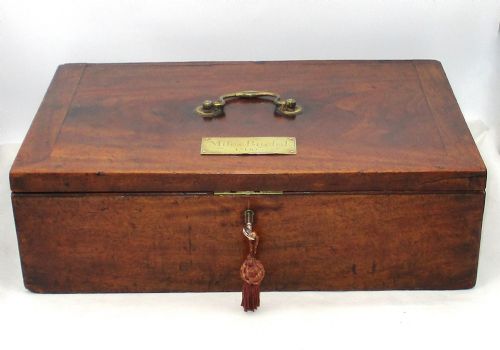
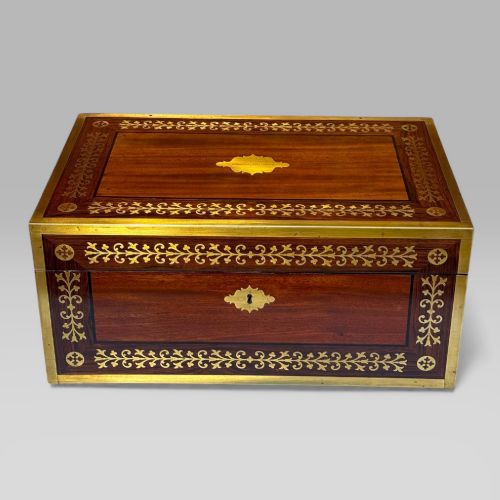
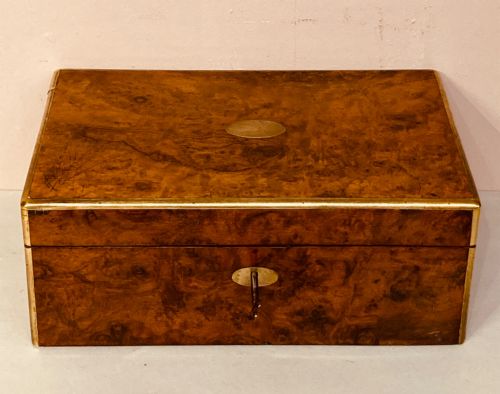
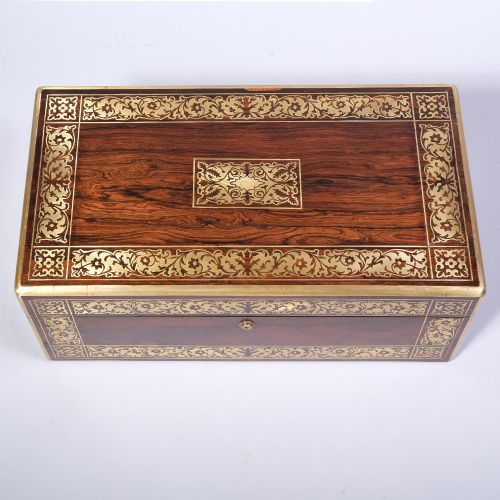



Brass Inlay Writing Box
A brass inlay writing box provides a portable writing surface, combining refined cabinetry with secure storage for correspondence.
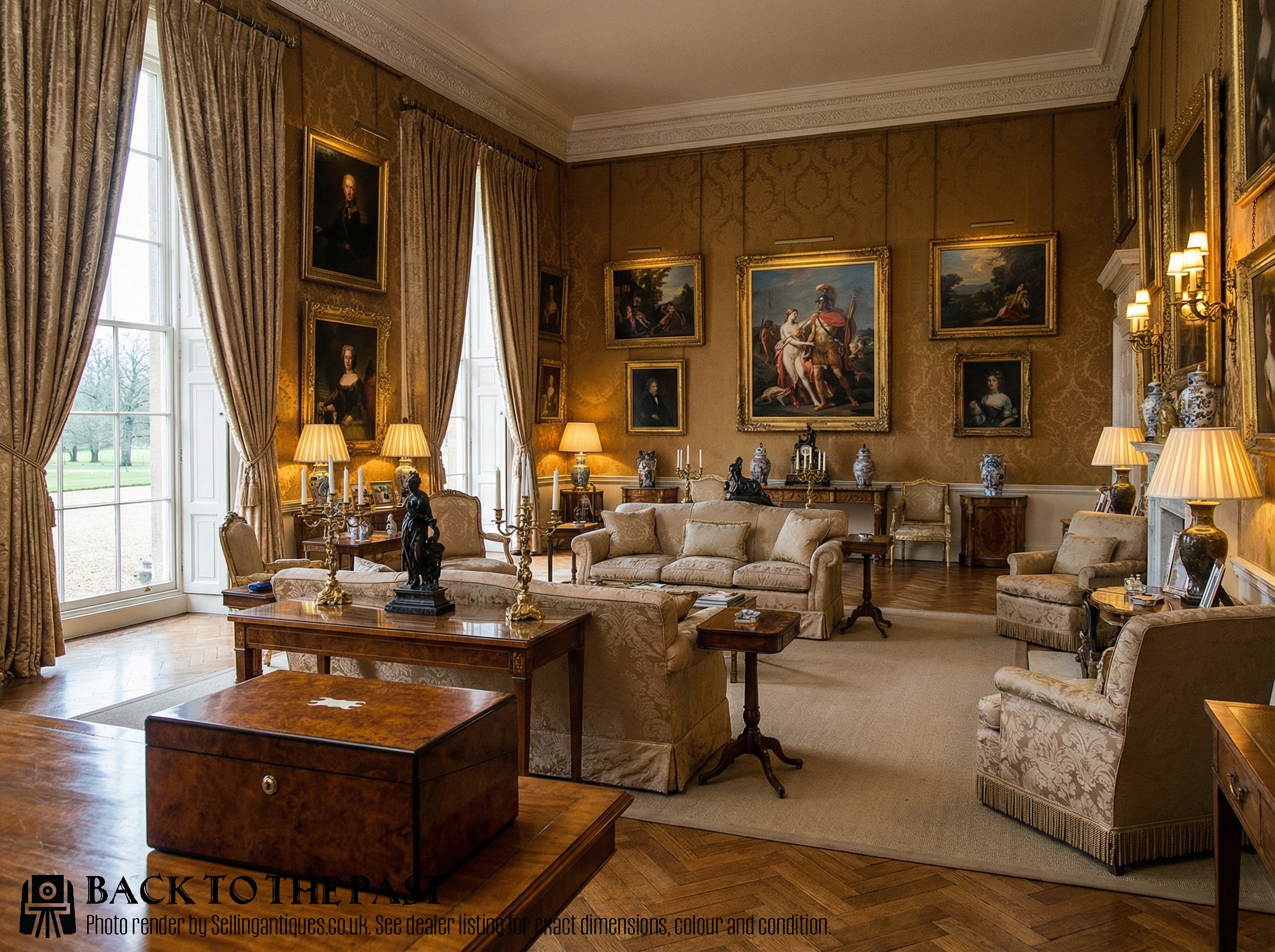
Brass Inlay Writing Box
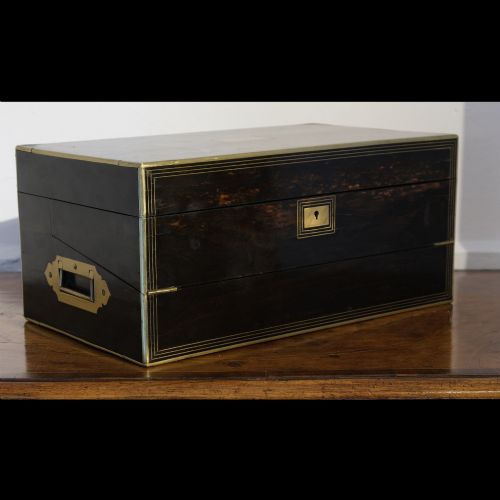
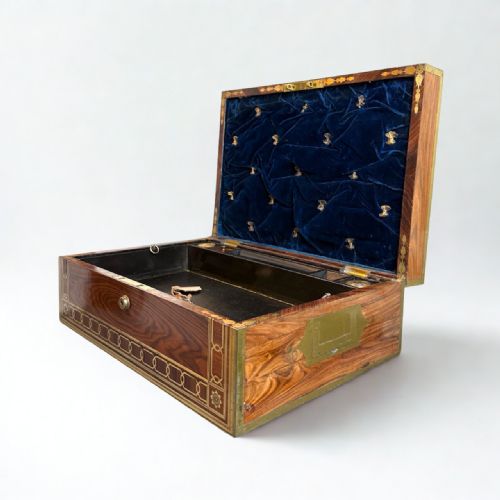
A brass inlay writing box is a portable desk designed for correspondence, featuring a hinged slope that opens to reveal a writing surface, pen trays, and inkwell compartments. These objects include compact document boxes, stationery boxes, and larger campaign writing slopes used during travel.
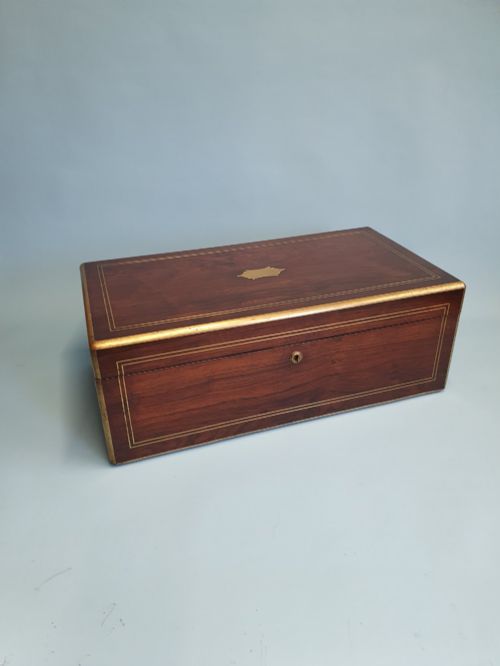
The pieces listed on this page span the Georgian, Regency, and Victorian periods, with walnut, rosewood, and mahogany serving as the primary timbers. Victorian walnut and Regency rosewood examples dominate the selection, frequently decorated with precise brass stringing or escutcheons.
Buyers encounter various formats, ranging from simple document boxes to elaborate desks fitted with secret drawers and Bramah locks. The assortment includes both domestic English models and continental examples displaying French and Chinese influences.

How they were made
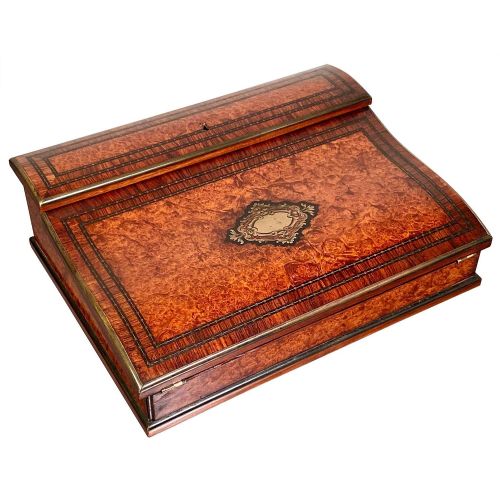
Cabinet makers constructed these boxes using dense hardwoods such as rosewood, mahogany, walnut, and exotic coromandel, often utilising figured veneers like burr walnut to create visually striking surfaces. Timber selection prioritized stability during travel, ensuring the wood resisted warping across shifting climates.
Craftsmen recessed brass stringing, corners, and escutcheons flush into the wooden surfaces to protect edges and ornament the exterior. Interior fittings incorporated secret drawers, leather-lined writing slopes, and glass inkwells secured within dedicated compartments.
The listings on this page span the 18th, 19th, and 20th centuries, covering Georgian, Regency, and Victorian periods.
What varies in quality
Quality rests in the precision of the brass inlay work and the selection of the timber veneer, where dense burr walnut or figured rosewood signifies superior craftsmanship. The alignment of flush brass edges and the tightness of the mitred corners distinguish high-end workshops from standard production pieces.
Internal complexity elevates a piece, particularly the inclusion of functional secret drawers, working Bramah locks with original keys, and complete sets of matched glass inkwells. The integrity of the original polish and the survival of fitted leather writing surfaces further separate standard examples from finer items.
The Brass Inlay Writing Box Glossary
- Writing slope
- A portable desk featuring a hinged, angled writing surface that opens to reveal storage for paper and writing implements. These boxes were essential for correspondence before the widespread use of fixed stationary desks.
- Bramah lock
- A high-security tubular lock patented by Joseph Bramah in the eighteenth century, frequently found on superior quality nineteenth-century boxes. These mechanisms provided exceptional protection for confidential documents and valuables.
- Campaign box
- A sturdy portable chest or writing slope designed for military officers and travellers on the move. They typically feature reinforced brass corners and flush handles to withstand rigorous transport.
- Escutcheon
- A decorative and protective brass plate surrounding a keyhole. It prevents the wood from splitting around the lock during daily use.
- Coromandel
- A dense, heavily figured hardwood imported from Asia, valued for its rich brown colour and contrasting dark stripes. It appears on luxury nineteenth-century boxes and desk accessories.
Brass Inlay Writing Box: Frequently Asked Questions
How were writing boxes used?
These boxes served as portable writing desks for letter writing, record keeping, and managing personal finances before the modern postal system and fixed desks became standard. Owners transported them between rooms or on journeys to maintain a private workspace anywhere.
When opened, the sloping lid provided a comfortable writing angle, while internal compartments kept stationery organised and secure. Many included secret compartments for confidential documents, currency, and jewellery.
How do I date a writing box?
Dating relies on timber choices, brass work styles, and internal hardware configurations typical of specific historical periods. Georgian and Regency examples often utilise mahogany or rosewood with delicate brass line inlay, while Victorian boxes frequently feature burr walnut and heavier brass mounts.
Lock types, such as patented Bramah mechanisms, and the presence of specific maker signatures or stamps help narrow down the decade of manufacture. Construction methods, such as hand-cut dovetails and lining materials, also provide chronological clues.
How do I care for a wooden box?
Maintain these wooden boxes by keeping them away from direct sunlight and extreme temperature fluctuations that can cause timber veneers to split or warp. Regular application of a quality wax polish preserves the historical finish and nourishes the antique wood.
Handle brass hardware gently and avoid using harsh chemical cleaners on the metal or the timber surface. Ensure that leather writing slopes remain dry and clean to prevent deterioration over time.