
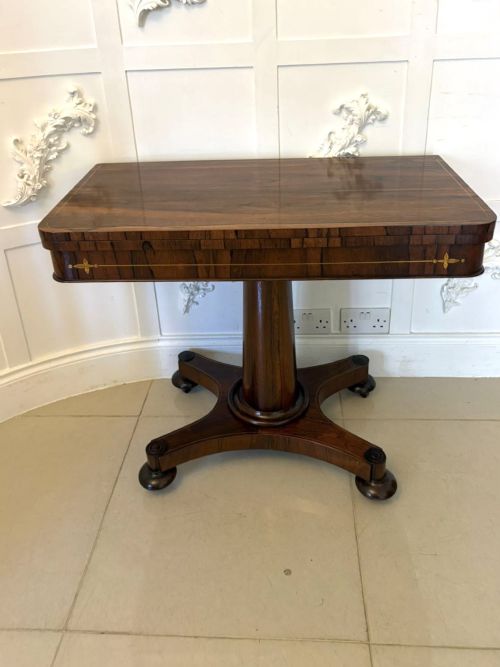
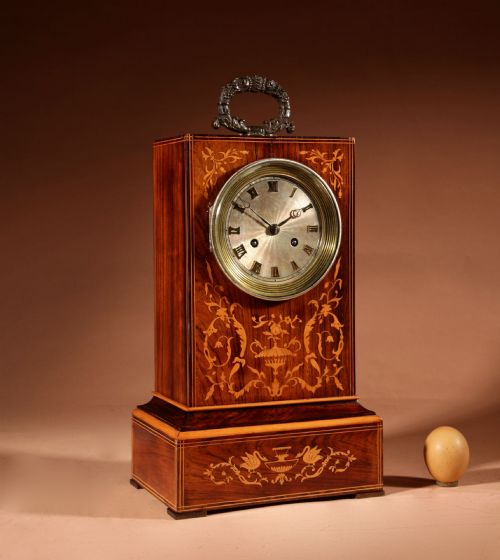
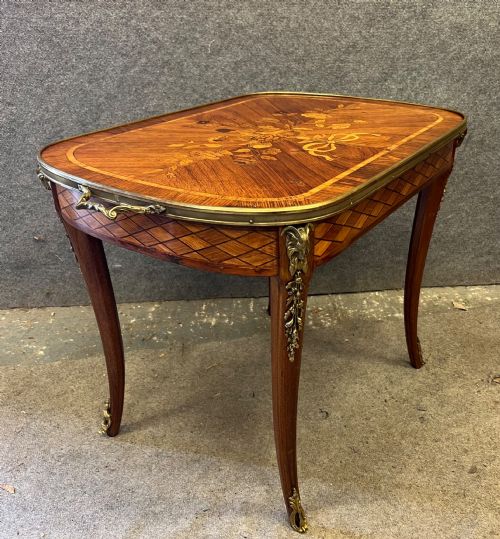
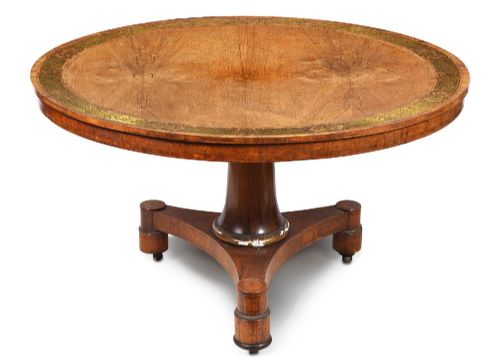
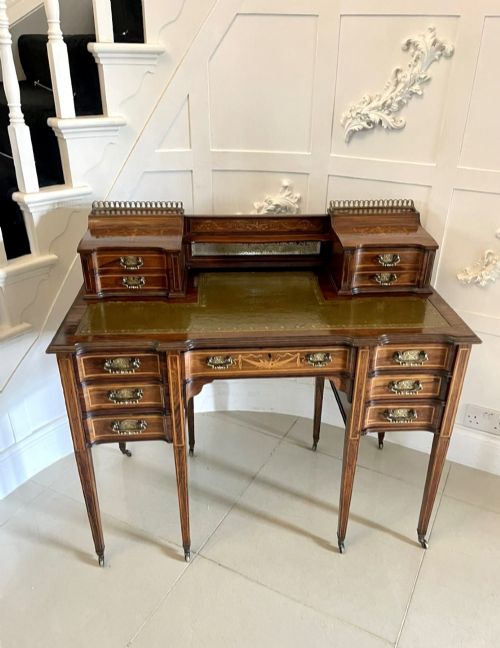
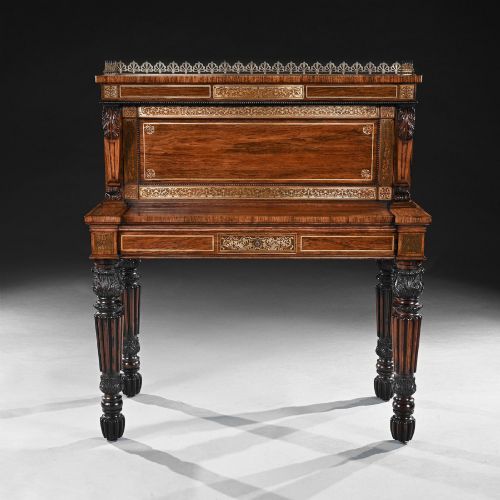
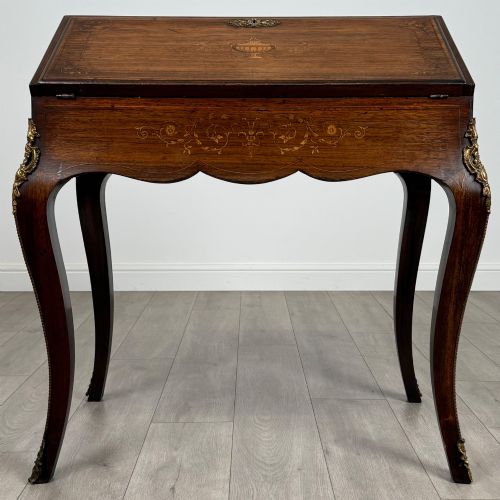

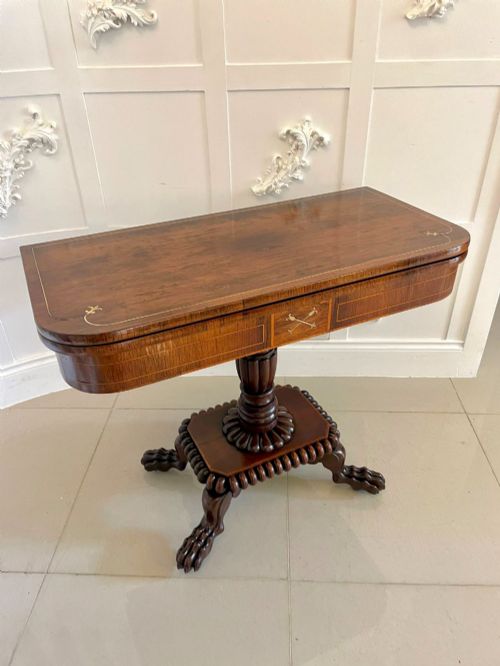
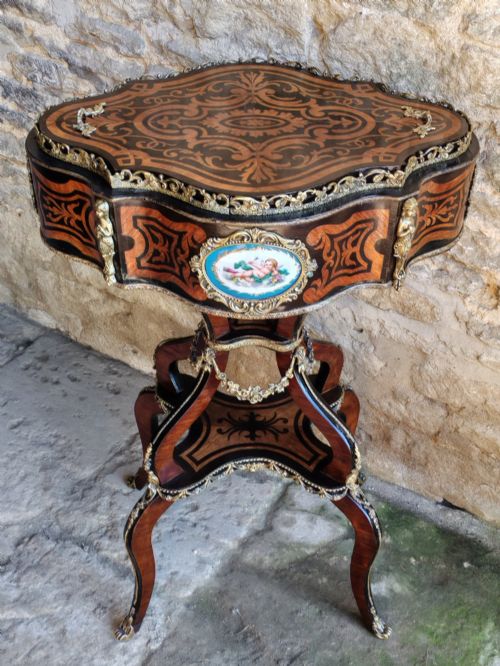
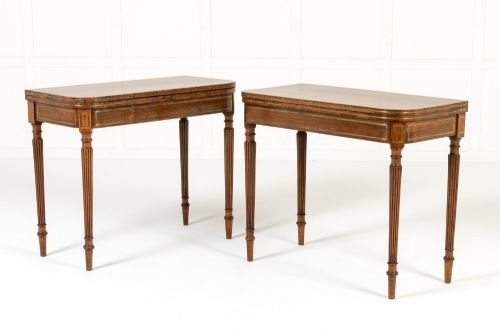
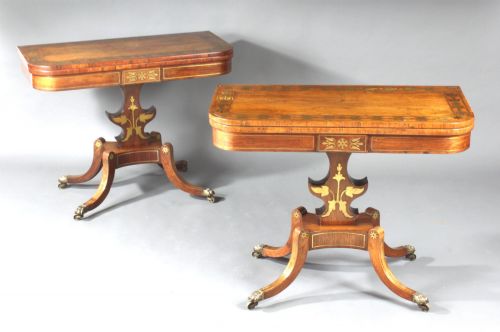
Brass Inlay Rosewood Table
A brass inlay rosewood table brings warm, figured timber together with precise metal lines for a formal interior.
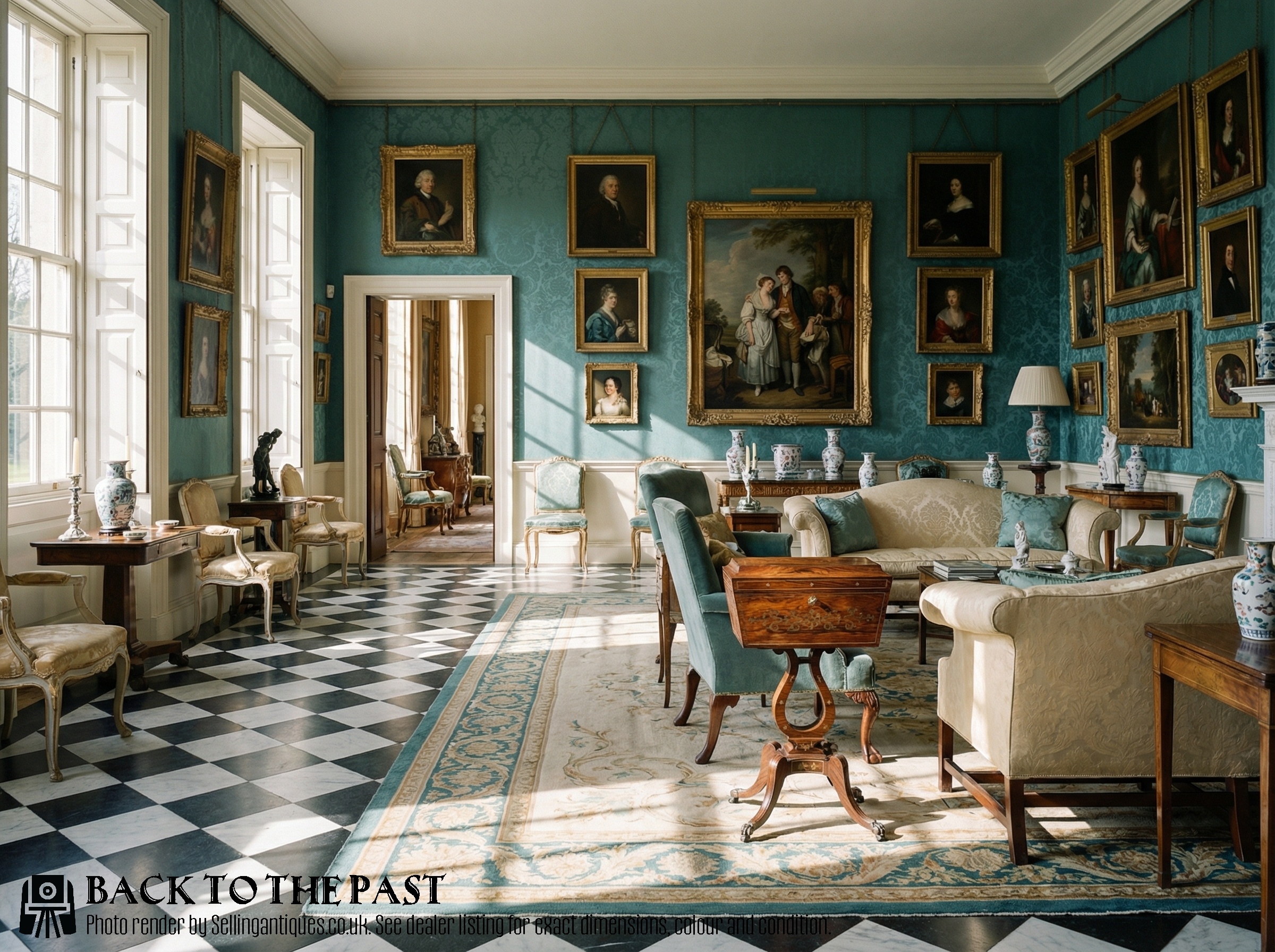
Brass Inlay Rosewood Table
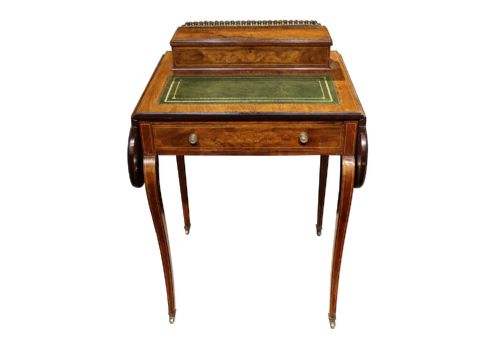
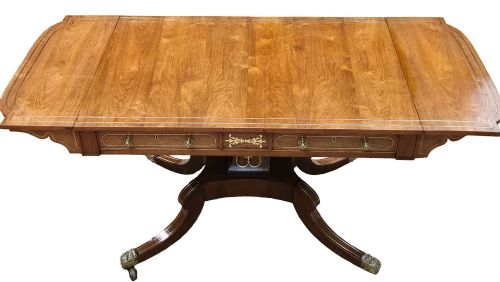
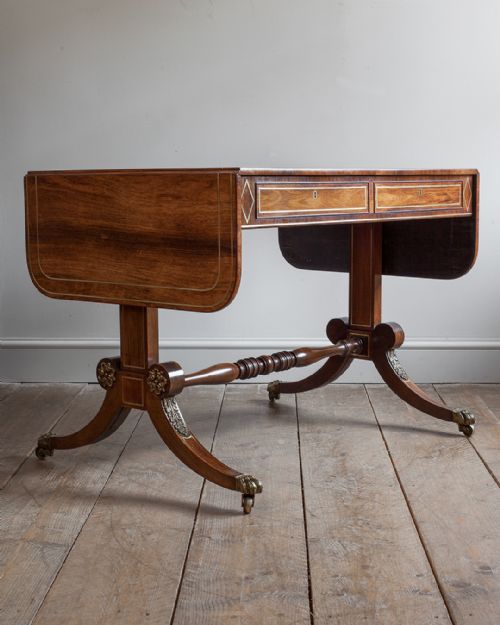
A brass inlay rosewood table encompasses folding card tables, library tables, sofa tables and circular centre tables originating principally from the Regency and Victorian periods. The pieces appearing most frequently on this page are card tables and sofa tables designed with hinged tops or drop leaves for entertaining.
Makers produced these functional items using dense tropical hardwoods, often incorporating satinwood crossbanding, mahogany, or maple alongside the characteristic metal stringing. Workshops in England and alternative regional centres adapted these forms for drawing rooms and parlours where guests gathered.
Beyond standard occasional and side tables, the selection includes specialised formats such as sewing worktables, quartetto nesting tables and games tables featuring chess surfaces or backgammon boards. These examples demonstrate the versatility of the timber and metal combination across domestic settings.
Materials and Technique
Cabinet makers utilised dark rosewood veneers applied to solid subframes, routing narrow channels into the wood grain to receive precision-cut brass strips and stringing. Ormolu mounts, castors and brass sabots frequently completed the structural composition.
The technique required exact hand-cutting of both the metal and the timber recess to ensure the inlay sat flush across the surface of the card table or sofa table top before polishing.
Several tables include hidden compartments designed for playing cards, counters or sewing notions.
Craftsmanship and Proportion
Superior examples display crispness in the brass inlay work, where the metal lines remain completely tight against the surrounding rosewood grain without gaps or filler. The refinement of the pedestal base, whether carved with lyre supports, scroll feet or pillar legs, distinguishes workshop output.
Proportion and timber selection dictate the standing of a piece, with figured grain patterns matched symmetrically across folding leaves and tabletops. Secondary woods and the original patination of the brass components further separate standard production from master cabinet work.
Maple And Co·Gillows Oxford Street Workshop·George Bullock·George Orpwood
The Brass Inlay Rosewood Table Glossary
- Brass Stringing
- Thin strips of brass inlaid into channels cut into the wood surface. This technique forms geometric lines and decorative borders.
- Crossbanding
- A border veneer applied around the edges of a tabletop with the grain running perpendicular to the centre panel. It provides a neat framing effect.
- Sofa Table
- A rectangular table fitted with drop leaves on either side and small drawers beneath the top. Originally designed to stand in front of a sofa.
- Sabot
- A metal sleeve or mount fitted to the foot of a table leg. It protects the timber and adds a decorative finish.
- Quartetto Tables
- A set of four graduating occasional tables that nest inside one another. They became popular during the Regency period for tea and writing.
Brass Inlay Rosewood Table: Frequently Asked Questions
What is a brass inlay rosewood table used for?
These tables served primarily as formal furniture for entertaining guests in Regency and Victorian drawing rooms. Card and games tables accommodated evening leisure, while sofa tables and centre tables held lamps, books and decorative objects.
Over time, their roles adapted to modern domestic spaces where their rich timber grain and metallic details function as focal points in a room.
How do I date a brass inlay rosewood table?
Dating relies on stylistic markers such as pedestal designs, leg shapes and the complexity of the brass stringing. Regency examples often feature brass sabots, lyre supports and bolder geometric brass motifs, while later Victorian versions incorporate different framing techniques.
Examining secondary timbers beneath the tabletop or inside drawer construction also helps confirm the period of manufacture.
How do I care for rosewood and brass?
Maintenance requires avoiding direct sunlight and excessive heat, which can dry out dense rosewood and loosen delicate brass stringing. Regular dusting with a soft, dry cloth preserves the polished finish of the timber.
Applying specialised metal polish should be approached with caution to prevent staining the surrounding wood grain.