


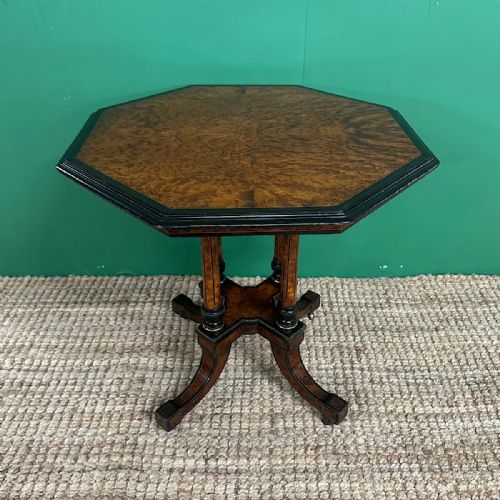

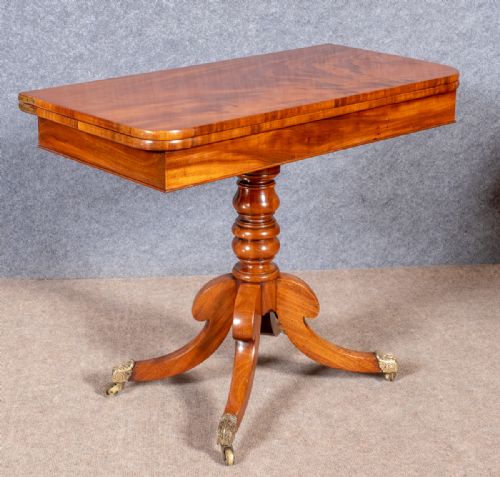

Splay Leg Card Table
These splay leg card table pieces bring folding tops and rich timbers into the room, built for evening play and conversation.
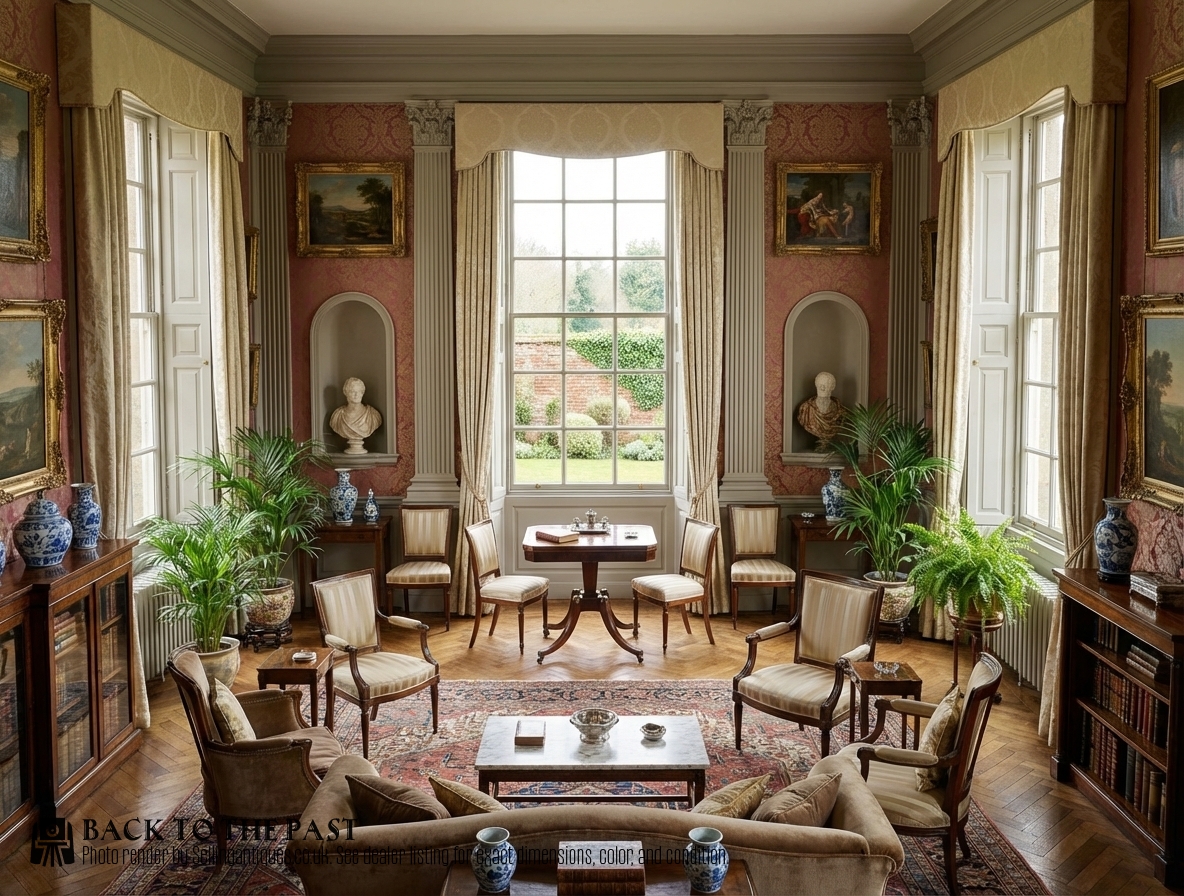
Splay Leg Card Table
A splay leg card table serves as a folding surface designed for games and tea, taking shape mostly across the Regency, Georgian, and Victorian periods. These pieces appear in forms such as games tables, card tables, and occasional tables.
The materials recorded in the evidence show a strong preference for mahogany and rosewood, alongside satinwood and amboyna veneer. Ebony and brass inlays add decorative detail to the tops and borders.
Most examples date from the Regency era, with occasional pieces stretching into the Georgian and Victorian decades. They operate primarily as folding tables that adapt from compact consoles to wider surfaces.
What varies in quality
The choice of timber creates the primary division in quality, with figured rosewood and richly grained mahogany sitting above standard utility woods. Elaborate brass inlay and fine satinwood banding demand a higher level of workshop skill than plain surfaces.
Proportion and the execution of the pedestal base dictate the visual balance of each piece. Crisp lines in the turnings and tight joints in the folding mechanism separate standard examples from finer commissions.
Many a nineteenth-century evening began with the satisfying click of a mahogany card table unfolding to reveal its hidden felt interior.
The Splay Leg Card Table Glossary
- Fold-over
- A table top hinged to double its surface area when opened for play or dining. This mechanism sits upon a rotating pivot or a pivoting frame.
- Inlay
- Material such as brass or ebony set into cavities flush with the surrounding wood surface. It creates geometric or floral patterns across the top.
- Pedestal base
- A central column support rising from a platform or feet rather than four traditional corner legs. This structure provides stability for heavier hardwood tops.
- Veneer
- A thin layer of figured wood applied over a secondary timber base. Amboyna and satinwood are frequently used in this manner to display grain patterns.
Splay Leg Card Table: Frequently Asked Questions
What is a splay leg card table used for?
These pieces functioned primarily as gaming surfaces for cards and board entertainment during the eighteenth and nineteenth centuries. When closed, they stood against a wall as a console or side table.
Their folding design allowed households to expand their usable surface space quickly for evening gatherings. They also served as tea or supper tables in formal rooms.
How do I date a splay leg card table?
Dating relies on observing the prevailing styles, timber choices, and construction methods recorded across the periods. Regency and Georgian pieces often feature rosewood or mahogany with brass inlay.
Victorian examples introduce timbers like amboyna and different proportions. Comparing the leg structure and edge details helps narrow the decade of manufacture.
Are these tables sturdy enough for daily use?
The hardwood construction makes these tables durable, but the folding mechanisms require careful handling. Opening the top should be done smoothly to protect the internal hinges and pivots.
Placing them away from direct heat sources prevents the mahogany or rosewood timbers from warping. Regular polishing maintains the finish of the veneered surfaces.
What woods were used for these tables?
Mahogany and rosewood form the main structure of the majority of surviving pieces. Cabinet makers also applied satinwood and amboyna veneer to create contrasting panels.
Ebony and brass provided fine stringing and inlay details around the borders. Secondary woods were used internally for framing and structural support.