



Brass Inlay Fusee Clock
A brass inlay fusee clock brings the quiet rhythm of the nineteenth century into a room through precise mechanics and warm cabinet wood.
Brass Inlay Fusee Clock
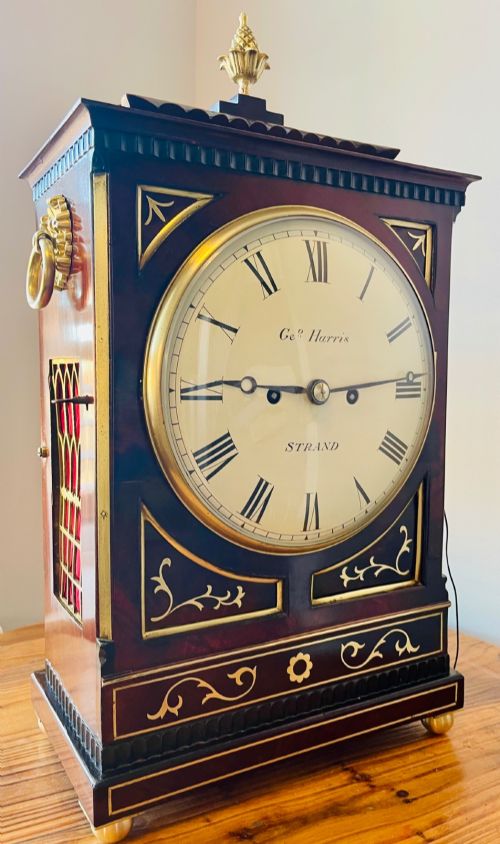
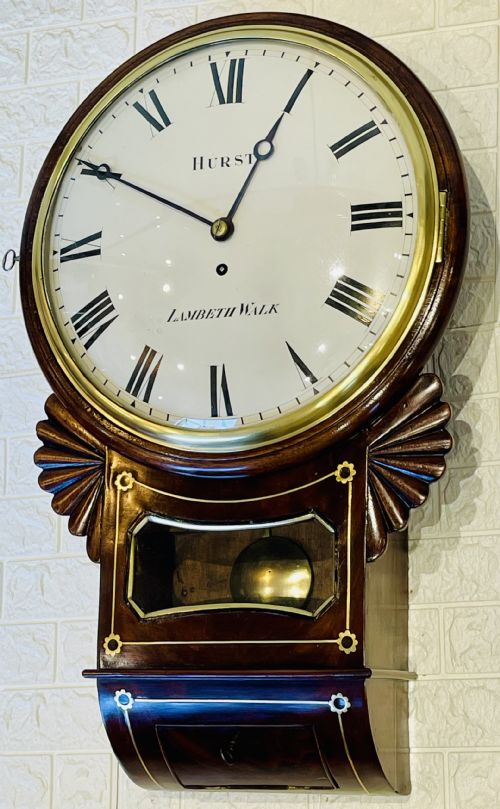
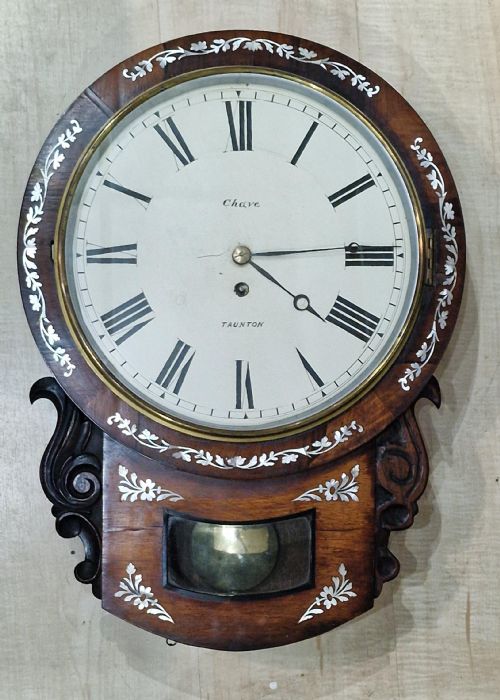
When searching for a brass inlay fusee clock, buyers encounter precision timepieces housed in rich timber cabinets designed for walls, brackets or mantelpieces. These horological instruments span the Georgian, Regency and Victorian periods, showcasing traditional British craftsmanship from both London workshops and provincial makers.
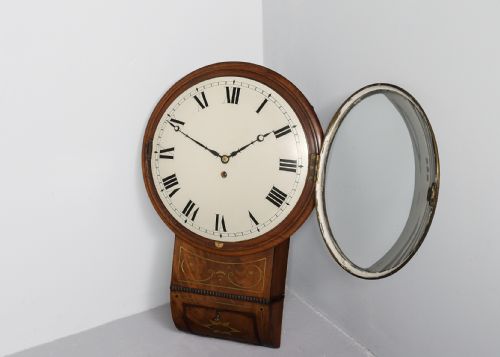
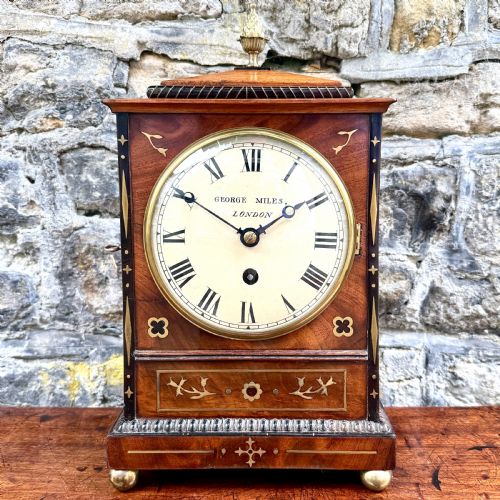
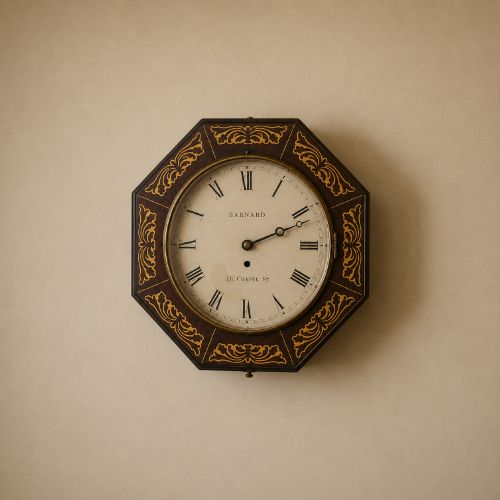
The most common formats on this page are wall-mounted drop-dial clocks with octagonal or round frames, alongside tabletop bracket and mantel clocks featuring architectural pediments such as lancet, pagoda or pad tops.
Cases primarily employ mahogany and rosewood, accented with delicate brass stringing and inlay work that frames the enamel or silvered dials. Such pieces functioned historically in libraries, hallways and formal rooms, relying on a fusee movement to maintain steady tension as the mainspring unwound.
Distinguishing quality
The distinction between standard provincial pieces and fine London workshop productions rests upon the crispness of the brass engraving, the heft of the cast bezels and the finesse of the cabinet joinery. Superior examples maintain original patination on the timber, sharp casting details on brass mounts and precise hand-cut wheel teeth within the movement.
Makers who signed their dials or backplates often invested greater care in movement finishing, such as engraved backplates and superior wooden secondary elements. The harmony between the proportions of the wooden case, the delicacy of the brass inlay and the legibility of the dial ultimately determines the standing of an individual clock.
Several clocks bear the names of provincial makers from places as far afield as Wick in Scotland and Bridgwater in Somerset.
Barnard·Chave Taunton·Halliday and Rich Bridgwater·Cording of London·Joseph Mansfield·W Burton·Wilkinson Leicester·Barrett London·Thomas Connold Alysham·Taylor of London·Joseph Jump London·Kleyser of London·frodsham and baker london·Haley and Milner London·John McGregor Wick·Plumbly and Tupman London·Arundel Clocks
The Brass Inlay Fusee Clock Glossary
- Fusee
- A conical pulley connected to the mainspring by a cord or chain, designed to equalise the driving force as the spring unwinds. This mechanism ensures consistent timekeeping throughout the duration of the wind.
- Drop dial
- A wall clock configuration where the circular dial sits above an extended wooden trunk or box, often fitted with a glazed pendulum window at the base. This format became popular in offices and hallways during the nineteenth century.
- Bracket clock
- A portable table or mantel clock, traditionally placed upon a matching wall bracket. These pieces often feature striking mechanisms and elaborate architectural wooden cases.
- Silvered dial
- A brass dial plate treated with a silver compound and engraved with numerals, producing a matte metallic finish. Such dials appear frequently on higher-grade nineteenth-century bracket clocks.
- Chamfer top
- A cabinet roof design featuring bevelled or angled upper edges meeting at a central flat or pediment. This styling characterises many Regency and Victorian mahogany mantel pieces.
Brass Inlay Fusee Clock: Frequently Asked Questions
What is a fusee clock?
A fusee clock is a mechanical timepiece that uses a conical pulley to regulate the power delivered from the mainspring to the gear train. This clever device ensures the driving force remains even as the spring runs down.
Such mechanisms were standard in better British clocks from the eighteenth and nineteenth centuries, valued for their superior accuracy compared to standard spring-driven movements.
How do I wind my clock?
Winding requires inserting a matching key into the winding hole on the dial and turning it gently until resistance indicates the mainspring is fully tensioned. Most fusee models require attention once every week.
Care should be taken not to overwind the movement, stopping immediately when firm tension is felt to protect the historic chain or cord.
Where should I place a wall clock?
Drop dial and wall clocks require a stable interior partition away from direct sunlight, dampness and heavy foot traffic that might cause vibrations. Securing the case firmly to a solid wall ensures the pendulum swings evenly.
Proper placement prevents erratic timekeeping and protects the historic mahogany or rosewood housing from environmental strain.
How do I date a mahogany case?
Dating relies on observing the cabinet style, wood selection, dial materials and construction methods used by the maker. Georgian and Regency examples often feature lighter mahogany with restrained brass stringing, while Victorian pieces can exhibit heavier mouldings and bolder proportions.
Signatures on the dial or movement backplate frequently provide a direct link to the active dates of the maker.