





Brass Inlay Chiffonier
A brass inlay chiffonier combines cabinet storage with open display shelving, anchored by the rich tones of rosewood or mahogany.
Brass Inlay Chiffonier
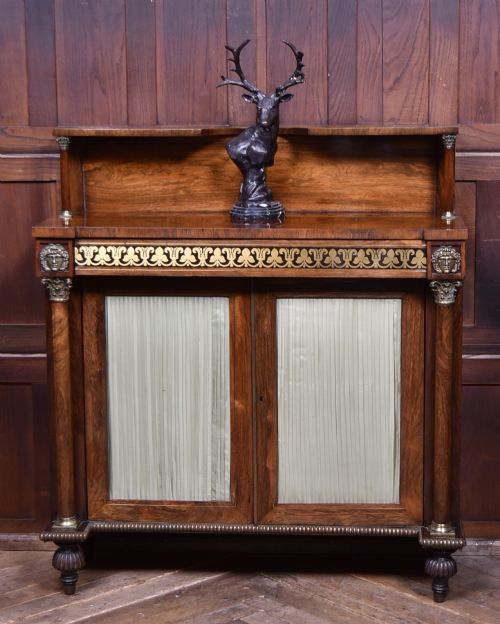
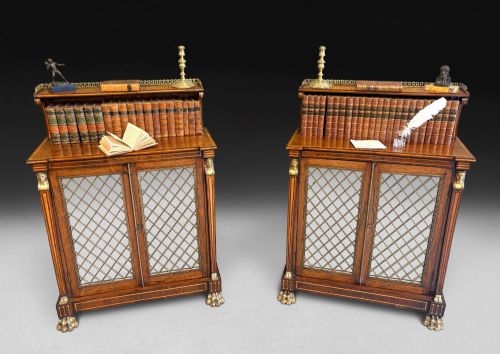
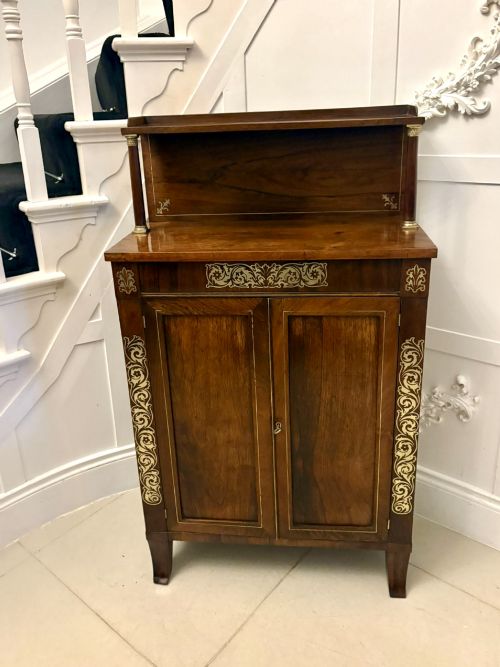
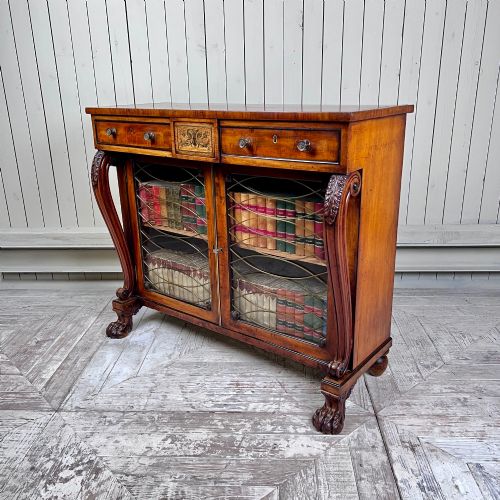
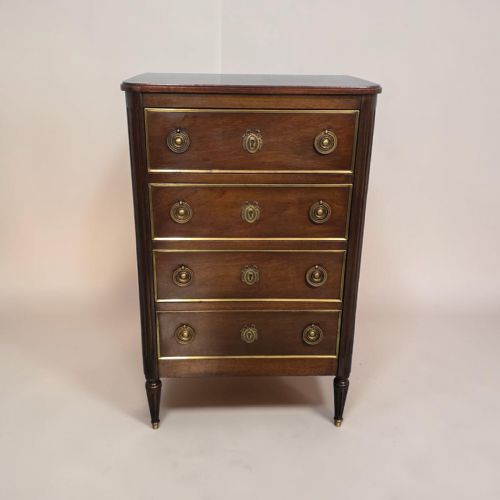
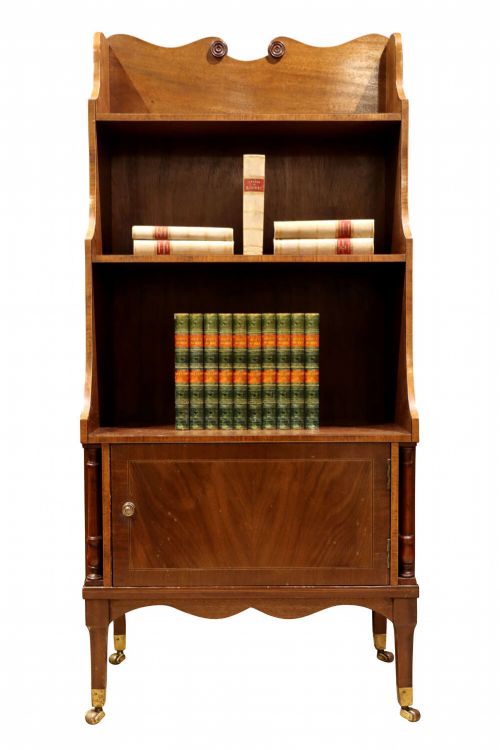
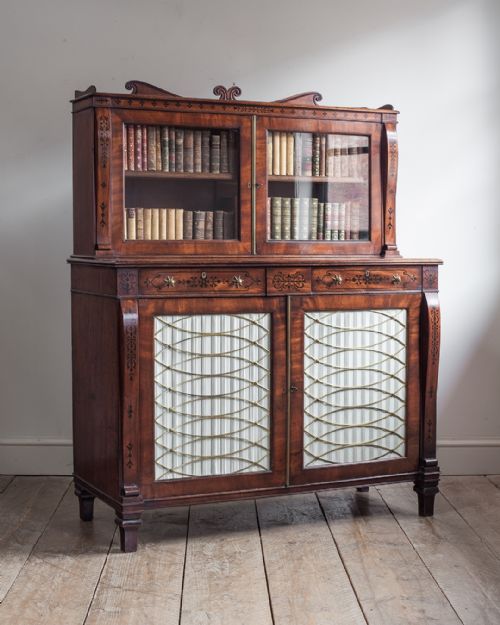
A brass inlay chiffonier is a low cabinet designed for the dining room or parlour, often featuring a raised shelf superstructure or bookcase top. These pieces belong predominantly to the Regency and nineteenth-century periods, with rosewood acting as the primary timber alongside mahogany.
Buyers will encounter various forms on this page, ranging from open-shelf chiffoniers to enclosed side cabinets and secretaire models. The brass inlay typically traces delicate classical motifs across the timber doors and friezes.
How they were made
Cabinetmakers constructed these pieces using dense hardwoods like rosewood, mahogany, and pollard oak as the primary carcass, frequently enhanced by contrasting ebony or boxwood stringing. Artisans routed precise channels into the grain to receive thin strips of brass, securing the metal flush with the polished wooden surface.
Secondary structural elements incorporated fabric, mirror glass, and silk linings behind glazed or open brass-grille doors. Brass castors frequently supported the feet beneath heavy breakfront and side cabinets.
Brass Inlay Chiffonier Retail Price Guide 2026
Typical asking prices for brass inlay chiffonier among the pieces listed under this phrase on Sellingantiques today, from the lower quarter to the upper quarter. They describe what is for sale here now, not the wider market.
Several cabinets roll quietly into position on original brass castors hidden beneath heavy timber feet.
What varies in quality
The precision of the brass inlay work dictates the baseline standard of the piece, where tight joints and complete linear borders distinguish finer workshops from simpler production. Grain selection in the rosewood or mahogany veneer also separates standard regional items from high-end cabinet work.
Proportions and the integration of secondary woods reveal the care taken during construction, particularly in the alignment of doors and the stability of superstructure shelves. Original hardware and sound structural integrity elevate the standing of any individual cabinet.
John McLean
The Brass Inlay Chiffonier Glossary
- Chiffonier
- A low cabinet with doors below and often a shelf superstructure above. It evolved during the Regency period to serve dining and entertaining needs.
- Rosewood
- A heavy, dark timber with distinct figuring, frequently utilised in fine nineteenth-century cabinetmaking. It provides a rich dark ground for brass inlay.
- Secretaire
- A cabinet incorporating a pull-down writing drawer fitted with internal pigeonholes and small compartments. These dual-purpose pieces were popular in the Regency era.
Brass Inlay Chiffonier: Frequently Asked Questions
What is a brass inlay chiffonier?
A brass inlay chiffonier is a low nineteenth-century cabinet designed with enclosed lower storage and often an upper shelf or bookcase section. These pieces utilise polished hardwoods ornamented with fine brass lines.
They served as functional sideboards and display furniture in formal rooms during the Regency period and later Victorian eras.
How do I date a chiffonier?
Dating relies on timber selection, structural design, and the specific style of brass ornamentation applied to the cabinet. Regency pieces often showcase rosewood and precise classical brass inlay.
Later Victorian examples introduce heavier proportions and alternative woods such as mahogany, while maintaining the traditional low cabinet format.
Where were chiffoniers used?
These cabinets stood primarily in dining rooms and parlours to hold serving items, linens, and books. The upper shelves displayed decorative ceramics and glassware.
Secretaire variants also provided a compact writing surface for correspondence within domestic sitting rooms.
What woods are common?
Rosewood and mahogany form the predominant timbers found across these listings, complemented by ebony, boxwood, and pollard oak. These dense tropical and native hardwoods provided stable surfaces for detailed brass work.
Simulated rosewood finishes also appear on pieces designed to mimic more expensive materials.