
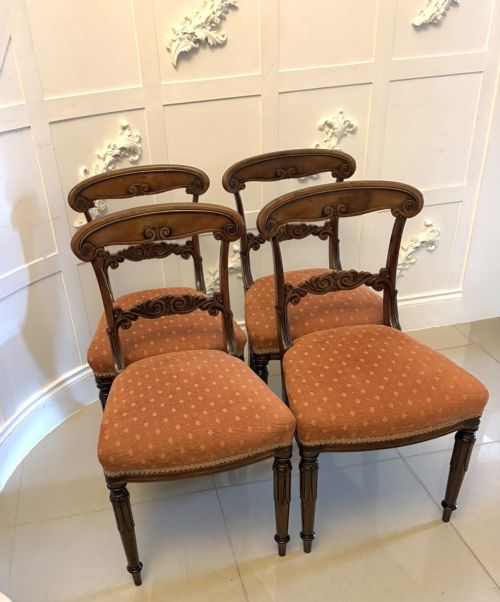
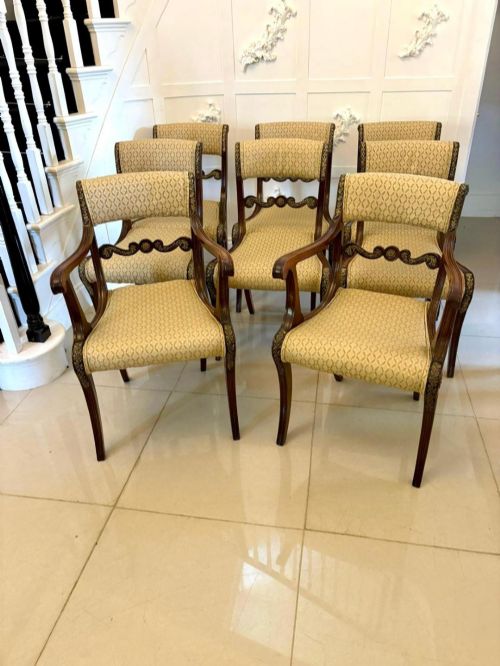

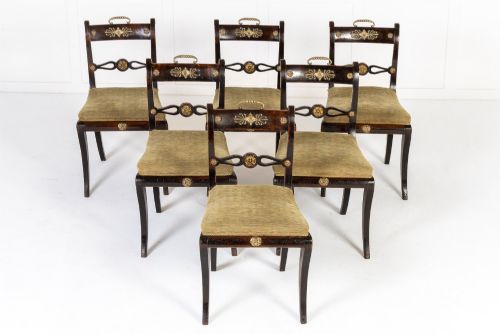
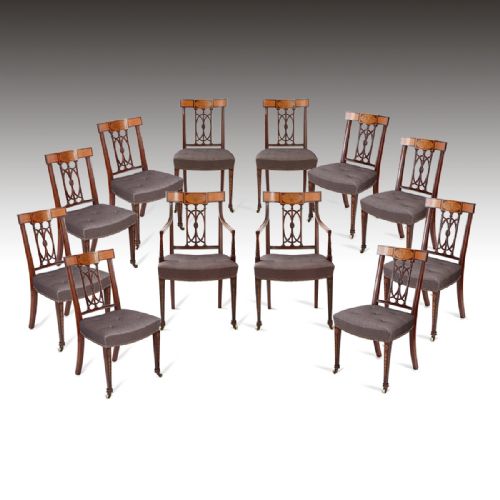
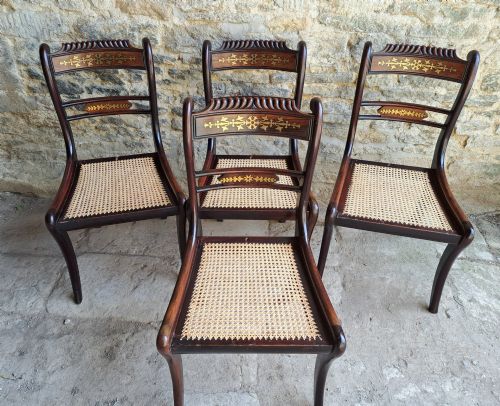


Brass Inlaid Dining Chairs
These brass inlaid dining chairs bring striking Regency lines and rich timber tones straight to the table.
Brass Inlaid Dining Chairs
Brass inlaid dining chairs are seating pieces ornamented with metallic inlay, appearing predominantly in Regency, Georgian, and 19th-century forms. Buyers seeking these items will find sets and pairs designed for formal dining rooms, encompassing side chairs and elbow chairs.
The most common examples on this page date from the Regency period, often featuring elaborate brass work set into dark woods. These chairs combine classical proportions with the decorative metal techniques popular during the early decades of the nineteenth century.
Forms range from smaller side chairs to larger armchairs, sometimes found in matched sets of four, six, eight, or twelve. The physical evidence shows both modest domestic seating and grand exhibition quality sets.
Materials and construction methods
Maker workshops built these chairs using dense cabinet timbers such as mahogany, rosewood, and satinwood, occasionally utilising faux rosewood finishes. Artisans also employed pollard oak and general wood foundations beneath the primary veneers.
Brass was cut and set flush into channels carved into the wooden surfaces, creating crisp geometric patterns and classical motifs. Upholstered seats, fabric, and leather panels completed the construction, providing comfortable padding for dining use.
Brass Inlaid Dining Chairs Retail Price Guide 2026
Typical asking prices for brass inlaid dining chairs among the pieces listed under this phrase on Sellingantiques today, from the lower quarter to the upper quarter. They describe what is for sale here now, not the wider market.
The listings show chair sets originating primarily from the Regency and Georgian periods, utilising rosewood, mahogany, and satinwood.
Distinctions in craftsmanship
Quality rests upon the precision of the brass inlay work and the selection of the timber grain. Pieces at the upper end display intricate, tightly fitted metalwork set into highly figured rosewood or mahogany.
The architectural balance of the frame and the retention of original timber properties dictate the standing of individual sets. Superior examples maintain structural integrity alongside crisp, uninterrupted brass decoration across all chairs in a set.
John Gee
The Brass Inlaid Dining Chairs Glossary
- Regency
- A period of British design spanning the early nineteenth century, known for classical antiquity influences. Chairs from this era often incorporate saber legs and brass inlay.
- Inlay
- A technique where pieces of a contrasting material are embedded into depressions in a wood base. In these pieces, brass stripwork forms decorative patterns across the top rails and splats.
- Elbow chair
- An armchair designed with low arms to fit beneath a dining table. These frequently accompany sets of side chairs as carvers for the head of the table.
- Faux rosewood
- A painted or grained surface finish mimicking the distinctive dark and reddish figuring of genuine rosewood timber. This technique was utilised when solid exotic woods were scarce or expensive.
- Satinwood
- A lustrous yellow-brown timber imported from the tropics, used for fine inlay work and contrasting details. It provides a bright visual accent against darker woods.
Brass Inlaid Dining Chairs: Frequently Asked Questions
How were brass inlaid dining chairs used?
These chairs served around formal dining tables in prosperous households during the Regency and Georgian periods. Sets typically included side chairs for general seating and matching elbow chairs placed at the table ends.
Their decorative backs allowed them to stand out visually against dining room walls when pushed in. They functioned as both practical furniture and statements of social standing.
How do I identify a Regency period chair?
Regency chairs display classical influences inspired by ancient Greece and Rome, often featuring curved saber legs and distinctive top rails. The presence of precision brass inlay work is a primary indicator of this specific design era.
Construction details like rosewood or mahogany framing further align with early nineteenth-century cabinet-making standards.
Are these chairs comfortable for daily dining?
Most examples feature upholstered seats covered in fabric or leather, providing structured support suitable for meals. The inclusion of elbow chairs offers additional comfort for seated guests.
Because they were built for prolonged dining use, their proportions accommodate an upright sitting posture.
What woods were used for these chairs?
Cabinetmakers primarily utilised dark, heavy timbers such as mahogany and rosewood to construct the frames. Satinwood and pollard oak also appear, alongside simulated rosewood surfaces.
These dense materials provided stable bases for embedding thin strips of decorative brass.