

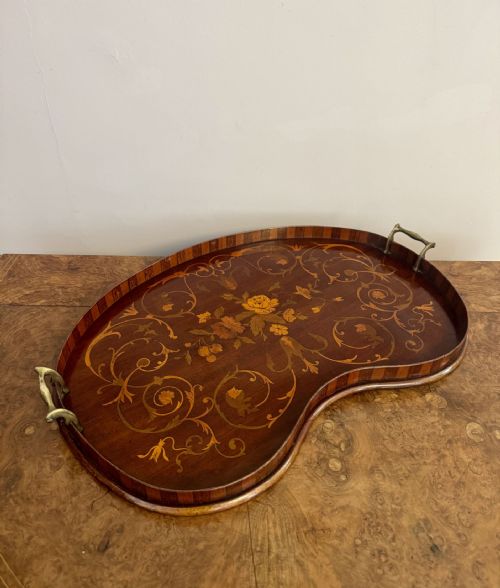


Brass Handled Wood Tray
A brass handled wood tray brings useful warmth to a room, combining rich timber with metal mounts for everyday service or display.
Brass Handled Wood Tray
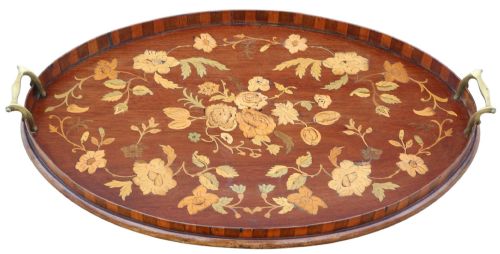
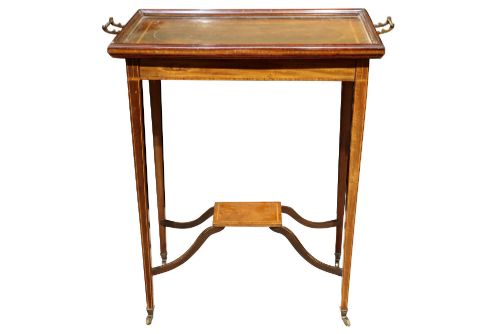
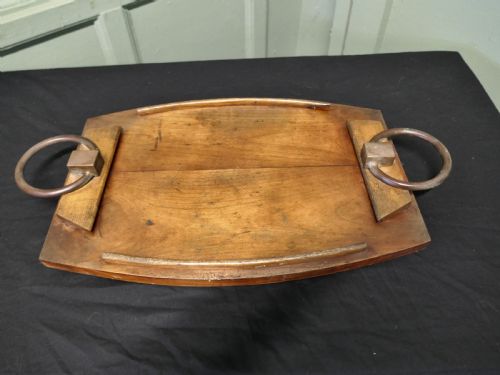
A brass handled wood tray takes several forms across the periods represented here, from George III serving pieces and butler trays to Edwardian kidney shaped tea trays and occasional tables. These items combine practical timber surfaces with metal fittings, often featuring raised edges or galleries to secure contents.
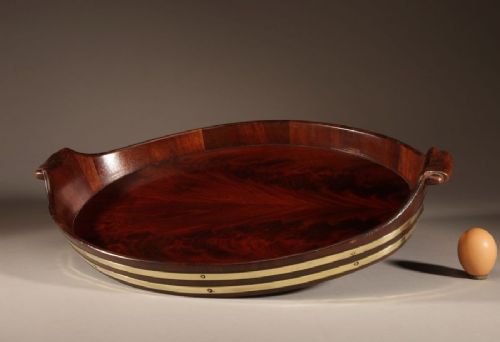
The pieces on this page span the eighteenth, nineteenth, and early twentieth centuries, showing styles from Georgian and Victorian eras through to Edwardian Sheraton Revival and Arts and Crafts designs. Buyers meet rectangular serving trays, oval tea trays, coopered designs, and occasional tray top tables.
Beyond standard serving ware, the category includes specialised items such as wine bottle carriers, cutlery boxes, and etagere tables. The unifying characteristic remains the combination of wood construction with brass handles or galleries.
How they were made
Makers utilised solid and veneered timbers including mahogany, satinwood, elm, and rosewood, selected for their grain and durability. Craftspeople shaped these woods into serving vessels, occasional tables, and storage boxes.
Decorative surface work relied on marquetry inlay and wood inlay to create geometric or floral motifs within the timber panels. Metal elements, particularly brass handles, galleries, and four section bottle dividers, were integrated securely into the wooden structures.
Brass Handled Wood Tray Retail Price Guide 2026
Typical asking prices for brass handled wood tray among the pieces listed under this phrase on Sellingantiques today, from the lower quarter to the upper quarter. They describe what is for sale here now, not the wider market.
Listings feature mahogany, satinwood, and elm woods across Georgian, Victorian, and Edwardian periods.
What varies in quality
The refinement of the timber preparation and the precision of the inlay set individual examples apart. Sharply cut marquetry and carefully selected grain patterns indicate higher workshop standards.
The heft and casting quality of the brass handles or galleries influence the overall character of the piece. Solid construction methods, such as coopered joints or tight dovetailing, distinguish superior items from simpler utility wares.
The Brass Handled Wood Tray Glossary
- Brass gallery
- A low pierced or solid metal rail fitted around the edge of a tray to prevent items from sliding off. This metal border is frequently found on fine serving pieces.
- Coopered tray
- A vessel constructed from vertical wooden staves fitted closely together and bound by bands, similar in method to barrel making. This technique creates curved sides with notable structural strength.
- Marquetry inlay
- The art of forming decorative patterns using thin veneers of different coloured woods fitted together into a surface. Craftsmen applied this technique to elaborate tea and serving trays.
- Etagere tray
- A piece of furniture incorporating removable trays or tiered shelves designed for display and service. These tables combine the function of a portable tray with a static stand.
- Butler tray
- A portable wooden tray, often featuring hinged sides, designed to sit upon a folding X frame stand. These utilitarian pieces were used for serving food and drink.
Brass Handled Wood Tray: Frequently Asked Questions
How were these trays originally used?
These items served primarily for carrying tea sets, wine bottles, and food items around large houses. Many designs functioned alongside folding stands as temporary side tables during meals.
Specialised pieces held cutlery or organised bottles in dining rooms. Their portable nature allowed servants to clear rooms swiftly between courses.
How do I care for a antique wooden tray?
Keep wooden surfaces away from direct heat sources and strong sunlight to prevent the timber and veneers from drying out. Periodic application of appropriate wax polish maintains the finish.
Avoid submerging wooden trays in water or using harsh chemical cleaners. Wipe surfaces gently with a dry or slightly damp cloth after use.
How can I tell a Georgian tray from an Edwardian one?
Georgian pieces often display simpler, robust construction in solid mahogany, focusing on practical handling and functional rails. Their lines tend to be straightforward and utilitarian.
Edwardian examples frequently exhibit lighter satinwood framing with complex marquetry inlay and Sheraton Revival motifs. They lean towards decorative display alongside practical service.
Can I use an antique tray for daily serving?
Many solid wood examples remain sturdy enough for light service, provided they receive careful handling. Using coasters helps protect aged polished surfaces from moisture marks.
Some delicate marquetry or inlaid specimens suit display purposes better than active service. Assessing the individual construction strength guides safe daily use.