
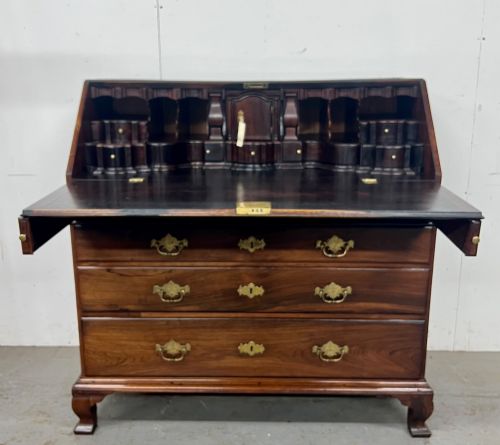


Brass Handle Bureau Desk
A brass handle bureau desk offers fitted drawers and writing surfaces shaped by Georgian, Victorian, and Edwardian hands.
Brass Handle Bureau Desk
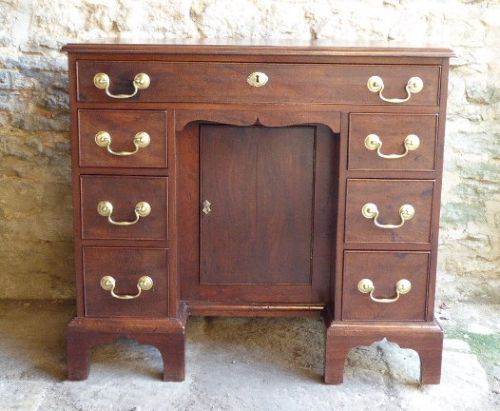
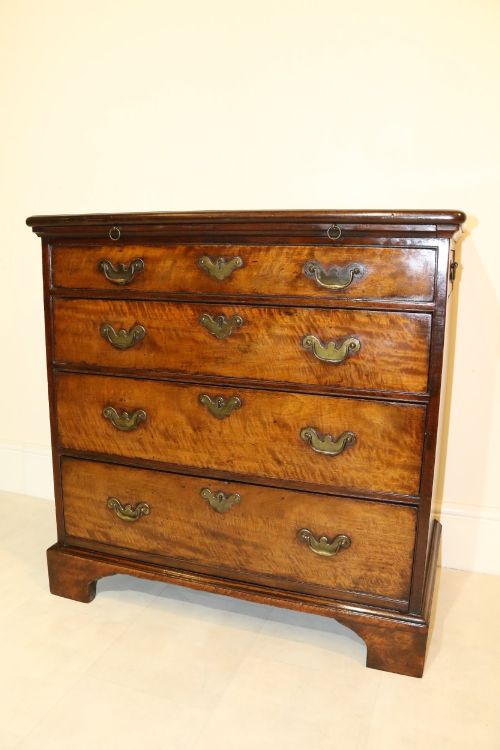
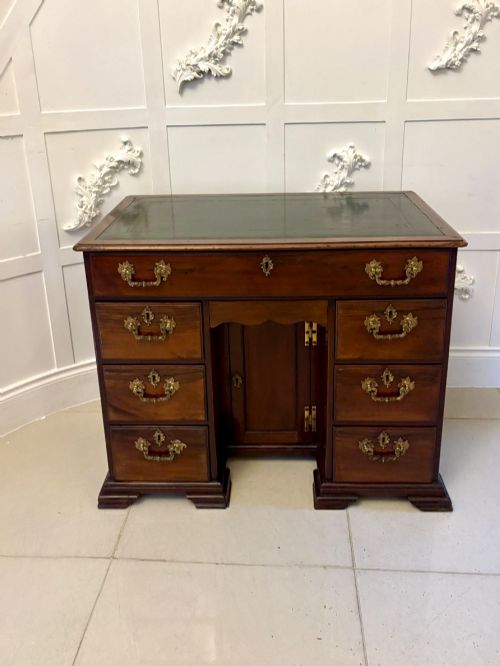
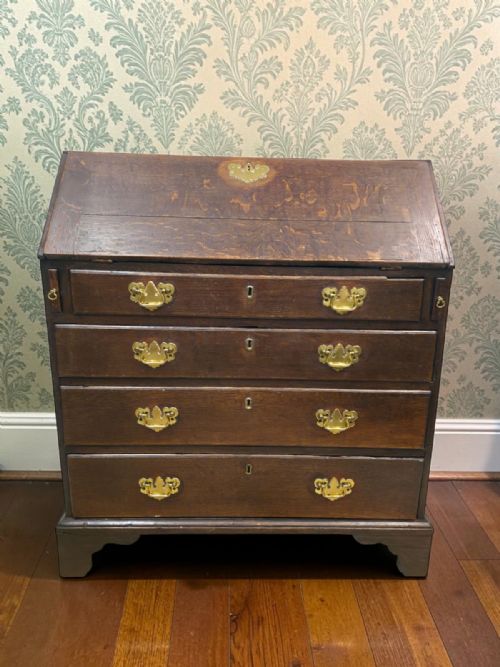
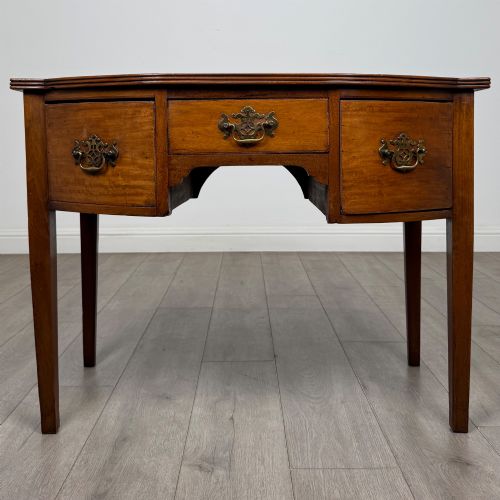
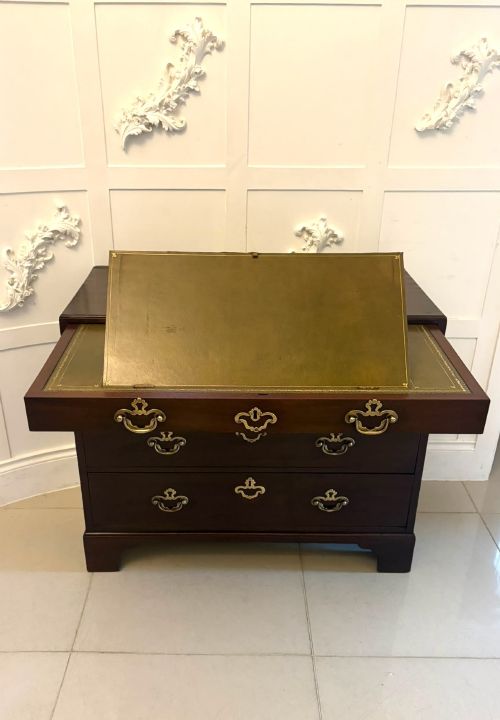
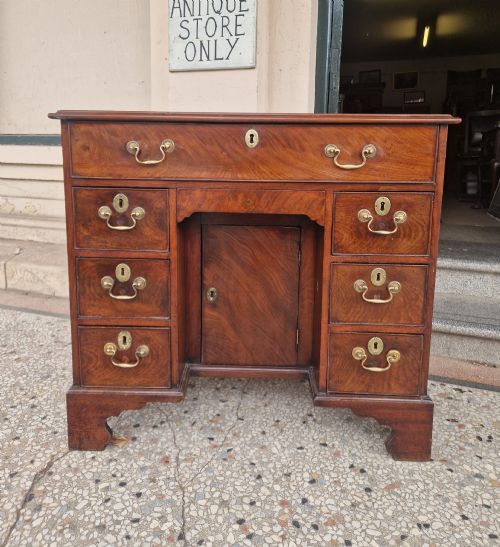
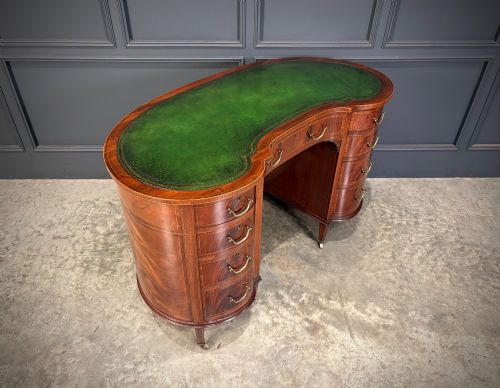
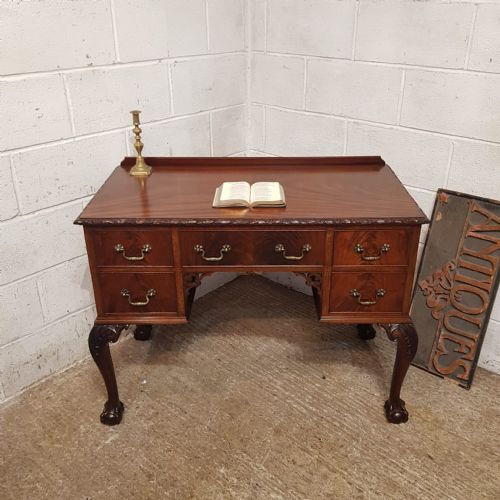
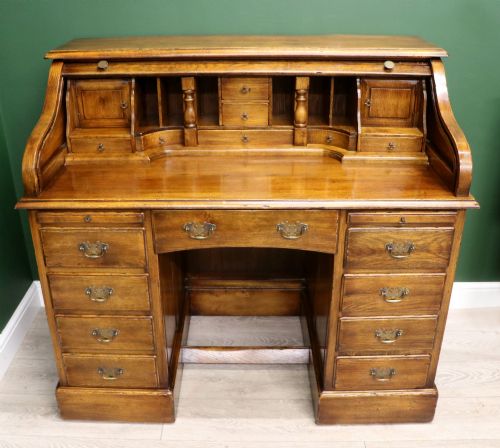
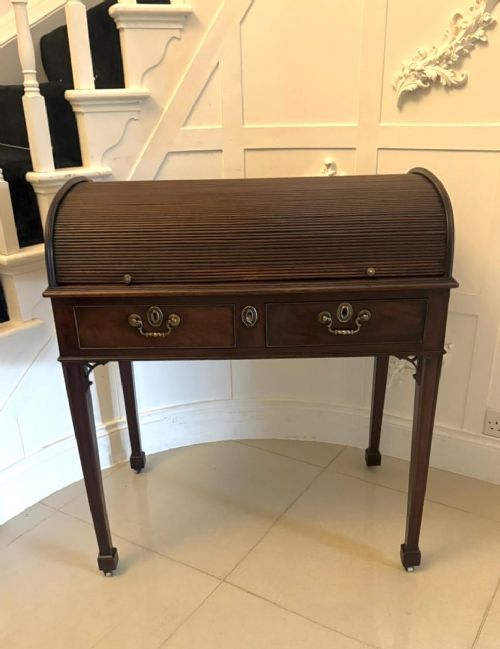
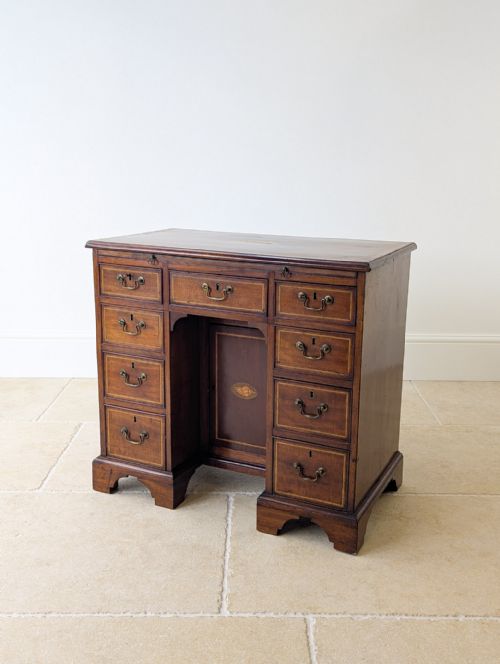
When you search for a brass handle bureau desk, you are looking at writing furniture designed for correspondence and storage. These pieces take the form of kneehole desks, fall-front bureaux, cylinder desks, and writing chests. The selection on this page leans heavily toward Georgian mahogany and oak examples alongside later Edwardian and revival iterations.
The form typically combines a writing surface - whether a sloping fall front, a cylinder top, or a pull-out slide - with banks of smaller drawers intended for stationery and documents. Brass hardware anchors the drawers, functioning as both a structural pull and a visual punctuation mark against the timber.
Origins stretch from English workshops to Scottish and Portuguese makers, spanning periods from the early eighteenth century through the Edwardian era. You will encounter compact kneehole desks and grander bureau bookcases alike, all united by their writing function and brass mountings.
How they were made
Cabinet makers built these desks primarily using solid timbers and veneers of mahogany, oak, and walnut, often accenting surfaces with satinwood, rosewood, or marquetry inlay. Interiors frequently feature secondary woods like oak for drawer linings.
Metalworkers cast and chased the brass handles, ring pulls, and occasionally paw feet that secured the wooden drawers. Leather insets also appear on writing surfaces, providing a durable plane for daily correspondence.
Listings include mahogany, oak, walnut, and rosewood surfaces paired with brass hardware across Georgian, Victorian, and Edwardian periods.
What varies in quality
The standard of timber selection and secondary wood usage distinguishes finer examples from simpler utilitarian pieces. Dense, finely figured mahogany or walnut veneers matched across a fall front indicate superior cabinet work.
The crispness of the brass hardware and the complexity of the interior fitted compartments - such as secret drawers, pigeonholes, and central cupboards - set higher grades apart. Original brass mounts and untouched drawer linings carry significant weight in assessing a piece.
Blyth and Son·Maples of London·Jenners·Coxed and Woster
The Brass Handle Bureau Desk Glossary
- Bureau
- A desk featuring a sloping fall-front lid that opens to reveal a fitted interior of pigeonholes and small drawers. This form provides a concealed writing surface when closed.
- Kneehole desk
- A pedestal desk featuring a central recess for the user's knees, flanked by vertical columns of drawers. They often include a small central cupboard tucked beneath the writing top.
- Cylinder desk
- A desk with a curved, quarter-circle rolling shutter that conceals the writing slide and interior compartments when pulled down. It offers a smooth mechanical alternative to the hinged fall-front.
- Fall front
- A hinged writing flap that drops down to a horizontal position supported by side arms or bearers. It serves as the primary writing plane on traditional bureaux.
- Crossbanding
- A narrow strip of veneer laid around the border of a drawer front or tabletop with the grain running at right angles to the central panel. This technique creates a neat framing effect on elite case furniture.
Brass Handle Bureau Desk: Frequently Asked Questions
What is a bureau desk?
A bureau desk is a writing cabinet featuring a sloping lid that opens to expose small interior drawers and document slots. When closed, it keeps writing materials neatly concealed out of sight.
These pieces served as household administrative hubs for letters and accounts, standing in parlours and studies across the Georgian and Victorian periods.
How do I tell a Georgian desk from an Edwardian one?
Georgian desks typically exhibit denser solid mahogany or oak construction with hand-cut dovetails and restrained proportions. Their brass hardware is often cast and hand-finished.
Edwardian interpretations frequently employ lighter satinwood or mahogany veneers with machine-sawn elements and revival stylistic cues referencing earlier centuries.
Where should I place a bureau desk?
A bureau desk suits a home study, living room, or hallway where its drop-down writing flap can be utilised without blocking foot traffic. Ensure there is adequate clearance for a chair when the fall front is open.
Keep wooden writing furniture away from direct heat sources and strong sunlight to protect the polish and prevent timber warping.
What are brass ring handles?
Brass ring handles are pivoting pulls attached to drawer faces via a small backplate. They allow fingers to slip through to draw the drawer outward.
Common on Regency and later furniture, they offer a refined, low-profile alternative to heavy drop handles and bail pulls.