



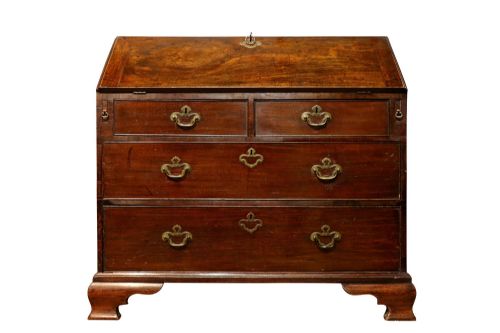
Georgian Slant Top Bureau
A georgian slant top bureau brings serious writing space and hidden compartments into a room, combining a sloping lid with functional drawers.
Georgian Slant Top Bureau
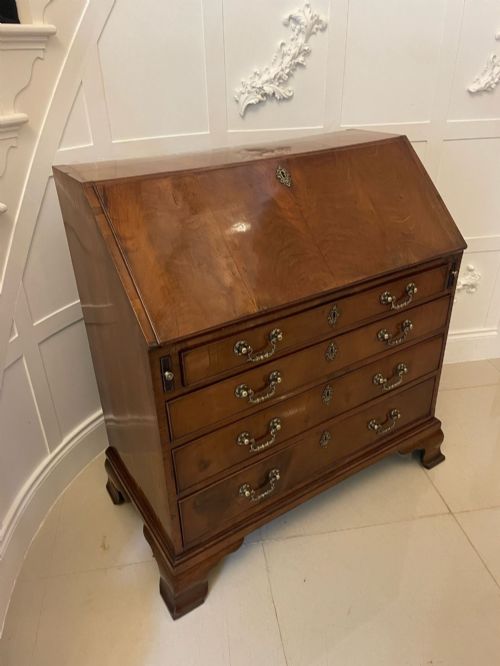
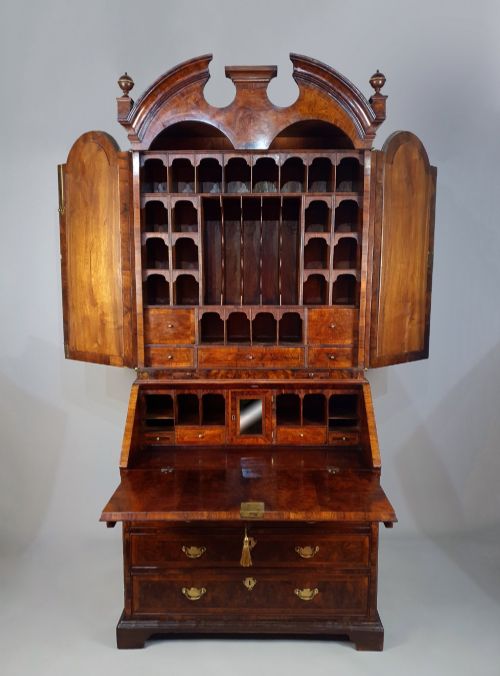
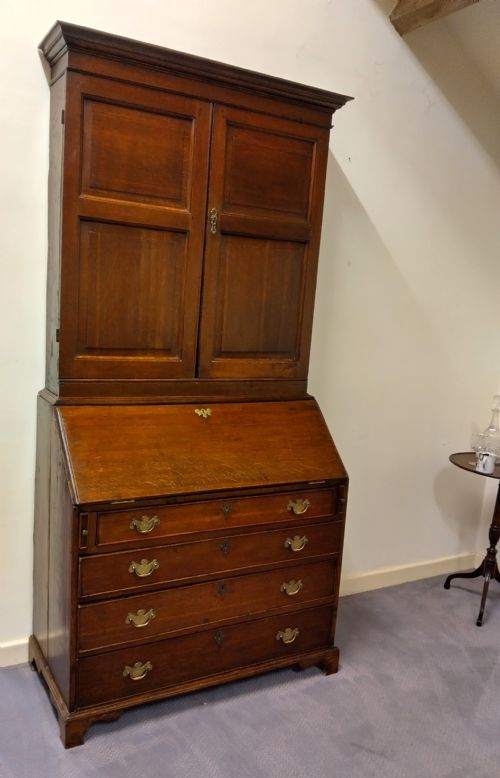
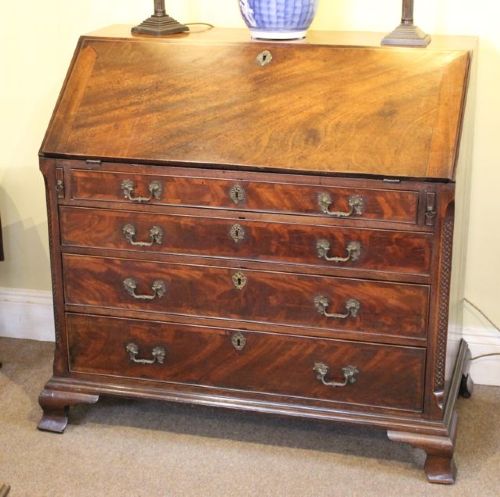
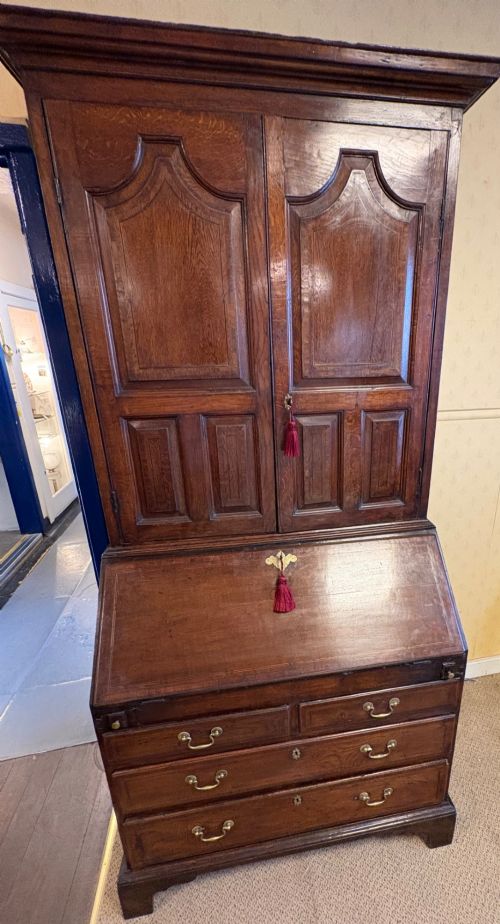
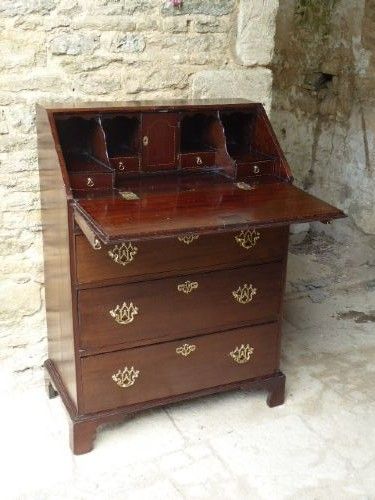
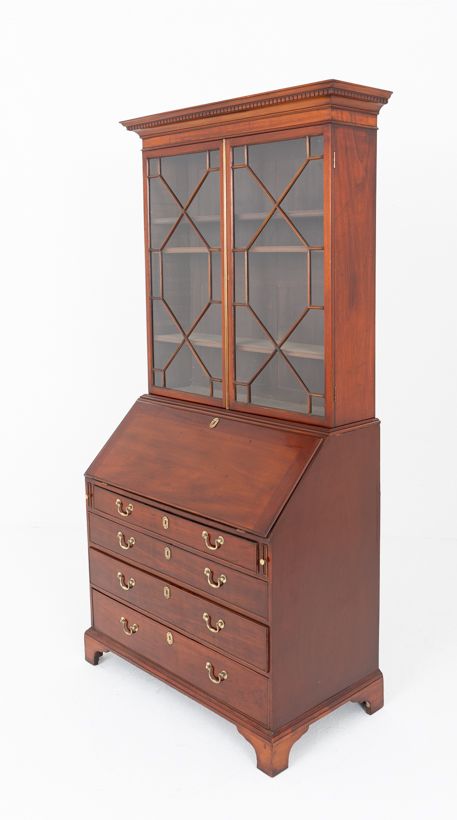
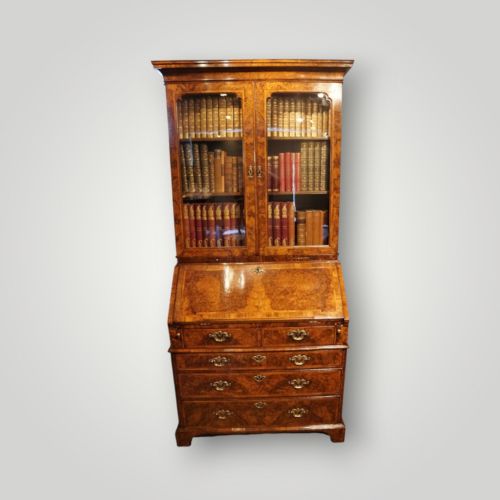
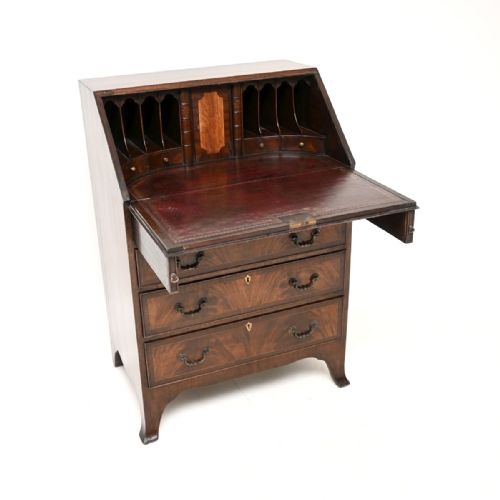
A georgian slant top bureau provides a dedicated writing surface that drops down to reveal fitted interiors, pigeonholes and secret drawers. These pieces emerge across the eighteenth century, spanning the reigns of George I, George II and George III, alongside related Queen Anne and William and Mary examples. They appear in formats ranging from compact table top versions and bureaus on stands up to large two-part bureau bookcases with glazed upper sections.
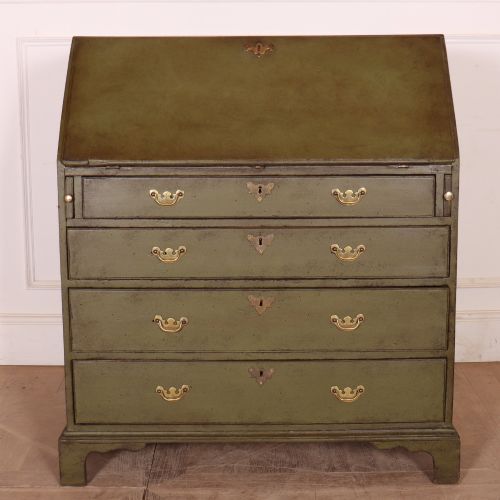
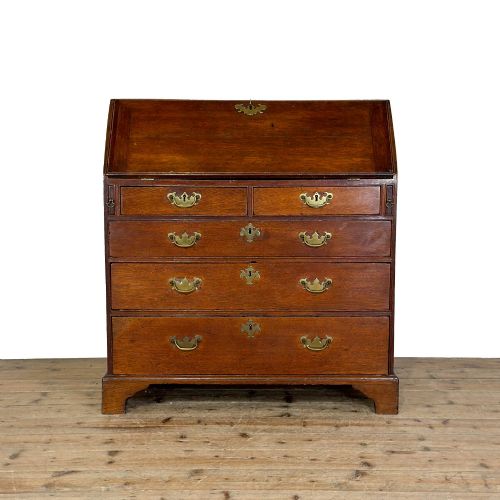
Mahogany and oak dominate the material palette, supported by walnut, burr walnut, elm, yew wood and painted finishes. Makers construct them as practical writing furniture, sometimes incorporating candle slides, stepped interiors or lower drawer banks. The selection moves from vernacular country pieces in solid oak to sophisticated town pieces with crossbanding and herringbone inlay.
Materials and Construction Techniques
Cabinetmakers build these desks using solid timbers and decorative veneers applied to secondary woods. Walnut, mahogany and oak provide the primary structural surfaces, often selected for strong figure or enhanced by crossbanding and herringbone inlay.
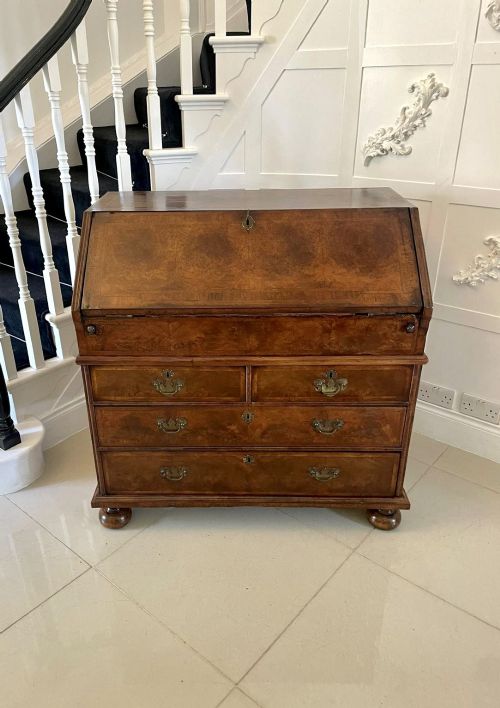
Internal joinery involves small dovetailed drawers, pigeonholes and sliding compartments concealed behind false panels or secret catches. Ironwork handles, brass drop handles, and brass escutcheons secure the fall front and drawers, while original bracket feet or stands support the main carcase.
Qualities That Separate Examples
Depth of timber figure and choice of primary veneer set individual pieces apart. High grade examples display rich burr walnut, figured mahogany or pollard oak with balanced grain patterns across the fall front and drawer faces.
Internal complexity and survival of original hardware dictate the standing of a desk. Superior pieces retain fitted stepped interiors, secret drawers, and original brasses, whereas altered or adapted pieces lose distinction.
The Georgian Slant Top Bureau Glossary
- Slant top
- The hinged sloping board that folds down to serve as a writing surface. This panel closes to conceal the inner compartments and papers.
- Crossbanding
- A narrow strip of veneer applied along the edges of drawer fronts or writing flaps with the grain running perpendicular to the main surface.
- Stepped interior
- An arrangement of internal pigeonholes and small drawers tiered in ascending levels inside the desk. This layout creates architectural depth within the writing well.
- Candle slides
- Pull-out wooden slats positioned beneath the upper cabinet doors to hold candlesticks. They light the writing surface below.
Georgian Slant Top Bureau: Frequently Asked Questions
How do I use a slant top bureau?
Lower the hinged wooden flap to create a flat writing ledge supported by automatic wooden lopers or the fall front itself. Store paper and ink within the internal pigeonholes and small drawers.
Close and lock the flap when finished to keep correspondence concealed and tidy. The lower drawers provide ample storage for household linens or documents.
What woods were used for these desks?
Cabinetmakers primarily utilised mahogany, oak and walnut for the main carcase and drawer construction. Burr walnut and pollard oak frequently appear as decorative veneers on high status examples.
Country pieces often rely on solid elm, yew wood or painted finishes. Secondary woods like deal or pine typically line the internal drawers.
Are the interiors always fitted?
Most pieces contain an arrangement of small drawers, pigeonholes and central cupboard doors behind the sloping lid. More elaborate desks feature stepped tiers and secret compartments.
Simpler vernacular models occasionally offer a more basic layout with fewer dividers. Many retain central prospect doors hiding hidden document wells.
How do I tell different periods apart?
Early eighteenth century pieces from the reigns of Queen Anne and George I frequently feature walnut veneers, herringbone inlay and cabriole legs on stand variants. Bracket feet and cleaner mahogany surfaces become more common under George III.
Oak versions often span both vernacular seventeenth century traditions and later eighteenth century country workshops. Proportions and hardware styles shift from engraved brass plates to simpler escutcheons over time.