


Brass Hallway Umbrella Rack
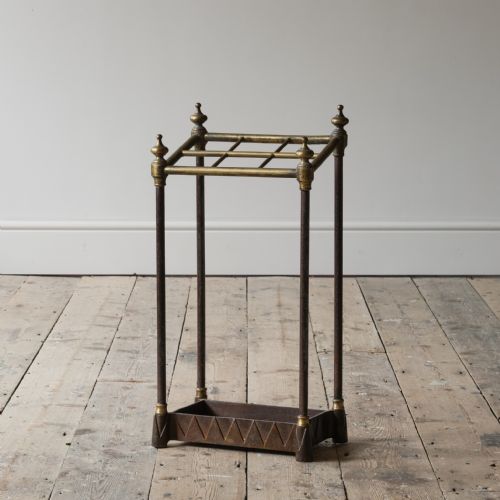
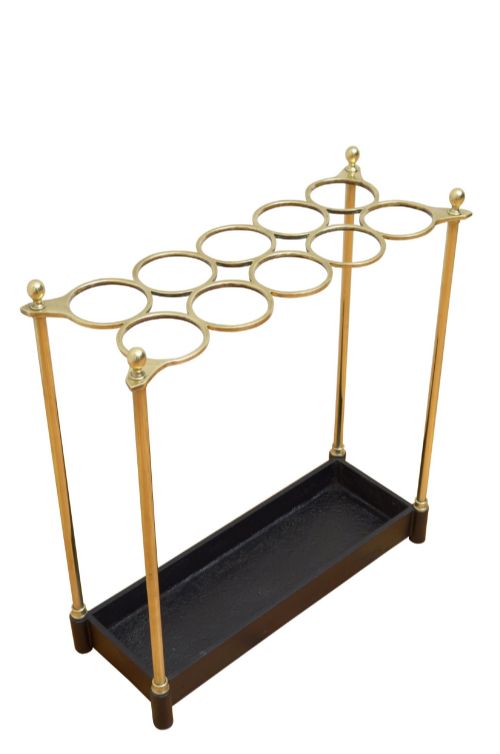
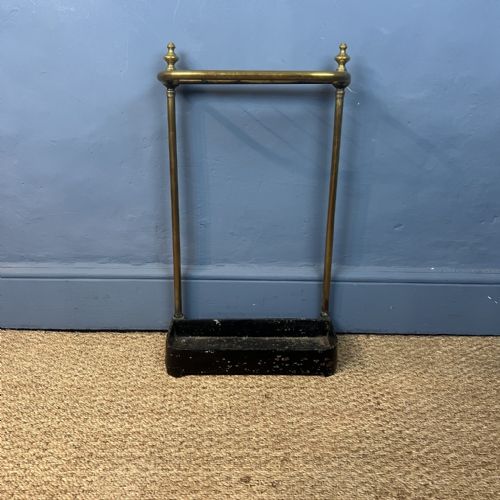
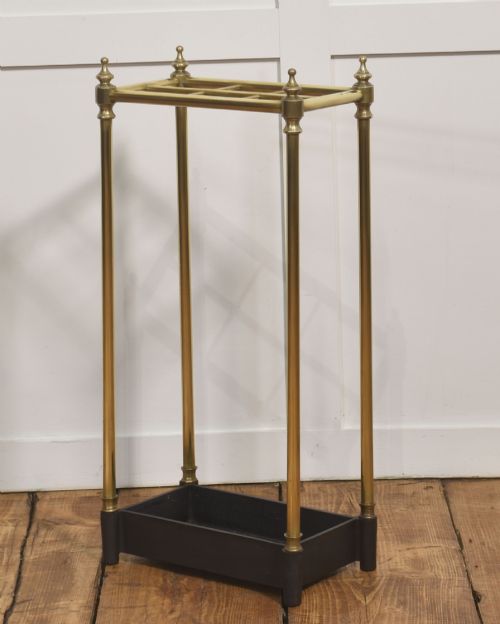
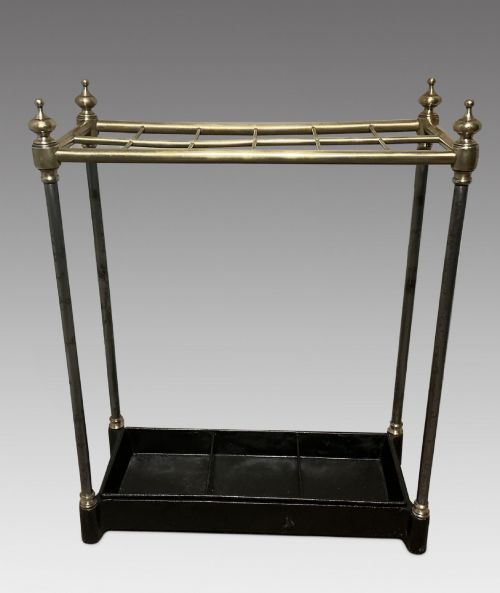
A brass hallway umbrella rack keeps heavy walking canes and wet sticks tidy while catching water from rain.

Brass Hallway Umbrella Rack
A brass hallway umbrella rack is a practical furnishing designed to hold walking sticks, canes, and umbrellas near an entrance. These pieces organise hallways and keep wet items contained upon entering a house.
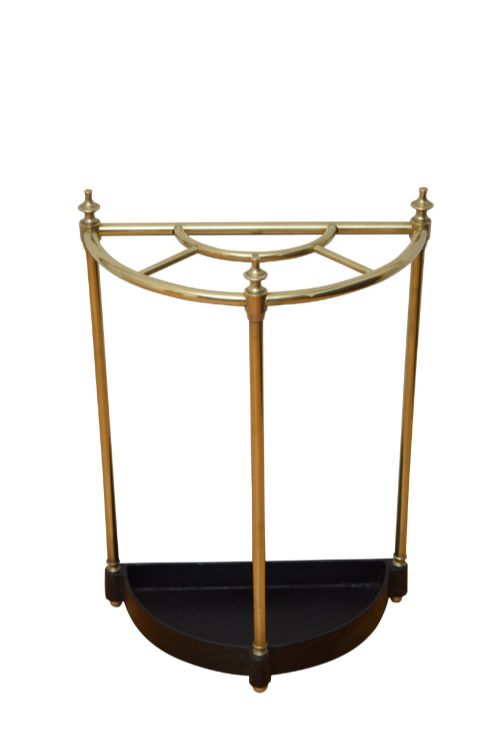
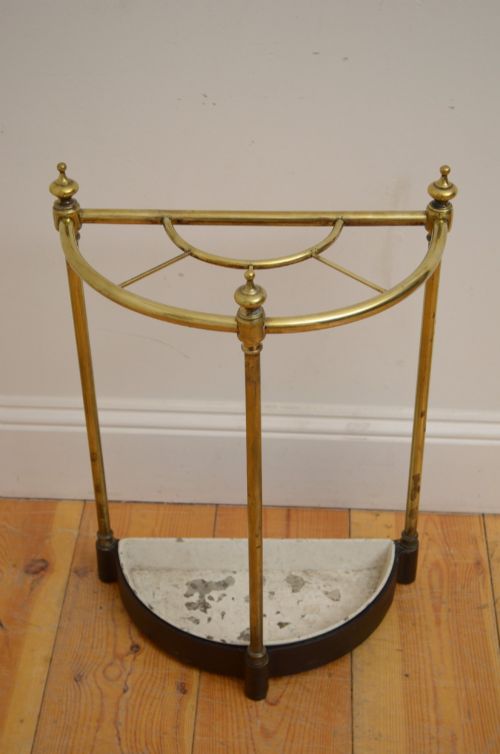
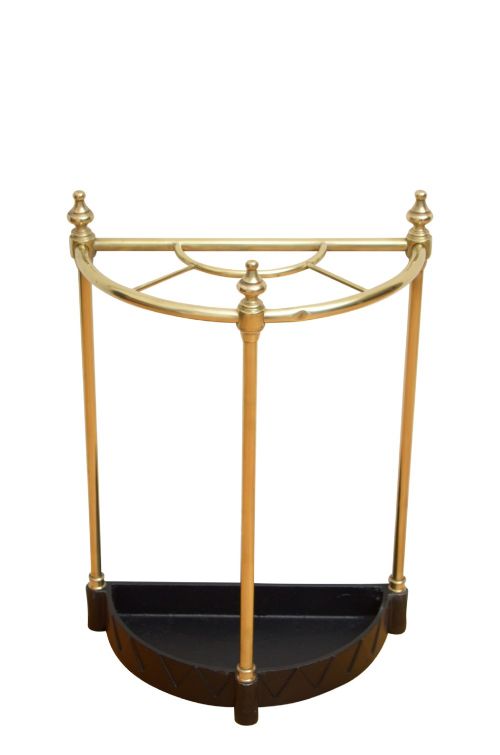
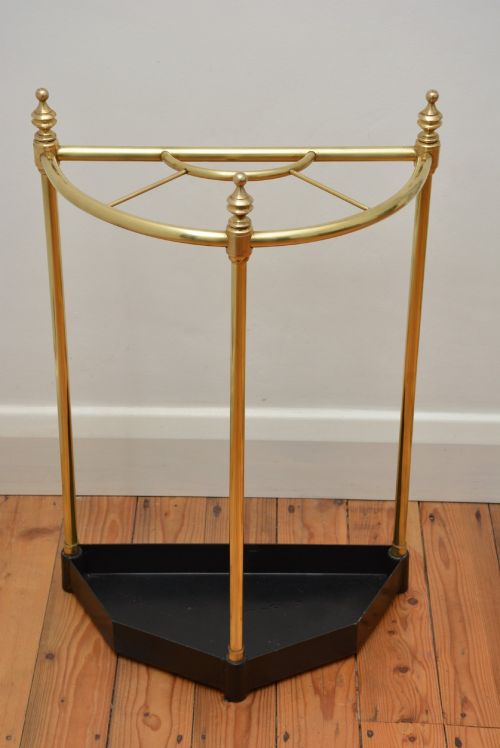
The version most frequently met on this page is the demi-lune, or half-moon, shape designed to sit flat against a hallway wall. These stands emerge primarily from the Victorian and Edwardian periods, utilising polished metal alongside sturdy bases.
How they were made
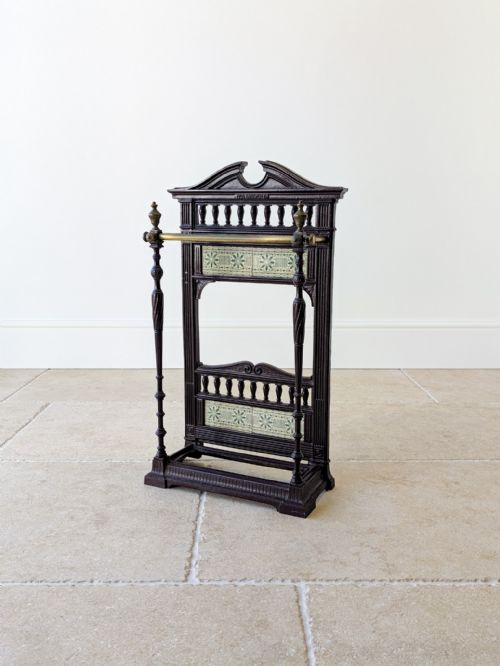
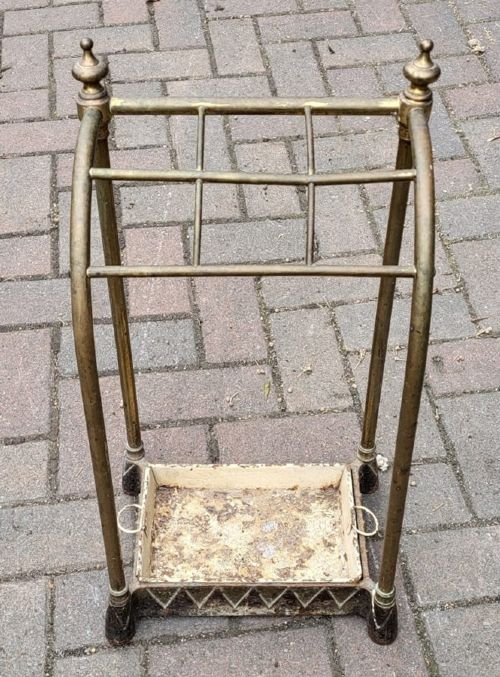
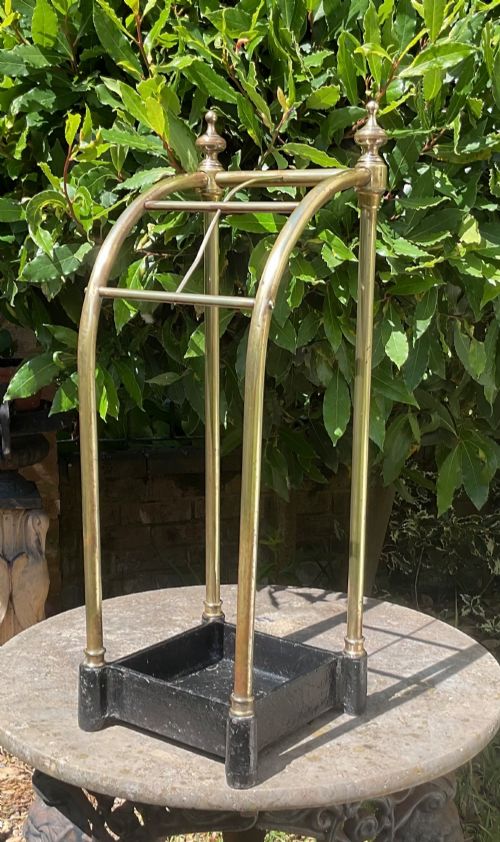
Makers constructed these pieces by combining cast iron bases with tubular brass frames and rails. The heavy iron base provided stability to support long canes, while brass components formed the upper loops and decorative finials.
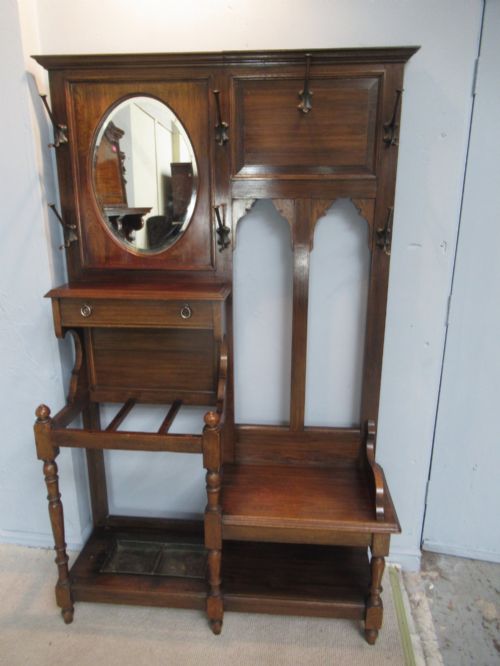
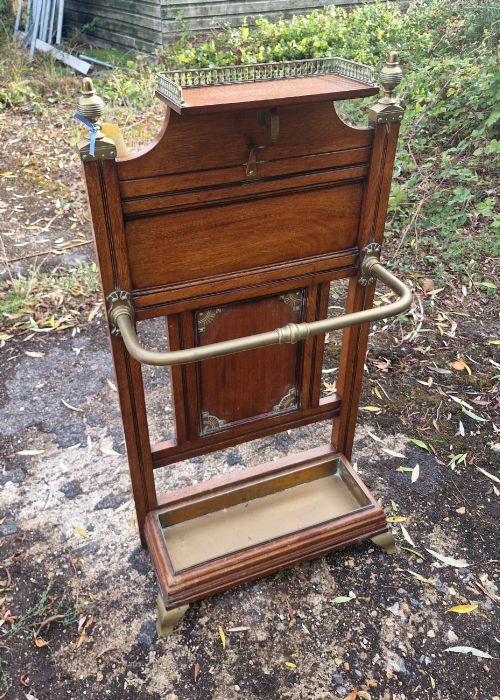
Some examples incorporated timber frames in oak or mahogany fitted with brass mounts and drip trays. Artisans used ceramic or cast iron inserts below to catch moisture from wet umbrella tips.
Listings incorporate materials such as brass, cast iron, oak, mahogany, walnut, ceramic, and glass across Victorian and Edwardian periods.
What varies in quality
Quality rests upon the heft of the casting and the thickness of the brass tubing used in the frame. Superior examples display crisp detailing in cast iron bases and secure joinery between the metal components.
The presence of an original drip tray at the foot of the stand alters the integrity of the piece. Better proportioned stands accommodate multiple divisions without crowding individual walking sticks.
Coalbrookdale·Shoolbred
The Brass Hallway Umbrella Rack Glossary
- Demi-lune
- A half-moon shape that allows the stand to sit flush against a hallway wall. This profile saves floor space in narrow entranceways.
- Drip tray
- A shallow metal or ceramic pan positioned at the base to collect water from wet umbrellas. It protects flooring from moisture damage.
- Stick loop
- The upper brass divider frame that keeps long umbrellas and canes separated and upright. These loops form individual slots for each walking aid.
- Bun feet
- Small, rounded feet that elevate the base of the stand slightly off the floor. They provide a stable footing on uneven hallway surfaces.
Brass Hallway Umbrella Rack: Frequently Asked Questions
Where should a brass hallway umbrella rack go?
Place the stand directly beside the main entrance door so family and visitors can store wet items immediately upon entering.
Demi-lune shapes work particularly well in narrow hallways because they hug the wall and leave walkways clear.
How do I clean brass and cast iron?
Dust the frame regularly with a dry cloth to prevent the accumulation of grime on the metal surfaces.
Avoid harsh chemical polishes that strip historical patinas from Victorian brass work.
Do these stands hold walking sticks?
Many designs accommodate both heavy walking canes and modern umbrellas within the same upper dividing loops.
Narrow configurations suit slender antique walking sticks just as effectively as rain umbrellas.
How do I date an antique stand?
Examine the construction methods, materials, and stylistic cues such as Aesthetic Movement or Edwardian design motifs.
Heavier cast iron components and specific registration numbers often point toward nineteenth-century production.