


Brass Grill Door Cabinet
A brass grill door cabinet brings fine timber and woven metalwork together, offering a clear view of stored volumes while keeping contents secure.
Brass Grill Door Cabinet
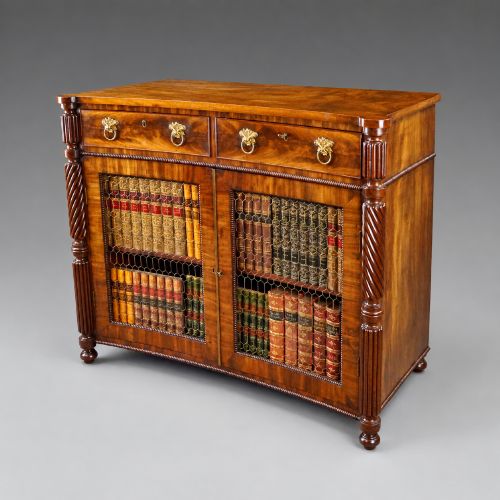
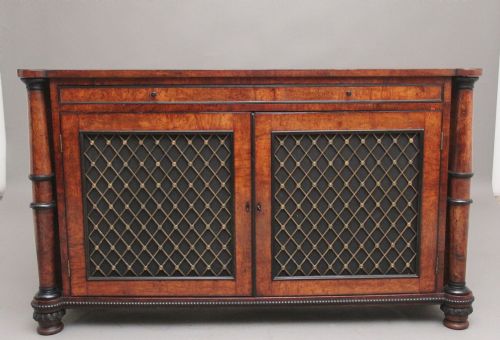
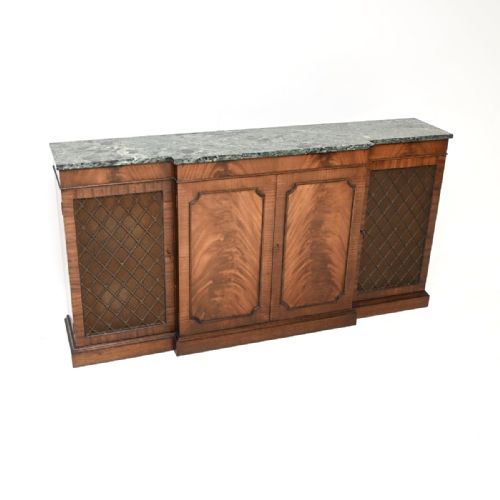
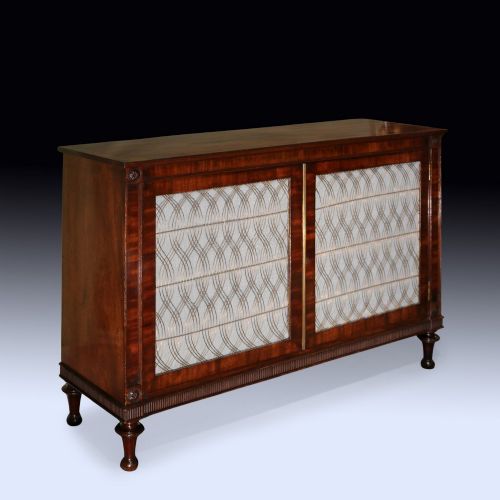
A brass grill door cabinet unites timber carcasses with woven metal mesh panels, functioning primarily as a refined storage piece for books or display items. Pieces meeting this description appear across several centuries, with the Regency and Victorian periods heavily represented in the current selection.
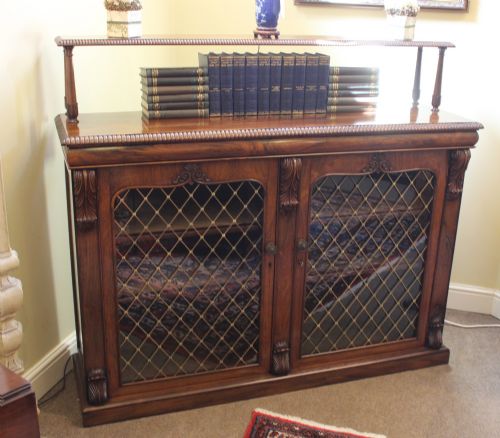
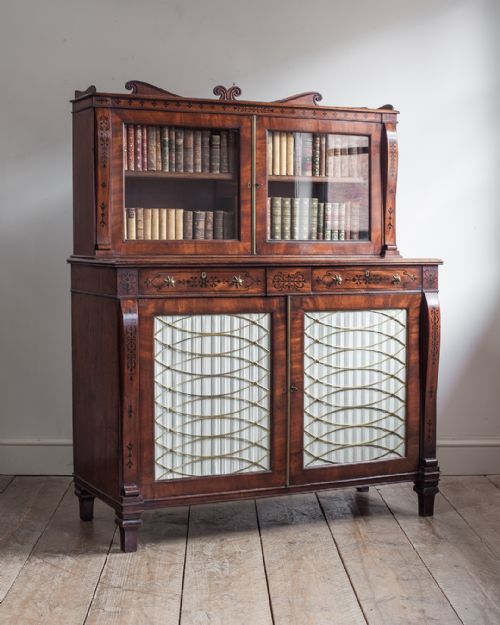
The format ranges from low side cabinets and chiffoniers to taller bookcase combinations fitted with adjustable shelving and marble tops. Buyers encounter rich hardwoods such as mahogany and rosewood most frequently, alongside walnut, pollard oak and occasional painted finishes.
Origins span English workshops, Scottish makers and continental examples like French Empire pieces, demonstrating a broad geographical spread within the traditional cabinet-making tradition.
Materials and construction
Cabinet-makers relied on dense tropical and domestic hardwoods, building carcases in mahogany, rosewood and walnut, often accented with satinwood, pollard oak or ebony details. Timber selection dictated the weight and grain pattern of each piece, providing a stable foundation for intricate veneering.
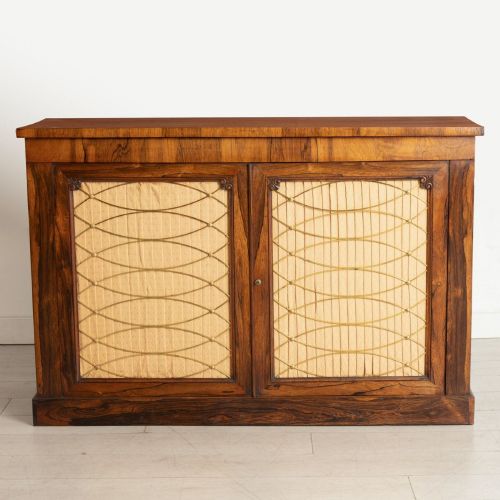
Fine brass wire was woven into grilles and set into wooden door frames, frequently backed by pleated fabric or silk to soften the interior view. Turned feet, brass inlay and marble tops completed the construction, balancing structural timber work with decorative metal elements.
Listings feature extensive examples from the Regency and Victorian eras, dominated by rich rosewood and mahogany timbers.
Factors of quality
Quality rests upon the crispness of the timber selection, such as figured mahogany or striking Gonçalo Alves, and the precision of the brass inlay and woven grilles. Superior examples display balanced proportions, clean joinery and thoughtful integration of secondary woods.
Finer pieces often incorporate original fabric linings behind unblemished brass mesh, alongside sophisticated architectural details like breakfront cornices and substantial marble slab tops.
Gillow
The Brass Grill Door Cabinet Glossary
- Chiffonier
- A low sideboard or cabinet featuring shelves or enclosed cupboards, popular during the Regency and Victorian eras. This form often incorporates fabric-backed brass grilles to its doors.
- Breakfront
- A piece of furniture whose central section projects forward from the flanking outer sections. This architectural arrangement creates depth and visual interest in larger cabinets and bookcases.
- Gonçalo Alves
- A dense, highly figured exotic hardwood known for its striking contrasting grain patterns. Makers utilised this timber to achieve a dramatic decorative effect on high-status Regency furniture.
- Pollard oak
- Timber harvested from trees that were cut back to encourage a dense cluster of branches, resulting in a turbulent, highly figured grain. Cabinet-makers prized this patterned wood for specialised panels and fronts.
- Pier cabinet
- A small, narrow cabinet designed specifically to fit the wall space between windows. These pieces often feature glass or brass grille doors and sometimes rest on turned feet.
Brass Grill Door Cabinet: Frequently Asked Questions
What is a brass grill door cabinet used for?
These cabinets serve as elegant storage solutions for books, display collections and dining room pieces. The woven wire mesh allows interior contents to remain partially visible while protected.
Historically, the design kept volumes ventilated and secure in libraries and drawing rooms. Today, they function well in living spaces to hold media or decorative objects.
How do I tell a Regency cabinet from a Victorian one?
Regency pieces often display classical proportions, restrained brass inlay and exotic veneers like rosewood or Gonçalo Alves. The influence leans heavily on Neoclassical and ancient architectural motifs.
Victorian cabinets tend to be more substantial in build, occasionally incorporating heavier mouldings, walnut timbers and more elaborate carved ornamentation. Examining the secondary woods and construction methods helps confirm the exact era.
Are the fabric panels behind the brass grilles original?
Fabric linings behind wire mesh frequently required replacement over the decades due to wear, fading or silk degradation. Finding period-appropriate replacement silk or fabric is common in antique textile-backed doors.
Original linings survive occasionally in well-preserved pieces that escaped heavy use or restoration. Examining the tacking and backing materials provides clues about the history of the upholstery.
How do I care for rosewood and mahogany cabinets?
Maintain stable indoor humidity levels and keep antique timber away from direct sunlight and heat sources to prevent veneer warping. Regular dusting with a soft, dry cloth protects the polished surface.
Occasional application of appropriate wax feeds the timber without building up heavy residues. Avoid modern silicone sprays that can penetrate old French polish finishes.