
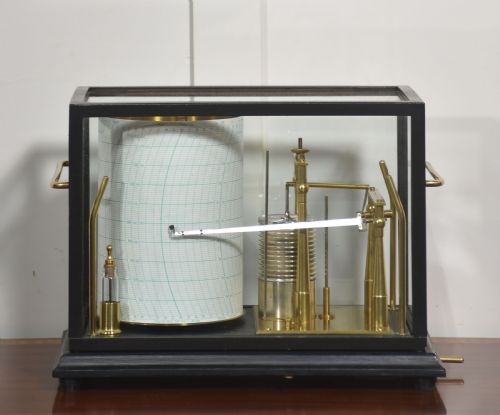
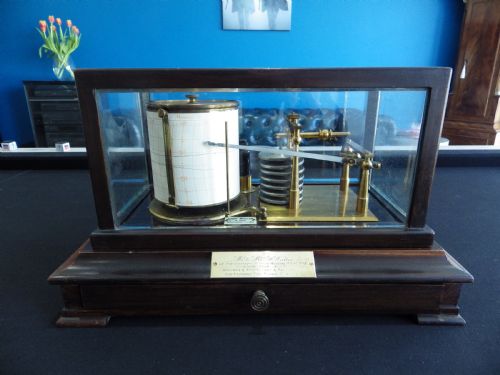


Brass Glazed Barometer
These brass glazed barometer examples combine scientific utility with cabinet-maker timber cases, offering a tangible record of historical meteorology for any room.
Brass Glazed Barometer
A brass glazed barometer search reveals a specialised category of weather instruments, encompassing barographs, stick barometers, and complex weather stations. These pieces primarily date from the nineteenth and twentieth centuries, spanning Victorian, Edwardian, and interwar periods.
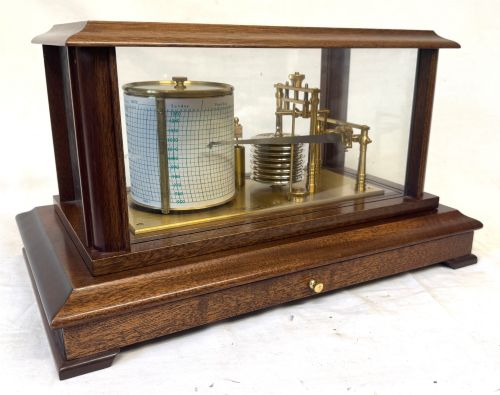
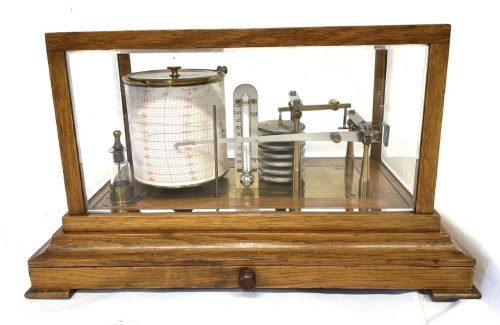
The most common form encountered in this selection is the barograph housed in a wooden case with glazed panels. Makers housed these mechanisms in oak, mahogany, and walnut enclosures, frequently incorporating chart drawers and thermometers.
Scientific instrument makers of London and regional centres produced these items for domestic interiors, shop displays, and railway offices. Examples range from compact miniature units to substantial desk and wall-mounted apparatus.
Materials and construction methods
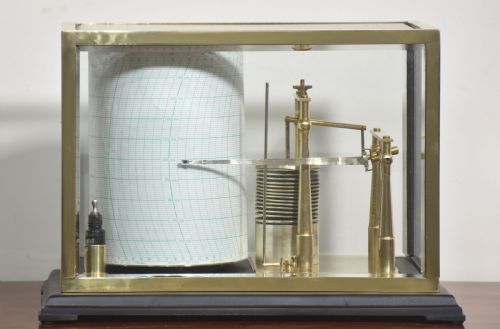
Workshops utilised heavy brass for bezels, instrument frames, and fittings, pairing the metal with transparent glass panels to protect the delicate internal movements while allowing clear viewing of the rotating paper drums and needles.
Cabinet makers constructed the protective housings using solid and veneered timbers including mahogany, oak, and walnut. Many cases feature bevelled glass windows and lower drawers designed specifically to store spare recording paper charts.
One extraordinary nineteenth-century piece was built specifically for Southend railway staff, proving that Victorian station masters took their atmospheric pressure very seriously indeed.
Factors determining quality
Superior examples derive their standing from the reputation of established scientific makers such as Negretti and Zambra or Short and Mason. The precision of the enclosed mechanical movement and the robustness of the brass framing dictate the overall standard.
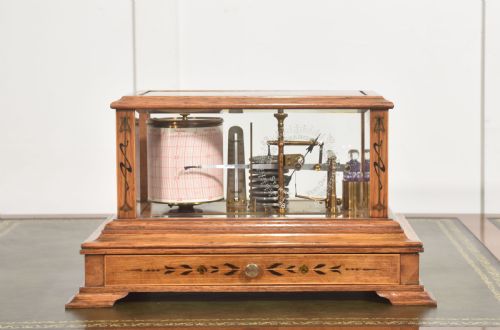
Cabinetwork execution separates standard production items from finer pieces. Details such as Art Nouveau timber inlay, carefully matched mahogany grains, and bevelled multi-pane glass distinguish superior housing construction.
Short and Mason·Negretti and Zambra·Alexander Wright·Jules Richard·Casella London
The Brass Glazed Barometer Glossary
- Barograph
- A self-recording aneroid barometer that plots atmospheric pressure onto a rotating paper chart over a week. It relies on stacked metallic vacuum capsules to sense pressure changes.
- Aneroid
- Operating without liquid, this mechanism uses a sealed flexible metal box that expands or contracts with shifting air pressure. The movement connects directly to the recording arm.
- Fortin barometer
- A mercury stick barometer featuring an adjustable cistern floor that allows the mercury level to be set precisely against an ivory point before reading. It represents high-precision nineteenth-century meteorological design.
- Bevelled glass
- Glass panes featuring angled, polished edges fitted into brass door frames. This technique adds depth and catches light more effectively than flat window glass.
- Thermometer
- A temperature-measuring instrument frequently mounted alongside the main barometer dial or barograph drum. It provides supplementary meteorological data within the same timber case.
Brass Glazed Barometer: Frequently Asked Questions
How do I operate a barograph?
You lift the glass cover to wind the clockwork mechanism inside the brass drum and fit a fresh paper chart around the cylinder. Ensure the recording pen rests lightly on the paper without applying excessive pressure.
Changes in air pressure cause the vacuum capsules to rise or fall, moving the arm across the rotating chart throughout the week. Close the brass and glass case gently to protect the delicate movement from drafts.
What is the difference between a barometer and a barograph?
A standard barometer displays current atmospheric pressure using a single pointer moving across a graduated dial face. It records only the immediate weather conditions at the exact moment of viewing.
A barograph continuously tracks and records pressure trends over several days onto a paper chart. This historical trace allows observers to see whether pressure has risen or fallen steadily over time.
Where should I place a timber cased weather instrument?
Position the instrument on a stable, level surface away from direct sunlight, radiators, and exterior doors. Sudden temperature shifts and strong vibrations can disrupt the delicate mechanical linkage inside the brass housing.
Wall-mounted versions require secure fixings into solid masonry or direct studwork due to the combined weight of the timber case, glass panels, and metal components.
How do I identify the period of an oak cased instrument?
Examine the timber selection, construction joints, and decorative motifs used on the outer case. Edwardian and 1910 examples often incorporate subtle Art Nouveau stylised inlay work or lighter oak finishes.
Victorian and nineteenth-century pieces typically feature heavier mahogany or dark oak cabinetry with functional brass carrying handles. Maker signatures engraved on the brass bedplate also help narrow down the production decade.