

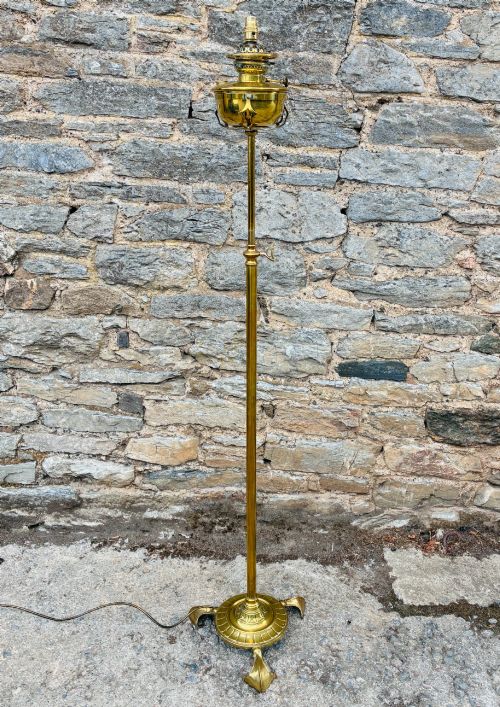
Brass Floor Stand
A brass floor stand provides steady upright illumination or display, bringing functional height and period weight to a room.
Brass Floor Stand
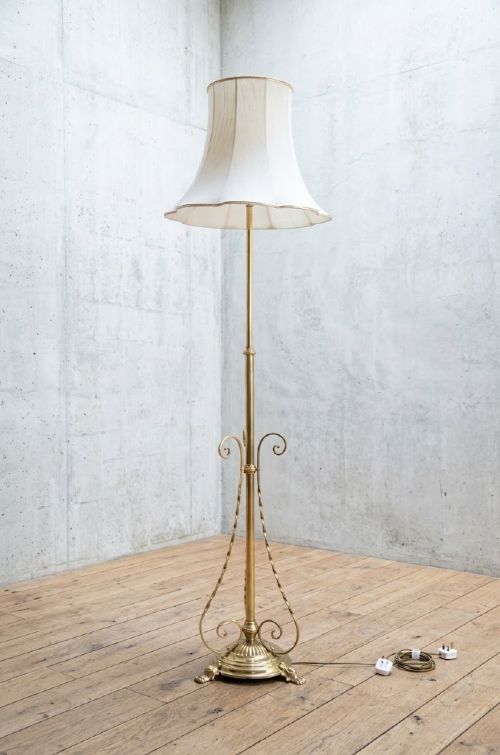
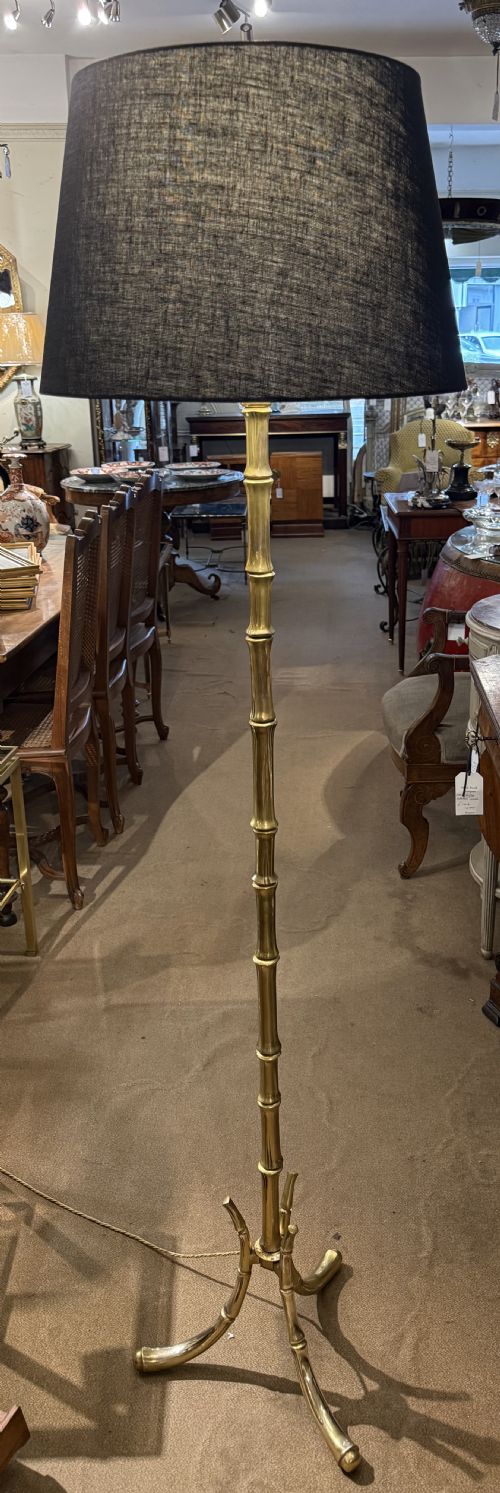
A brass floor stand encompasses standard lamps, reading stands, telescopic oil lamps, and tall ecclesiastical candlesticks designed to elevate light or objects from the ground. When searching for a brass floor stand, buyers encounter examples ranging from heavy Victorian Corinthian columns and adjustable Arts and Crafts designs to French Art Deco extending stems.
The materials span polished brass, copper, and cast elements sometimes paired with glass shades or supported on sturdy tripod bases. Dating predominantly from the Victorian and Edwardian eras into the early twentieth century, these heavy upright fixtures served practical illumination tasks in country houses and parlours.
How they were made
Makers utilised heavy cast brass for tripod or weighted bases to ensure stability when extended at height. Tubing was drawn for upright columns, while components were often threaded, turned, or hand-hammered, particularly within Arts and Crafts workshops.
Rise-and-fall mechanisms and telescopic adjustments relied on precise internal ratchets or keys. Surface treatments included polished finishes, patinated patinas, or combinations of brass and copper.
The listings show materials spanning polished brass, copper, and mahogany, with periods covering Victorian, Edwardian, and Art Deco design movements.
What varies in quality
Substantial weight in the base and gauge of the brass tubing separate robust workshop production from lighter commercial output. Superior items show crisp casting detail in Corinthian capitals, rococo scrolls, or hammered strapwork.
The engineering of adjustable mechanisms dictates functional success. Smooth operation in telescopic collars and secure locking keys demonstrate superior period construction.
Hinks·R. W. Winfield, Birmingham·Maison Bagues
The Brass Floor Stand Glossary
- Standard Lamp
- A floor-standing lamp designed to support a shade and bulb at eye level. These fixtures often feature weighted bases and height-adjustable columns.
- Telescopic
- An adjustable mechanism allowing the upper shaft to raise or lower within a sleeve. This design permits variable height control for reading or ambient lighting.
- Corinthian Column
- An architectural column style featuring an ornate capital decorated with acanthus leaves. Victorian standard lamps frequently adopted this classical form.
- Tripod Base
- A three-legged support system providing wide stability for tall upright standards. These bases frequently incorporate claw feet or scrolling supports.
- Bouillotte
- A traditional French lamp design featuring adjustable shades mounted over candle arms. Surviving examples often utilise twin or triple brass candle fittings.
Brass Floor Stand: Frequently Asked Questions
How do I adjust the height?
Many period examples use a key or screw collar on the central shaft to release and lock the telescopic stem.
Care should be taken to support the weight of the upper section while adjusting to prevent internal wire twisting or mechanism wear.
Are these wired for modern use?
Most surviving standard lamps and floor stands have undergone conversion to electricity at various points in their history.
Original oil or candle fittings are sometimes retained on dedicated lighting pieces, requiring careful rewiring for safe domestic placement.
How do I clean polished brass?
Maintenance depends on whether the metal retains an aged patina or a bright polished surface. Gentle dusting is generally preferred over abrasive chemical cleaners to preserve historic finish integrity.
What styles are most common?
Victorian Corinthian columns and Arts and Crafts hammered designs appear frequently alongside Edwardian telescopic standards and French rococo revivals.
Each style reflects the prevailing aesthetic of its production period, from industrial utility to classical revivalism.