






Victorian Brass Book Trough
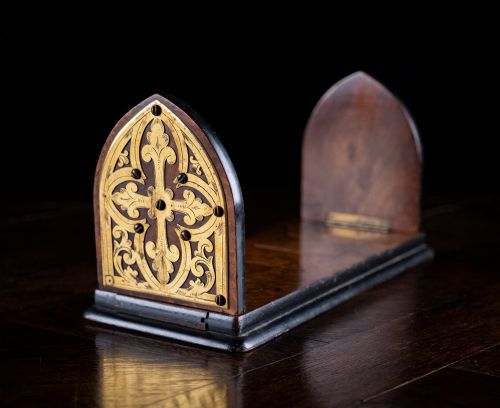
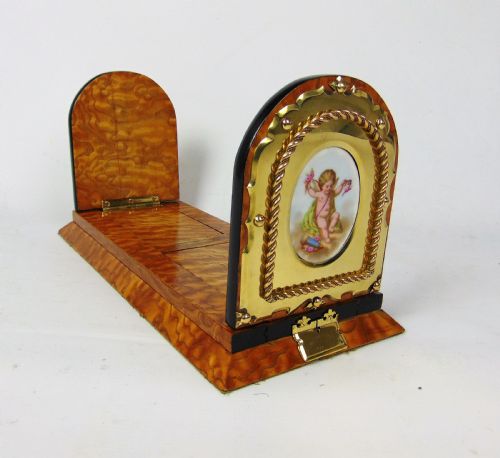
These Victorian brass book trough examples are extendable desk accessories built to hold volumes upright in style.
Victorian Brass Book Trough
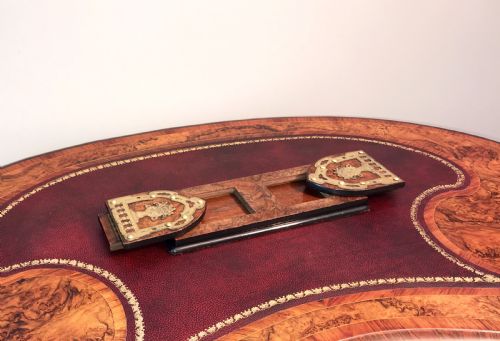
A Victorian brass book trough is an extendable desktop accessory designed to hold library books and volumes securely between folding or sliding ends. When you search for a Victorian brass book trough, you encounter extendable book slides, book rests, and book stands built to adapt in length as your collection grows.
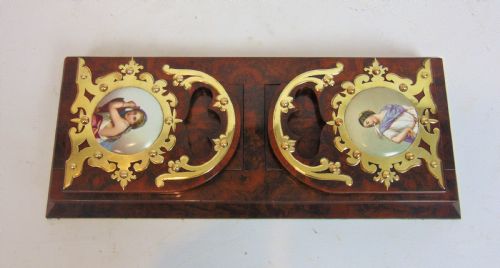
The pieces listed on this page originate predominantly from the Victorian period, with occasional Regency examples appearing alongside items dated from eighteen-thirty to nineteen-twenty. Forms range from simple extending book slides to elaborate library book holders fitted with painted plaques, pietra dura panels, or porcelain inlays.
Makers utilised various timber bases fitted with metal mounts to create these desk accessories. While past archive records show oak construction, the current selection relies heavily on walnut, burr walnut, mahogany, coromandel, and ebonised wood combined with brass mounts.
Materials and construction
Maker workshops built these desk pieces using dense hardwoods like walnut, mahogany, coromandel, and burr walnut as the primary body. These timbers provided a sturdy foundation capable of supporting heavy rows of volumes without warping over time.
Brass formed the hinges, mounts, and extending mechanisms, often paired with decorative inlays such as porcelain plaques, finely painted panels, and pietra dura work. Patented extending actions, such as those by Betjemanns, allowed the wooden bases to slide smoothly while maintaining rigid support for the books.
Victorian Brass Book Trough Retail Price Guide 2026
Typical asking prices for victorian brass book trough among the pieces listed under this phrase on Sellingantiques today, from the lower quarter to the upper quarter. They describe what is for sale here now, not the wider market.
Listings feature pieces spanning the Regency period through to nineteen-twenty, constructed in walnut, mahogany, coromandel, and oak.
Assessing quality and craftsmanship
Quality in these desk accessories rests upon the selection of timber and the precision of the extending mechanism. Finer pieces employ figured woods like coromandel or burr walnut paired with robust brass mounts that operate smoothly without binding.
The inclusion of decorative elements distinguishes standard items from superior examples. Hand-painted porcelain plaques, pietra dura inlays, and patented mechanical actions indicate a higher tier of Victorian craftsmanship.
Betjemanns·Tiffany & Co
The Victorian Brass Book Trough Glossary
- Book slide
- An extendable desktop stand with moving ends designed to hold varying numbers of volumes upright.
- Coromandel
- A dense, dark brown timber with contrasting light stripes, prized for luxury nineteenth-century desk accessories.
- Pietra dura
- An inlay technique using cut and fitted polished coloured stones to create pictorial designs on plaques.
- Gothic Revival
- An architectural and decorative style drawing inspiration from medieval forms, featuring pointed arches and heavy brass mounts.
- Burr walnut
- Timber taken from a walnut tree growth, showing intricate swirling grain patterns highly valued in Victorian cabinet work.
Victorian Brass Book Trough: Frequently Asked Questions
How do extending book slides work?
These desk accessories feature a hinged or telescoping mechanism that allows the wooden base to expand or contract. This lets you adjust the length to accommodate a growing or shrinking row of volumes.
The metal hinges and sliding tracks ensure the end supports remain upright and rigid when locked into position.
What woods were used for book troughs?
Cabinet makers utilised dense hardwoods such as mahogany, walnut, burr walnut, coromandel, and ebonised wood. These timbers offered durability and attractive grain patterns suited for library desks.
Exotic woods like coromandel and burr walnut typically appeared on higher-status pieces intended for prominent display.
How do I identify a Victorian piece?
Victorian desk accessories display characteristic nineteenth-century timber choices, brass mounting styles, and decorative techniques like pietra dura or porcelain plaques. Construction methods reflect industrial age joinery combined with hand-finishing.
Patent marks or retailer stamps occasionally stamped into the brass work provide further chronological confirmation.
Were these items used in offices?
Libraries, studies, and offices utilised these troughs to keep working reference volumes organised and accessible on desks or tables. The extendable design meant they adapted to changing paperwork needs throughout the day.
More ornate decorative models also served as display stands in domestic drawing rooms.