



Brass Book Holder Stand
A brass book holder stand organises heavy volumes and open scores with robust metal fittings and rich timber bases.
Brass Book Holder Stand
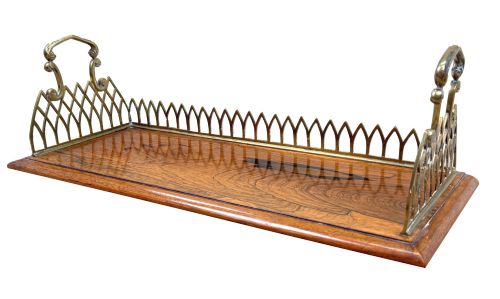
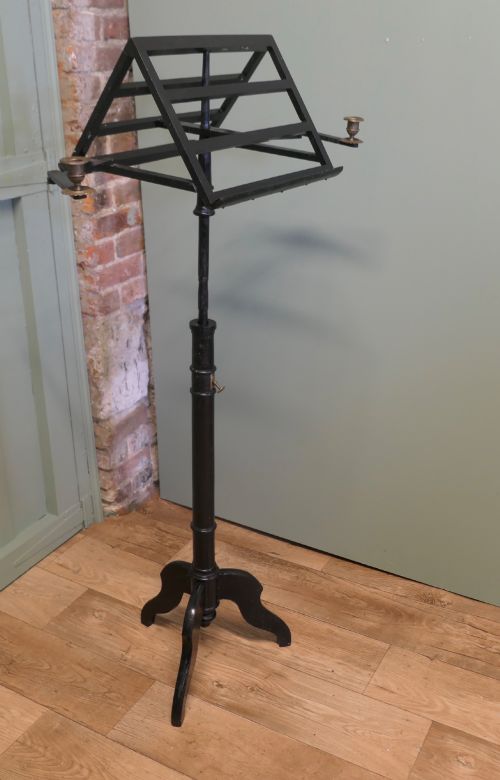
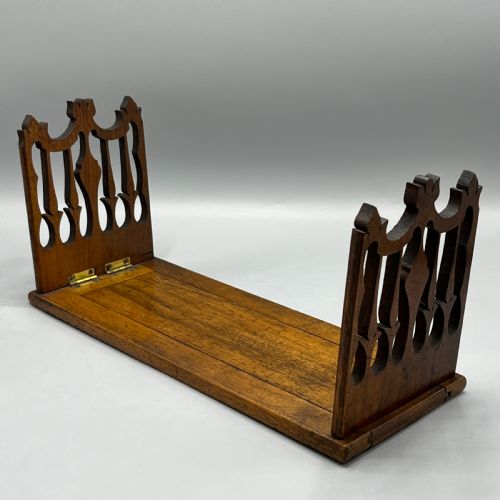
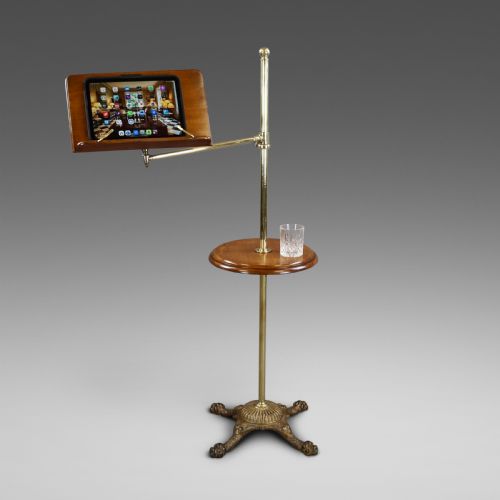
A brass book holder stand covers a range of reading furniture, music stands, and book slides designed to hold volumes securely at a comfortable angle. You will frequently encounter adjustable reading stands and book rests pairing polished metal with dark hardwoods.
The selection includes Victorian oak revolving bookcases, walnut music stands, and mahogany reading tables featuring brass mounts and extending mechanisms. These pieces served libraries, studies, and drawing rooms where heavy texts and scores needed steady support.
Originating across periods from the Regency era through to the Interwar period, these stands combine functional hardware with decorative timber frames. The most common forms on this page are adjustable lecterns and extending book rests anchored by brass fittings.
Materials and construction
Craftsmen built these pieces using dense timbers such as mahogany, walnut, rosewood, and oak, often pairing them with cast iron and polished brass mounts. Brass provides the sliding actions, hinges, and pivoting joints necessary for adjustable reading stands and book slides.
Surfaces feature inlaid details, ebonised finishes, and painted plaques set into burr walnut or mahogany panels. Joinery techniques secure heavy book carriers and revolving tiers to withstand the weight of large volumes.
Brass Book Holder Stand Retail Price Guide 2026
Typical asking prices for brass book holder stand among the pieces listed under this phrase on Sellingantiques today, from the lower quarter to the upper quarter. They describe what is for sale here now, not the wider market.
Some mahogany reading tables feature marine themes, keeping maritime literature steady while the desk remains firmly on dry land.
Distinguishing quality in stands and slides
Quality rests on the smoothness of the mechanical adjustments and the solidity of the timber frames. Finer examples incorporate patented extending mechanisms, such as those by Betjemanns, alongside superior wood figurations like burr walnut.
Decoration separates standard utility pieces from high-end library accessories, with hand-painted plaques, marine-themed carvings, and intricate brass mountings elevating the design.
Betjemanns·Harrods
The Brass Book Holder Stand Glossary
- Book slide
- An extending rack with upright ends designed to hold a row of books on a desk or table. These often feature brass mounts and folding or sliding actions.
- Lectern
- A reading stand with a slanted top designed to hold books or music scores at a readable angle. They frequently sit on adjustable pedestals.
- Revolving bookcase
- A freestanding tiered case mounted on a pivot so users can spin the shelves to access books from any side. They appear in timbers like oak and walnut.
- Ebonised
- Wood treated with a dark finish to imitate expensive ebony. This treatment appears on adjustable reading stands from the later periods.
Brass Book Holder Stand: Frequently Asked Questions
What is a brass book holder stand used for?
These pieces support heavy books, ledgers, and music scores at readable angles for study or performance. They keep volumes open at specific pages without requiring manual holding.
Desk accessories and reading stands also organise surfaces by keeping frequently referenced books upright and accessible in libraries and studies.
How do adjustable stands work?
Adjustable stands utilise brass ratchets, hinges, and extending arms to alter the height and angle of the reading surface. Mechanisms allow users to tilt lecterns or expand book slides to fit varying numbers of volumes.
Patented designs incorporate sliding actions that lock securely into place when adjusted to the desired position.
How do I date a reading stand?
Dating relies on the combination of timber styles, hardware types, and construction methods characteristic of different periods. Regency and Victorian pieces often display distinct carving styles and rosewood or mahogany veneers.
Later pieces from the Interwar period show simpler lines and ebonised finishes while retaining traditional brass mounting techniques.
Where should I place a revolving bookcase?
Revolving bookcases suit corners, beside armchairs, or near desks where 360-degree access to frequently read books is useful. Their compact footprints allow them to hold substantial libraries in small spaces.
Ensure the revolving mechanism has adequate clearance on all sides to spin freely without striking nearby furniture.