


Brass Fitted Oak Chest
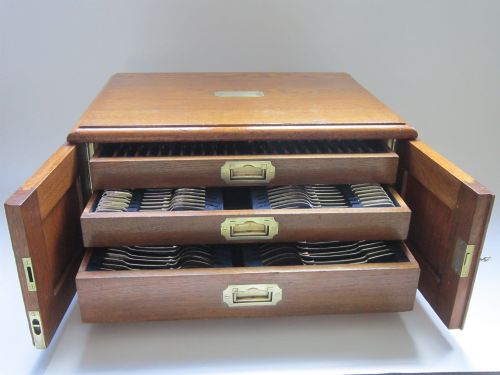
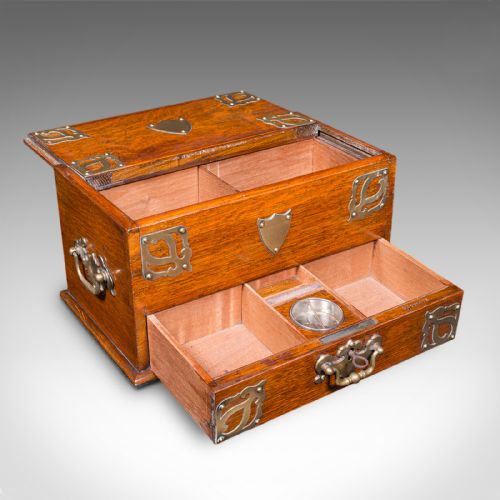
A brass fitted oak chest is a sturdy timber storage box reinforced with metal mounts, prized by collectors for its robust build and handsome grain.
Brass Fitted Oak Chest
When you search for a brass fitted oak chest, you encounter a robust variety of substantial wooden containers reinforced with metal hardware and designed for storage or travel. These pieces emerge primarily from the Victorian and Edwardian eras, alongside select examples from the eighteenth century and the early twentieth century.
The assortment on this page spans several utilitarian and social forms, ranging from silver trunks and campaign chests to cutlery canteens, decanter boxes, and games compendiums. Oak serves as the primary timber, complemented by brass mounts and occasionally iron bindings, velvet linings, or sterling silver fittings.
You are most likely to meet Edwardian and Victorian examples configured as cutlery canteens or games boxes, alongside campaign chests and travel trunks. Their origins lean toward English country houses and club lounges, reflecting a period when durable storage demanded both functional strength and presentable materials.
How they were made
Makers built these pieces using solid oak, chosen for its density and striking grain, then reinforced the corners and seams with brass plates and corner brackets fixed by screws or rivets. Some variants incorporate iron binding for added structural rigidity during travel.
Internal arrangements often feature fitted compartments lined with velvet to secure delicate items such as cutlery, decanters, or gaming pieces. Metal hinges, drop handles, and escutcheons were cast or beaten and applied to withstand regular movement and use.
Some oak chests hid entire drinking dens and card games inside, ready for a rainy afternoon in an Edwardian country house.
What varies in quality
The distinction between standard examples and the finest pieces lies in the precision of the joinery and the heaviness of the brass hardware. Superior items display well-matched oak grain, tightly fitted interior partitions, and substantial brass mounts that sit flush with the wood.
Makers' marks and complete original fittings elevate a piece, particularly when interior contents such as silver flatware or matched decanters remain intact. The sophistication of locking mechanisms and the condition of velvet linings further separate utilitarian containers from luxury items.
Walker & Hall·Mappin & Webb
The Brass Fitted Oak Chest Glossary
- Campaign chest
- A portable storage trunk designed for military officers or travellers, typically built in sections with recessed brass handles and corner brackets to endure rough transit.
- Cutlery canteen
- A fitted box or chest designed to hold a complete set of tableware and flatware, often featuring multiple baize-lined tiers and trays.
- Tantalus
- A locking beverage cabinet that holds decanters securely in a wooden frame with a metal bar, preventing access to the contents without a key.
- Escutcheon
- A protective metal plate surrounding a keyhole, usually made of brass on these pieces to prevent the surrounding wood from wearing down.
- Compendium
- A multi-functional box housing various games, writing materials, or drinking vessels within a single compact oak enclosure.
Brass Fitted Oak Chest: Frequently Asked Questions
What is a brass fitted oak chest used for?
These chests served primarily for storing and transporting valuable household possessions, ranging from silver flatware and glassware to documents and parlour games.
Today, they function well as decorative storage furniture in living rooms, studies, or hallways, offering practical space while retaining period character.
How do I date an oak chest?
Dating relies on examining the construction methods, the style of the brass hardware, and any maker marks stamped into the wood or metal. Victorian and Edwardian examples often feature machine-sawn timber and standardised brass screws, while eighteenth-century pieces display hand-cut joinery.
Comparing the internal linings and lock types against documented periods helps narrow down the exact decade of manufacture.
Are the brass fittings original?
Original brass fittings typically show patination, wear patterns, and screw heads that match the age and style of the surrounding oak. Replacements often appear too bright, fit poorly into existing indentations, or use modern screw types.
Inspecting the wood around the mounts reveals whether hinges or brackets were added later or swapped out during a repair.
How do I care for antique oak and brass?
Maintain the oak by applying a suitable wax polish sparingly to nourish the grain and prevent the timber from drying out in heated rooms. Avoid excessive moisture and keep wooden surfaces away from direct heat sources.
Polish the brass mounts gently with a dry cloth, avoiding harsh chemical cleaners that might strip the historic patination or stain the adjacent wood.