



Antique Table Cutlery Box
An antique table cutlery box provides secure, fitted housing for domestic silver and flatware, spanning oak chests to cased sets.
Antique Table Cutlery Box
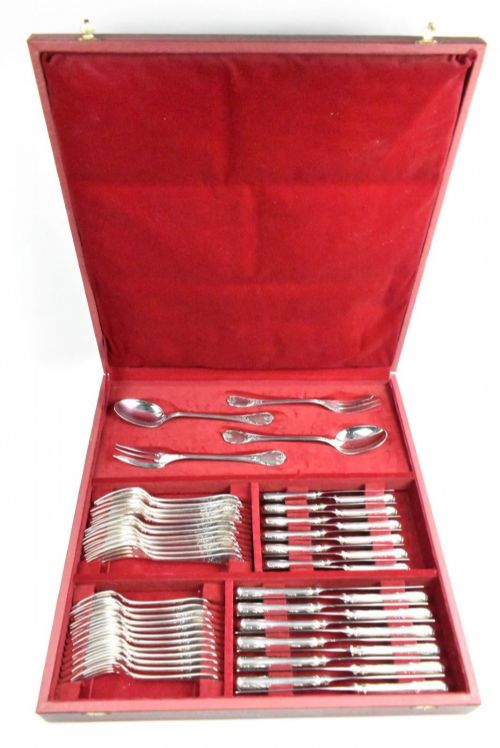
An antique table cutlery box encompasses fitted canteens, flatware chests, and smaller fitted presentation cases designed to organise and protect dining implements. When you search for an antique table cutlery box, you encounter pieces intended to house everything from expansive silver services to individual serving sets.
The selections span distinct periods from the nineteenth century through the Edwardian era and the nineteen-thirties. You meet substantial English oak chests alongside refined cased sets featuring silver plate and sterling silver.
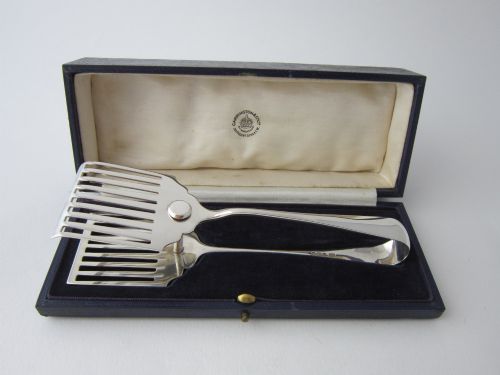
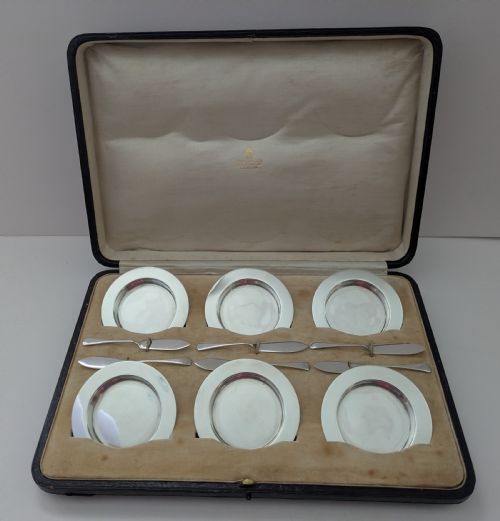
Formations vary from standalone canteens on stands to tabletop chests and specialised cases for butter knives, grape shears, and hors d'oeuvres sets. Each variation reflects the dining customs of its respective period.
Materials and construction
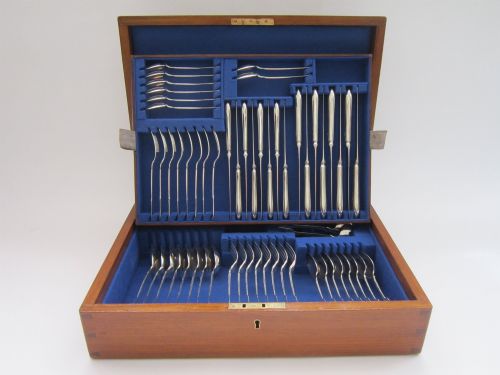
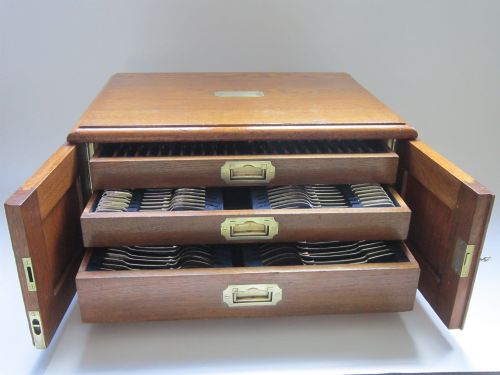
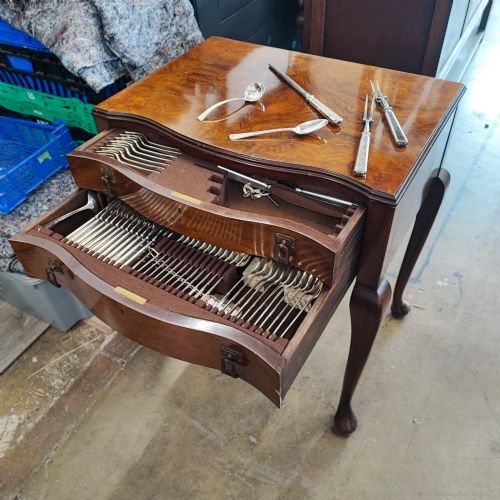
Carpenters utilised solid oak and walnut to build robust exterior carcasses designed to withstand heavy daily use in the dining room. Brass fittings such as hinges, escutcheons, and carrying handles reinforced the structural integrity of these wooden chests.
Interiors received careful lining with tactile fabrics including velvet, silk, and leatherette to cushion delicate silver and steel implements. Fitted internal tiers and slots secured specific pieces like Fiddle pattern cutlery, serving tongs, and knife rests during transit or storage.
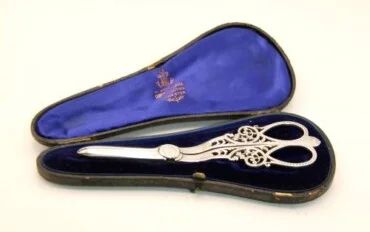
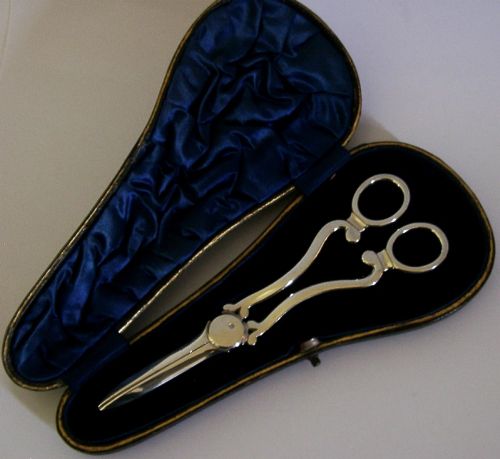
Even proper dining required dedicated scissors just for grapes.
Distinctions in craftsmanship
Superior examples demonstrate precise internal joinery and purpose-built compartmentalisation tailored to exact sets of flatware rather than generic storage. The quality of the timber selection and the durability of the internal textile linings set finer chests apart from standard production pieces.
The integration of hardware, from flush-fitting brass locks to substantial carrying handles, indicates the original tier of manufacture. Complete original contents, whether sterling silver or silver plate, elevate the integrity of the ensemble.
Christofle·Asprey and Co·Walker and Hall·Mappin and Webb
The Antique Table Cutlery Box Glossary
- Canteen
- A fitted chest or box designed specifically to hold a complete set of cutlery or flatware. These containers ensure every knife, fork, and spoon rests in a designated slot.
- Fiddle pattern
- A traditional nineteenth-century flatware handle shape characterised by a slender stem widening towards a squared, upturned terminal resembling a fiddle. This design appeared frequently in Victorian silver services.
- Escutcheon
- A protective plate surrounding a keyhole on the exterior of a box or chest. It prevents the surrounding wood from splintering through repeated use of the key.
- Silver plate
- A base metal, often copper or nickel alloy, coated with a layer of pure silver through electroplating or older fusion methods. It offered an accessible alternative to solid sterling silver.
Antique Table Cutlery Box: Frequently Asked Questions
What fits inside an antique table cutlery box?
These boxes accommodate a wide range of dining implements, from large canteens of flatware to specialised sets like asparagus tongs, butter knives, and grape shears.
Interiors often feature dedicated slots and tiers designed to keep specific utensils separated and secure during storage.
How do I identify the period of a box?
Dating relies on examining the construction timber, exterior hardware style, and interior lining materials alongside any maker marks present on the fittings or housed silver.
Edwardian and Victorian examples frequently employ solid oak with brass handles, while later nineteen-thirties pieces introduce distinct Art Deco geometric influences.
Were these boxes meant to stay on the dining table?
Larger canteens and chests remained in the dining room or butler's pantry as permanent storage, while smaller cased sets were brought out specifically for hosting guests.
Standalone chests on stands served as permanent furniture pieces that doubled as functional storage for household silver.
What textiles protect the interior implements?
Manufacturers lined the fitted compartments with tactile materials such as velvet, silk, and leatherette to prevent scratching on polished silver and steel surfaces.
These fabrics also cushioned the contents against movement when the heavy wooden lids or doors were opened and closed.