
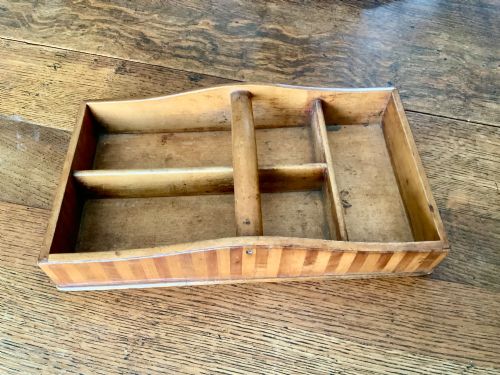


Vintage Wooden Flatware Box
A vintage wooden flatware box keeps cutlery ordered and makes a handsome addition to any sideboard.
Vintage Wooden Flatware Box
A vintage wooden flatware box is a practical receptacle designed to house cutlery sets, knives, and serving implements securely. When searching this phrase, buyers encounter various forms such as knife boxes, canteens, trays, and chests dating from the Georgian period through the Edwardian era and the nineteen thirties. These pieces serve to protect domestic silverware and utensils while offering a decorative container for the dining room.
The versions most commonly met on this page span several distinct eras, including nineteenth century examples, George III pieces, and Edwardian items. Forms range from serpentine fronted stationery and cutlery boxes to rustic pine trays and large mahogany chests. Origins recorded in the listings include English, Scottish, Portuguese, and Scandinavian workshops.
Makers and materials differ widely across the selection, reflecting the functional needs of different households over the centuries. Some boxes house complete canteens with numerous pieces, whilst others function as simple open trays or fitted knife boxes. Each iteration provides a tangible link to historical dining customs and domestic organisation.
How they were made
Construction relies upon traditional cabinet making techniques utilising timber species such as mahogany, oak, pine, sycamore, walnut, fruitwood, and coromandel. Craftsmen selected these woods for their durability and grain patterns, frequently employing decorative inlays to enhance the exterior appearance. Many examples feature fitted interior compartments designed to hold specific fork, spoon, and knife patterns securely.
Metal components play an essential structural and decorative role, with brass fittings, handles, and escutcheons appearing frequently across the pieces. These brass elements are fastened securely to the timber bodies, providing both operational utility and visual contrast against the dark or polished wood surfaces. The integration of metalwork with solid wood framing ensures the longevity of these storage containers.
The selection includes items from the Georgian, Edwardian, Victorian, and Art Deco periods.
What varies in quality
Quality in a vintage wooden flatware box depends heavily on the selection of timber and the precision of the cabinet work. Finer examples display figured mahogany, carefully matched veneers, or intricate inlaid details that demonstrate superior craftsmanship. The execution of curved fronts, such as serpentine shapes, requires advanced joinery skills that distinguish high grade pieces from simpler utility boxes.
The integrity of the internal fittings and the quality of the metal hardware also separate superior items from standard ones. Well preserved brasses, original locks, and cleanly divided interior spaces indicate a higher standard of original manufacture. Furthermore, boxes that retain their structural soundness without excessive timber movement represent better preserved examples of period craftsmanship.
Walker & Hall
The Vintage Wooden Flatware Box Glossary
- Serpentine front
- A furniture front shape that curves outward in the centre and inward at the sides, creating a gentle wave effect. This contour demands skilled woodworking to execute properly on boxes and chests.
- Canteen
- A fitted box or chest designed specifically to hold a complete set of cutlery or flatware. These containers often feature multiple internal tiers or baize lined slots.
- Escutcheon
- A flat plate of metal surrounding a keyhole, designed to protect the surrounding wood from wear. On these boxes, brass escutcheons often match the carrying handles and hinges.
- Inlay
- A decorative technique where pieces of contrasting timber or shell are inserted into depressions in the wood surface. George III pieces frequently utilise this method to create geometric or floral patterns.
- Coromandel
- A dense, heavily figured exotic timber from Asia featuring dark brown and black stripes. Due to its striking appearance, it was reserved for high end decorative boxes.
Vintage Wooden Flatware Box: Frequently Asked Questions
What is a vintage wooden flatware box used for?
These boxes were originally manufactured to store, protect, and transport sets of cutlery and dining utensils. They kept silver and metal flatware organised in fitted compartments, preventing the pieces from scratching against one another.
Today, collectors utilise them on sideboards or dining tables for everyday cutlery storage or to house vintage tableware collections securely.
How do I date a wooden flatware box?
Dating relies upon examining the timber species, construction methods, hardware styles, and any maker marks present on the piece. Georgian and George III boxes often feature mahogany with fine brass fittings, whilst Edwardian and later canteens frequently use oak or walnut.
Comparing the internal lining and the style of the cutlery set included, if any, also helps narrow down the period of manufacture.
Are all flatware boxes lined inside?
Many period canteens and knife boxes feature fitted interiors lined with baize, velvet, or fabric to cushion the cutlery. However, simpler trays and rustic boxes often feature bare wood interiors without specialist linings.
The presence of original lining depends on the intended function of the specific box, whether for formal dining rooms or country utility use.
How should I clean a wooden flatware box?
Maintenance requires gentle dusting with a soft, dry cloth to remove surface particles without harming the polished timber. Avoid using harsh chemical sprays or excess water, which can damage old wood finishes and corrode metal fittings.
Applying a suitable microcrystalline wax periodically helps nourish the wood and maintain the natural lustre of the surface.