
Brass Fireside Scuttle
These brass fireside scuttles bring hearthside warmth through polished metal and honest utility.
Brass Fireside Scuttle
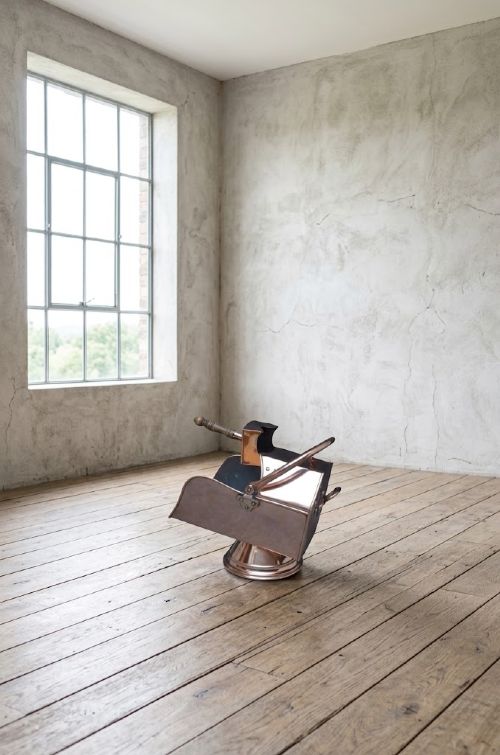
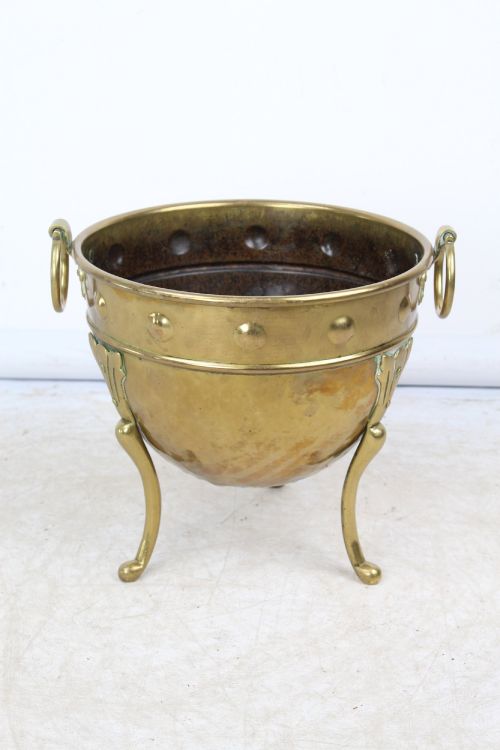
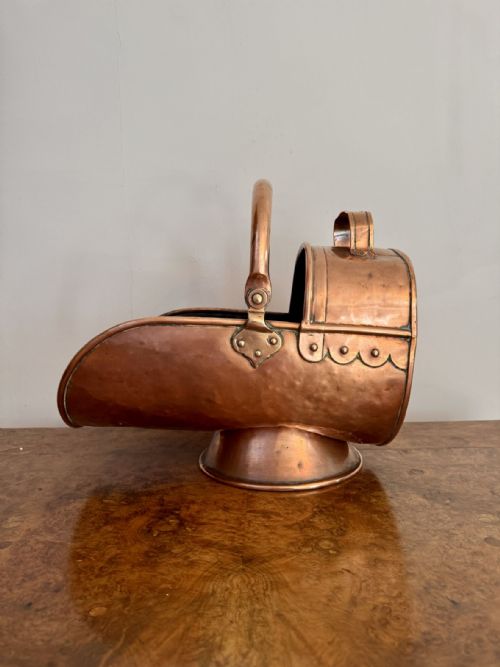
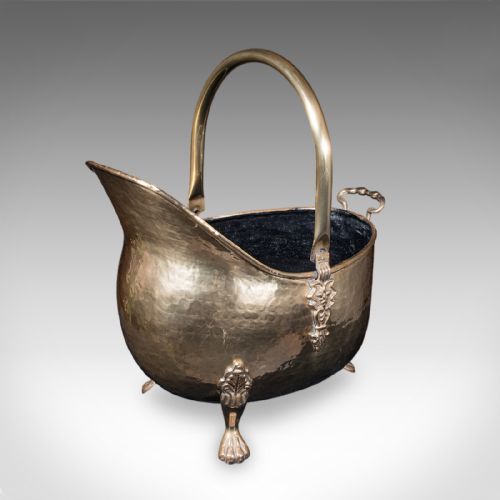
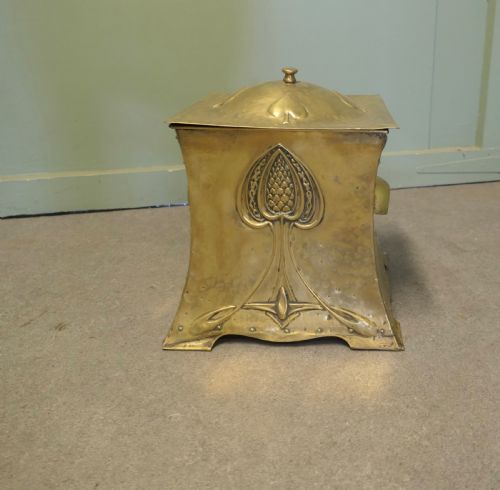
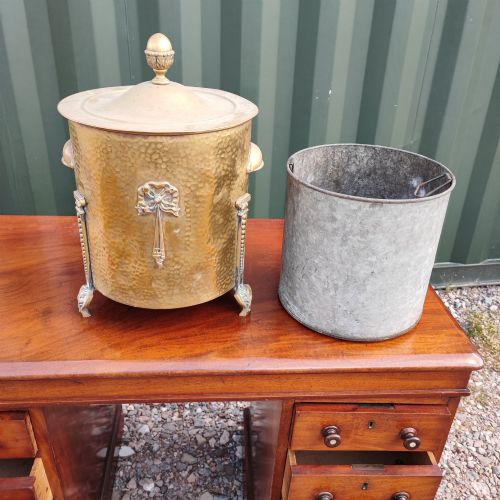
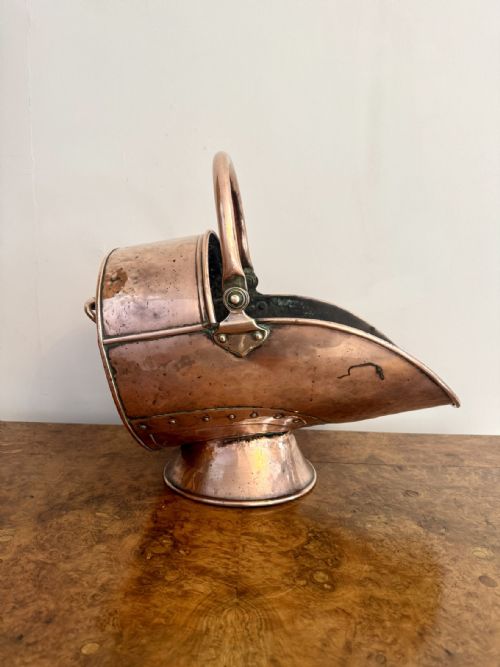
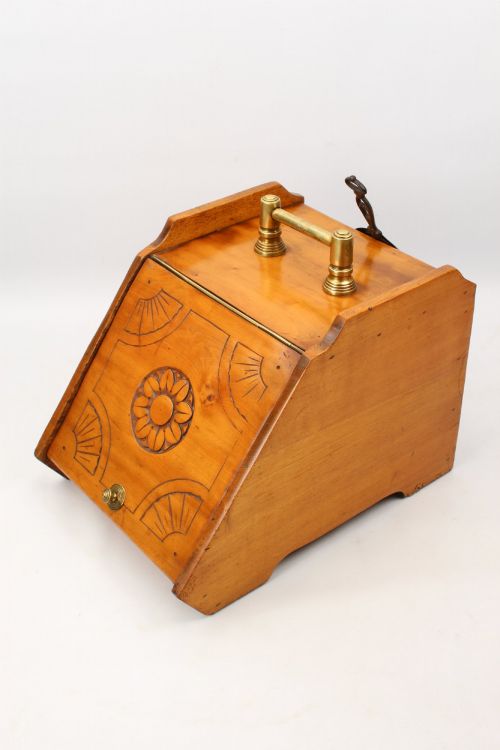
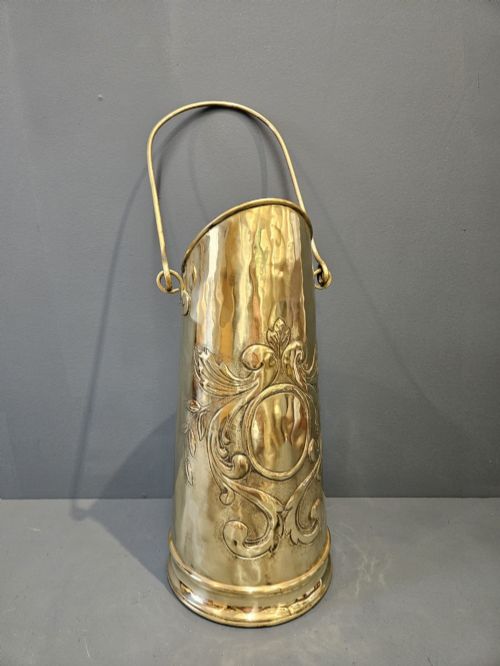
A brass fireside scuttle serves as a practical hearthside container for fuel, taking the form of buckets, helmets, boxes, and bins designed to hold coal or logs. When you search for this phrase, you encounter vessels that sit beside the fireplace, often paired with matching shovels or companion tools.
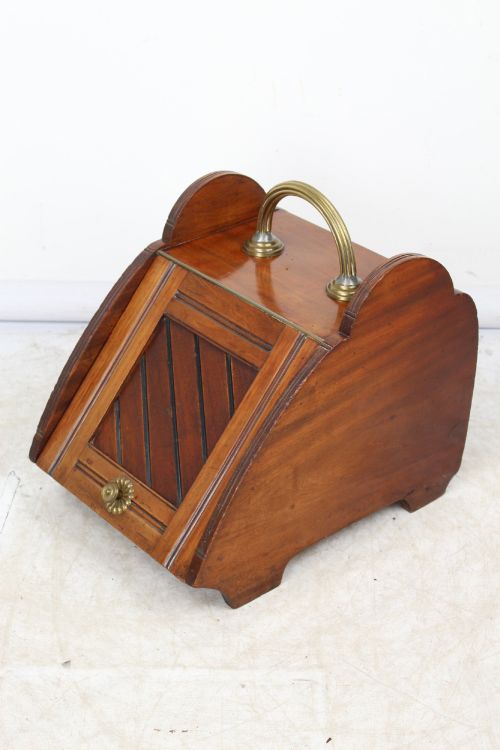
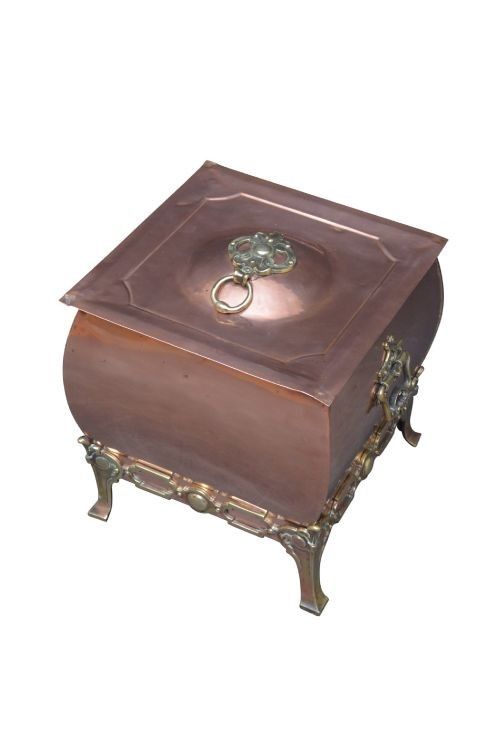
The versions most frequently met on this page date from the Victorian and Edwardian eras, spanning the nineteenth and early twentieth centuries, alongside earlier Georgian forms and later Art Deco designs. These pieces range from simple cylindrical buckets to raised coal boxes with hinged lids and decorative handles.
Makers and workshops utilised various shapes, including helmet scuttles with flared lips and robust log bins banded in contrasting metals. Each object reflects the domestic requirements of period hearths, combining metalwork with structural timber components such as oak, mahogany, and walnut.
Materials and construction methods
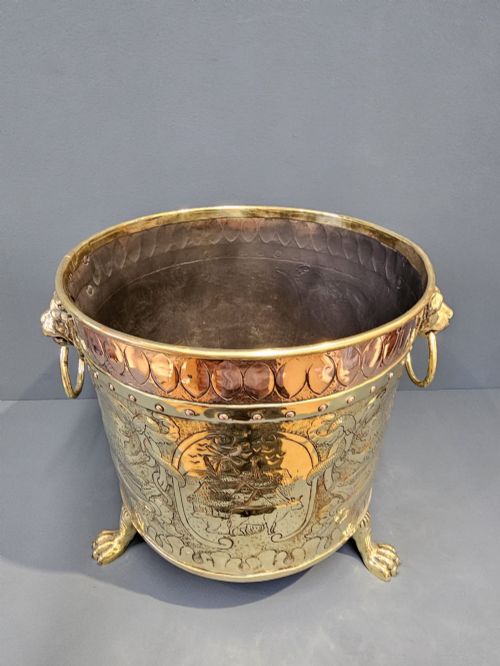
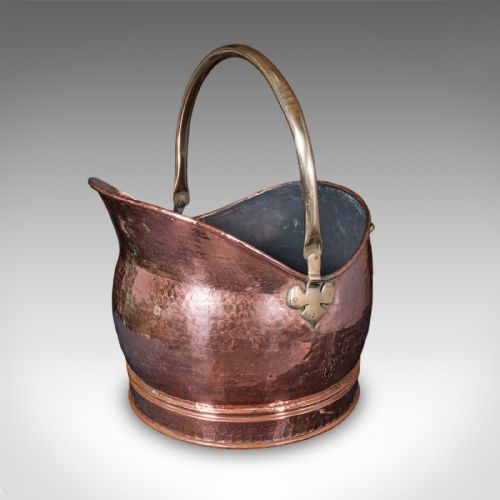
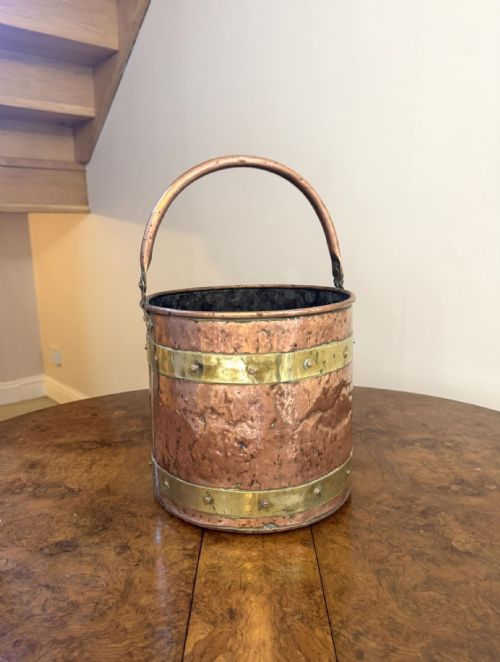
Makers constructed these vessels primarily using sheet brass and copper, often combining both metals to create banded bodies or contrasting rims. Rivets secure many of the copper and brass seams, ensuring structural integrity for heavy loads of coal and logs.
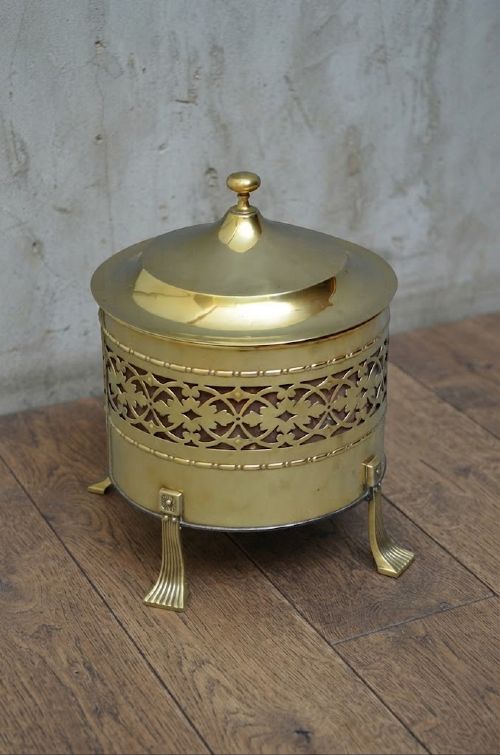
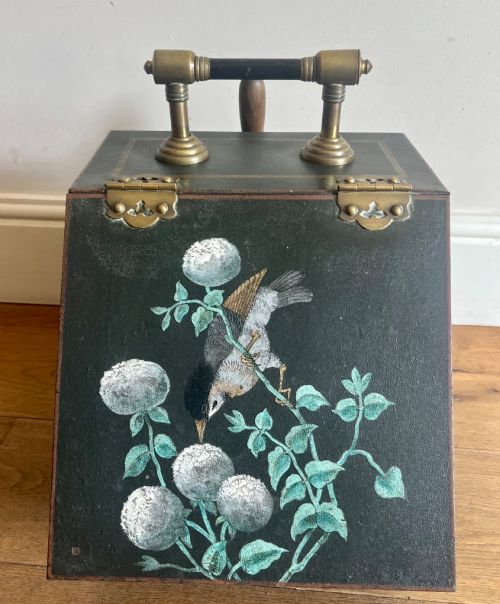
Wooden elements appear frequently, with bodies fashioned from solid oak, mahogany, or walnut, and reinforced with brass mounts, hinges, and carrying handles. Surface finishing involves hand-beating, embossing, and fretwork designs, producing decorative panels that depict scenes or geometric patterns.
Some coal buckets feature spirited tavern scenes hammered into the brass, turning fuel storage into a lively local story.
Judging the standard of manufacture
Quality reveals itself in the weight of the metal gauge and the firmness of the joints. Thicker brass and heavy copper resist denting from daily handling, while robust riveted or dovetailed construction keeps the body square under the shifting weight of fuel.
The refinement of decorative detail distinguishes finer examples, from crisp embossing and hand-finished chasing to well-fitted wooden liners and original matching shovels. Superior pieces integrate functional handles and hinges securely into the structural design without looseness.
Henry Loveridge·Benham and Froud·Petrus Ramus
The Brass Fireside Scuttle Glossary
- Coal helmet
- A traditional scuttle shape featuring a flared, sloping opening reminiscent of a classical helmet, designed for easy pouring of fuel onto the fire.
- Log bin
- A wider cylindrical or rectangular container intended for storing larger pieces of firewood rather than small coal.
- Fretwork
- Pierced decorative metalwork cut into open patterns, frequently seen on Edwardian bucket rims and panels.
- Tole ware
- Lacquered or painted metalware, occasionally utilised for decorative coal scuttles.
- Repoussé
- A metalworking technique where the design is hammered into relief from the reverse side, commonly found on Arts and Crafts examples.
Brass Fireside Scuttle: Frequently Asked Questions
What is a brass fireside scuttle used for?
These vessels were originally designed to hold and transport coal or logs to the fireplace for daily hearth maintenance.
Today, they serve both as functional fuel holders and as decorative accessories that bring period character to living spaces.
How do I date a brass scuttle?
Dating relies on observing stylistic markers, construction methods, and materials, such as heavy hand-beating on nineteenth-century pieces or lighter fretwork on Edwardian items.
Makers' stamps and specific forms, like Georgian helmet shapes or Art Deco geometric lines, provide further chronological clues.
Are these scuttles suitable for modern firesides?
Solid metal and sturdy wooden construction make these bins entirely practical for holding logs or kindling next to working hearths.
Their robust build ensures they withstand regular everyday use while adding traditional aesthetic value to the room.
How should I clean a brass scuttle?
Maintenance involves gentle dusting and occasional wiping with a soft cloth to preserve the natural patina accumulated over the decades.
Harsh chemical polishes should be avoided to protect hand-finished surfaces and historical patination on both brass and copper elements.