
Brass Fireplace Guard
A brass fireplace guard protects the room from embers while shaping the hearth through Victorian and Edwardian metalwork.
Brass Fireplace Guard
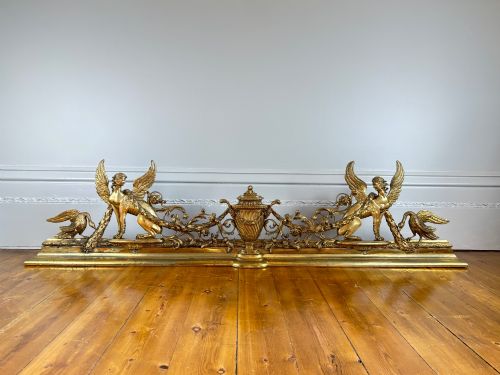
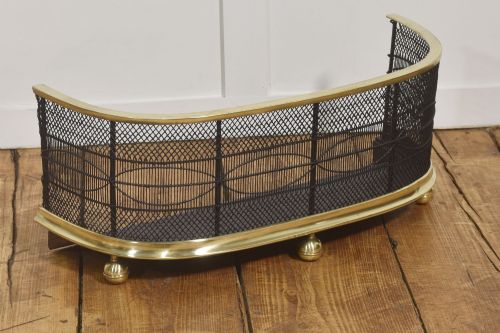
A brass fireplace guard encompasses screens, mesh spark guards and fenders designed to contain hearth debris. The pieces on this page span Victorian, Edwardian and earlier nineteenth-century eras, originating from English, French and Dutch workshops.
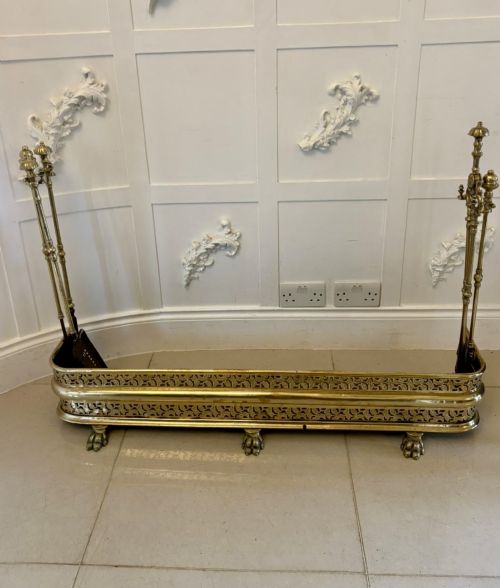
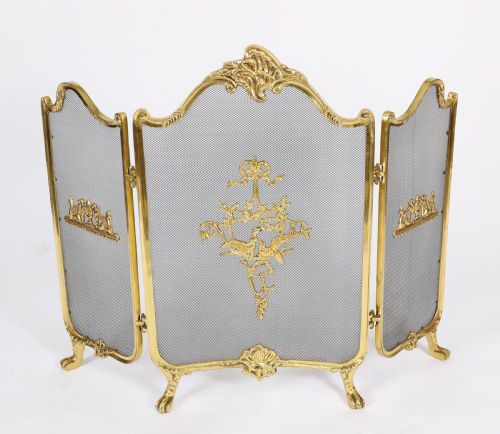
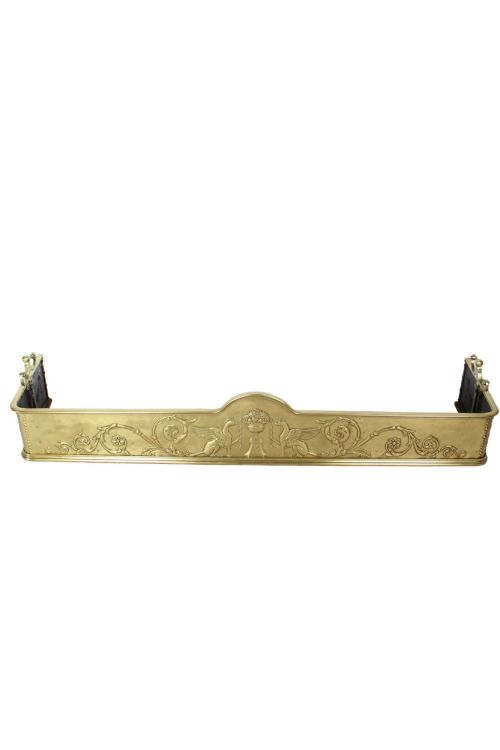
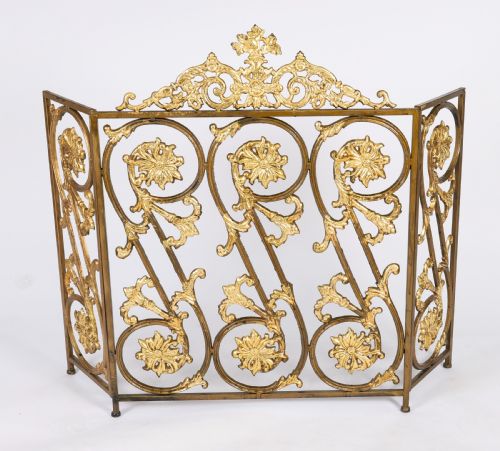
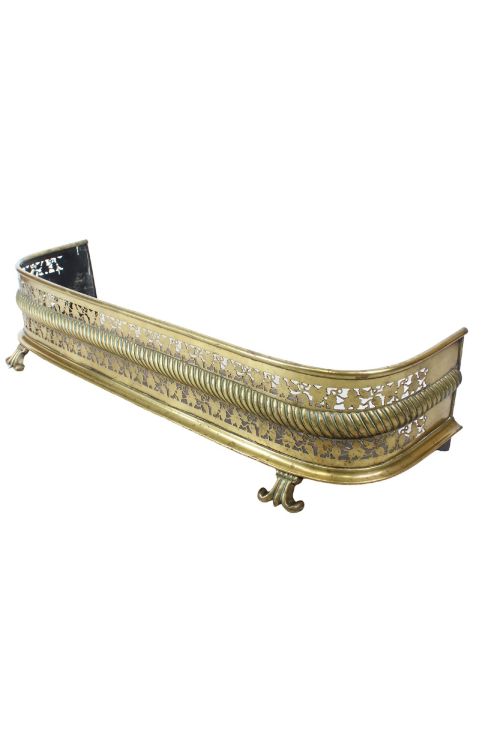
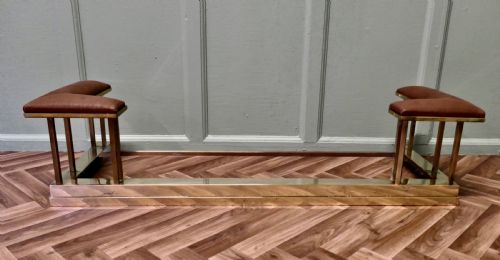
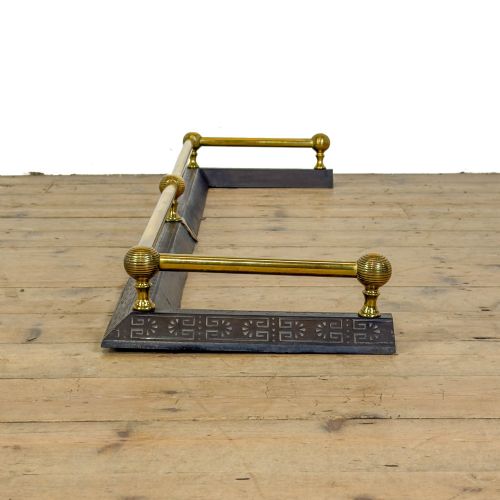
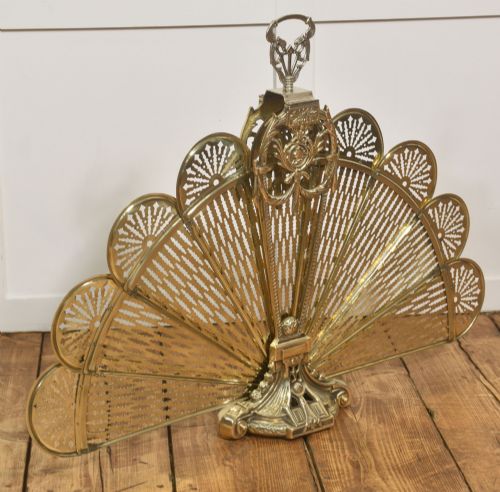
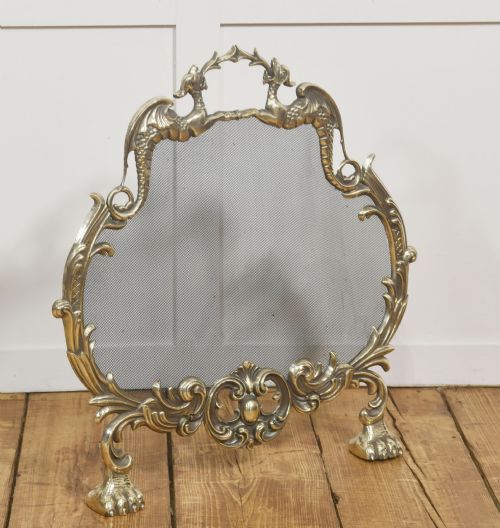
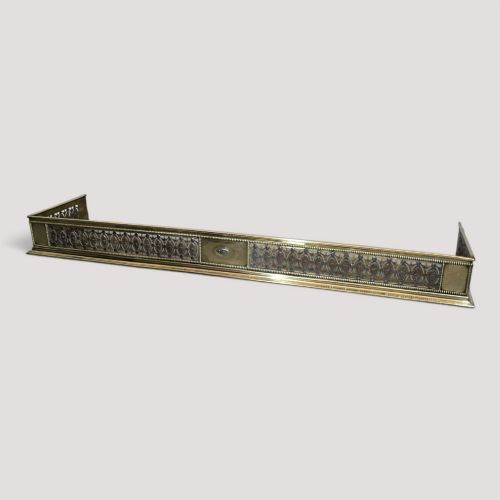
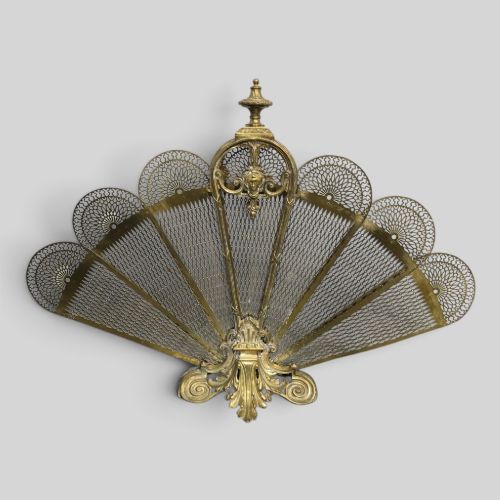
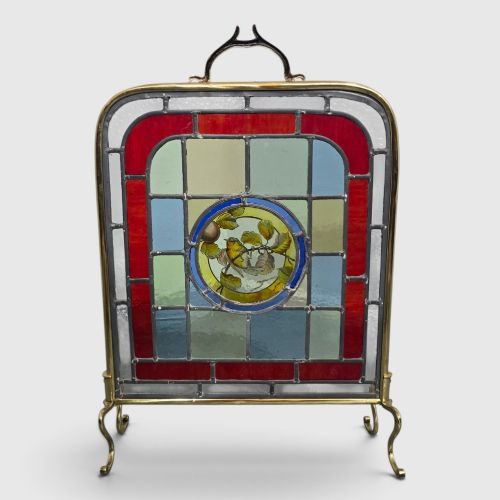
Fire screens range from rigid panels to folding peacock fan designs and triple-section frames. Fenders include extendable hearth curbs, club fenders with leather seats and low pierced brass rails.
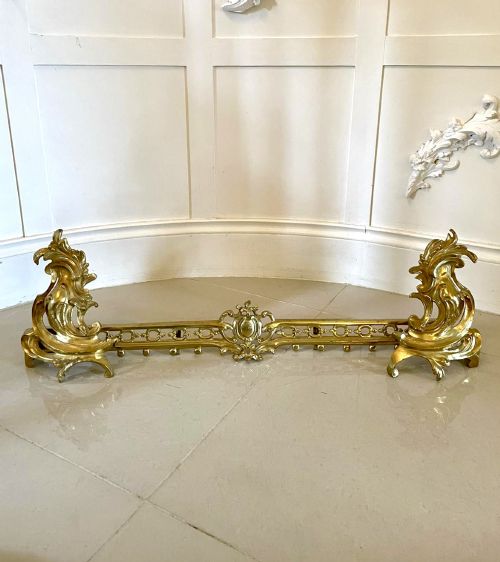
Makers utilised iron and steel frames alongside brass mesh and sheet metal to build functional hearth protection. Many incorporate decorative motifs drawn from French Rococo, Louis styles and Arts and Crafts design.
How they were made
Workshops combined cast brass mounts with beaten sheet brass, iron frames and fine wire mesh. Artisans pierced metal panels by hand and chased surface details on ormolu and gilt bronze mounts.
Structural parts utilised adjustable iron brackets, riveted joints and heavy steel bases to withstand hearth heat. Leather upholstery on club fenders required professional tacking over padded corner seats.
Brass Fireplace Guard Retail Price Guide 2026
Typical asking prices for brass fireplace guard among the pieces listed under this phrase on Sellingantiques today, from the lower quarter to the upper quarter. They describe what is for sale here now, not the wider market.
Listings feature brass, iron, copper and wire mesh across Victorian, Edwardian and Georgian periods.
What varies in quality
Quality rests on the thickness of the brass gauge and the crispness of chased or pierced ornamentation. Heavy cast brass components and original fire irons demonstrate superior workshop output compared to pressed sheet metal.
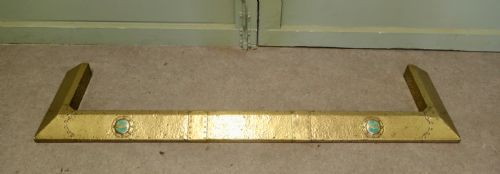
The integrity of folding hinges on screens and the original patina on unpolished surfaces distinguish finer examples. Integrated details like green enamel cabochons or embossed family crests elevate individual pieces.
E F Caldwell New York
The Brass Fireplace Guard Glossary
- Club fender
- A low hearth guard featuring upholstered corner seats for sitting by the fire. These typically combine brass rails with leather pads.
- Fender
- A metal curb placed around the hearth perimeter to keep coal and ash contained. Many examples include adjustable widths or integrated fire irons.
- Peacock fan
- A folding fire screen composed of multiple radiating brass blades that open like a tail. This design expands to block sparks and folds flat when not in use.
- Ormolu
- Gilt bronze or brass applied to decorative mounts and screen frames. The technique produces a rich golden finish characteristic of French revival pieces.
- Spark guard
- A fine wire mesh barrier designed to catch flying embers from open fires. These range from single flat frames to multi-section folding guards.
Brass Fireplace Guard: Frequently Asked Questions
What is a club fender?
A club fender is a hearth surround fitted with cushioned leather seats on the corners. This design allowed people to sit close to the fire while containing stray embers.
Victorian and Edwardian versions often use brass and iron frames with adjustable widths to fit specific fireplace hearths.
How do peacock fire screens work?
Peacock screens consist of hinged metal blades that pivot outward to form a semicircular fan shape. They provide wide coverage against sparks during a fire.
When the hearth is cold, the blades fold inward into a compact vertical unit that takes up minimal space.
Are these guards safe for open fires?
Most antique guards with wire mesh or solid metal panels function effectively to catch flying sparks. Folding spark guards and mesh screens place a physical barrier between the hearth and the room.
Buyers should check the stability of the frame and the condition of the mesh before regular use with an active fire.
How do I identify a Victorian fender?
Victorian fenders frequently display pierced brass galleries, heavy cast iron bases and neoclassical or Rococo revival motifs. Many incorporate adjustable length mechanisms or matched sets of fire irons.
Look for nineteenth-century construction methods such as hand-riveted joints and heavy gauge brass rather than light modern alloys.