
Brass Fire Fender
A brass fire fender anchors the hearth, framing the fireplace while protecting the room from stray embers.
Brass Fire Fender
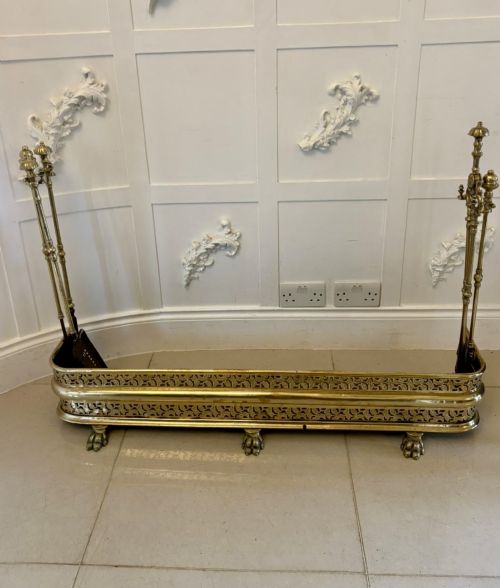
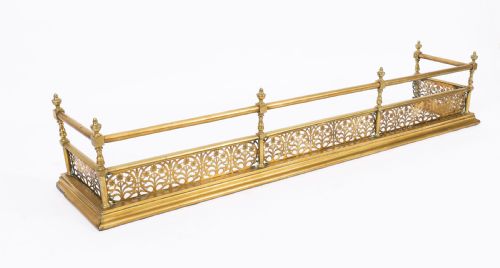
A brass fire fender provides a protective boundary around an open fireplace, keeping hearth debris contained and defining the fireplace space. When searching for a brass fire fender, buyers encounter a variety of period designs ranging from plain nineteenth-century hearth kerbs to ornate Victorian pierced galleries.
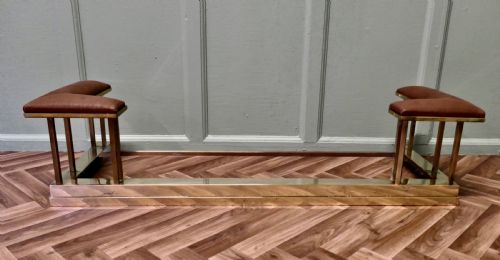
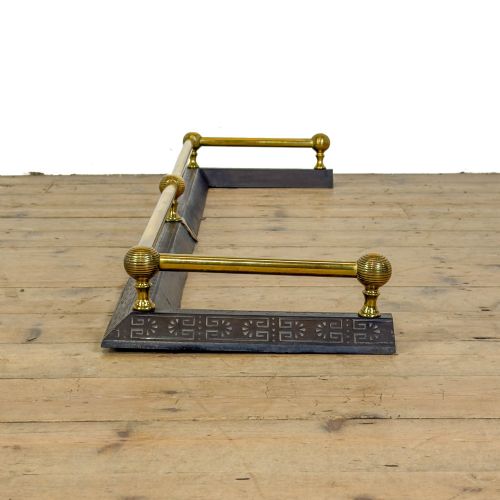
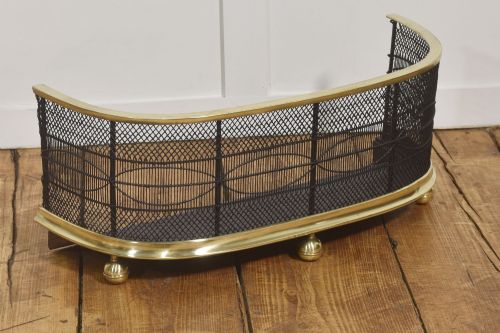
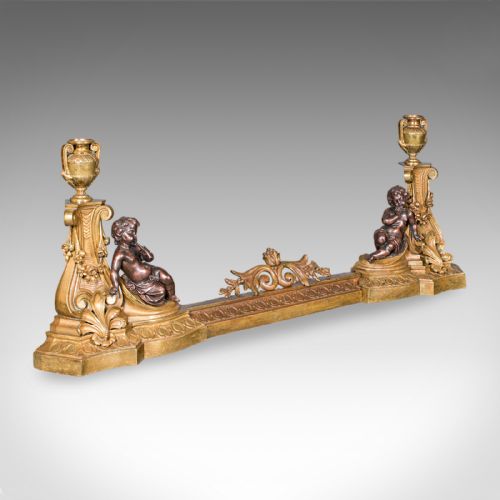
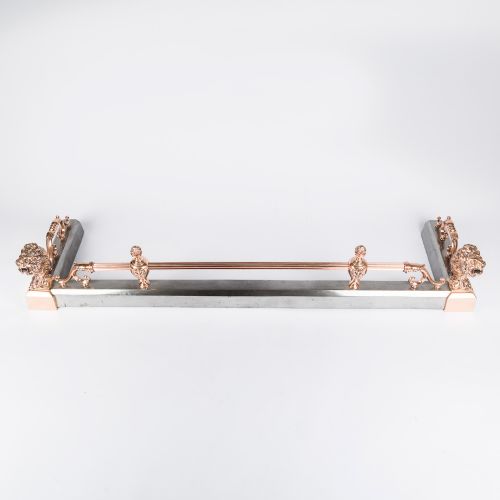
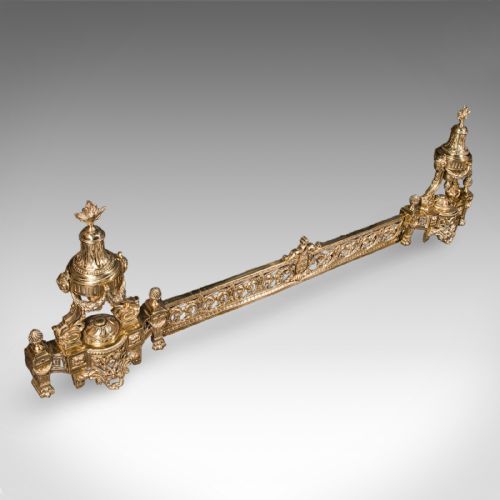
Most examples originate from the Victorian and Edwardian periods, alongside earlier Regency designs and later twentieth-century iterations. These pieces take various forms, including expanding frames, raised club fenders with leather seats, and low kerbs fitted with wire mesh spark guards.
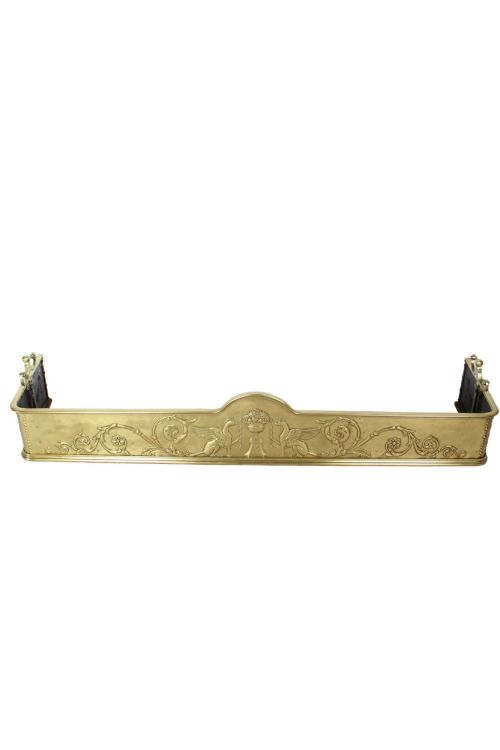
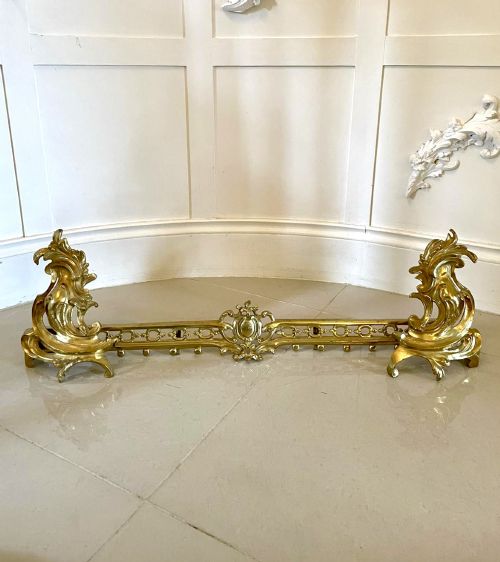
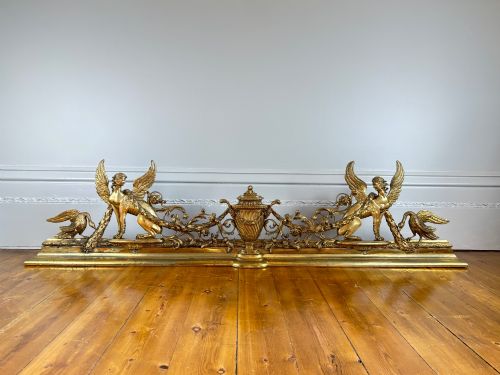
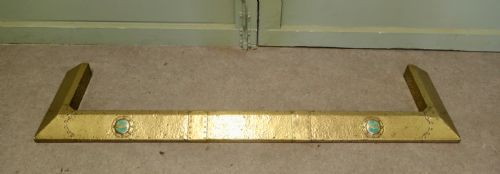
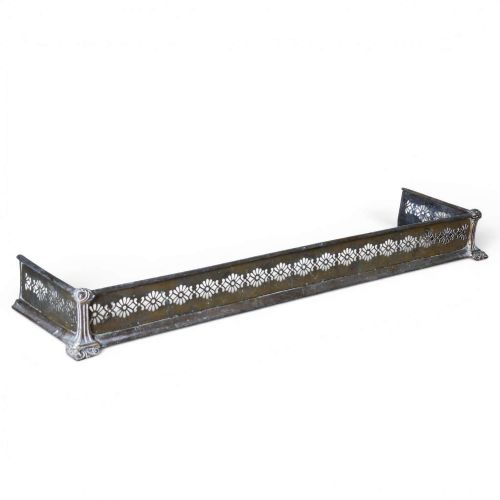
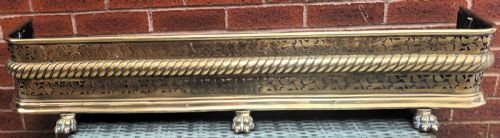
Makers utilised a mix of solid brass, cast iron, steel, and bronze, often embellishing the metalwork with pierced fretwork, embossing, or decorative mounts. Surviving pieces frequently show regional English craftsmanship alongside French Rococo and Neoclassical revival styles.
Materials and Construction
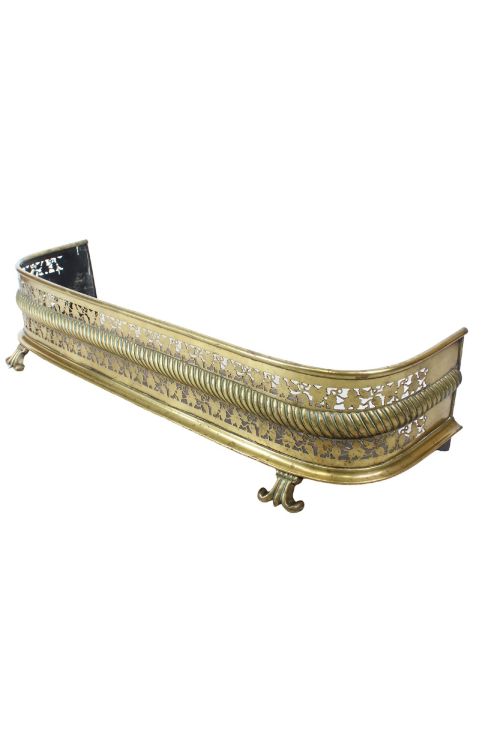
Makers constructed these hearth surrounds using sheet brass, cast brass, and tubular metal frames reinforced with iron or steel internal structures for stability. Pierced designs were punched or cut by hand or machine to create decorative fretwork patterns along the gallery.
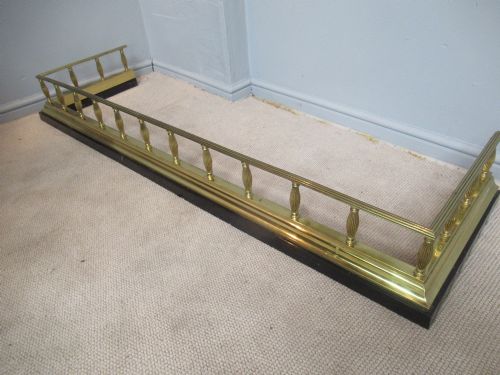
Many nineteenth-century examples combine polished brass with cast iron bases or steel hearth plates to add weight and durability. Club variants incorporate upholstered leather or velvet top rails supported by brass balustrades or columns.
Brass Fire Fender Retail Price Guide 2026
Typical asking prices for brass fire fender among the pieces listed under this phrase on Sellingantiques today, from the lower quarter to the upper quarter. They describe what is for sale here now, not the wider market.
Listings feature brass fire fenders paired with iron, steel, wire mesh, and leather components across the nineteenth and early twentieth centuries.
Assessing Quality
Quality rests upon the thickness of the brass gauge, the crispness of the pierced or embossed detailing, and the structural integrity of the frame. Heavy cast brass mounts and substantial iron inner frames separate robust utilitarian pieces from lighter decorative items.
Original components, such as matching fire irons, leather upholstery, or period brackets, elevate the authenticity of the piece. Finer examples display precise joinery, well-finished corners, and deeply chased surface ornamentation rather than shallow stamping.
E F Caldwell New York
The Brass Fire Fender Glossary
- Club fender
- A low fireside seat featuring an upholstered leather or velvet top rail supported by a brass or iron frame, designed for sitting close to the hearth.
- Pierced brass
- Sheet metal perforated with repetitive geometric, floral, or scrollwork patterns to allow light through while containing ash.
- Fire kerb
- A low metal barrier fixed directly to the floor around the hearth to demarcate the fireplace boundary.
- Nursery fender
- An tall protective guard, often incorporating wire mesh or fabric rails, built to keep children safely away from open flames.
- Chenet
- A French ornamental firedog placed on the hearth, frequently paired with matching grates or fenders.
Brass Fire Fender: Frequently Asked Questions
What is a club fender?
A club fender is a specialised hearth surround featuring padded leather or velvet seats along the top rail. This design allowed Victorians and Edwardians to sit directly beside the fire for warmth.
These pieces typically combine a sturdy brass or iron base with upholstered top sections and open balustrades. They remain popular for creating intimate seating arrangements around traditional fireplaces.
How do I measure for a fender?
Measure the width and depth of your hearth stone to ensure the inner dimensions of the fender fit comfortably around the fireplace surround. Leave a small clearance gap on each side for stability.
Take note of the height as well, particularly if you are considering an extending model or a club variant with upholstered seats. Check whether your fireplace opening requires a straight front or a curved serpentine shape.
Are these fenders adjustable?
Many nineteenth-century examples feature extending mechanisms that allow the frame to slide outwards to fit varying hearth widths. These adjustable designs use overlapping metal sections secured by internal screws.
Fixed-width models remain common, requiring precise measurement of your hearth before purchase. Extending versions offer greater flexibility if you plan to move the piece to another room.
What materials are used?
Construction primarily relies on polished brass, cast brass, and sheet brass over iron or steel internal frames. Many pieces incorporate wire mesh panels, leather upholstery, and bronze mounts.
Earlier examples often pair bright brass with blackened iron or steel components. Later Victorian and Edwardian pieces frequently utilise pierced fretwork and enamel cabochons for added decoration.