


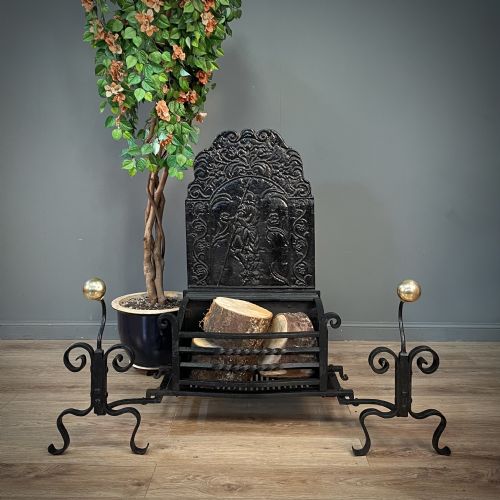
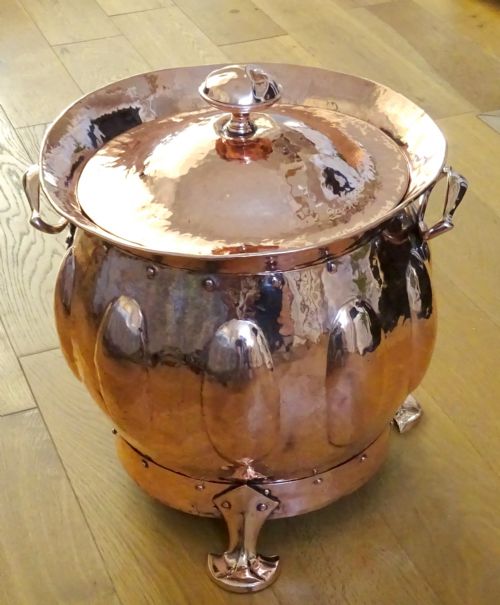

Brass Fire Basket
A brass fire basket brings a bright focal point to a hearth, combining sturdy iron with polished metal details.
Brass Fire Basket
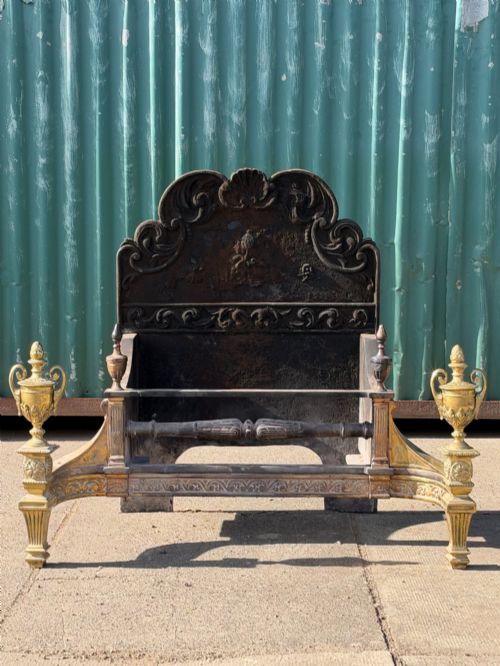
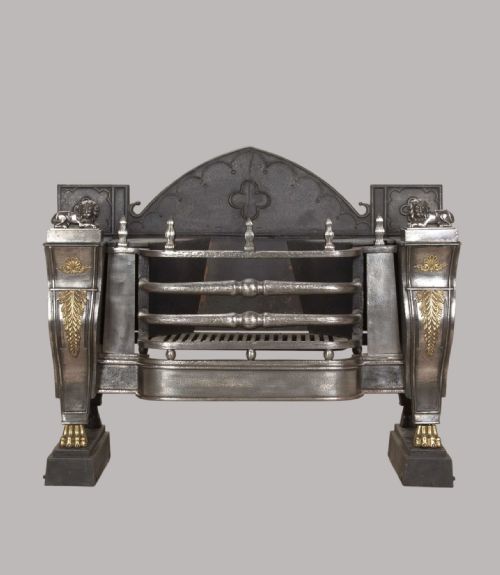
A brass fire basket is a hearth fixture designed to hold solid fuel for a fireplace. The pieces seen here span periods from the Georgian era through the Victorian period, Regency designs, and into the early twentieth century.
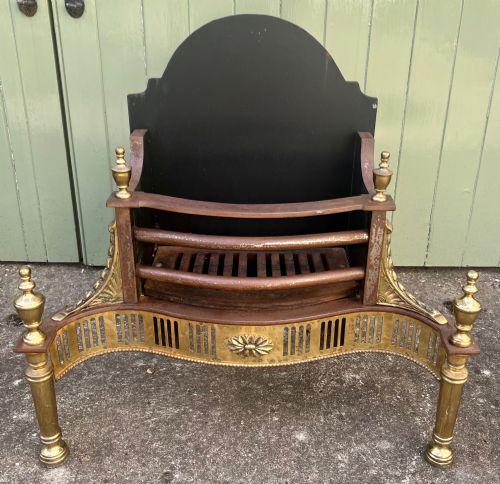
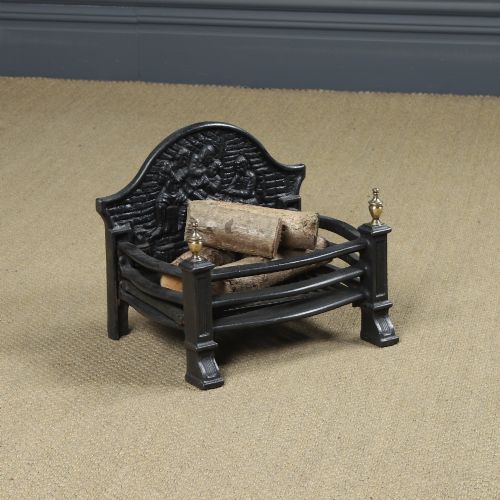
Most examples pair a substantial iron or steel grate with brass mounts, finials, or serpentine fronts. Buyers encounter forms ranging from classical hob grates to freestanding baskets and related log bins.
How they were made
Maker's work relied on combining cast iron for the functional fire-holding grate with wrought iron or steel for structural support. Brass was then utilised for decorative elements such as finials, front bars, and cast mounts.
Surviving pieces frequently integrate firebrick or secondary metals like copper and zinc within log bins and associated accessories.
Some nineteenth-century baskets come equipped with brass griffins keeping watch over the hearth coals.
What varies in quality
Quality rests in the crispness of the casting and the weight of the metals used. Finer pieces display refined neoclassical or Adam style brass work, whereas simpler utilitarian grates rely on heavier cast iron construction.
The integrity of the structural joints and the retention of original brass components dictate the standing of an individual grate.
The Brass Fire Basket Glossary
- Hob grate
- A type of fireplace grate featuring raised side plates known as hobs, used for warming pots or kettles.
- Serpentine front
- A curved, undulating front outline found on certain eighteenth and nineteenth-century grates.
- Andirons
- Supporting metal firedogs placed on either side of a hearth, often accompanying fire baskets.
- Adam style
- A neoclassical design vocabulary characterised by symmetrical urn and swag motifs popular in British interiors.
Brass Fire Basket: Frequently Asked Questions
What is a brass fire basket?
A brass fire basket is a metal hearth insert designed to contain coal or wood. It uses a cast iron grate to hold the fuel, framed by polished brass decorative elements.
These pieces were built to sit within an open fireplace opening, providing both functional heat retention and formal decoration for the room.
How do I date a fire basket?
Dating relies on stylistic clues and construction methods. Georgian and Regency pieces often show classical motifs like urns and tapered legs, while Victorian examples lean towards heavier cast iron and brass finials.
Twentieth-century reproductions or later revival pieces often emulate these earlier styles using similar combinations of cast iron, steel, and brass.
Can I use an antique fire basket?
Many grates are structurally sound enough for burning solid fuel, though some buyers choose to use them with gas log inserts or simply as decorative hearth furniture.
Inspect the internal iron bars for heavy warping or heat degradation before deciding to light a real fire.
What is the difference between a grate and a basket?
The terms are often used interchangeably in historical listings, but a basket typically denotes an open cage structure designed to hold logs or coal.
Grates can include flat hob designs or register grates that integrate more fully into the chimney opening, whereas baskets often stand as independent units.