


Brass Dial Regulator Clock
A brass dial regulator clock brings precision timekeeping into a room through polished metal and glass.
Brass Dial Regulator Clock
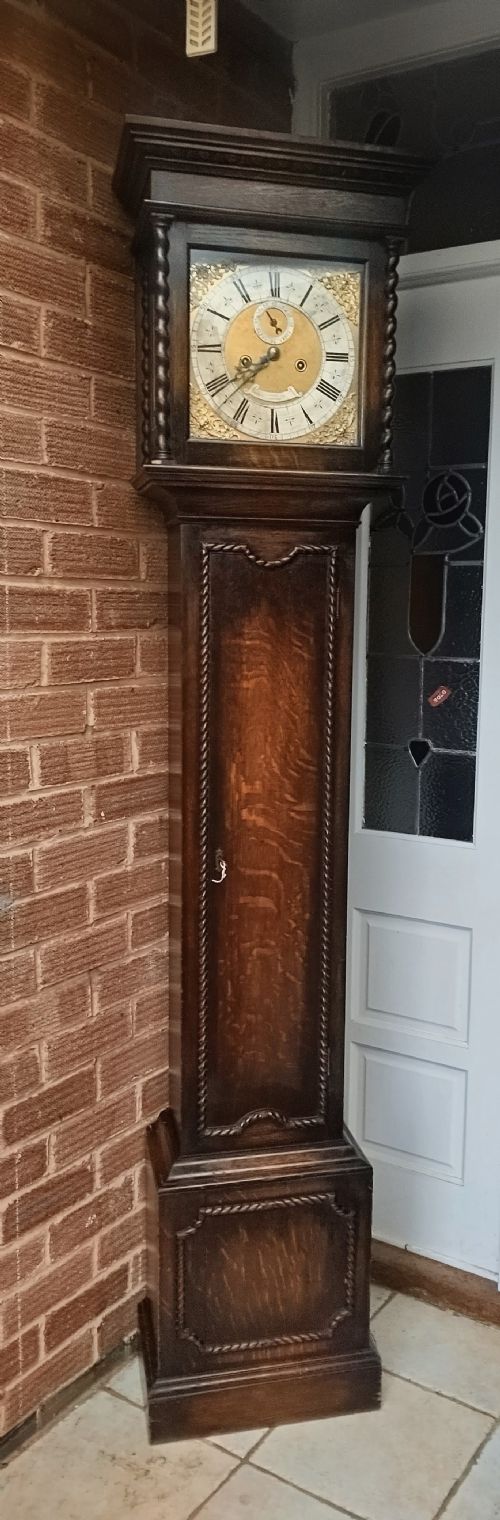
When you search for a brass dial regulator clock, you find timepieces spanning the nineteenth and early twentieth centuries, including wall clocks, longcase clocks, and mantel clocks. These pieces originate from English, French, German, and Austrian makers, reflecting styles from the Regency period through to Edwardian and Arts and Crafts designs.
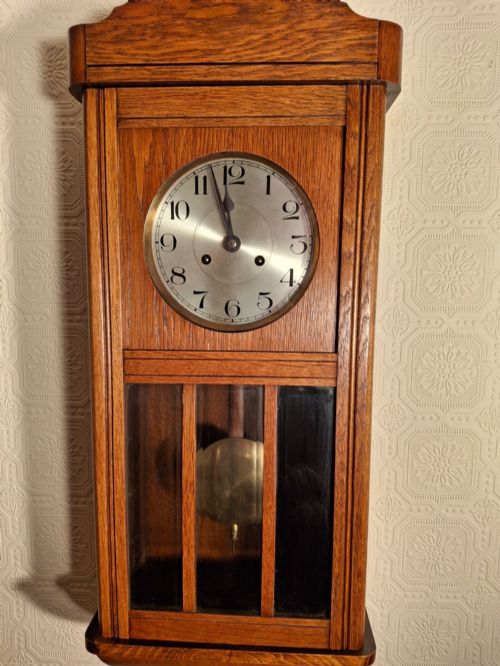
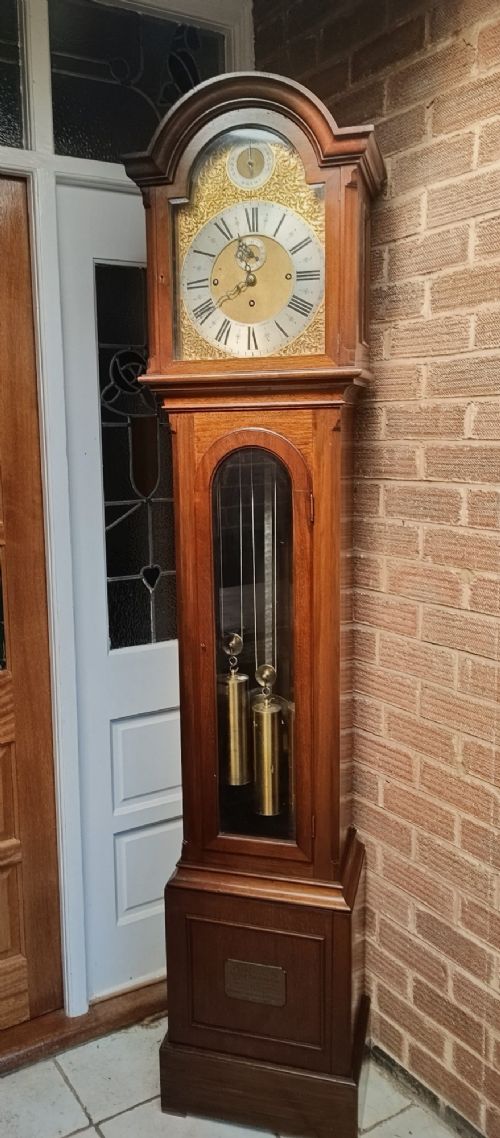
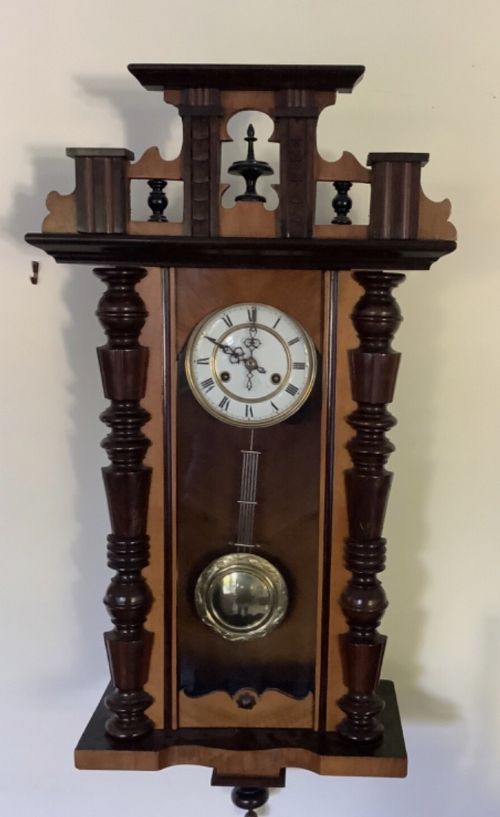
The version you are most likely to meet on this page is a wall-mounted or mantel-standing regulator, frequently housed in mahogany, walnut, or oak cases with visible pendulums and enamelled dials. Longcase and four-glass crystal variants also appear, showcasing brass bezels and detailed movements.
How they were made
Cases combine timbers such as mahogany, walnut, oak, and rosewood with glass panels that protect the movement while revealing the swing of the pendulum. French makers frequently employed gilt brass and bevelled glass for four-glass mantel models.
Dials combine brass chapters with enamelled cartouches or porcelain rings, while movements rely on precision brass gears, weights, and springs assembled by specialist horologists.
Listings feature woods including mahogany, walnut, oak, maple, and rosewood, alongside brass, gilt brass, enamel, and porcelain components.
What varies in quality
The distinction between standard production and superior work lies in the refinement of the movement and the integrity of the cabinetwork. Heavier timber cases with rich grain patterns and signed brass movements represent the finer tier of manufacture.
Dial execution also separates grades, where finely painted enamel numerals and chased brass bezels outclass simpler stamped metal faces.
Samuel Marti et Cie·Gillett and Johnston·Gustav Becker·Chater and Son·Frederick Rowe
The Brass Dial Regulator Clock Glossary
- Regulator clock
- A precision timekeeper designed for exact timekeeping, often featuring a long pendulum and a prominent seconds sub-dial. These clocks served as reference standards in offices, railway stations, and fine homes.
- Four glass clock
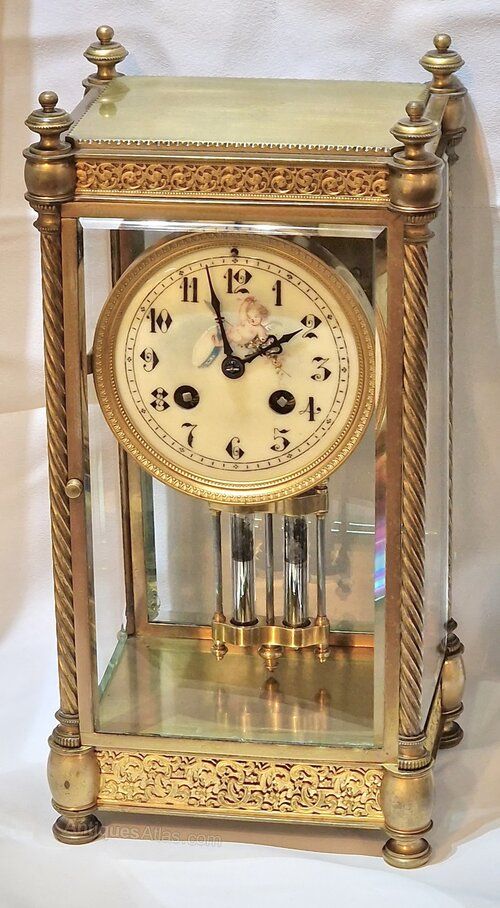
- A mantel clock enclosed in glass panels on all four sides, allowing light to pass through and reveal the movement. This style gained popularity in late nineteenth-century France.
- Vienna regulator
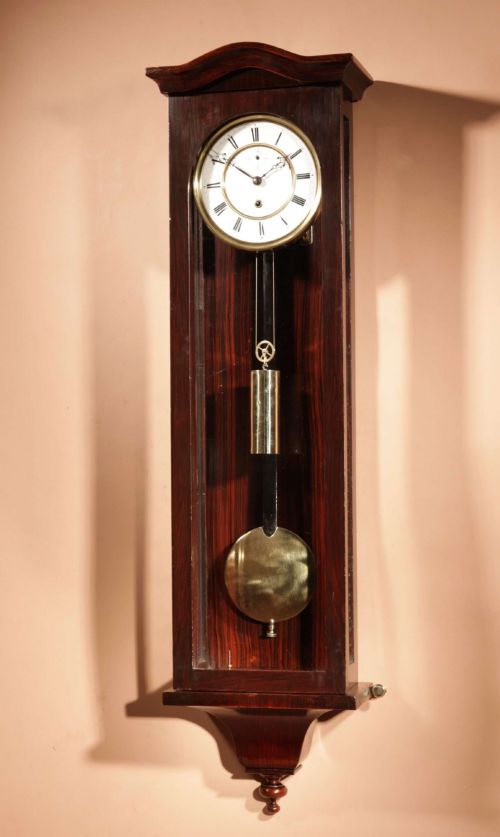
- A wall-mounted clock originating from Austrian and German workshops, known for its refined weight-driven movement and elegant wooden case. They display the pendulum clearly behind a glazed door.
- Drop dial
- A wall clock featuring a circular dial above a short, often glazed trunk that accommodates the pendulum swing. Regency and Victorian makers produced these for domestic and public spaces.
- Two train movement
- A clock mechanism with two separate gear trains, one dedicated to timekeeping and the other to striking the hours or chimes. This system requires two winding holes on the dial.
Brass Dial Regulator Clock: Frequently Asked Questions
How do I wind a brass dial regulator clock?
Most mechanical regulators require a specialised key inserted into the winding holes on the dial to tension the springs or raise the weights. Care must be taken not to over-wind the movement.
Consult the specific requirements of your clock's train configuration, as musical and chiming variants may involve different winding sequences for the time and strike trains.
Where should I place a regulator wall clock?
Mount your clock on a solid interior wall away from direct sunlight, excessive heat sources, and heavy vibrations. A stable surface ensures the pendulum swings evenly.
Ensure the case is plumb and level so the beat of the escapement remains uniform, which is essential for accurate timekeeping.
How do I tell a French crystal regulator from a Vienna wall clock?
French crystal regulators are generally mantel or table clocks encased in brass frames with four glass panels, often featuring decorative enamel dials and mercury pendulums. They emphasise visual elegance.
Vienna regulators are typically wall-hanging wooden case clocks designed around a long pendulum and weight-driven movement, prioritizing mechanical visibility and vertical length.