





Nineteenth Century Regulator
Nineteenth century regulator clocks are precise timepieces prized for their exact movement and commanding presence in any room.
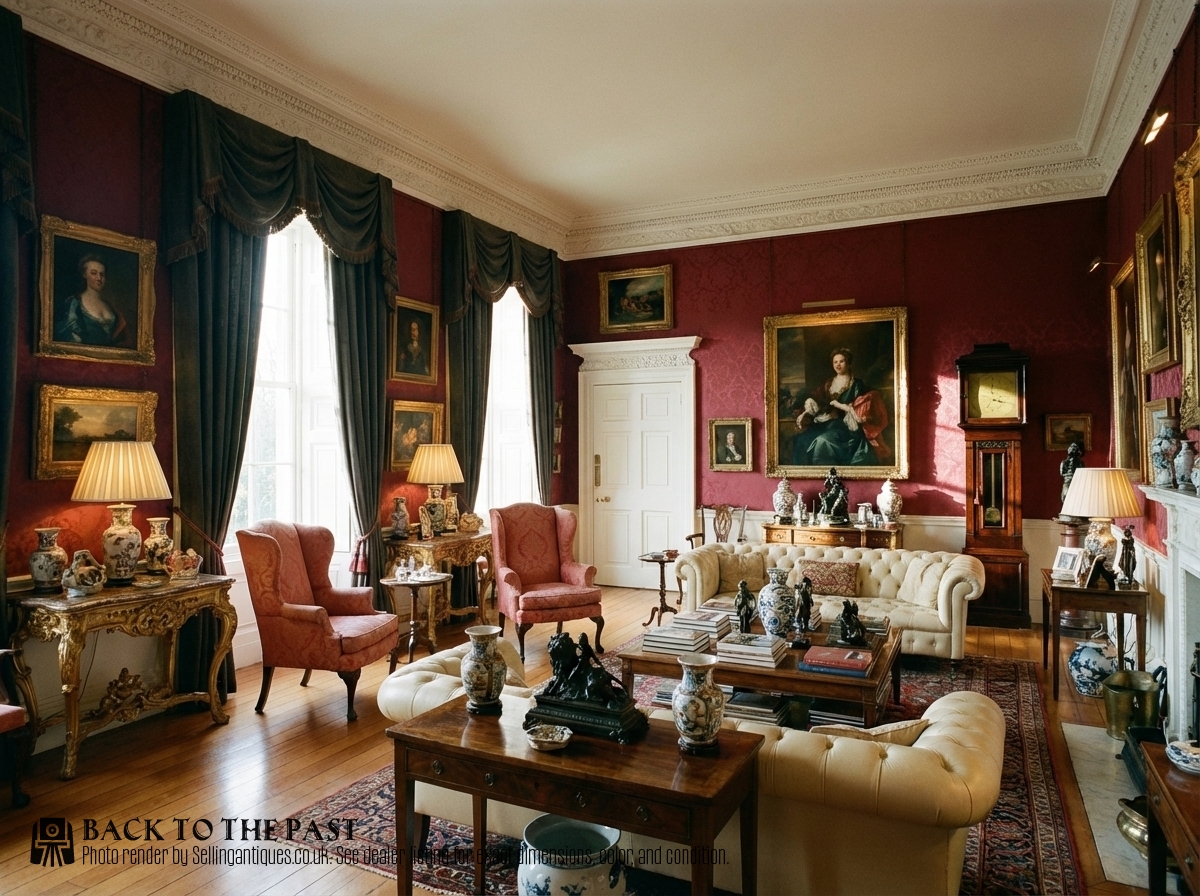
Nineteenth Century Regulator
A nineteenth century regulator is a precision timekeeper designed for absolute accuracy, typically found here as wall clocks, longcase clocks, or mantel clocks. These pieces span various periods including the Regency era and the Victorian period, reflecting both British and continental craftsmanship.
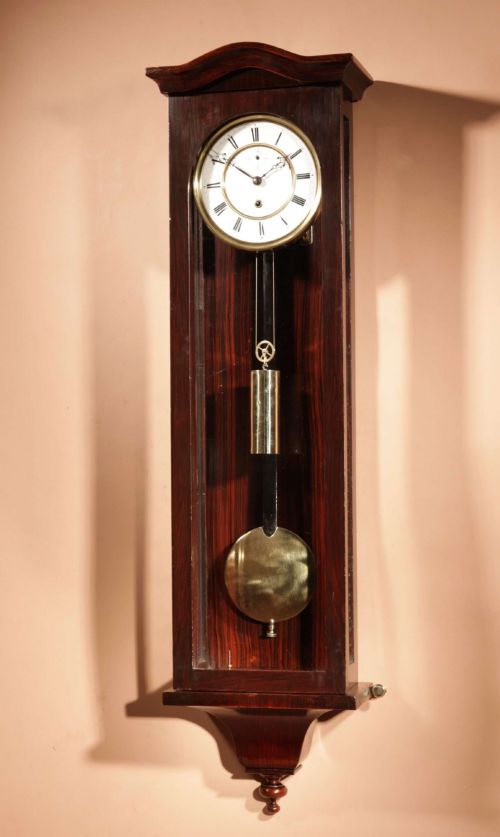
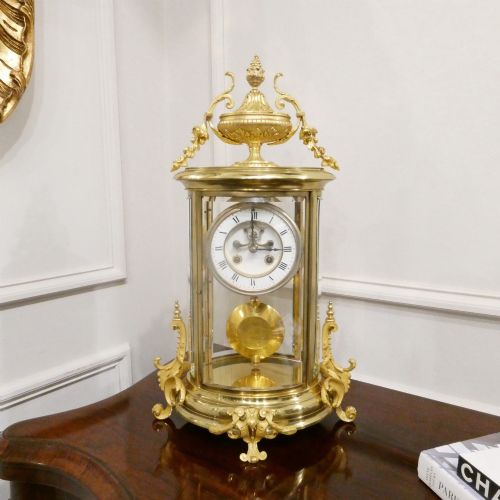
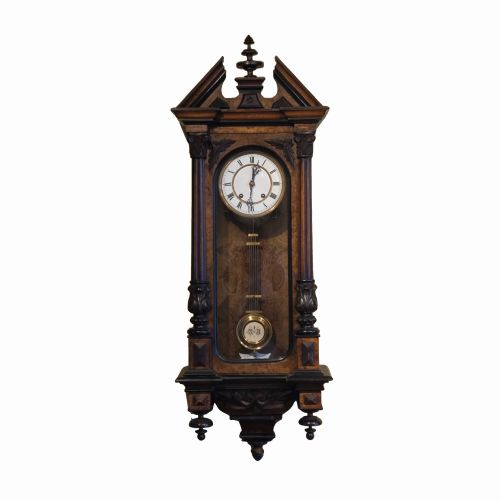
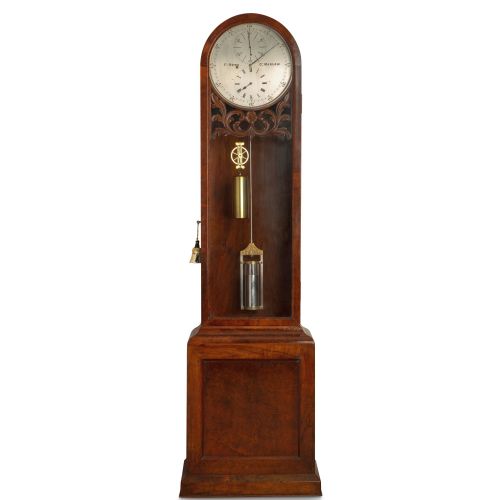
You will most commonly encounter Vienna regulator wall clocks alongside British longcase and French four glass mantel clocks. These objects range from architectural wall regulators in walnut and mahogany to elegant gilt bronze mantel pieces.
How they were made
Clockmakers constructed the cases of nineteenth century regulator clocks from fine timbers such as mahogany and walnut, housing intricate movements driven by brass gears. Dials frequently feature silvered metal or enamel, protected behind bevelled glass panes.
The decorative elements often incorporate gilt bronze and porcelain, particularly in French designs, while cases utilise traditional joinery to support heavy weights and pendulums.
Some makers signed their dials with such elaborate flourishes that reading the time required decoding an artistic puzzle.
What varies in quality
The distinction between standard examples and superior nineteenth century regulator clocks lies in the refinement of the movement and the execution of the timber case. Finer makers invested greater skill into the precision of the gear trains and the crispness of dial inscriptions.
Cabinetwork quality separates ordinary workshop production from exceptional pieces, visible in the selection of veneer, the depth of carving, and the proportion of the brass and gilt bronze mounts.
Samuel Marti·Gustav Becker·James Wood·Aitchison of Glasgow·Frederick Rowe of Great Marlow·Richard Rowell
The Nineteenth Century Regulator Glossary
- Regulator
- A precision pendulum clock designed to keep exceptionally accurate time, often used as a standard to set other timepieces. These clocks usually feature a prominent seconds dial.
- Vienna Regulator
- A wall-mounted clock originating in Austria, known for its refined movement and elegant glazed case that displays the swinging pendulum and weights. They became popular across Europe during the nineteenth century.
- Four glass clock
- A mantel clock enclosed in a brass or gilt bronze frame with glass panels on all four sides, allowing the movement to be seen from multiple angles. This style was widely produced in France.
- Silvered metal dial
- A clock face made of brass or copper treated with a silver compound to produce a matte, reflective surface with dark engraved numerals. It offers high legibility and a subdued lustre.
- Double weight
- A clock movement driven by two separate weights suspended by cords or chains, typically powering both the timekeeping and striking trains.
Nineteenth Century Regulator: Frequently Asked Questions
What is a nineteenth century regulator clock?
A nineteenth century regulator is a high-precision timekeeper built to maintain exact time, often featuring a prominent pendulum and a clear, easy-to-read dial.
These clocks were essential for synchronising other timepieces in railway stations, workshops, and wealthy homes during the Victorian era.
How do I wind a wall regulator?
Winding involves using a matching key to carefully draw up the weights or tension the spring via the winding holes on the dial.
Care must be taken not to overwind the mechanism, ensuring the weights are raised smoothly without disturbing the pendulum.
Where were these clocks placed?
Wall regulators and longcase clocks were traditionally hung or positioned in hallways, offices, and principal rooms where their steady ticking and accuracy could be monitored.
Smaller mantel clocks sat upon fireplace surrounds and side tables in parlours and drawing rooms.
How do I tell Vienna regulators apart from British ones?
Vienna regulators typically present as tall, glazed wall clocks designed to display the pendulum and weights clearly through wooden frame doors.
British examples frequently take the form of longcase clocks in mahogany or walnut cases with painted or silvered dials.