
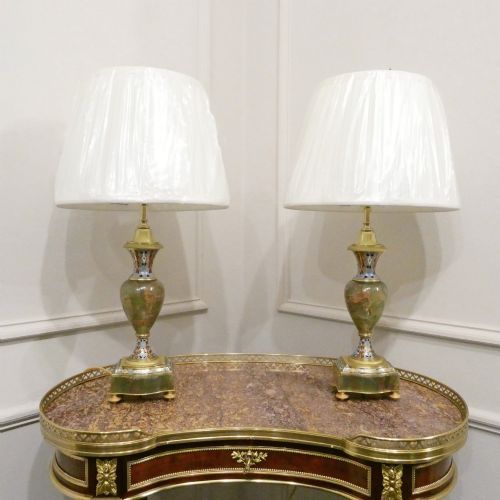
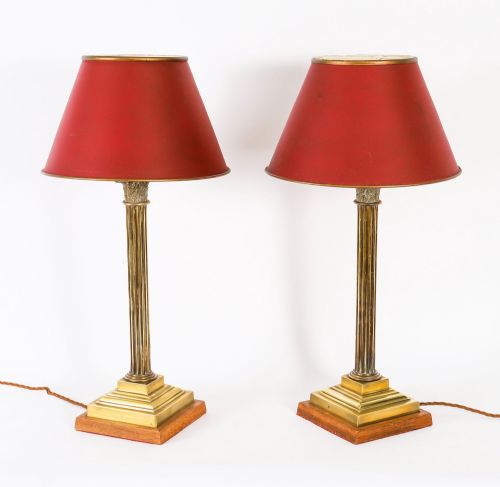
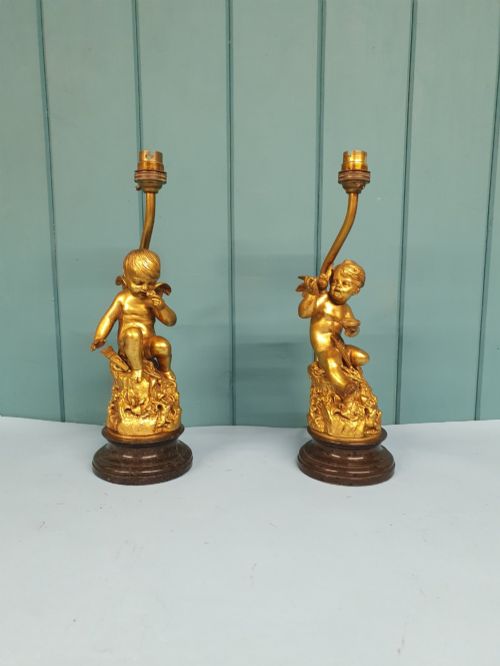
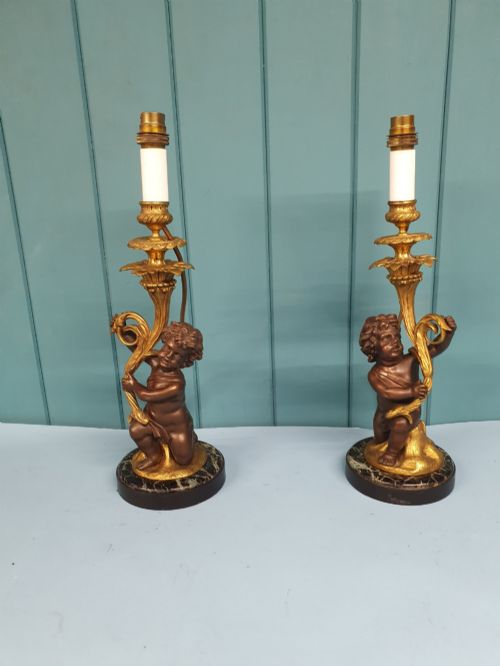
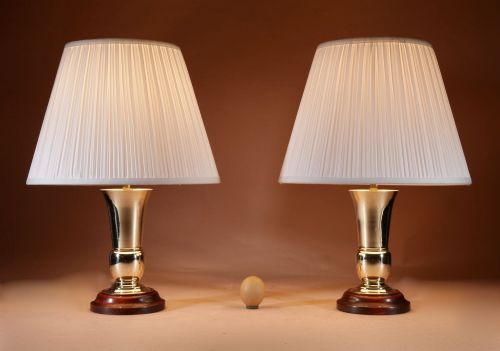
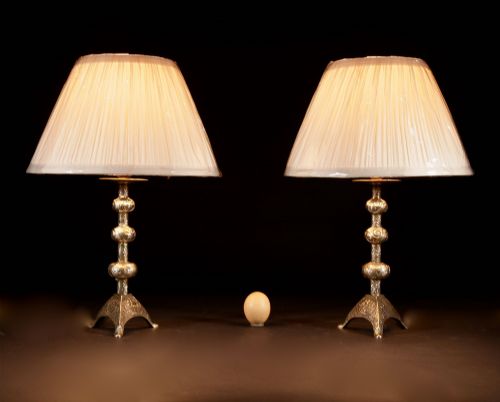
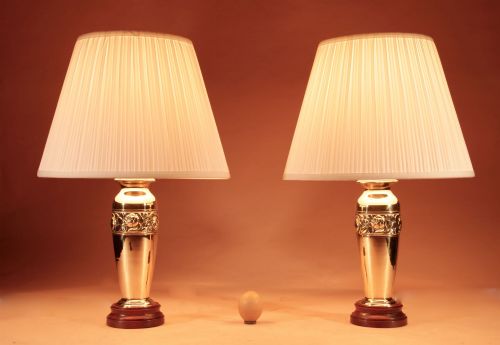
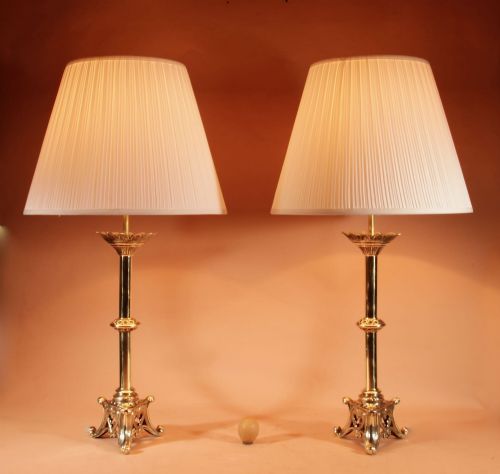
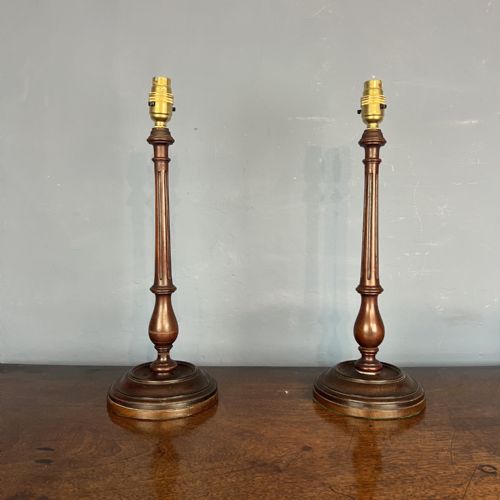
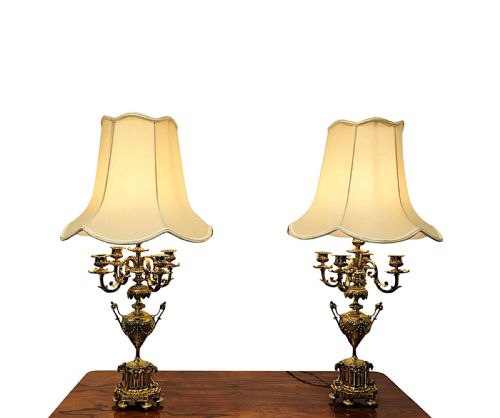
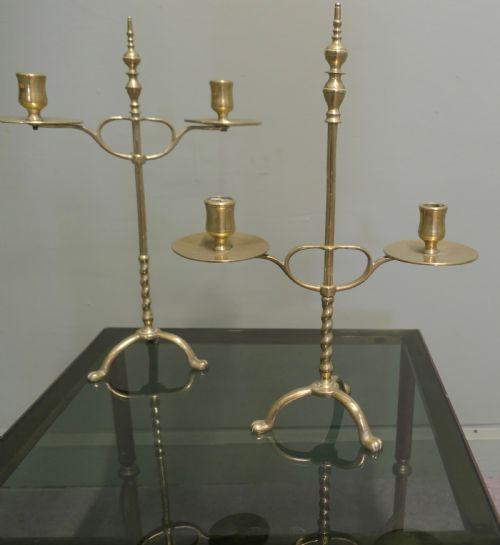
Brass Desk Lamps Pair
When sourcing a brass desk lamps pair, collectors select matched illumination engineered to anchor a study or library table.
Brass Desk Lamps Pair
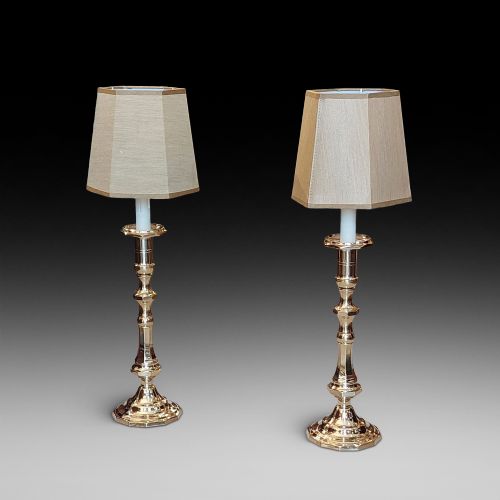
A brass desk lamps pair represents matching dual lighting fixtures designed for workspace use, originating predominantly from the Victorian, Edwardian, and early twentieth-century periods. These items frequently manifest as adjustable student lamps, bouillotte styles, or converted candlesticks utilising solid metal construction.
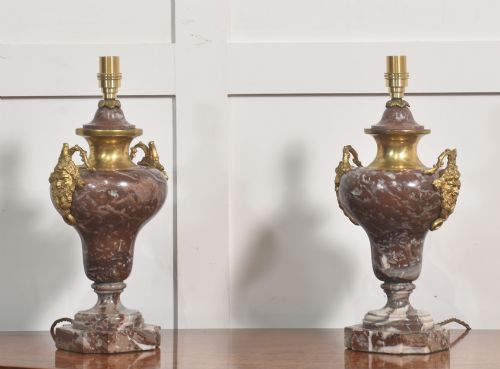
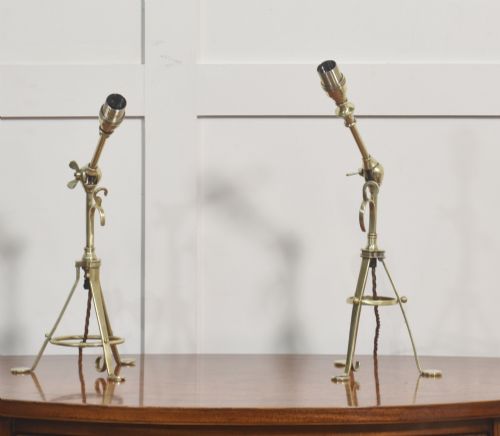
Buyers encountering this selection will find examples ranging from heavy Corinthian column designs to swan neck models and Art Deco articulated forms. Many pieces bridge the boundary between table lamps and dedicated desk lighting, reflecting the functional requirements of nineteenth and twentieth-century studies.
The historical scope spans from the Georgian era through to the 1920s, incorporating stylistic influences such as Gothic Revival, Neoclassical, and French Rococo. Surviving examples often show adaptation from earlier oil-burning mechanisms or candlesticks to modern electrical wiring.
Materials and construction
Makers utilised solid brass, ormolu, and bronze as the primary structural metals, frequently combining them with marble, onyx, or oak bases for added weight and stability. Casting techniques produced substantial columns, detailed capitals, and articulated arms capable of directional adjustment.
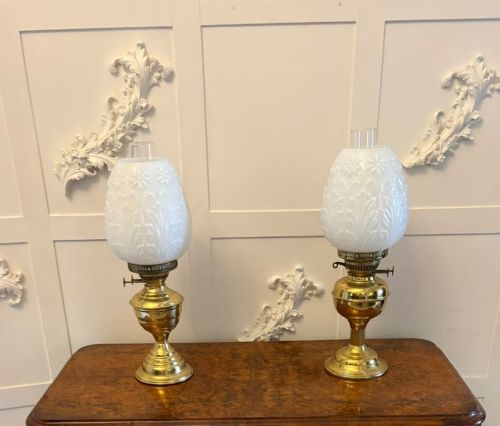
Lighting components incorporated glass elements including opaline, vaseline, and etched ruby shades, alongside fabric shades introduced during later twentieth-century adaptations. Metal components were turned on lathes, cast in parts, and joined through threading or brazing before finishing with patination or gilding.
Listings feature brass desk lamps pair examples spanning the Victorian, Edwardian, and Art Deco periods, utilising marble, glass, and bronze elements.
Assessing quality in matched pairs
Quality rests upon the precision of the casting work and the exact matching of the pair in both height and component detail. Superior examples display crisp acanthus leaves on Corinthian capitals, heavy gauge metal that resists flexing, and robust adjustment mechanisms that hold their position.
The integrity of the original components - such as matching period shades, heavy weighted bases, and integrated switchgear - distinguishes workshop output from later assembled combinations. The depth of the natural brass patina and the absence of crude repairs indicate superior manufacturing origin.
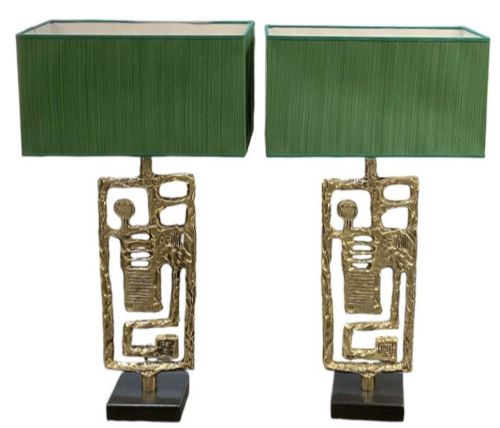
W.A.S. Benson·Angelo Brotto for Esperia
The Brass Desk Lamps Pair Glossary
- Bouillotte lamp
- A traditional desk or card-table lamp featuring a central shaft, a saucer-shaped base with a raised rim, and an adjustable metal or fabric shade. This form originated in France for card games and later became a standard study accessory.
- Corinthian column
- A classical architectural column form utilised as the main shaft for table lamps, characterised by an ornate capital decorated with acanthus leaves. Victorian makers favoured this design for formal library lighting.
- Ormolu
- Gilt bronze produced by applying a finely ground high-carat gold-mercury amalgam to a bronze base object. This technique imparts a rich, durable golden surface seen on high-status nineteenth-century lighting.
- Opaline glass
- A pale, translucent milk glass popular in Victorian and Edwardian shade manufacture. It diffuses light evenly across a workspace while softening harsh glare.
- Student lamp
- An adjustable desk light featuring a burner or bulb positioned on a sliding arm to direct illumination precisely where required. These utilitarian pieces were constructed for heavy daily use in offices and libraries.
Brass Desk Lamps Pair: Frequently Asked Questions
How do I date a brass desk lamp?
Dating relies on examining the assembly methods, switch types, and stylistic motifs such as Corinthian capitals or Art Deco geometry. Screw threads, weighted base construction, and wiring channels offer further clues to the period of manufacture.
Earlier nineteenth-century examples often start as converted oil lamps or candlesticks, whereas Edwardian and later pieces were built specifically for electricity with integrated switches.
Were these always electric lamps?
Many surviving examples began life as oil lamps, gas fixtures, or candlesticks before being converted to accept electrical wiring during the twentieth century. This conversion process is standard for pieces dating from the nineteenth century and earlier.
Original electrical models typically date from the Edwardian period onwards, incorporating period-correct switches, braided flex, and weighted bases designed specifically for bulbholders.
How should I clean antique brass?
Maintaining antique brass requires minimal intervention to preserve the natural aged patina developed over decades of exposure. Dusting with a soft dry cloth is usually sufficient for routine care.
Harsh chemical polishes should be avoided because they strip away the historical surface colour and reduce the visual depth valued by collectors.
What is a bouillotte lamp used for?
Bouillotte lamps were originally designed to illuminate card tables and writing desks, featuring a sliding shade to shield the eyes from the flame or bulb. The saucer base served to catch wax drips from candles or hold small desk accessories.
In modern interiors, they function effectively on sideboards or executive desks where directional downward light is required.