







Gothic Brass Table Lamp
A gothic brass table lamp brings architectural weight and ecclesiastical character into a room, combining medieval motifs with period lighting.
Gothic Brass Table Lamp
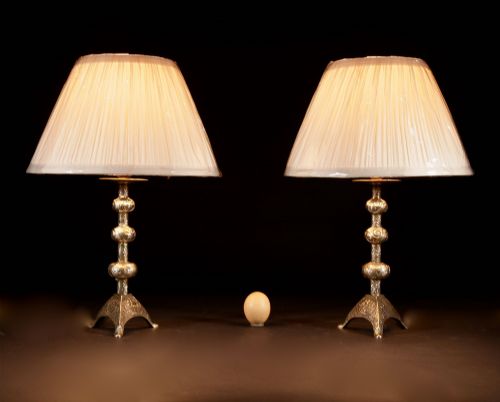
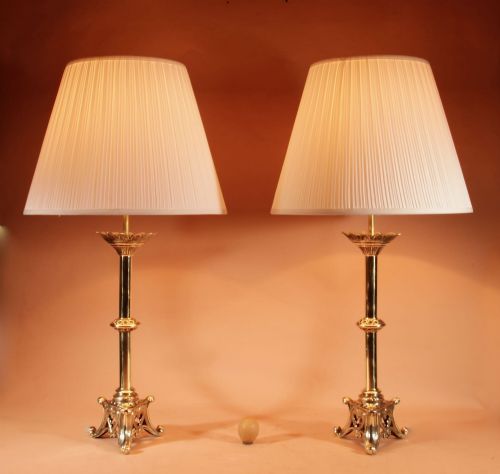
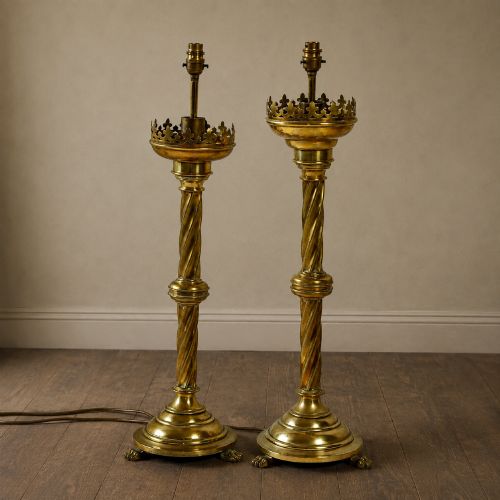
A gothic brass table lamp draws heavily upon medieval architectural vocabulary, taking inspiration from church furnishings and altar candlesticks. When buyers search for a gothic brass table lamp, they encounter heavy cast metal pieces shaped into columnar shafts, stepped bases, and candle-socket adaptors. Most examples date from the Victorian era and the nineteenth century, reflecting a widespread revival of medieval design across Britain and France.
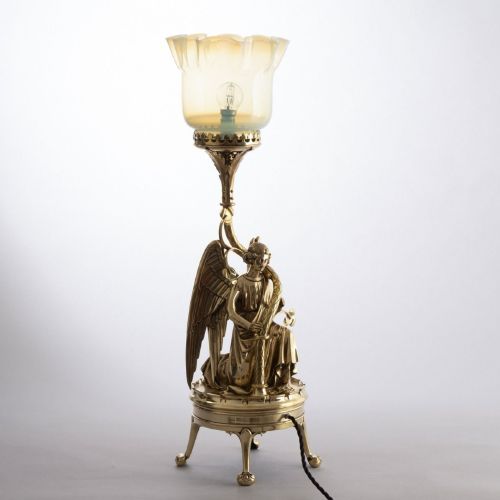
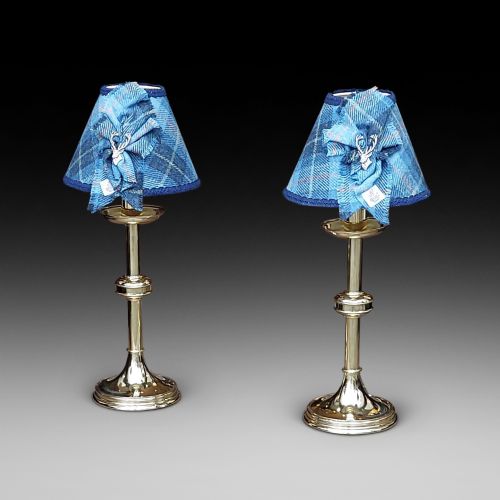
The form often originates from converted church candlesticks or altar sticks fitted for electricity, retaining their substantial proportions and patinated metal surfaces. Pairs appear frequently among the listings, alongside occasional single tall standards and candlestands adapted for domestic use. Alongside standard brass construction, certain examples incorporate contrasting elements such as vaseline glass or fabric shades with fringe details.
How they were made
These lamps rely on heavy cast brass and spun components, producing a rigid structure capable of supporting tall shafts and weighted bases. Metalworking techniques involve sand casting for the ornate bases and detailed knops, followed by hand-finishing to sharpen the architectural mouldings. The surfaces develop a natural oxidation over time, while some pieces integrate oak supports or glass elements to vary the texture.
Conversion for modern lighting typically involves routing a cord through the centre of a former candlestick or adding a discreet fitting above the drip pan. Shade assemblies utilise traditional materials like silk fringe, damask fabric, and tinted or vaseline glass components that diffuse the light downward.
A few brilliant vaseline glass components manage to glow fiercely under the right light, proving that even solemn ecclesiastical brass has a playful side.
What varies in quality
Quality rests upon the crispness of the casting and the thickness of the brass used in the structural shaft and base. Superior examples exhibit deep relief work, sharp tracery, and well-defined mouldings that mirror medieval stonework without soft edges. Weight serves as a reliable indicator of substance, with heavy cast pieces commanding greater presence than lighter spun alternatives.
Proportion and integrity also divide the range, particularly regarding how cleanly an altar candlestick converts into a table lamp without compromising the original silhouette. The choice of secondary materials, such as vaseline glass inserts or period-appropriate fabric shades, further distinguishes standard production from more ambitious workshop pieces.
The Gothic Brass Table Lamp Glossary
- Gothic Revival
- An architectural and decorative style spanning the eighteenth and nineteenth centuries that revives medieval forms, pointed arches, and ecclesiastical ornament. It heavily influences the design vocabulary of these lamps.
- Altar Candlestick
- A tall, heavy candlestick originally designed for use on a church altar, frequently adapted into a table lamp during later periods. These provide the core structural form for many pieces on this page.
- Vaseline Glass
- A type of glass containing uranium dioxide that exhibits a distinctive yellow-green fluorescence under ultraviolet light. It appears in select lamp configurations to provide colourful contrast to the brass.
- Damask Fabric
- A reversible figured textile woven on a jacquard loom, often utilised for traditional lamp shades. Its rich patterning complements the heavy metalwork of the base.
Gothic Brass Table Lamp: Frequently Asked Questions
Are these lamps converted church candlesticks?
Many examples originate as ecclesiastical altar candlesticks or church sticks that were subsequently fitted with electrical wiring for domestic use. This lineage accounts for their substantial height, heavy bases, and architectural candle-socket designs.
Makers often retained the original drip pans and knopped stems, integrating the electrical cord through the central axis so the historic appearance remains undisturbed.
How do I date a brass gothic lamp?
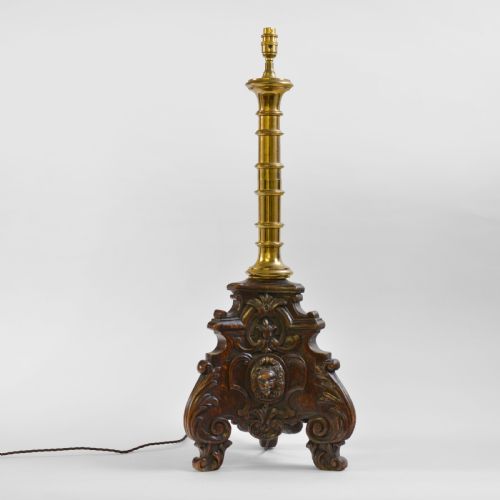
Dating relies primarily on the style of the casting, the assembly methods, and contextual clues from the brass composition and patination. Most pieces belong to the Victorian period and the wider nineteenth-century Gothic Revival movement, though occasional seventeenth-century Flemish oak examples and early twentieth-century interpretations appear.
Examination of the threading, base construction, and wiring apertures helps distinguish nineteenth-century production from later revivals.
What styles accompany gothic brass lamps?
The listings encompass several related aesthetics, including Romanesque Revival, Flemish Baroque, and French nineteenth-century ecclesiastical design. These styles share a preference for heavy metalwork, structural columns, and medieval ornamentation.
While gothic pieces dominate through pointed arches and trefoil motifs, Romanesque variants introduce rounded arches and heavier, blockier proportions.
How do I style a heavy brass lamp?
A heavy metal lamp anchors a room when placed on a substantial wooden sideboard, desk, or side table where its architectural weight can balance surrounding objects. Pairing the metal base with a textured shade in damask or silk fringe softens the industrial feel of the brass.
These pieces integrate naturally into traditional, eclectic, or maximalist interiors that embrace historic metalwork and dark wood furniture.