



Vintage Brass Altar Lights
Vintage brass altar lights bring the solemn majesty of ecclesiastical interiors directly into domestic spaces through enduring metalwork.
Vintage Brass Altar Lights
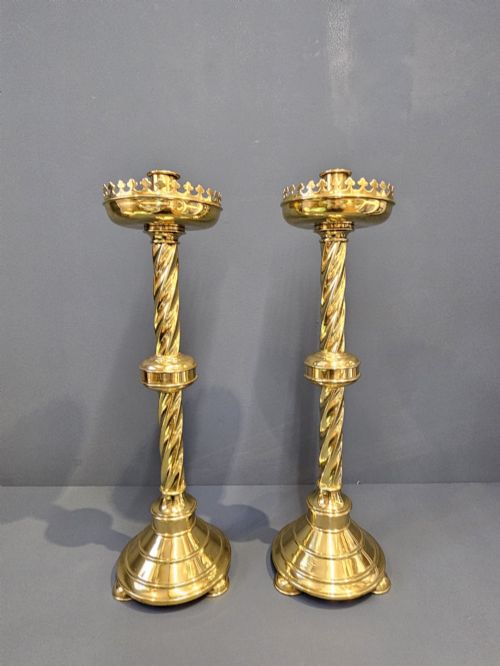
Vintage brass altar lights encompass ecclesiastical candlesticks, pricket stands, and converted lamp forms originating primarily across the nineteenth and early twentieth centuries. Buyers frequently encounter tall pairs displaying ecclesiastical proportions, designed originally for church altars and sanctuary spaces.
The aesthetic leans heavily into Gothic Revival and Victorian design idioms, alongside occasional Amsterdam School and Baroque revival expressions. These objects bridge sacred architecture and domestic decoration, functioning equally as striking table lamps or monumental candlesticks.
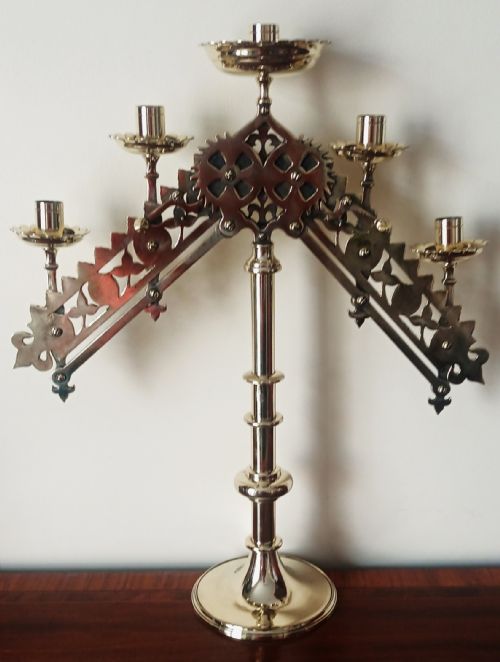
Most examples hail from British, French, and Italian workshops, reflecting a broad European tradition of heavy metal casting. Standard configurations range from simple columnar shafts to articulated candelabra and multi-tiered ecclesiastical designs.
Materials and production methods
Construction relies predominantly on solid cast brass and bronze, often paired with secondary elements of wrought iron or wood to achieve structural stability. Metal components undergo traditional sand casting and lathe turning, resulting in substantial weight and robust physical presence.
Surface treatments vary from polished finishes to patinated bronze surfaces, occasionally incorporating enamel detailing or fabric components like silk fringe on related shade elements. Many items integrate threaded joints and heavy bases to support the considerable height of church candles or electrical fittings.
Current inventory includes nineteenth-century pieces alongside early twentieth-century examples utilising cast brass, bronze, and wrought iron.
Distinguishing quality factors
Superior examples separate themselves through crispness of cast ornamentation and the sheer heft of the metal components. Better workshops invested in finer chased detailing, particularly upon Corinthian capitals and Gothic tracery, whereas lesser pieces rely on simpler, softer castings.
Proportion and scale dictate desirability, with taller graduated sets and matched pairs commanding greater presence in a room. The integrity of original construction, including heavy weighted bases and authentic period patination, elevates an individual piece above later adaptations.
T Thomason & Co
The Vintage Brass Altar Lights Glossary
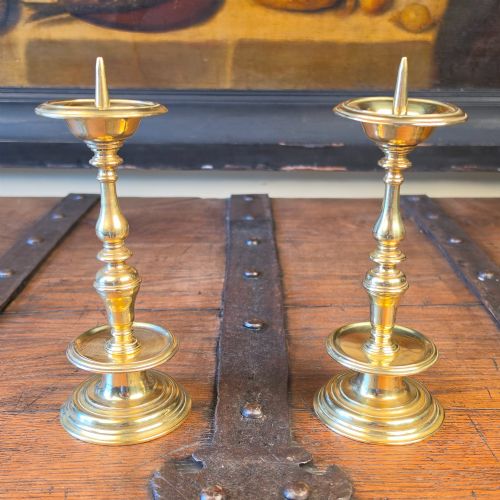
- Pricket candlestick
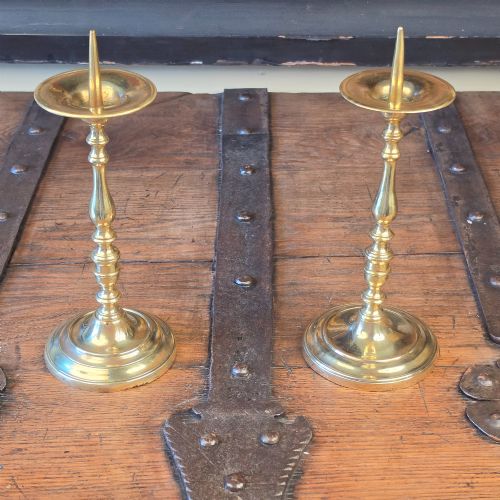
- A heavy candlestick featuring an upright metal spike in the centre of a drip pan to secure large wax candles.
- Gothic Revival
- An architectural and decorative style popular in the nineteenth century that imitates medieval ecclesiastical forms and pointed arches.
- Candelabra
- A branched candlestick holder designed to support multiple candles simultaneously from a single central stem.
- Corinthian column
- A classical architectural column type featuring ornate acanthus leaves decorating the upper capital.
- Amsterdam School
- An early twentieth-century architectural and design movement known for expressive, rounded brickwork and richly textured metal forms.
Vintage Brass Altar Lights: Frequently Asked Questions
What is a pricket candlestick?
A pricket candlestick uses a central metal spike rather than a socket to hold the candle firmly in place.
This design appears frequently on heavy altar lights intended for large wax pillars.
How do I date these brass lights?
Dating relies on stylistic clues like Gothic Revival motifs or Amsterdam School shaping alongside casting methods.
Most pieces span the Victorian period through the early twentieth century.
Were these originally used in churches?
Many large pairs served practical ecclesiastical functions on church altars before entering the antique market.
Others were manufactured specifically for domestic revival interiors of the era.
Can these be used as table lamps?
Several examples arrive converted with electrical fittings or accommodate lampshades alongside traditional candle holders.
Their substantial height makes them suitable for sideboards and larger surface areas.