


Brass Cranberry Oil Lamp
These brass cranberry oil lamps combine gleaming metal and rich pink-red glass to bring Victorian warmth and bright colour into a room.
Brass Cranberry Oil Lamp
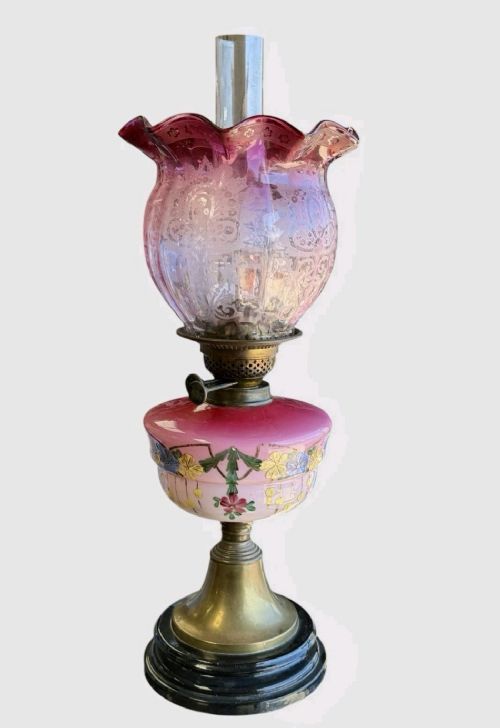
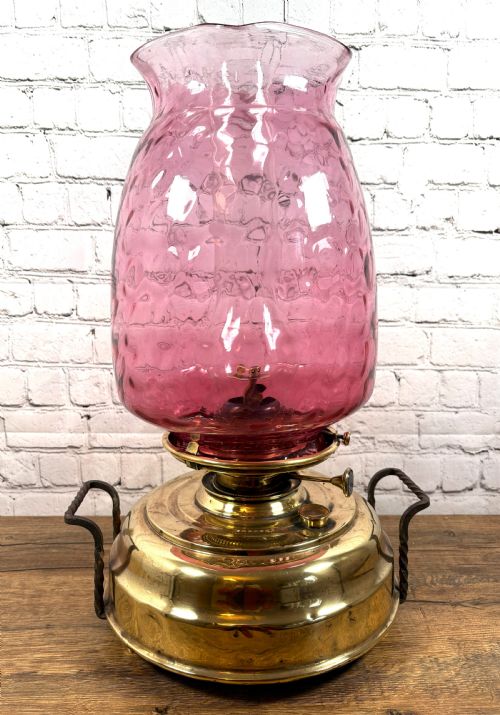
A brass cranberry oil lamp brings together a polished or cast metal base with a distinctive glass shade or vessel in shades of pink and deep red. These domestic lighting pieces mostly date from the Victorian and Edwardian periods, stretching from the mid nineteenth century into the early twentieth century.
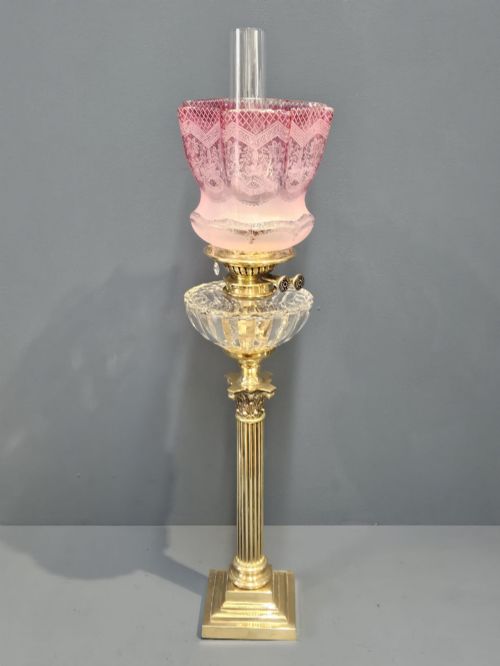
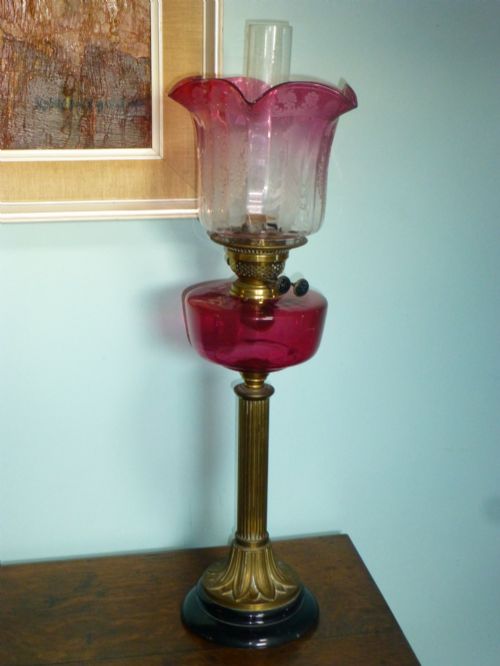
The versions most commonly met on this page stand on solid brass columns, sometimes fluted in the Corinthian style or supported by heavy adjustable stands, holding fonts and shades of cranberry glass. Alongside standard table pieces, the form appears as taller floor-standing models, wall sconces and pulpit heaters.
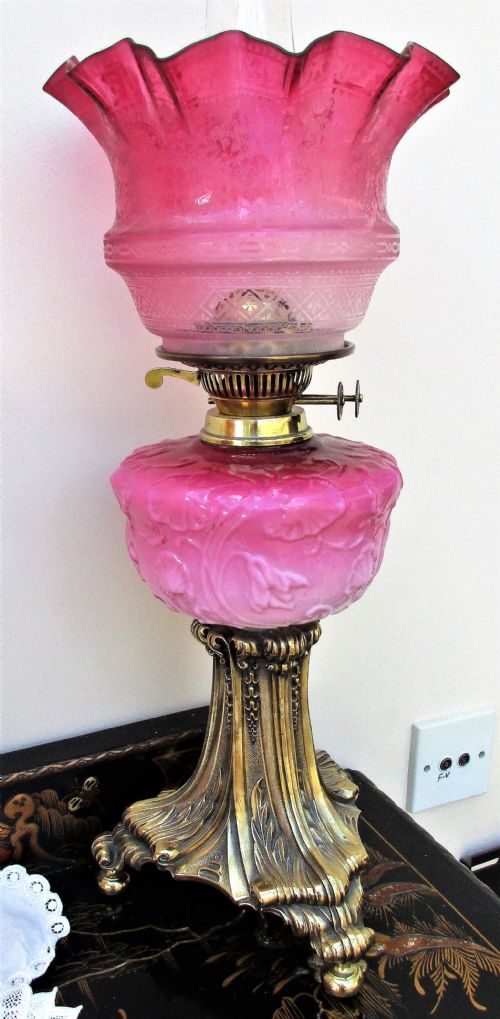
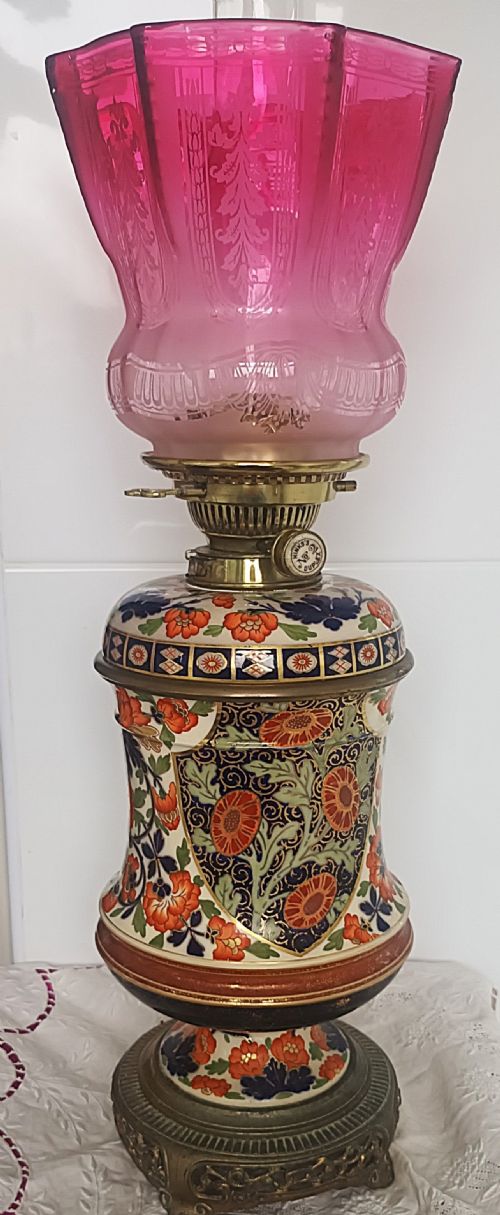
Makers and designers of the period utilised various formats, from simple reeded columns to elaborate examples featuring ceramic reservoirs, marble stems or figural brass mounts like cherubs. Many survive in standard duplex burner configurations or have undergone conversion to electricity for modern interior use.
Materials and construction
The structural framework relies heavily on brass, often paired with copper, iron, or heavy marble bases to provide stability for the tall glass components above. Metal columns and reservoirs are cast, turned, and polished, while some incorporate ceramic or porcelain bodies painted with botanical or figural scenes.
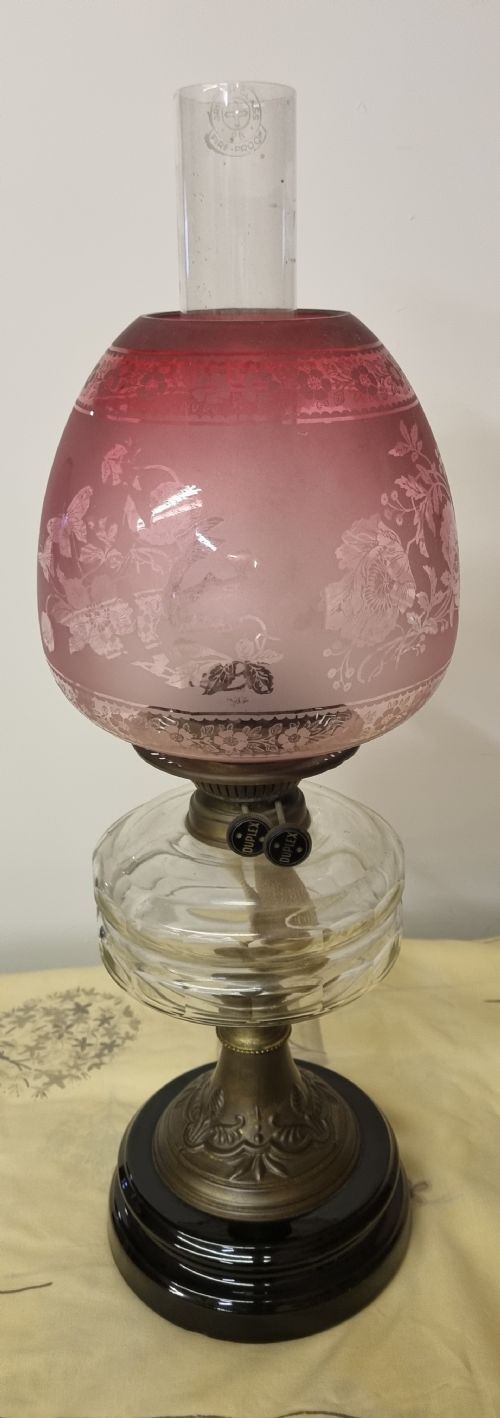
The distinctive red colour of the glass comes from the addition of gold or copper oxide to the molten batch during manufacture, creating shades from soft pink to rich cranberry. Artisans shaped these vessels by hand-blowing, moulding, or cutting the glass, occasionally adding etched patterns, hand-painted details, or delicate filigree brass mounts.
Surviving lighting configurations range from standard table lamps and tall floor stands to wall sconces and pulpit heaters.
Judging quality
The distinction between ordinary and superior pieces rests on the weight of the metal casting and the crispness of detail in elements such as Corinthian capitals. Heavy, solid brass bases with well-defined ornamentation sit above lighter, mass-produced alternatives that lack structural substance.
Glass quality introduces another clear division, visible in the depth of colour and the precision of cut or etched decoration on the shade and font. Matching original components across the base, font, and shade elevate an object above examples assembled from mismatched replacement parts.
Hinks·Taylor Tunnicliff·Sitzendorf·Veritas
The Brass Cranberry Oil Lamp Glossary
- Cranberry glass
- A type of transparent glass coloured with gold salts, producing rich pink and red hues commonly used for Victorian lighting shades and reservoirs.
- Duplex burner
- A double-wick mechanism found on many nineteenth-century oil lamps that produced a brighter flame than single-wick variants.
- Corinthian column
- A classical architectural column style frequently utilised for the brass stems of tall Victorian table and floor lamps.
- Peg lamp
- A small oil lamp fitted with a tapered metal peg designed to drop directly into a separate candlestick or base.
Brass Cranberry Oil Lamp: Frequently Asked Questions
How do I date a brass cranberry oil lamp?
Dating relies primarily on the registration marks, burner types, and stylistic cues present in the brass casting and glass manufacture. Most examples date from the Victorian era through to the early twentieth century, with architectural column styles and heavy marble bases appearing frequently in mid-to-late nineteenth-century pieces.
Examining the burner mechanism provides further chronological clues, as patented double-burner systems gained popularity towards the end of the nineteenth century. Simpler wall-mounted and table formats span across the entire period, reflecting steady domestic production.
Were these lamps originally paired with shades?
Many lamps were manufactured with matching cranberry glass shades, often decorated with etched patterns or hand-painted floral motifs. The shade directed light and completed the visual balance of the tall brass column and font.
Over time, shades were frequently broken and replaced, meaning some surviving lamps now feature later or replacement glass components. Finding an example with its original matching shade and font remains a notable feature for collectors.
How can I safely convert one to electricity?
Conversion typically involves running a discreet electrical wire through the central column without altering or damaging the historic brass structure. Many pieces have already been adapted for modern use while retaining their original burners and collars.
Consulting a professional lighting restorer ensures the internal wiring meets safety standards while preserving the exterior appearance of the antique metalwork and glass.
What is the difference between a table lamp and a floor lamp?
Table lamps were designed to sit on side tables or desks, featuring compact brass columns and moderate overall heights suitable for domestic rooms. Floor lamps stand much taller, often incorporating heavy weighted bases or adjustable stands to illuminate larger living spaces.
Makers also produced wall-mounted versions and caravan bracket lamps, which featured specialised bow tops to secure the vessel safely against movement.