







Brass Copper Log Bucket
A brass copper log bucket brings both practical warmth and tactile metalwork to a fireside hearth.
Brass Copper Log Bucket
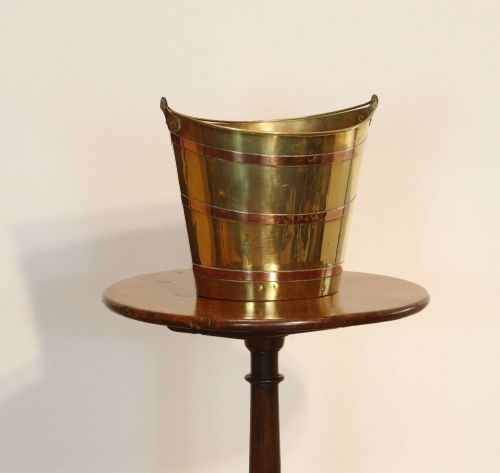
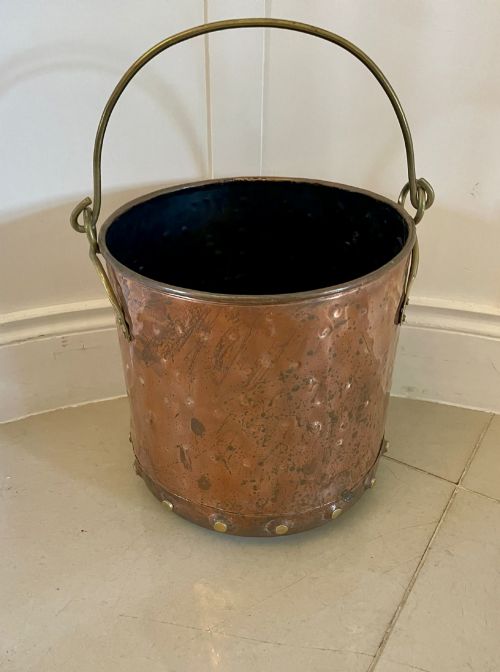
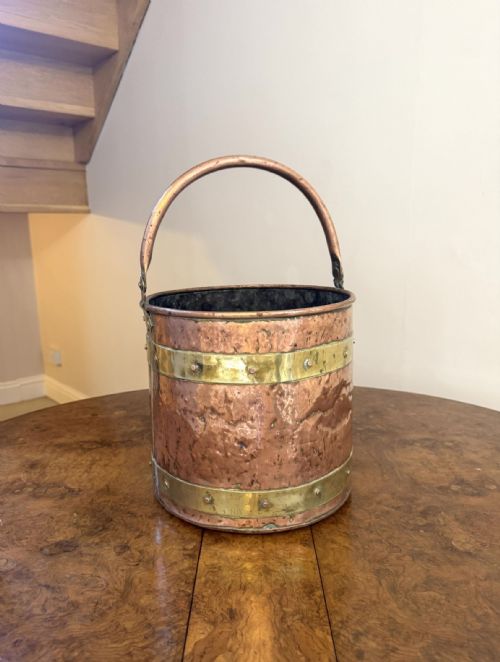
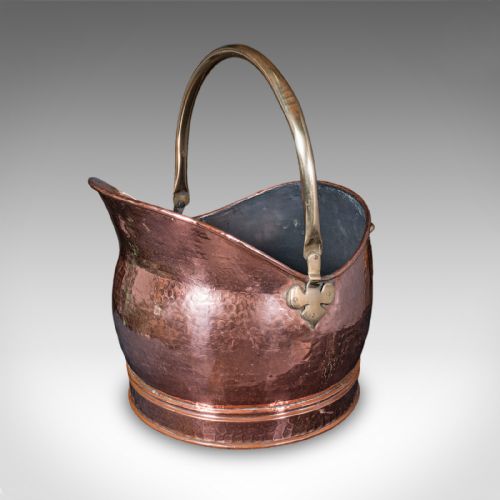
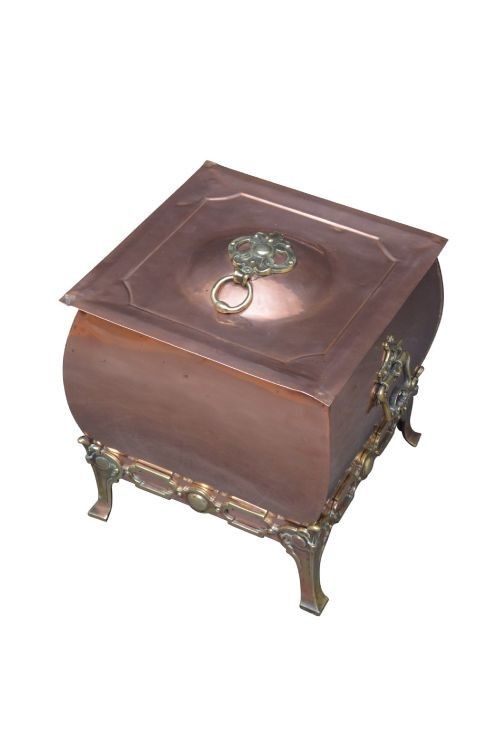
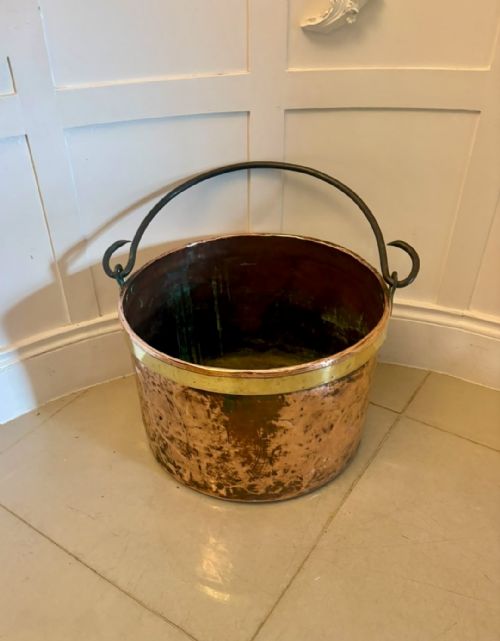
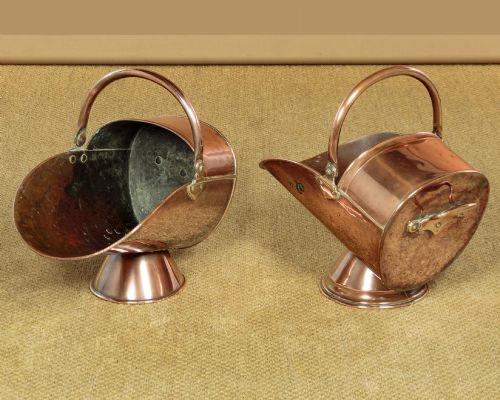
A brass copper log bucket is a sturdy fireside container designed to hold fuel such as wood, peat, or coal near a hearth. These vessels appear in forms ranging from traditional bucket shapes and helmet scuttles to oval lidded bins and cauldrons.
The pieces available here lean heavily toward Victorian and Georgian periods, alongside Edwardian and Arts and Crafts examples. Alongside primary fuel storage, many items double as planters, jardinieres, or general waste bins.
Makers and craftsmen of the nineteenth and early twentieth centuries utilised mixed metals to create functional objects that also served as decorative interior furnishings. Buyers will find variations in scale, from small hearthside pans to large floor-standing log bins.
Materials and construction methods
Makers built these vessels primarily from sheet copper and brass, frequently combining the two metals to create contrasting rims, handles, bands, and feet. Iron, wrought iron, and tin often appear in internal fittings, swing handles, or structural bands.
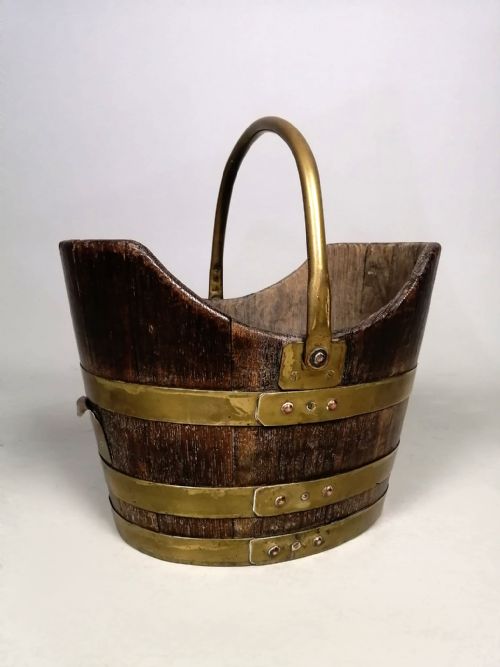
Construction techniques visible across the listings include hand-beating, riveting, and hammering to shape the metal bodies. Certain pieces utilise coopered wood construction in oak or walnut, bound with brass or copper bands rather than relying entirely on sheet metal.
Brass Copper Log Bucket Retail Price Guide 2026
Typical asking prices for brass copper log bucket among the pieces listed under this phrase on Sellingantiques today, from the lower quarter to the upper quarter. They describe what is for sale here now, not the wider market.
Listings feature items spanning the Georgian, Victorian, Edwardian, and Arts and Crafts periods, constructed from copper, brass, iron, oak, and walnut.
Assessing quality in metalwork
Quality in a brass copper log bucket rests primarily on the thickness of the metal sheet and the integrity of its construction. Heavy-gauge copper and solid brass banding indicate superior durability compared to thinner, pressed alternatives.
The refinement of surface finish also separates finer examples from standard utility items. Hand-hammered texturing, careful riveting, and the integration of sturdy swing handles demonstrate skilled artisan production rather than mass manufacture.
William Soutter And Sons
The Brass Copper Log Bucket Glossary
- Coal Scuttle
- A vessel designed for holding and carrying coal to a fireplace. These often feature a shaped mouth and a rear handle for controlled tipping.
- Jardiniere
- An ornamental pot or stand for holding plants or flowers. In metal fireside pieces, these often share a form with log bins and coal buckets.
- Dinanderie
- Objects made of beaten or polished brass, copper, or bronze. This term encompasses many decorative vessels from the Arts and Crafts period onwards.
- Coopered
- Assembled from vertical staves of wood held together by metal hoops, much like a traditional barrel. Walnut and oak frequently appear in this style.
- Swing Handle
- A pivoting metal handle attached to opposite sides of a bucket or cauldron. It allows for balanced carrying of heavy loads of fuel.
Brass Copper Log Bucket: Frequently Asked Questions
What is a brass copper log bucket used for?
These vessels serve as practical containers for holding firewood, logs, or coal right beside a domestic fireplace.
Beyond fuel storage, many owners repurpose them as large indoor plant pots, umbrella stands, or decorative floor bins.
How do I date a brass copper log bucket?
Dating relies on examining construction techniques, such as hand-beating and visible riveting typical of Victorian and earlier pieces. Styles also shift from the simpler Georgian lines to elaborate Arts and Crafts or Edwardian surface decoration.
Material choices, including walnut staves or specific brass mountings, further help narrow down the period of manufacture.
Are these buckets waterproof?
Many metal buckets feature sealed or soldered seams designed to contain loose debris and small amounts of moisture from damp wood. However, older riveted joints can develop minor weeping over time.
Using a modern liner inside protects the historic metal and wood from prolonged contact with standing water or wet soil.
How do I clean a brass copper log bucket?
Maintenance generally involves gentle dusting and occasional wiping with a soft, dry cloth to preserve the aged surface. Aggressive metal polishes strip away desirable historical patination that accumulates over generations.
Allowing the copper and brass to retain their natural warmth highlights the hand-finished character of the metal.