
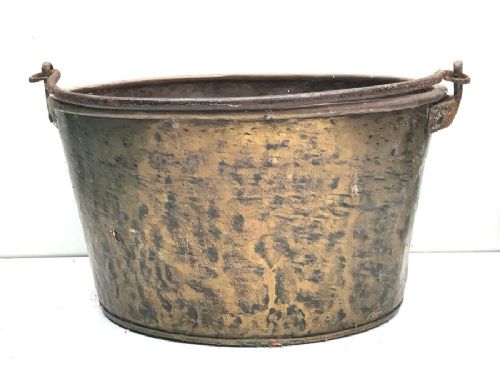
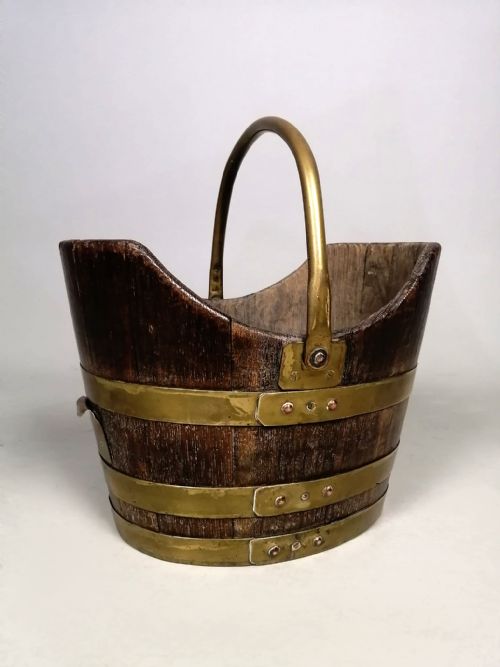
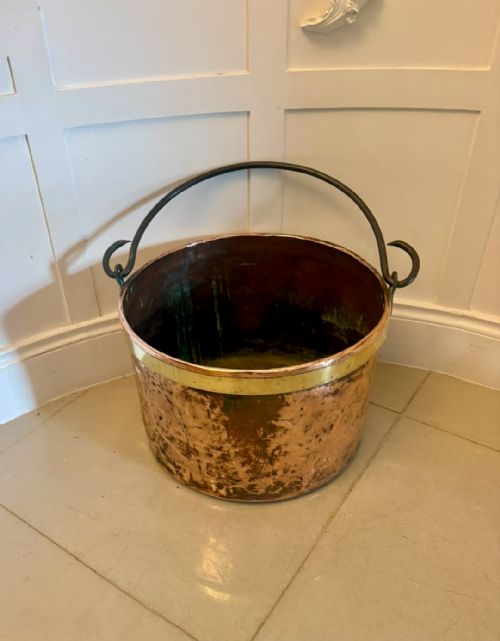


Georgian Copper Log Bin
A georgian copper log bin brings functional hearthside warmth into a room, combining heavy metalwork with domestic utility.
Georgian Copper Log Bin
A georgian copper log bin serves as a substantial hearthside container for holding firewood, appearing across listings in forms such as cauldrons, buckets, scuttles, and pots. These vessels originate from the 18th century, the Georgian period, and the 19th century, reflecting domestic practices of storing solid fuel near the fireplace.
The versions most frequently met on this page span the 18th Century, 1800, and the 19th Century, frequently categorized alongside fireside accessories and coal buckets. Surviving examples demonstrate heavy utility, moving between kitchen cookware and refined country house fireside storage.
Materials and construction
The construction of these pieces relies heavily on heavy-gauge copper joined with brass, wrought iron, and iron components. Workshops utilised brazed, dovetailed, and seamed construction techniques to build durable vessels capable of holding dense loads of timber.
Many items incorporate contrasting metal banding, riveted seams, and occasional oak elements to reinforce the body. This combination of materials provided both structural integrity and the resilience required for daily fireside service.
Some heavy log bins spent decades simmering stews before retiring to quiet service beside the hearth.
Assessing quality
Quality in these vessels reveals itself in the weight of the metal and the precision of the seaming. Heavier gauge copper and tight dovetail joints separate utilitarian kitchen pots from more decorative fireside bins.
The refinement of ancillary details, such as brass bands and riveted construction, distinguishes ordinary utility items from superior country house pieces. Substantial scale and balanced proportions indicate greater original craftsmanship.
The Georgian Copper Log Bin Glossary
- Copper
- A malleable reddish-brown metal forming the primary body of these vessels. It offers high thermal conductivity and a distinctive surface patina.
- Brazed construction
- A method of joining metals using a molten filler metal at high temperatures. This technique ensured watertight and robust seams in heavy cauldrons.
- Dovetailed seaming
- An interlocking joint pattern hammered along the edges of metal plates before securing. It provides exceptional tensile strength for large cylindrical containers.
- Log bin
- A deep vessel designed specifically for storing firewood beside a hearth. These items often double as coal buckets or planters.
- Cauldron
- A large round pot with a large capacity, frequently adapted for domestic storage use. Their heavy rims supported lifting and movement.
Georgian Copper Log Bin: Frequently Asked Questions
How were log bins used originally?
These vessels sat beside the hearth to keep firewood dry and close at hand for the fire.
They also served multipurpose roles in large households, occasionally doubling as coal scuttles or cauldrons for various domestic tasks.
What periods do these pieces date from?
The pieces span the 18th century and the 19th century, including specific dates around 1800 and the Georgian era.
Victorian examples also appear, reflecting continued manufacturing traditions into the later period.
How do I care for antique copper?
Maintain the metal by dusting gently and avoiding harsh abrasive cleaners that strip the historic surface.
Allowing the natural patina to remain preserves the character developed over centuries of use.
Can I use them as planters?
Many of these vessels are suitable for holding large plants and indoor trees.
Their robust copper and iron construction resists moisture, though placing a protective liner inside guards against prolonged dampness.