
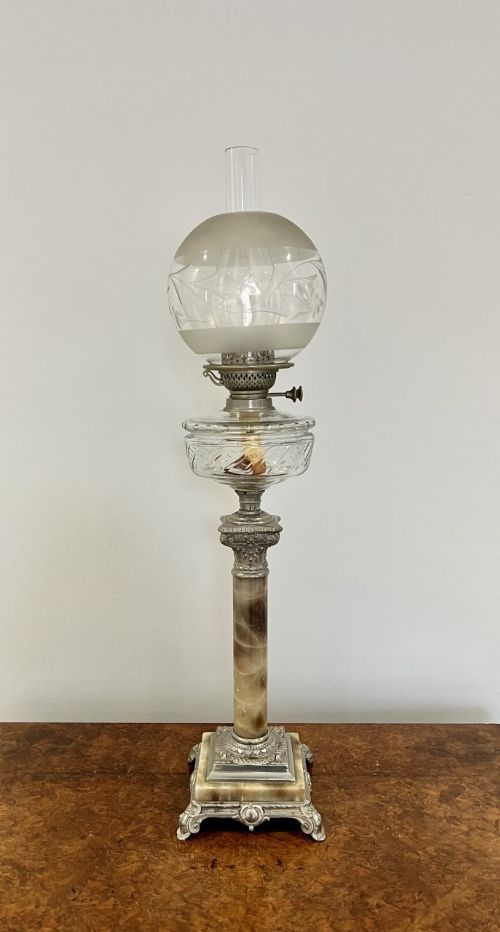
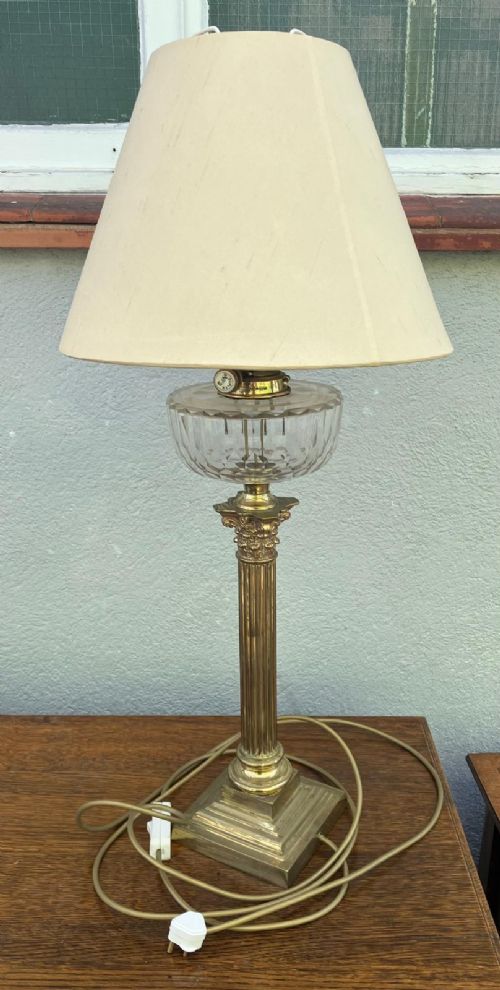
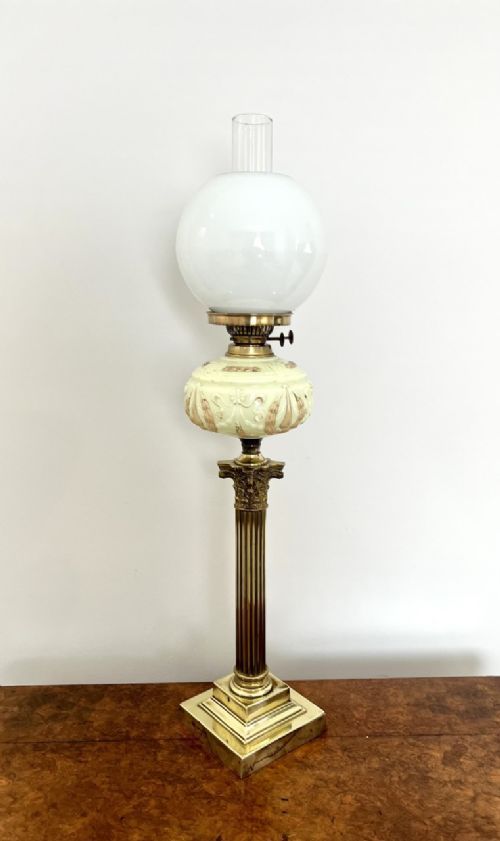
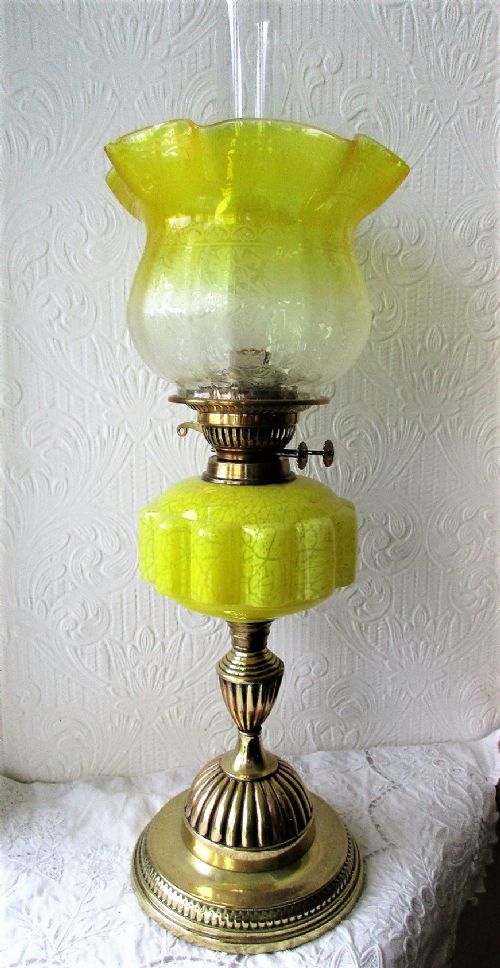
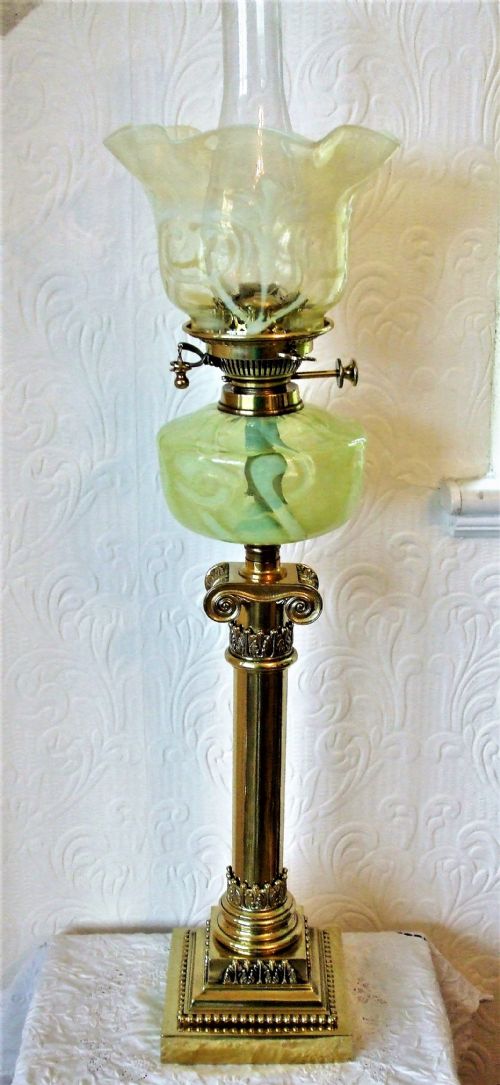
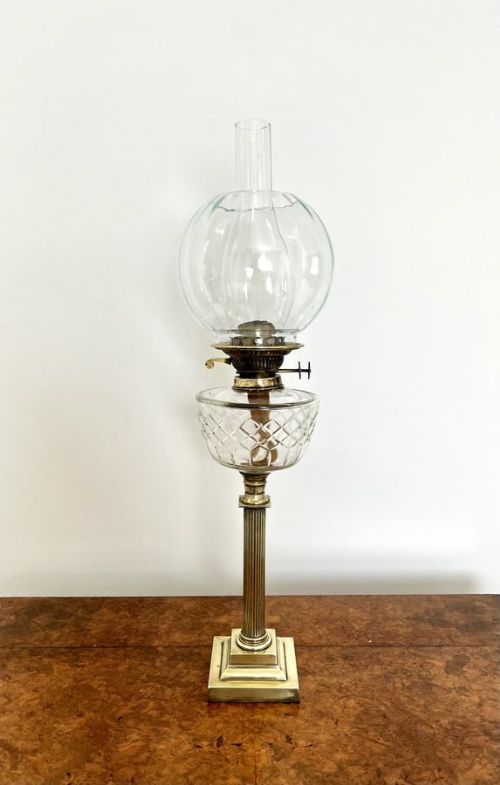
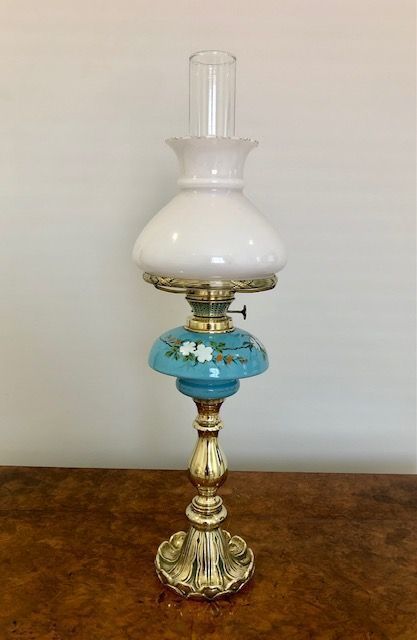
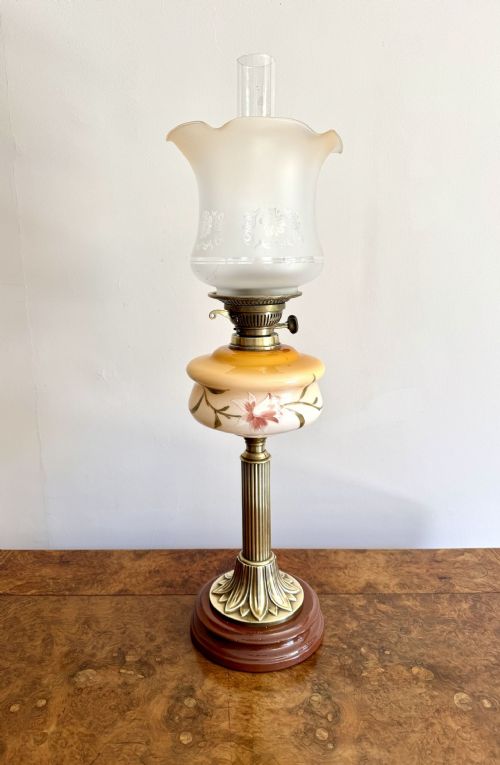
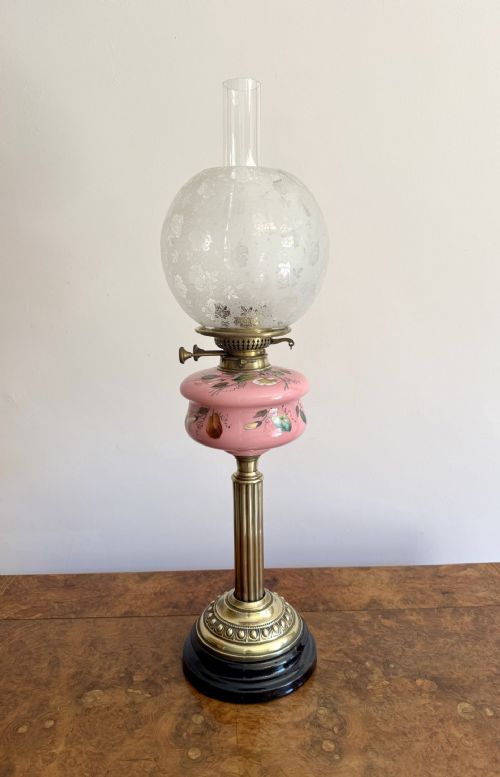
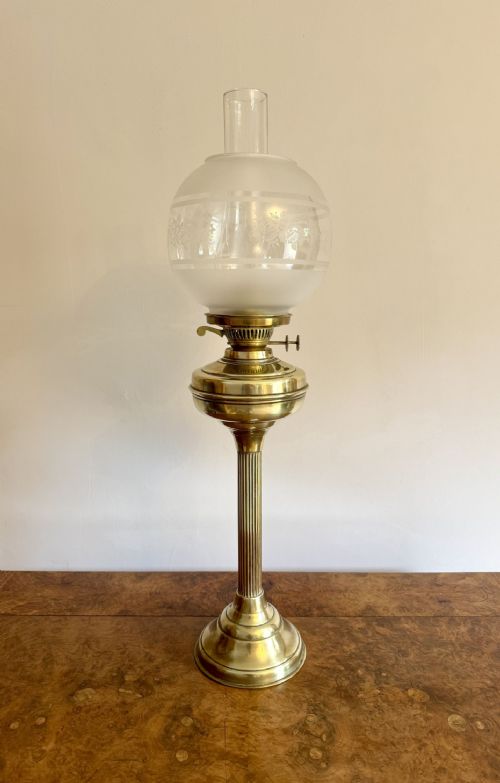


Brass Column Paraffin Lamp
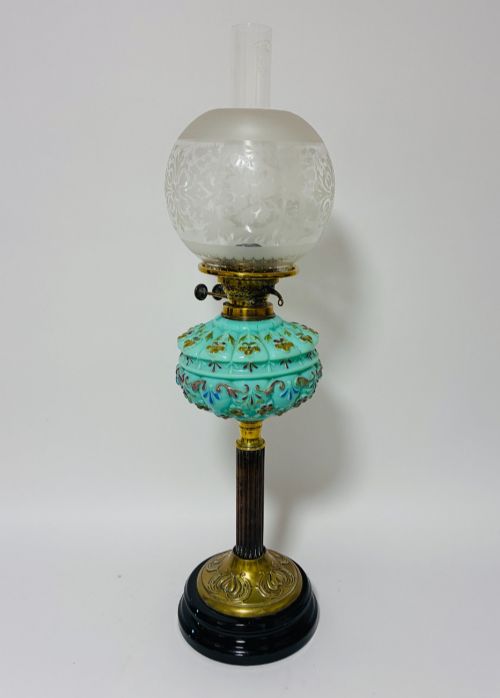
A brass column paraffin lamp brings heavy Victorian engineering and bright coloured glass together on the table.
Brass Column Paraffin Lamp
When you search for a brass column paraffin lamp, you are looking at domestic lighting fixtures dating primarily from the Victorian and Edwardian eras. These pieces combine a rigid metal shaft with an oil reservoir, frequently topped by a decorative glass shade.
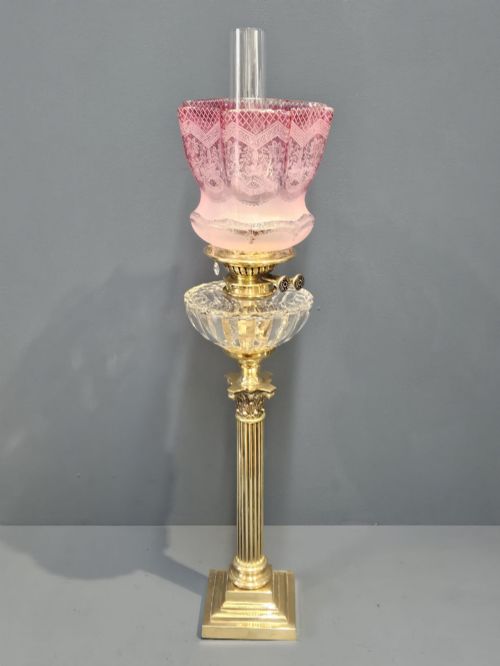
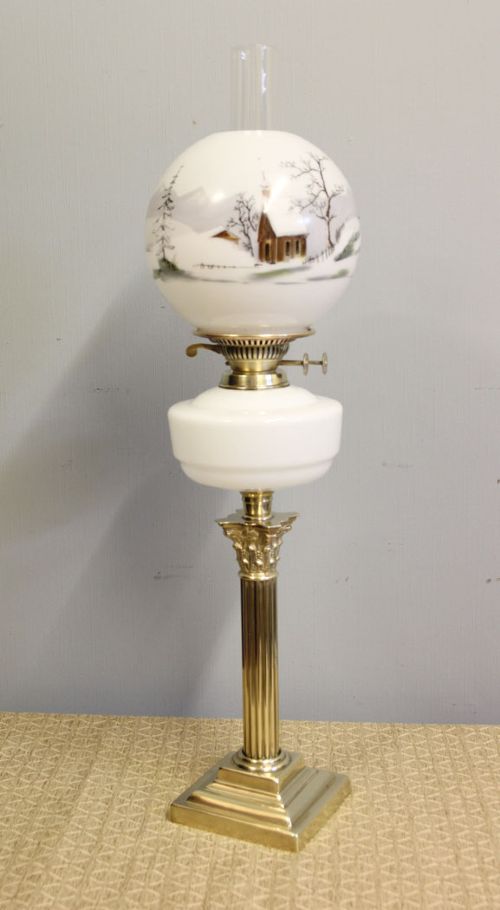
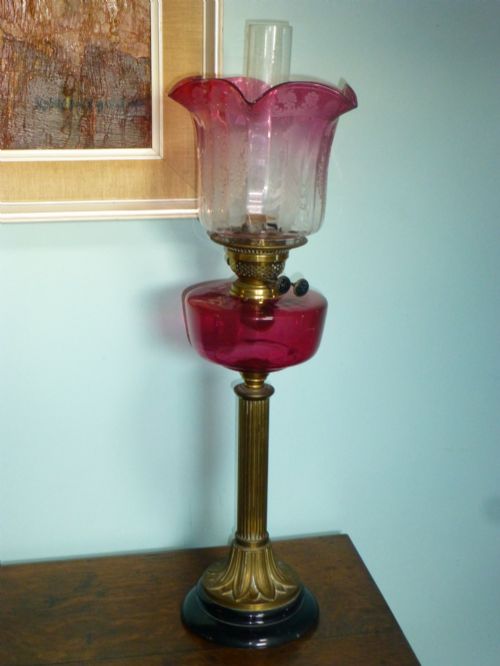
The version you are most likely to meet on this page is the Corinthian or Ionic column design in solid brass, standing on a heavy square foot. Many examples pair the metallic stem with a coloured glass font in cranberry, pink, or blue, supported by periods spanning the mid nineteenth century to the early twentieth century.
Makers such as Hinks produced standard and duplex burner systems that defined domestic illumination during the period. The listings here include table lamps and taller floor-standing variants, some retaining their original burners while others have been adapted for electricity.
Materials and construction
Manufacturers built these lamps using heavy-gauge brass for the structural column and base, often casting the classical capitals in detailed relief. The metal components were turned on lathes and polished, while fonts and shades were cast or blown in various coloured and opaline glass formulations.
Assembly relied on threaded brass rods running through the centre of the column to secure the base, font holder, and burner mechanism together. Burners such as the duplex system incorporated twin flat wicks and complex brass thumbwheels to regulate the flame, paired with galleries designed to hold glass chimneys securely.
Brass Column Paraffin Lamp Retail Price Guide 2026
Typical asking prices for brass column paraffin lamp among the pieces listed under this phrase on Sellingantiques today, from the lower quarter to the upper quarter. They describe what is for sale here now, not the wider market.
Listings feature Victorian and Edwardian pieces, incorporating brass columns paired with cranberry, cut glass, opaline, and ceramic fonts.
Evaluating the standard
The distinction between ordinary and exceptional pieces lies in the crispness of the brass casting and the weight of the metal used. Superior examples feature deeply rendered acanthus leaves on Corinthian capitals and heavy gauge brass that resists bending under the weight of the glass font.
Glass quality also dictates value, with hand-etched shades and cased cranberry or crystal fonts showing far greater depth than plain pressed glass. Furthermore, the presence of signed burner mechanisms by known makers elevates the standing of the piece significantly.
Hinks of Birmingham
The Brass Column Paraffin Lamp Glossary
- Duplex burner
- A burner mechanism utilising two parallel flat wicks to produce a brighter flame than standard single-wick models. This system became standard on better quality lamps from the late nineteenth century onwards.
- Corinthian column
- An architectural column style featuring an ornate capital decorated with carved acanthus leaves. It was widely adapted by Victorian lamp makers for formal drawing room pieces.
- Chimney
- The tall, narrow glass tube that surrounds the flame to create a draught and stabilise combustion. Original chimneys often feature hand-finished rims and clear, bubble-strewn glass.
- Opaline glass
- An opaque, milky glass popular in the Victorian period for lamp shades and globes. It softens the light emitted by the paraffin burner while providing a smooth, porcelain-like finish.
Brass Column Paraffin Lamp: Frequently Asked Questions
How do I date a brass column paraffin lamp?
Examine the burner mechanism and the style of the brass casting for chronological clues. Pieces bearing maker stamps on the thumbwheels often correlate with specific patent dates from the Victorian era.
Heavier cast brass columns and classical revival motifs generally point to the nineteenth century, while simpler lines often indicate Edwardian production around 1900.
What is a duplex burner?
A duplex burner uses two flat wicks running side by side to generate a wider, brighter flame than traditional single wick designs. You will find them on larger table and floor lamps.
They require matching double wicks and produce significantly more illumination, which made them popular for main living spaces.
Are these lamps safe to use with oil?
While many retain their original working mechanisms, using them with paraffin requires careful inspection of the metal fount and seals for hairline cracks. Most modern buyers prefer to use them as decorative objects or have them professionally converted.
Conversion to electricity preserves the antique appearance while removing the risks associated with burning paraffin indoors.
How should I clean polished brass?
Dust the brass column regularly with a soft, dry cloth to prevent the buildup of grime in the intricate details of the Corinthian or Ionic capitals. Avoid harsh chemical dips that strip away the aged patina.
Gentle cleaning with a specialist metal polish applied sparingly will maintain the warm metallic glow without damaging the historical surface.