


Brass Column Oil Burner
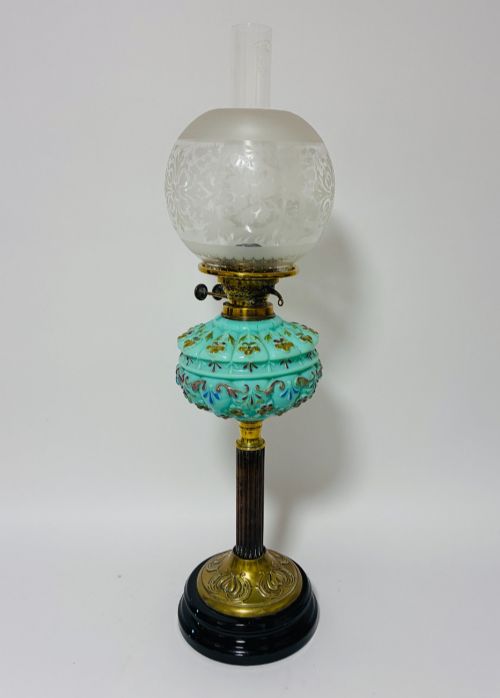
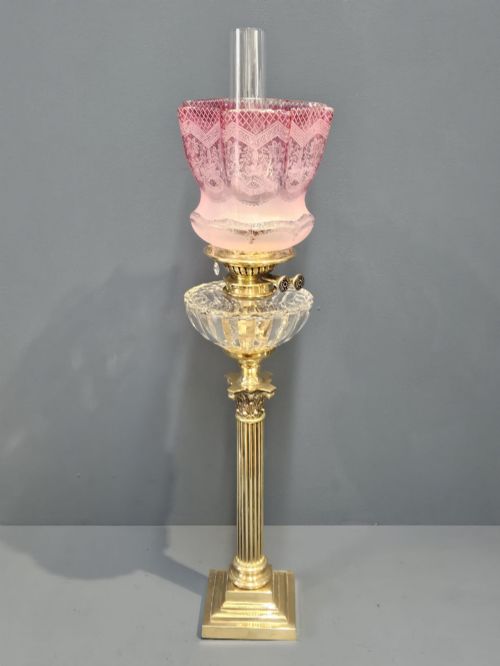
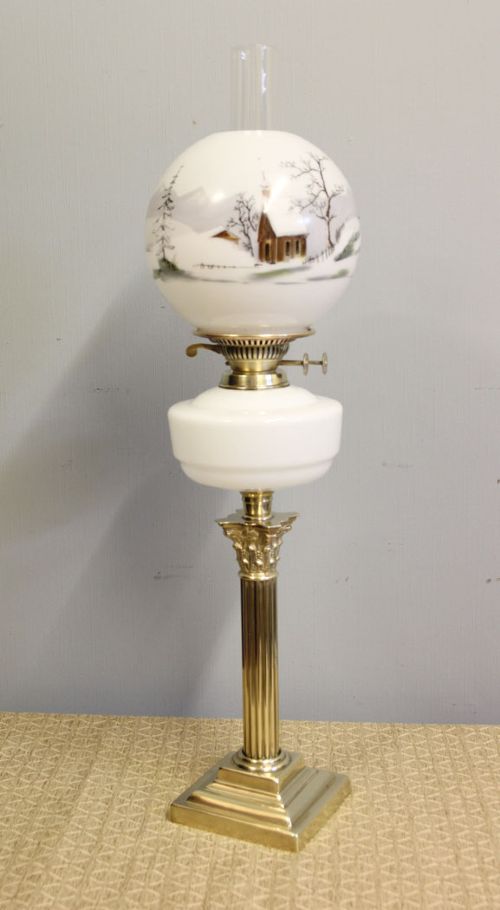
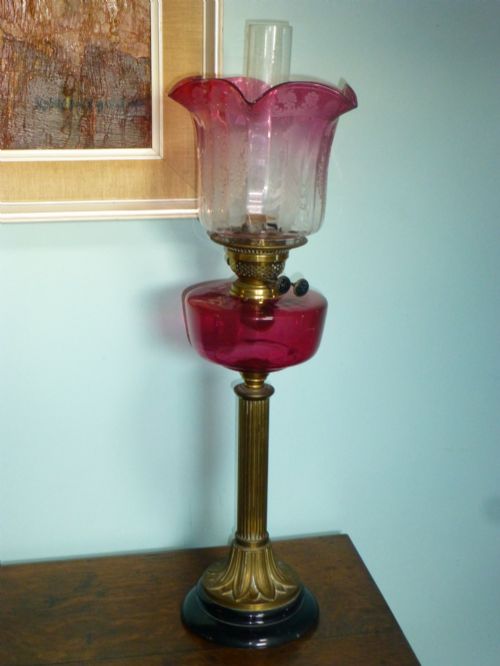
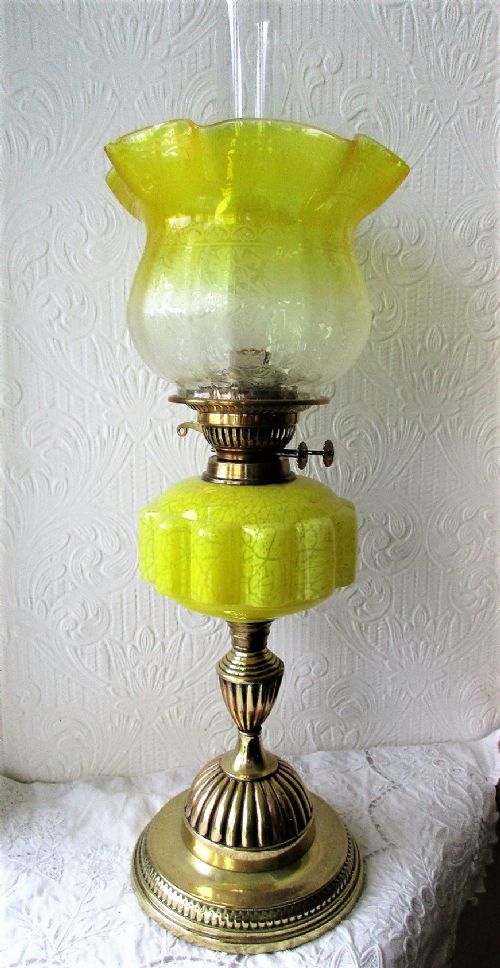
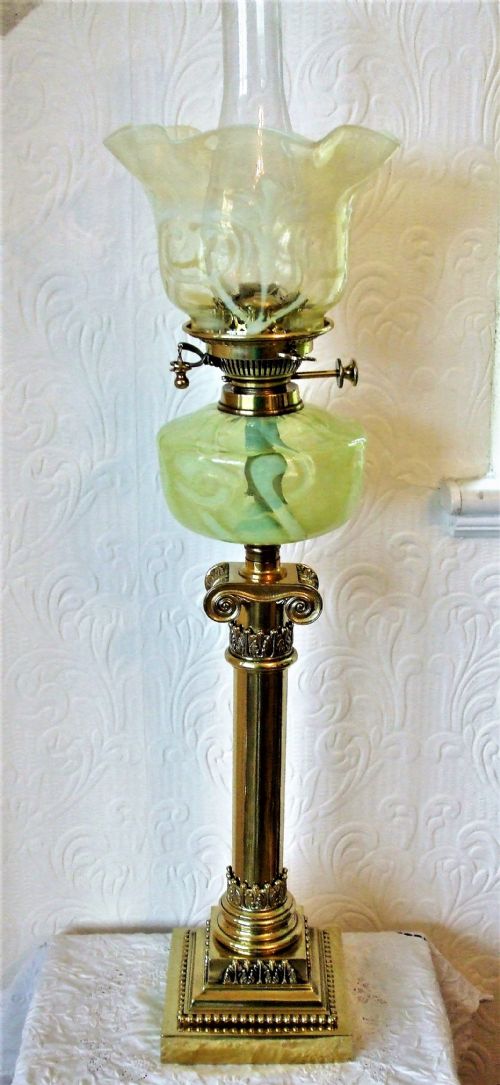
These brass column oil burner designs bring Victorian weight and warm light into a room, combining substantial metal stands with tinted or etched glass reservoirs.
Brass Column Oil Burner
A brass column oil burner sits on a sturdy metal base, most frequently taking the form of a classical Corinthian or Ionic column rising to support a glass font and shade. These lighting pieces date predominantly from the Victorian period through to around 1900, reflecting the domestic technology of the nineteenth century before electricity became common.
The most typical examples encountered on this page feature a polished brass standard mounted above a heavy base, paired with a removable glass shade in cranberry, pink, or opaline glass. Alongside standard single-wick burners, larger duplex variants appear regularly, designed to hold twin wicks for a brighter illumination.
Materials and construction
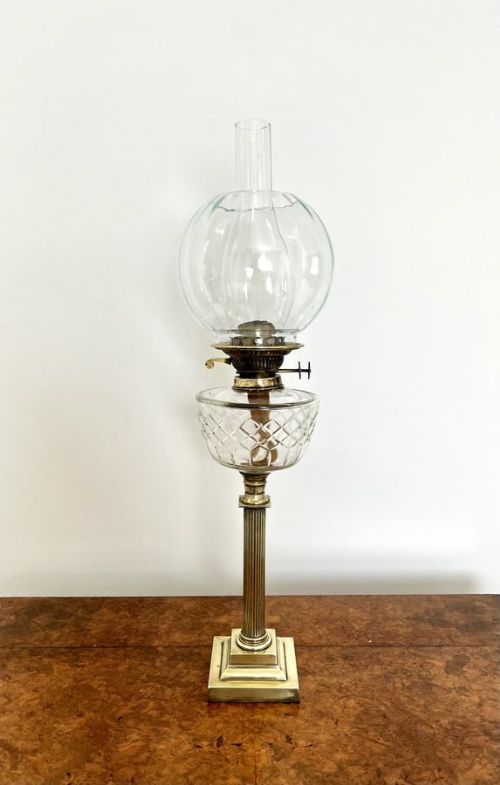
Makers constructed the main standards from cast and turned brass, often incorporating reeded or fluted shafts that mimic classical architecture. These metal columns were frequently paired with glass fonts made from clear, cut, or coloured glass to hold the paraffin.
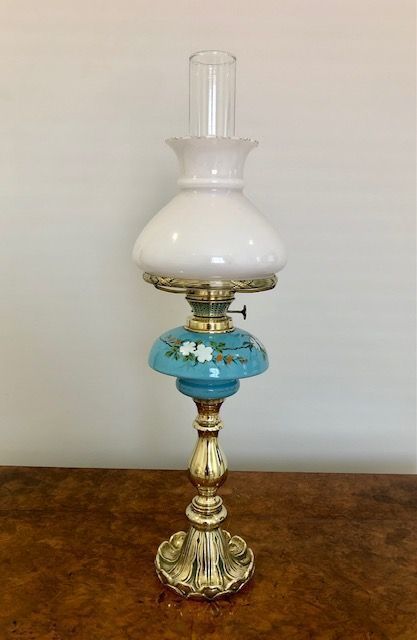
Shades were blown or moulded from specialised glass mixtures, including cranberry glass and milk glass, sometimes finished with etched floral or winter scenes. Burner mechanisms in brass and other metals were mounted to the top of the font, incorporating thumbwheels to adjust the wick height.
Listings show brass column oil burners spanning the Victorian era, utilising cranberry, milk, cut, and opaline glass alongside standard brass components.
Standards of manufacture
Quality in a brass column oil burner depends heavily on the crispness of the casting work on the column capitals and the thickness of the metal used in the base. Finer examples display sharp architectural detailing on Corinthian corners and heavier brass weight throughout the body.
The glass components also determine the calibre of the piece, with heavier cut crystal fonts and rich, evenly coloured cranberry shades representing superior production. Maker-marked burner mechanisms, such as those by Hinks or Messenger, add a layer of distinction to the assembly.
Hinks·Messenger
The Brass Column Oil Burner Glossary
- Corinthian column
- A classical architectural column style featuring an ornate capital decorated with acanthus leaves. This motif was frequently adopted for the standards of Victorian oil lamps.
- Duplex burner
- A burner mechanism designed with two parallel flat wicks instead of one. This arrangement produced a significantly brighter flame and required a wider gallery.
- Font
- The oil reservoir sitting atop the brass column, usually fashioned from coloured, clear, or cut glass. It held the paraffin required to feed the flame.
- Opaline glass
- A semi-translucent white or tinted glass popular in the nineteenth century for lamp shades. It diffused the bright light of the oil flame evenly across the room.
Brass Column Oil Burner: Frequently Asked Questions
How do I operate a brass column oil burner?
To operate the lamp, unscrew the burner gallery and fill the glass font with paraffin oil, allowing the wick to saturate thoroughly before lighting. Adjust the flame height using the side thumbwheel to maintain an even burn without smoking.
Keep the wick trimmed straight and clean the glass chimney regularly to ensure proper combustion and prevent soot buildup on the decorative shade.
What is a duplex burner?
A duplex burner is a nineteenth-century mechanism that accommodates two flat wicks side by side rather than a single wick. This setup provided greater illumination for Victorian parlours.
These double-wick systems require specific matching replacement wicks and proper airflow through the gallery to burn efficiently.
How do I date a brass oil lamp?
Dating relies on stylistic clues such as the classical column design, the presence of specific glass colours like cranberry, and mechanical patents stamped into the brass burner wheels. Most examples date from the Victorian era between 1850 and 1900.
Maker stamps and registry marks on the metal burner components often provide a more precise year of production.
Are these lamps safe to use today?
These pieces function as historical lighting fixtures and require careful handling if filled with paraffin oil. Many collectors prefer to use them strictly as decorative interior objects rather than active light sources.
If you choose to burn oil, inspect the glass font for micro-cracks and ensure the burner mechanism seals tightly to the collar.