


Brass Chinese Lamps
These brass chinese lamps bring together period porcelain and metalwork, offering substantial decorative presence for a room.
Brass Chinese Lamps
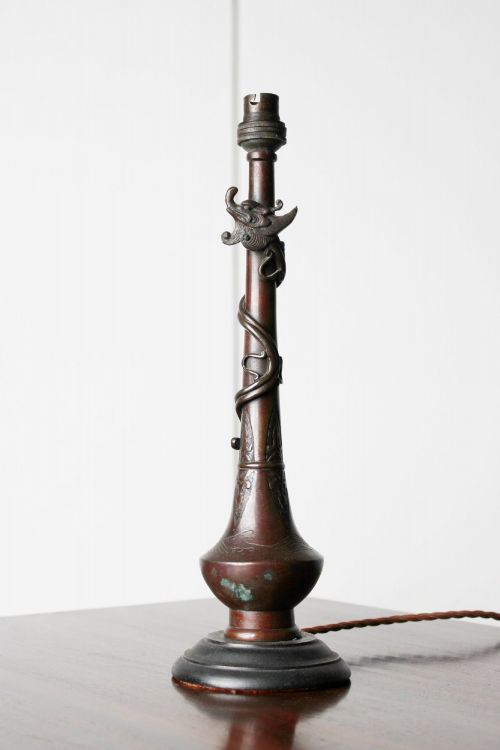
Brass chinese lamps most commonly take the form of converted vessels, utilising nineteenth-century vases, ginger jars, and twin-handled urns mounted for electrical use. The selection relies heavily on nineteenth-century porcelain and cloisonne bodies paired with metal mounts.
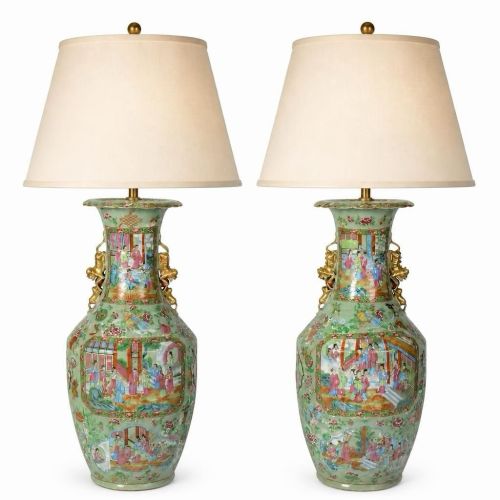
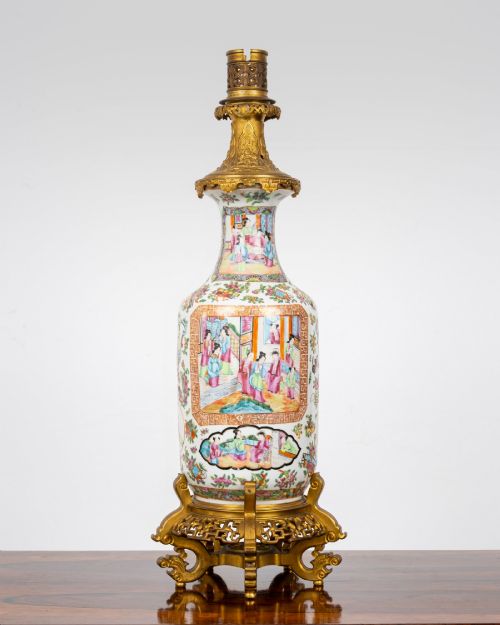
Makers often adapted imported Cantonese and Japanese porcelain bodies, fitting them with gilt bronze, ormolu, or brass components to create domestic lighting. Pairs of Rose Medallion and Famille Verte vases appear frequently alongside single ginger jar forms.
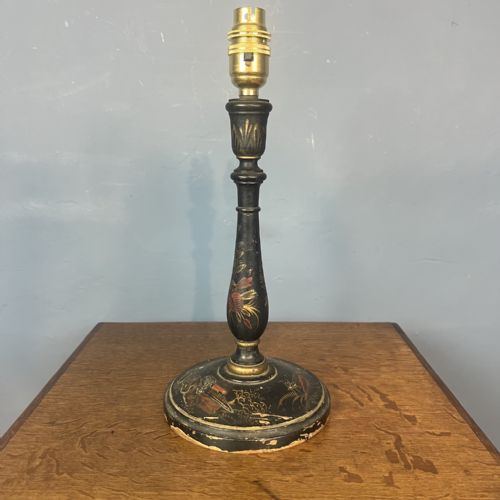
Edwardian interpretations also surface, blending European lacquer work and Chinoiserie styles with traditional forms. These pieces span periods from the early nineteenth century through to the 1930s, reflecting changing British tastes for oriental decoration.
Construction and Materials
The bodies of these lamps combine heavy porcelain, ceramic, or enamel surfaces with structural brass and gilt bronze mounts. Cloisonne examples employ wire-work cells soldered to metal bases and filled with coloured enamel paste before firing.
Porcelain bodies display hand-painted glazes, including blue and white, celadon, and famille rose palettes, often drilled or fitted with collars to accommodate electrical wiring. Wooden elements and fabric shades complete the construction in specific Edwardian variants.
Listings incorporate brass, porcelain, fabric, wood, enamel, silk, gilt bronze, and cloisonne enamel materials across multiple periods.
Quality Variations
Quality rests upon the crispness of the hand-painted porcelain decoration and the weight and chasing of the brass or gilt bronze mounts. Finer examples display intricate enamel work and securely fitted metal collars that integrate cleanly with the ceramic body.
The proportion between the ceramic vessel and its metal base dictates the visual balance of the piece. Superior specimens retain uniform glaze colours and well-preserved surface gilding across both the vessel and the mounting hardware.
The Brass Chinese Lamps Glossary
- Famille Rose
- A palette of opaque enamel colours dominated by pink, introduced in Chinese ceramics during the Qing dynasty. This palette defines many nineteenth-century vase lamps.
- Cloisonne
- A metalwork technique where fine wires form raised barriers on a surface to hold coloured enamel pastes. Pieces using this method show detailed geometric or floral compartments.
- Ormolu
- Finely ground high-carat gold-mercury amalgam applied to a bronze base, providing a rich metallic finish. This material frequently appears in the mounts of nineteenth-century vase conversions.
- Chinoiserie
- European artistic styles reflecting Chinese motifs and decorative techniques, popular during the Edwardian period. Such pieces merge local cabinet-making with oriental aesthetic themes.
- Celadon
- A pale green jade-like glaze applied to porcelain bodies, originating in ancient kilns. This finish provides a subdued, uniform tone for larger lamp bases.
Brass Chinese Lamps: Frequently Asked Questions
Are these lamps converted from old vases?
Many examples originate as nineteenth-century Chinese porcelain vases, ginger jars, or cloisonne vessels that were later mounted and wired for electricity.
This method of adaptation preserves historical ceramic bodies while allowing them to function as modern table lighting.
How do I identify a nineteenth-century piece?
Nineteenth-century examples typically display hand-painted famille rose, blue and white, or celadon glazes paired with heavy brass or gilt bronze mounts.
Examination of the porcelain body and the wear on the metal components helps indicate the age of the construction.
Do these lamps come with shades?
Certain listings include matching fabric shades, particularly those originating from the Edwardian period or later twentieth-century iterations.
Buyers should verify whether a specific lamp includes a shade or requires a separate purchase to fit the holder.
Can these lamps be used safely today?
A number of pieces feature updated wiring to meet contemporary standards, though older fittings may require professional inspection by an electrician.
Checking the cord and plug condition ensures safe integration into a modern domestic setting.