




Brass Charger Tray
A brass charger tray brings heavy domestic metalwork and intricate chased ornament into modern rooms, offering broad circular surfaces that catch the light.
Brass Charger Tray
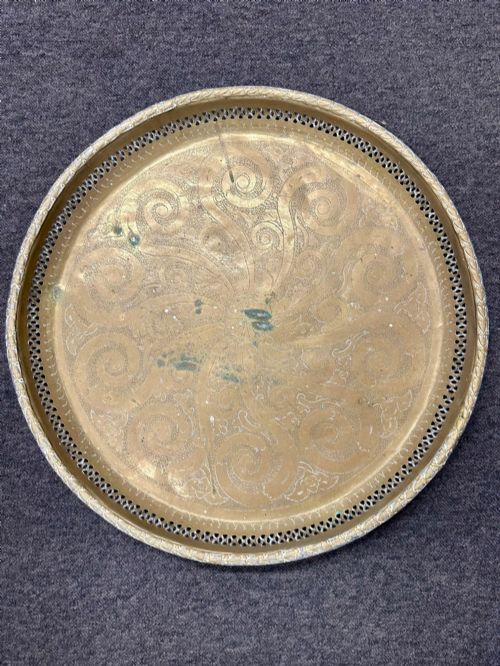
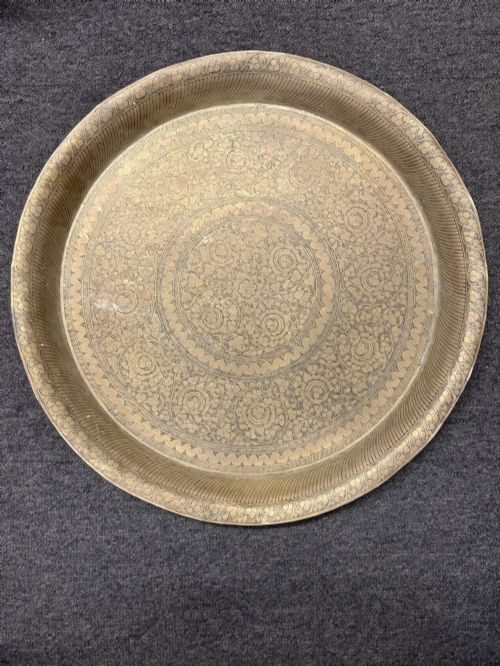
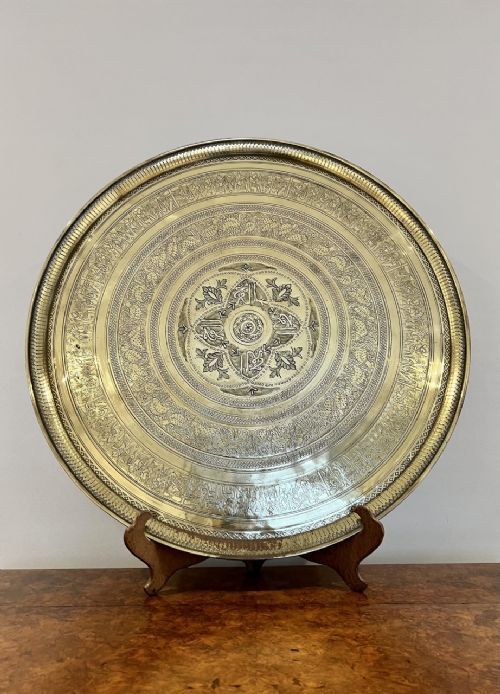
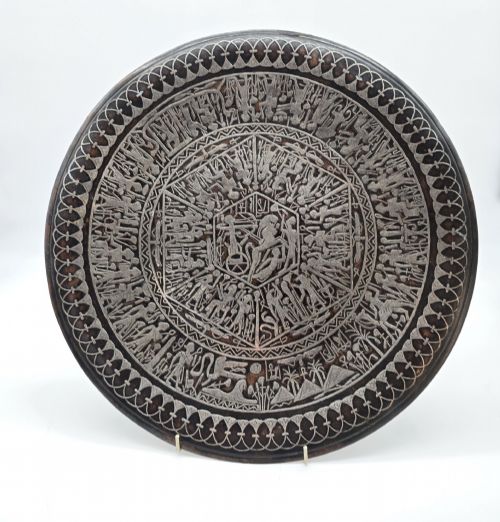
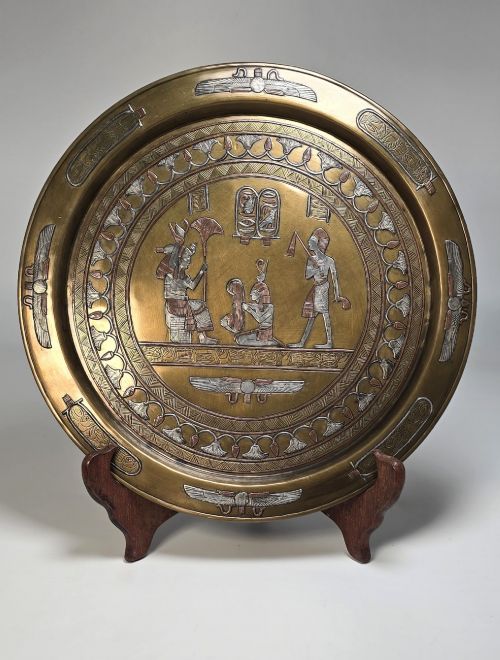
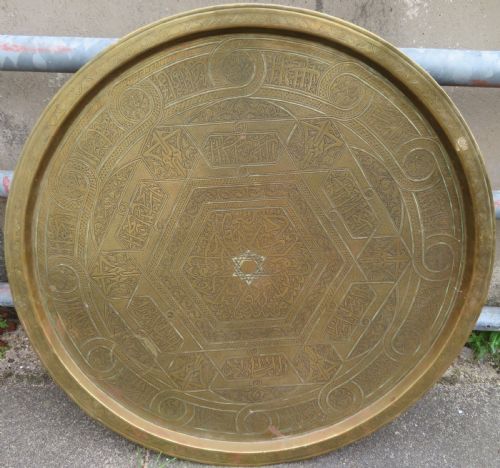
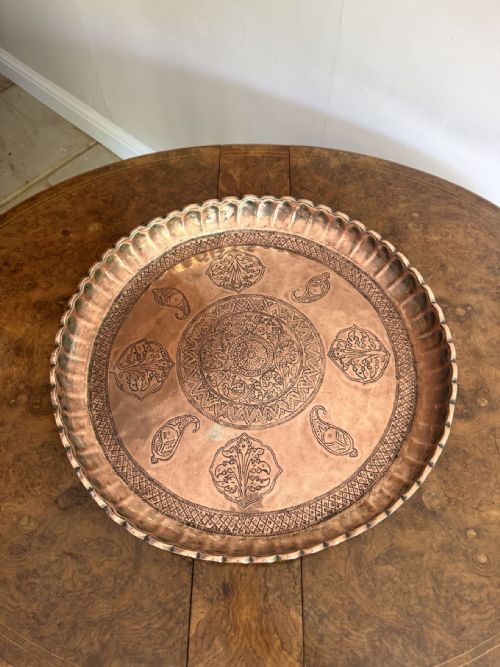
A brass charger tray encompasses wide circular wall plates, deep serving platters, and decorative dishes fashioned from base metals across the nineteenth and early twentieth centuries. When searching for a brass charger tray, buyers encounter heavy mixed-metal plates, engraved Cairo Ware, and hammered surfaces bearing regional motifs.
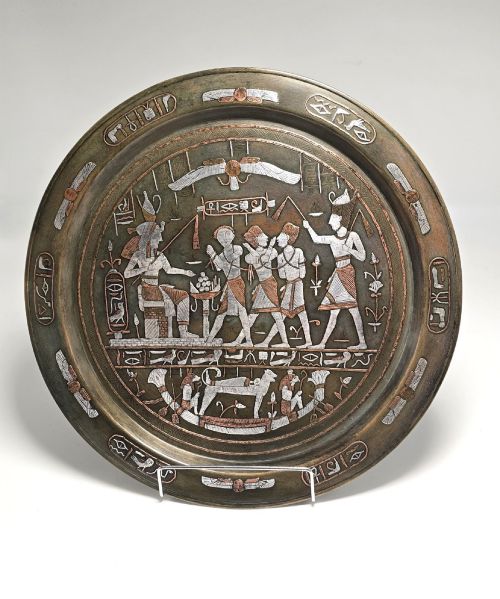
The objects stem from diverse origins, including Victorian workshops, Edwardian factories, and revivalist movements spanning Islamic metalwork and Anglo-Indian design. Pieces range from plain brass platters to complex copper and silver inlaid chargers produced during the height of the Grand Tour.
Circular formats dominate the selection, appearing alongside octagonal Japanese cloisonne trays and oval plaques depicting classical figures. These vessels function primarily as decorative wall chargers or centre table displays rather than everyday dining ware.
Materials and construction methods
Metals form the core of these items, combining brass, copper, bronze, and patinated copper often enriched with silver inlay or mixed-metal highlights. Makers employed heavy gauge sheeting, shaping the metal through hammering, casting, or spinning before applying surface decoration.
Decoration relies on hand engraving, chasing, piercing, and enamelling to produce dense surface patterns across the metal. Inlaid silver wire and contrasting metals define revivalist styles, whilst Japanese pieces integrate cloisonne enamel work directly onto metal foundations.
Brass Charger Tray Retail Price Guide 2026
Typical asking prices for brass charger tray among the pieces listed under this phrase on Sellingantiques today, from the lower quarter to the upper quarter. They describe what is for sale here now, not the wider market.
Listings feature items from the eighteenth century through to the Edwardian period, spanning brass, copper, and mixed metal.
Distinctions in craftsmanship
Quality rests upon the depth and precision of the hand engraving and the integrity of any metal inlay work. Superior items display crisp chisel work and tightly secured wire inlay, whereas lesser examples feature shallow stamped impressions or simple machine-etched lines.
The choice of materials dictates the overall substance of the piece, with heavier gauge brass and mixed-metal compositions offering greater rigidity and weight. Finer chargers retain well-balanced proportions and secure mounting loops or even rims, avoiding distortion across wide diameters.
The Brass Charger Tray Glossary
- Charger
- A large circular plate or dish originally used for serving food or displaying wealth on sideboards. In modern contexts, these pieces serve mainly as decorative wall plaques or centrepieces.
- Cairo Ware
- Late nineteenth-century metalwork produced in Egypt for the European export and Grand Tour market. These items typically feature heavy brass or copper bodies inlaid with silver and copper calligraphy or geometric motifs.
- Cloisonne
- An enamelling technique where metal wire is soldered to a metal base to form compartments filled with enamel paste. The surface is then fired and polished smooth.
- Mixed Metal
- The combination of different metallic elements such as brass, copper, and bronze within a single decorative piece. This practice creates visual contrast through varying metal tones and patination.
- Repousse
- A metalworking technique where the artisan hammers the metal from the reverse side to form a raised design in relief. Details are subsequently refined from the front using chasing tools.
Brass Charger Tray: Frequently Asked Questions
How were brass charger trays originally used?
These large metal vessels served varied domestic functions depending on their cultural origin and period. Many acted as display plates on sideboards or were hung directly on walls as decorative art.
Heavier platters also functioned in formal hospitality settings for presenting food or holding vessels, though intricate engraved surfaces often rendered them unsuitable for wet or acidic foods.
Where should I hang a large wall charger?
Large circular chargers require sturdy wall fixings due to the considerable weight of solid brass and mixed-metal construction. Ensure proper picture hooks or specialist plate hangers support the full rim securely.
Positioning them at eye level in dining rooms or hallways allows the engraved patterns and inlaid metals to catch natural daylight and interior lighting.
How do I clean an antique brass tray?
Antique metalwork requires minimal intervention to preserve the natural oxidation and historical patination built up over decades. Dust the surface gently with a dry, soft cloth rather than applying aggressive chemical polishes.
Removing the dark patination destroys the visual depth of engraved lines and inlaid silver, diminishing the character of nineteenth-century pieces.
How do I distinguish Cairo Ware from European brass?
Cairo Ware items display distinctive Islamic revival motifs, including Arabic calligraphy, geometric strapwork, and dense silver and copper wire inlay. These pieces originate from late nineteenth-century Egyptian workshops catering to European travellers.
European brass trays from the Victorian or Edwardian periods typically feature neoclassical borders, floral engravings, or regional British arts and crafts hammered textures.