

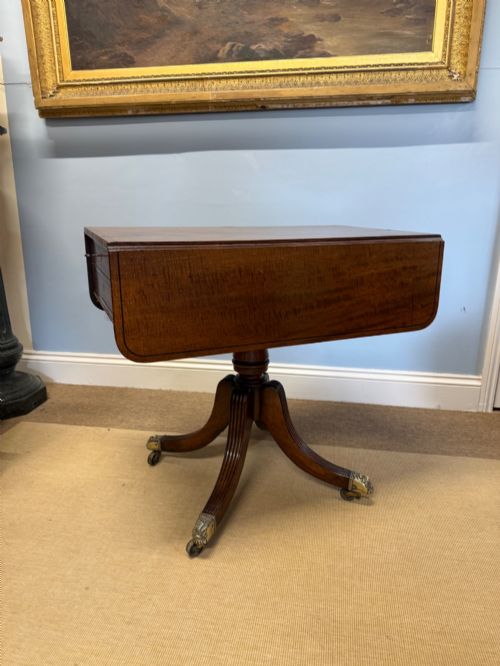
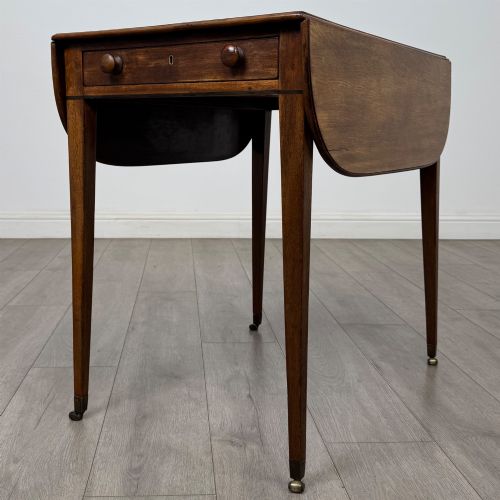
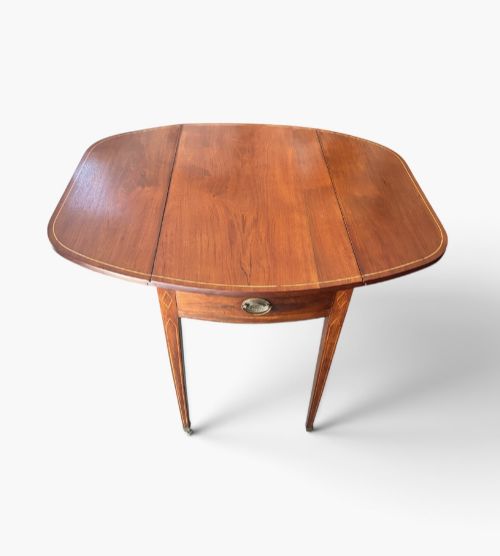
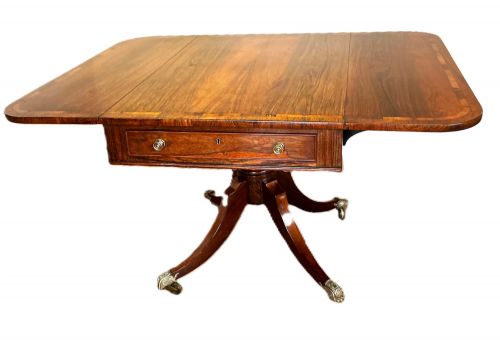
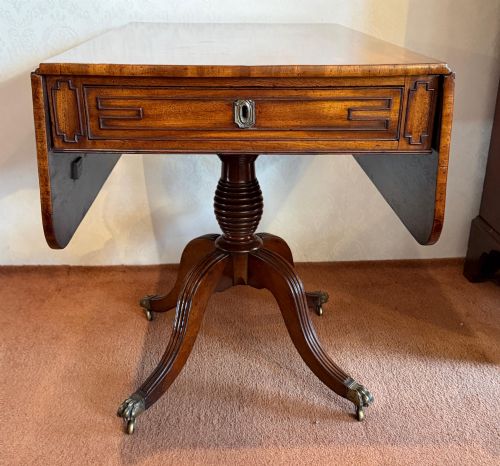

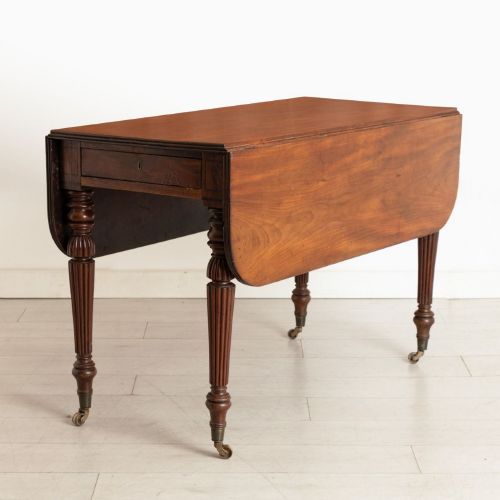


Brass Castored Pembroke Table
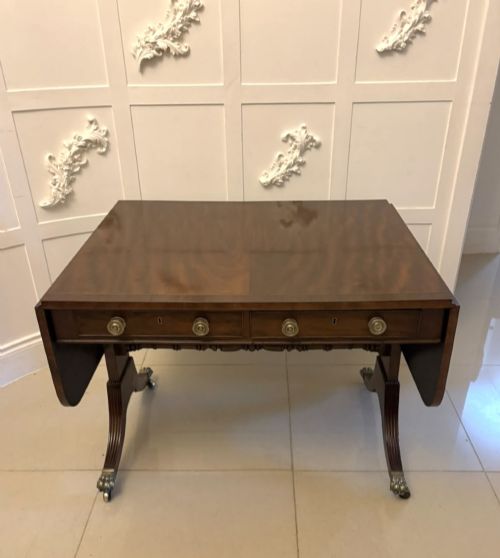
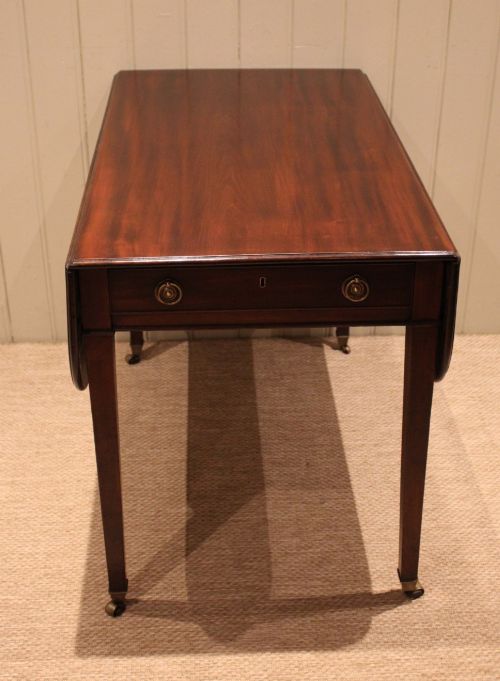
A brass castored pembroke table is a drop-leaf drop-flap piece raised on castors, prized for extending surface space in smaller rooms.
Brass Castored Pembroke Table
A brass castored pembroke table is an occasional, side, dining, or breakfast table featuring folding drop leaves supported by hinged flaps. When searching for a brass castored pembroke table, buyers encounter forms spanning the 18th century, Georgian, Regency, William IV, Victorian, and Edwardian periods.
The versions most likely to meet a buyer on this page are constructed from mahogany, flame mahogany, Cuban mahogany, or rosewood, frequently incorporating boxwood or satinwood inlay. These tables serve as functional lamp, sewing, library, or small dining tables within domestic spaces.
How they were made
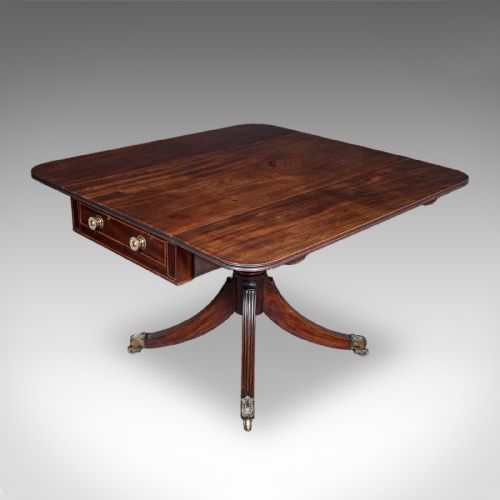
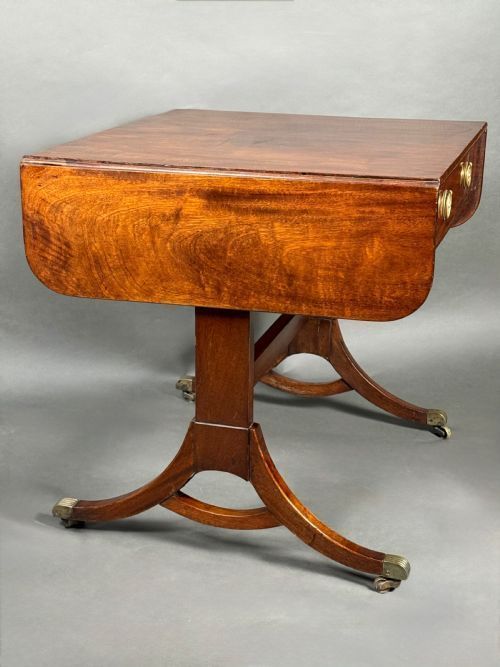
Cabinet makers built these drop-leaf tables using solid timbers and veneers of mahogany and rosewood, often incorporating contrasting woods such as boxwood and satinwood for inlay work. Supporting elements include pedestals, centre columns, and legs fitted with original brass castors to allow mobility.
Hinged flaps sustain the drop leaves, while drawers provide integrated storage for sewing or writing materials. Construction techniques balance structural stability with the refined proportions characteristic of Georgian and Regency cabinet work.
Brass Castored Pembroke Table Retail Price Guide 2026
Typical asking prices for brass castored pembroke table among the pieces listed under this phrase on Sellingantiques today, from the lower quarter to the upper quarter. They describe what is for sale here now, not the wider market.
Some drop-leaf tables doubled as sewing stations, keeping stray threads contained while the brass castors chased the sunlight around the room.
What varies in quality
Quality separates through the choice of timber and the execution of decorative details, such as figured flame mahogany or intricate satinwood inlay. The crispness of the carpentry on the drop leaf hinges and drawer construction distinguishes finer examples from standard workshop production.
The integration of original brass castors and the harmony of the proportions across the pedestal or leg supports indicate the standard of manufacture. Pieces retaining their original surfaces and authentic brass fittings sit at the top of the range.
Andrew Thomson And Sons
The Brass Castored Pembroke Table Glossary
- Pembroke table
- A small occasional or dining table with hinged drop leaves on two opposing sides. It often includes one or more small drawers.
- Drop leaf
- A hinged flap of wood attached to the main top that folds down to save space or lifts up to extend the surface area.
- Castor
- A small wheel mounted on a swivel assembly attached to the base of each leg, allowing the table to move across flooring.
- Satinwood inlay
- Decorative woodwork where contrasting light-coloured satinwood is set into the primary mahogany surface to form patterns.
- Flame mahogany
- A distinct timber figure displaying a flickering, flame-like grain pattern prized for cabinet fronts and table tops.
Brass Castored Pembroke Table: Frequently Asked Questions
What is a brass castored pembroke table used for?
These tables function as versatile surfaces in living rooms, libraries, or small dining spaces. The folding drop leaves allow the footprint to expand or contract depending on daily requirements.
Drawers incorporated into the frame provide convenient storage for smaller household items, writing implements, or sewing accessories.
What is the difference between a pembroke and a sofa table?
Pembroke tables generally feature square or oval tops with two drop leaves and a more compact footprint suited for various rooms. Sofa tables are traditionally longer and narrower, designed to stand directly behind a sofa.
Both forms utilise drop leaves and brass castors, but their original domestic placement and overall proportions differ.
How do I care for antique mahogany wood?
Keep mahogany furniture away from direct sunlight and heat sources to prevent the wood and veneers from drying out. Regular dusting with a soft, dry cloth maintains the surface finish without chemical buildup.
Apply a traditional beeswax polish occasionally to nourish the timber and preserve the natural sheen of the grain.