
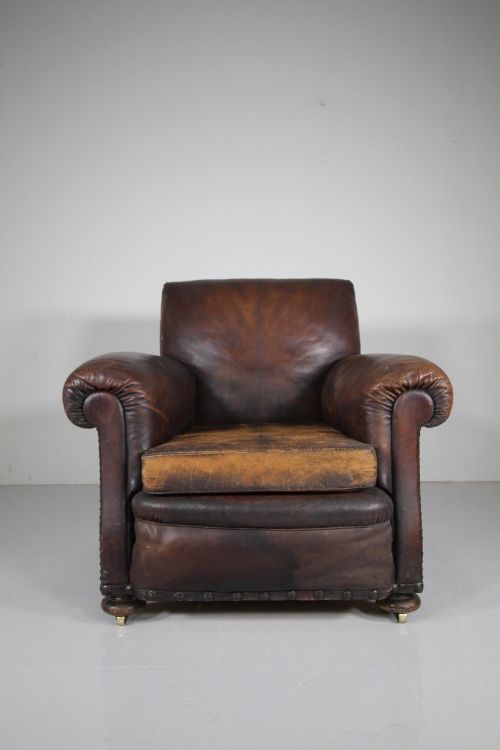


Brass Castor Leather Chair
A brass castor leather chair brings tactile warmth and mobility to a room, offering sturdy timber frames paired with supple hides.
Brass Castor Leather Chair
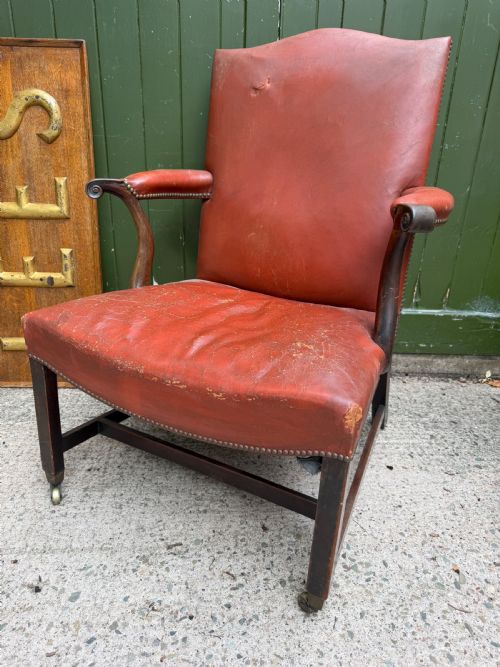
A brass castor leather chair unites substantial timber framing with upholstered hide and metal wheel supports for ease of movement. Buyers hunting for a brass castor leather chair typically encounter robust seating forms designed for studies, libraries, and formal reception rooms.
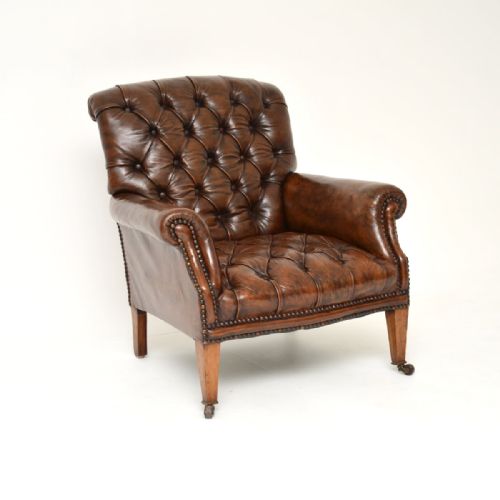
The selections span from the restrained elegance of the Georgian and Regency eras through the heavy comfort of the Victorian period and into Edwardian designs. Armchairs, desk chairs, and library armchairs dominate the range, frequently utilising mahogany, rosewood, walnut, or oak.
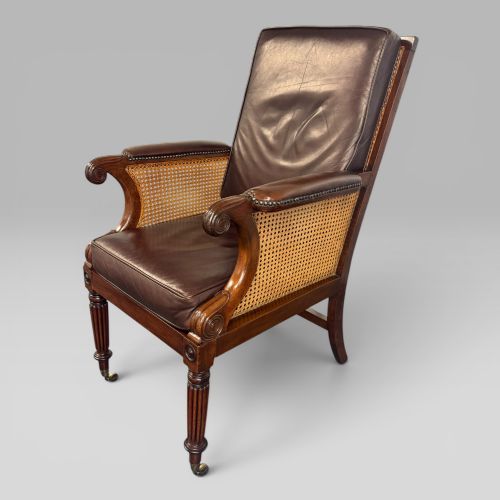
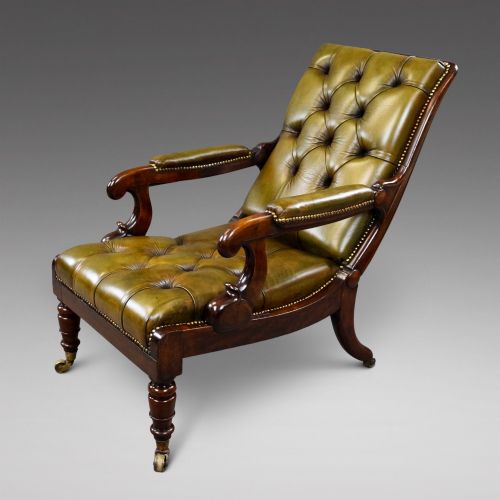
Many examples incorporate caned elements alongside leather upholstery or feature specialised mechanisms such as reclining options and buttoned backs. The presence of brass castors beneath sturdy wooden legs defines the practical mobility shared across these diverse period pieces.
How they were made
Cabinetmakers constructed the primary framework using dense hardwoods such as mahogany, rosewood, walnut, and oak, often shaping arms and legs with turned or carved details. Caning was woven tightly into wooden frames for lighter seat panels where specified by the design.
Upholsterers applied durable leather over supportive stuffing materials, securing the hides with closely spaced tacks and occasionally adding deep buttoning for structural tension. Brass components were cast and polished before being fitted to the base of the legs to allow smooth rolling across floor coverings.
Listings feature mahogany, rosewood, walnut, and oak paired with brass and leather across Georgian, Regency, and Victorian periods.
What varies in quality
The refinement of the timber carving and the architectural proportions of the wooden frame set superior examples apart from simpler utilitarian seating. Master workshops brought an extra level of precision to the joinery and the shaping of the arms and legs.
The grade and original condition of the leather upholstery, alongside the execution of traditional buttoning and tacking, dictate much of the visual character. Furthermore, heavy cast brass hardware that moves freely on its original mountings indicates a higher standard of manufacture.
Gillows·Howard & Son's·William Birch·Daws
The Brass Castor Leather Chair Glossary
- Bergère
- An enclosed upholstered armchair with wooden framing exposed around the sides and back. These often feature cane panels or fully upholstered sides.
- Castor
- A small wheel mounted on a swivel attached to the foot of a leg. It permits smooth relocation of heavy furniture across carpets and floors.
- Library Chair
- A large, comfortable armchair designed for prolonged sitting in a study or library. They frequently appear in mahogany with leather upholstery.
- Gainsborough
- A wide, open-armed mahogany armchair originating in the eighteenth century. They traditionally feature upholstered seats and padded backs supported by short legs.
- Morocco leather
- A fine goatskin leather traditionally tanned using sumac leaves and distinguished by a fine pebble grain. It offers durability and a distinct texture for upholstery.
Brass Castor Leather Chair: Frequently Asked Questions
Where were brass castor leather chairs used?
These chairs served primarily in domestic libraries, studies, and formal reception spaces where reading and writing took place.
Their mobile bases allowed users to reposition heavy seating easily across large rooms without damaging floor surfaces.
How do I identify a Regency period piece?
Regency seating often displays classical architectural influences, sparse carved decoration, and dark tropical hardwoods like mahogany and rosewood.
Makers of this era focused on clean lines and functional mobility through integrated brass wheel hardware.
Are these chairs suitable for daily desk work?
Many library and desk chair variants provide ergonomic support suited for regular seating at a writing table.
Their sturdy timber frames and cushioned leather surfaces handle continuous daily use while maintaining structural stability.
How should I care for vintage leather?
Maintaining vintage hide involves keeping the material away from direct heat sources and applying specialised leather balms periodically.
Gentle cleaning prevents the natural surface from drying out and preserves the suppleness of the original upholstery.