
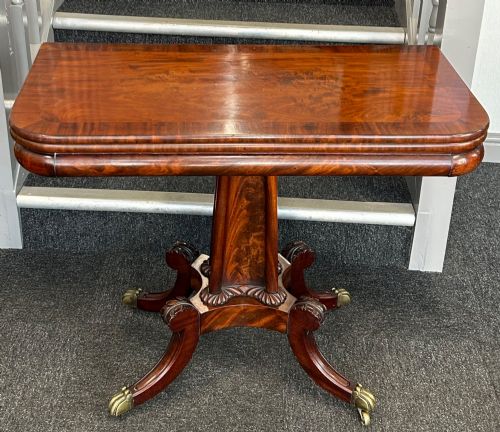


Brass Castor Card Table
Looking for a brass castor card table means hunting for clever folding timber surfaces designed for indoor games and tea.
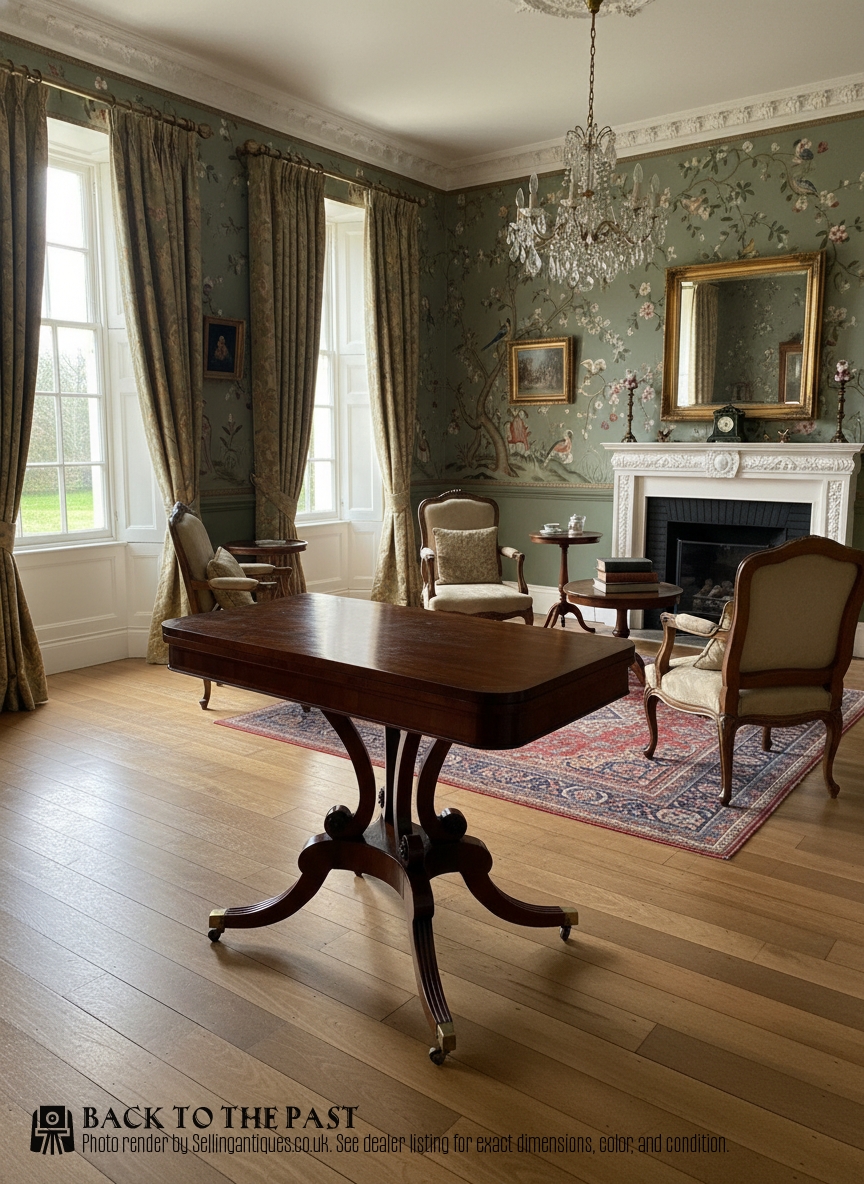
What brass castor card tables are
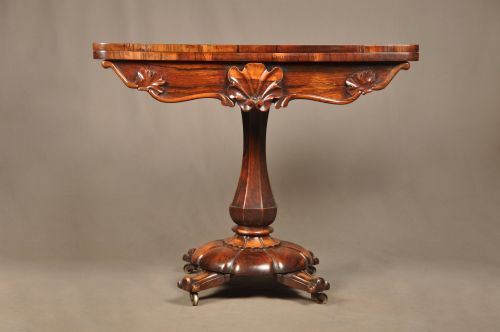
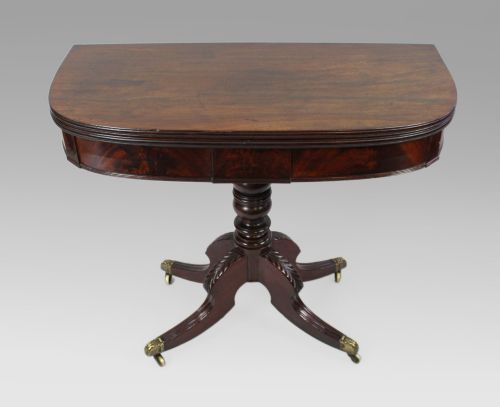
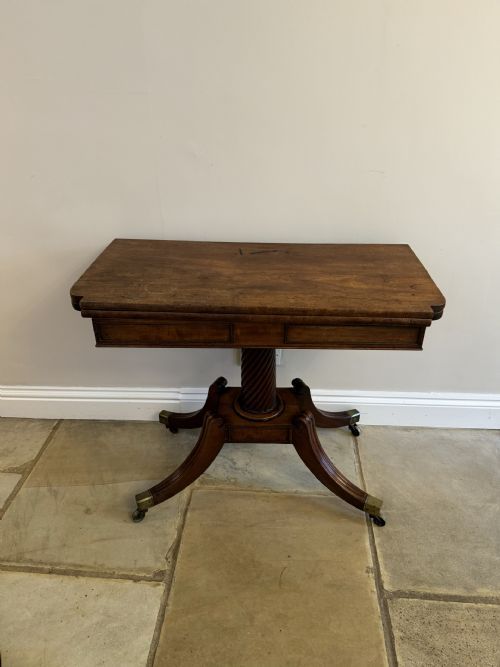
A brass castor card table is a folding timber furniture form designed for social rooms and domestic pastimes. These objects appear in forms such as games tables, card tables, and foldover tables.
The versions most likely to be met on this page belong to the Georgian, Regency, and Sheraton Revival periods, alongside items dated to the nineteenth century and nineteen thirty. They arrive in timber varieties that include mahogany, satinwood, and rosewood.
Makers shaped these surfaces to swivel, fold, and rest upon sturdy legs fitted with metal wheels for easy movement across carpeted floors. Such engineering allowed households to clear space rapidly when evening card parties concluded.
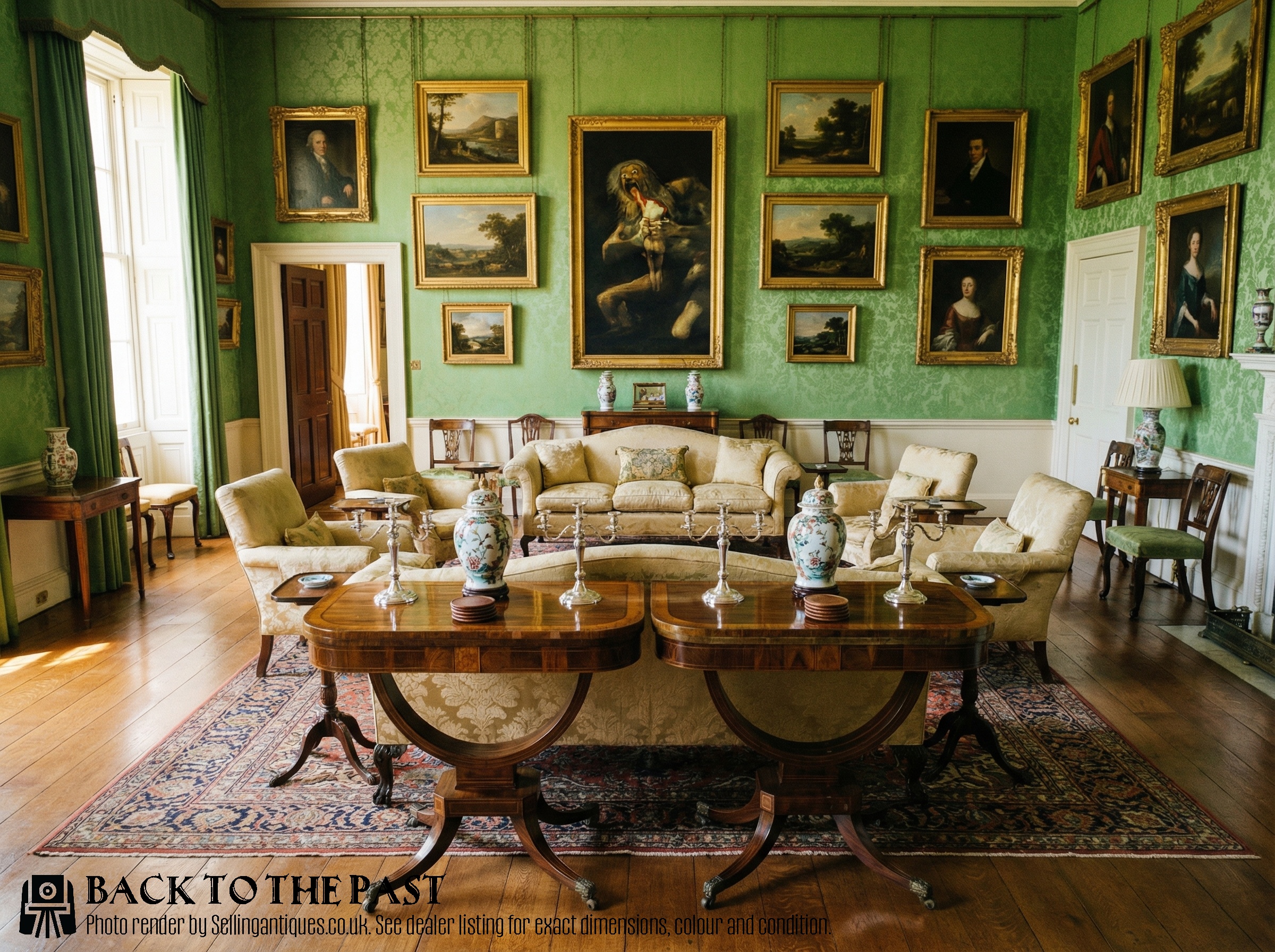
How they were made
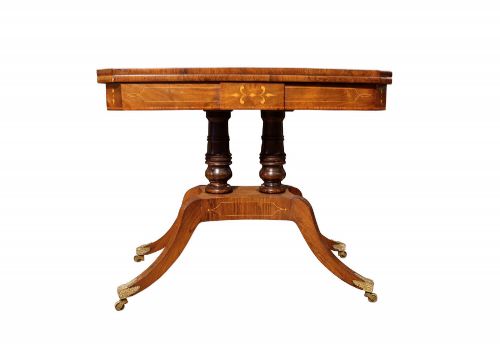
Cabinet makers constructed these tables from dense hardwoods like mahogany and rosewood, often applying satinwood and ebony veneers to the primary display surfaces. Metal fittings such as brass castors were secured to the base to support the weight of the folding top.
Interiors frequently received linings of wool baize to provide a soft playing surface for cards and counters. Timber sections were joined using traditional woodworking techniques to ensure the foldover mechanism operated smoothly without warping.
Retail Price Guide 2026
Typical UK retail prices for brass castor card table, calculated from the Sellingantiques database of over a million retail prices indexed since 2003. This retail price guide relies exclusively on Sellingantiques data; no external sources or auction records are used, so the figures do not describe the wider market.
Secret compartments hidden beneath folding tops often retain stray twentieth-century copper coins left behind by careless card players.
What varies in quality
The distinction between ordinary and exceptional examples rests in the choice of timber and the precision of the inlay. Tables featuring finely figured rosewood or intricate ebony and satinwood banding display a higher level of workshop ambition.
Structural integrity of the folding mechanism and the original condition of the brass castors also separate standard pieces from superior survivors. Subtle proportions and crisp edge moulding reveal the hand of a more accomplished cabinet maker.
The Brass Castor Card Table Glossary
- Castor
- A small wheel fitted to the foot of a furniture leg to allow smooth rolling across floors. These are typically fashioned from brass on nineteenth-century tables.
- Foldover table
- A dual-surface furniture piece with a hinged top that opens out to double its area for dining or card games. This design conceals a storage well underneath in many period examples.
- Baize
- A coarse woollen fabric, traditionally green, used to line the playing surface of card and games tables. It protects cards from sliding and dampens the sound of placement.
- Inlay
- A decorative technique where contrasting strips of timber or metal are inserted into hollowed-out recesses on the wood surface. Regency and Georgian makers utilised ebony and satinwood for this effect.
Frequently Asked Questions
What is a brass castor card table used for?
These tables served as versatile furniture for domestic card games, writing, and social gatherings in period homes. The hinged top folded flat against the wall when not in use to save space.
During evening entertainment, the top unfolded to reveal a baize-lined playing surface for cards and board games. The integrated brass castors allowed servants or residents to reposition the heavy timber piece effortlessly between rooms.
How do I tell Regency from Georgian pieces?
Regency tables often display bolder timber grains, such as rosewood, combined with contrasting brass inlay and heavier pedestal bases. Georgian items tend to favour mahogany with simpler lines and more restrained decorative carving.
Examining the construction methods and secondary timbers underneath can also offer clues to the exact decade of manufacture. Stylistic shifts between the reigns dictate these distinct aesthetic choices.
How do I clean a wool baize surface?
Wool baize requires gentle dry maintenance using a soft brush or a low-suction vacuum attachment to remove dust. Moisture should be avoided entirely to prevent shrinkage and staining of the historic fabric.
Professional textile conservators handle deeper cleaning if accumulated grime threatens the integrity of the material. Regular care preserves the nap of the wool over decades of ownership.
Can I use these tables for dining?
Card tables are generally built too low and too narrow for comfortable everyday dining use. The internal folding mechanism and support framing also restrict legroom beneath the top.
Using them occasionally for light tea or drinks is acceptable, provided heavy hot items use protective mats. Their primary engineering priority remains card playing rather than robust meal service.