

Brass Candlestick Holders
Brass candlestick holders are lighting fixtures cast and turned from metal to elevate taper candles, bringing period character and warm metallic reflection to a room.
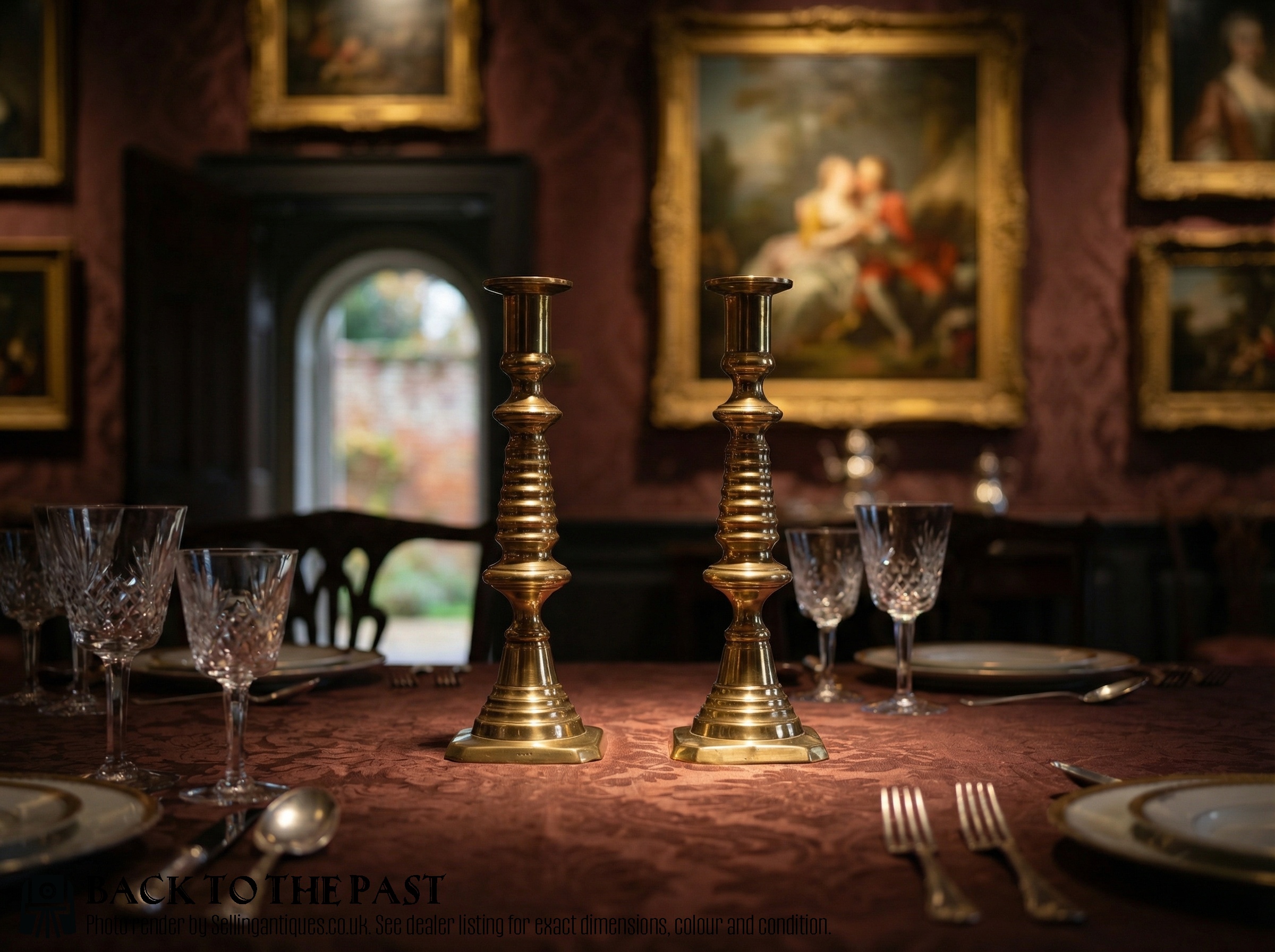
Brass Candlestick Holders
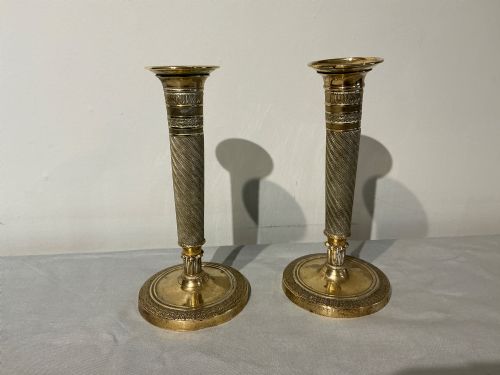
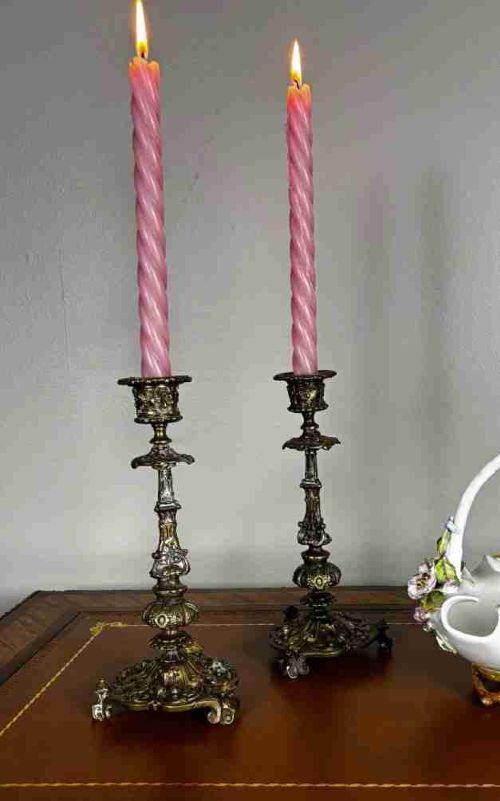
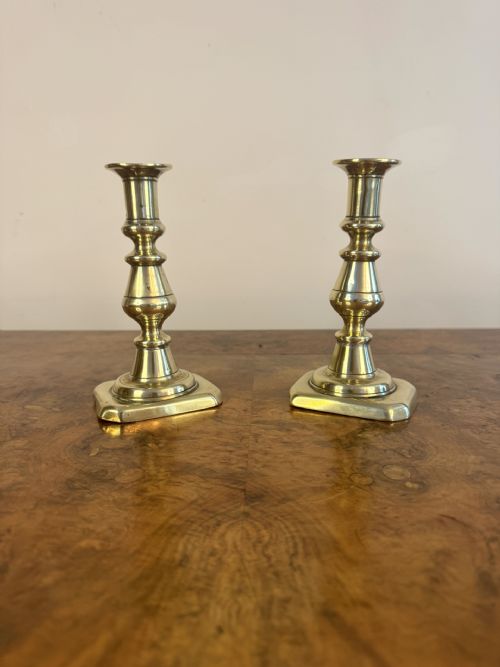
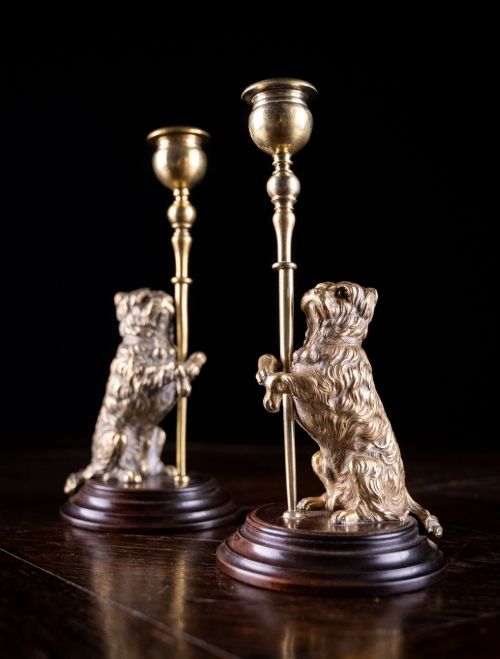
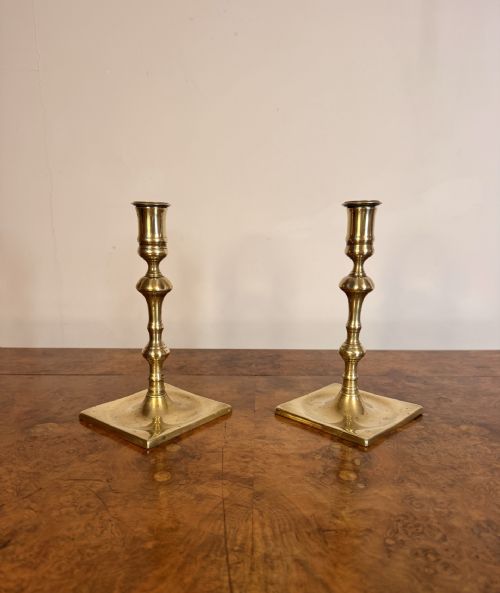
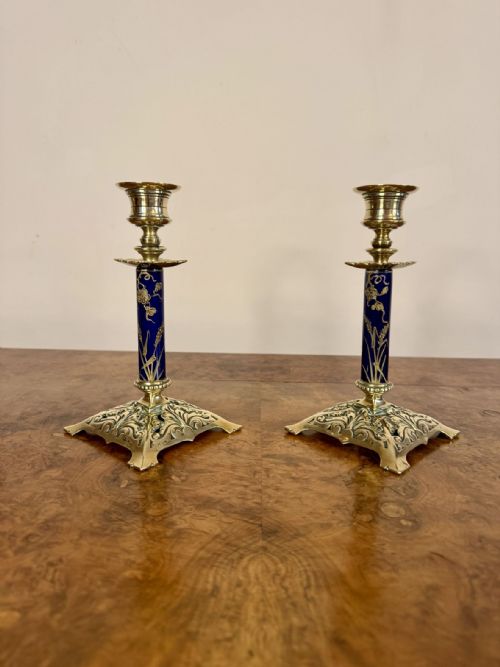
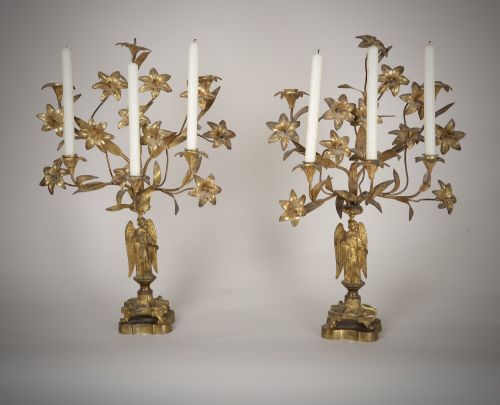
Brass candlestick holders appear across this page in forms ranging from plain Georgian domestic items with petal bases and ejectors to ornate Victorian church pieces and figural designs.
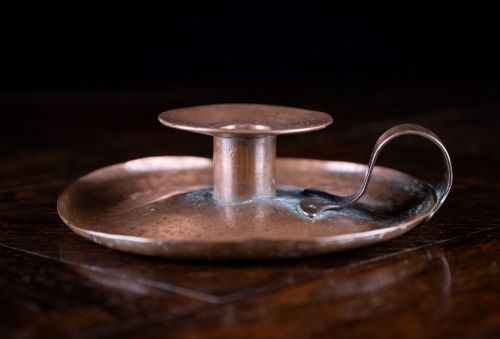
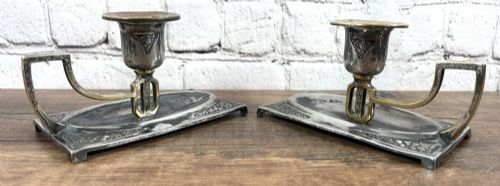
The selection includes eighteenth-century seamed examples, nineteenth-century revival styles such as Gothic and Louis XVI, and early twentieth-century Arts and Crafts copper and brass pairings.
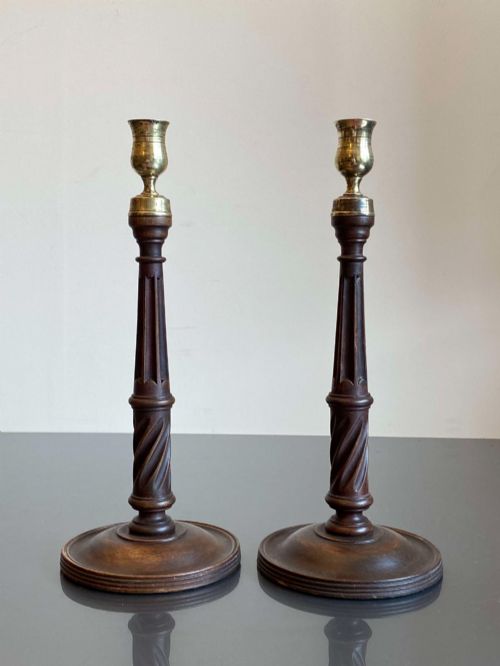
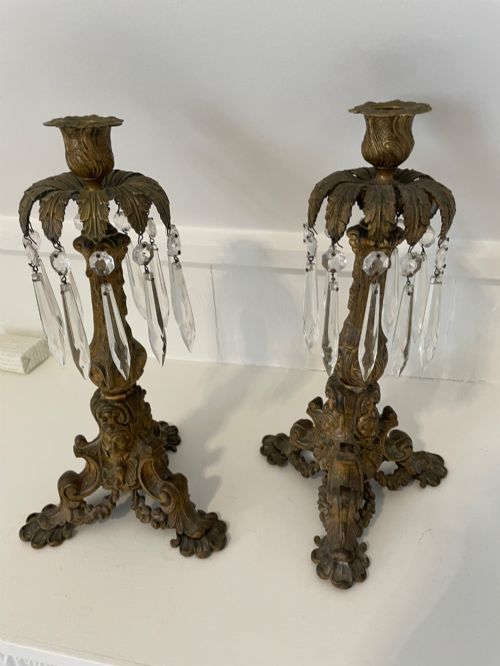
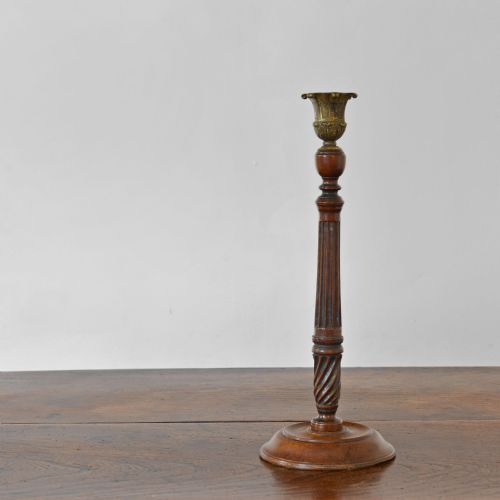
Makers utilised various metals alongside brass, incorporating gilt bronze, ormolu, bronze, and occasional accents of mahogany, onyx, and glass within the candle holders and candelabra.
Materials and Construction
The pieces on this page rely heavily on brass, cast and patinated, often formed through seaming techniques visible in eighteenth-century examples.
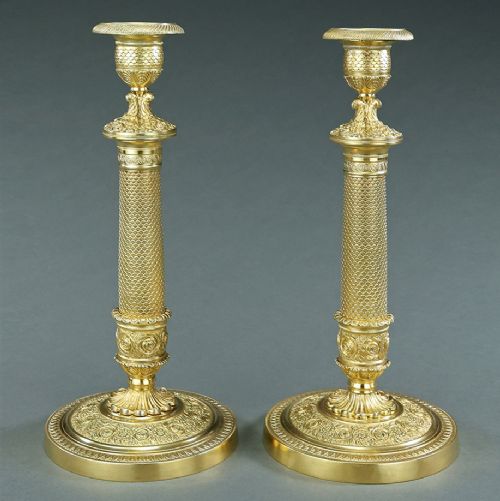
Casting methods extended to ormolu and gilt bronze, particularly in French Rococo and Louis XVI revival items, while other variants incorporate turned wood such as mahogany and oak.
Workmanship involves joining cast components, cutting glass, and applying decorative champlevé or patination to achieve the finished surface.
Brass Candlestick Holders Retail Price Guide 2026
Typical asking prices for brass candlestick holders among the pieces listed under this phrase on Sellingantiques today, from the lower quarter to the upper quarter. They describe what is for sale here now, not the wider market.
Listings include items spanning the eighteenth, nineteenth, and early twentieth centuries, featuring materials from brass and bronze to mahogany and glass.
Quality Variations
Quality in these objects rests upon the crispness of the casting detail, particularly in figural subjects such as dogs, bears, and sculptural trees.
The integrity of the construction distinguishes standard domestic items from grander ecclesiastical or architectural pieces, with seamed joints and heavy gauge metal marking superior examples.
The sophistication of the surface finish, whether through fine fire-gilding, ormolu, or controlled patination, separates standard production from exceptional work.
Barbedienne
The Brass Candlestick Holders Glossary
- Ejector
- A concealed internal mechanism operated by a side lever to push a stuck candle stub out of the socket. This device became common on eighteenth and nineteenth-century domestic brass candlesticks.
- Pricket
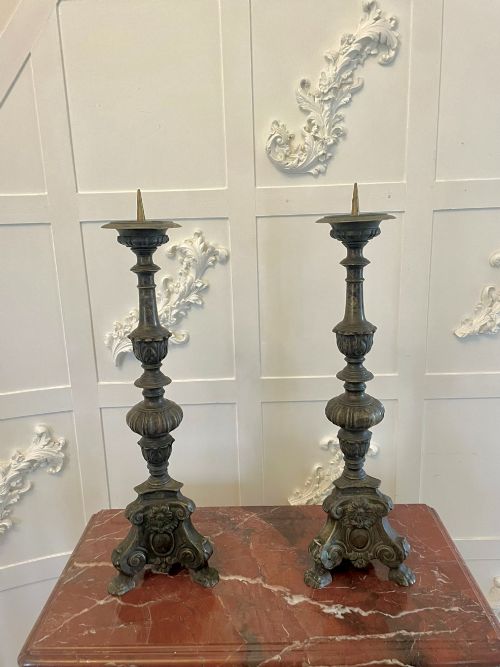
- A sharp metal spike set in the centre of a drip pan to secure a large candle, typically found on church and ecclesiastical pieces. These holders pre-date socket candlesticks in church settings.
- Ormolu
- Finely ground high-carat gold applied to a bronze base using a mercury amalgamation technique. The method produces a rich golden lustre characteristic of French decorative arts.
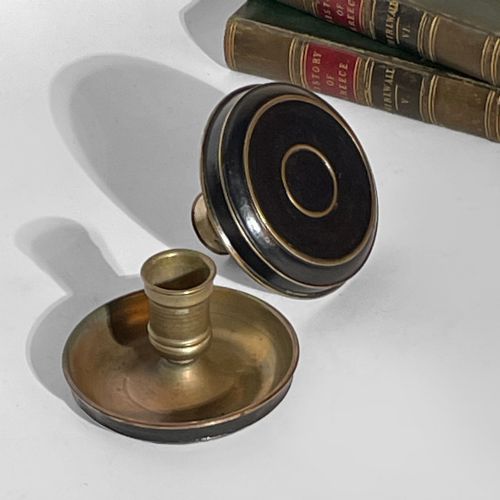
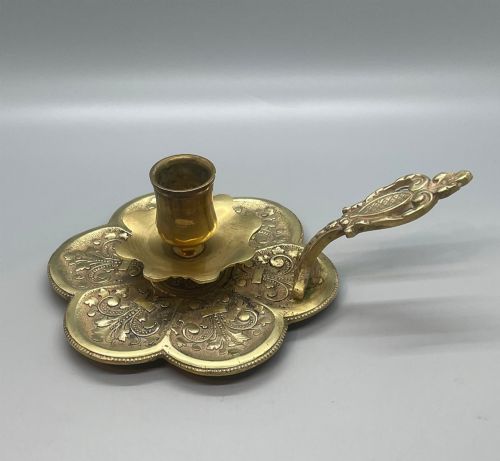
- Chamberstick
- A low-profile candle holder fitted with a wide drip pan and a loop handle for carrying through a house at night. They frequently sit on bedside tables or desks.
- Candelabra
- A branched lighting fixture designed to hold multiple candles simultaneously. These pieces often feature central shafts decorated with foliate or figural casting.
Brass Candlestick Holders: Frequently Asked Questions
What is an ejector candlestick?
An ejector candlestick contains an internal sliding plate connected to an exterior thumbpiece. Pushing the lever upward raises the remaining wax residue for easy removal.
This practical addition helps date domestic examples to the Georgian and Victorian eras when replacing burnt-down wax efficiently was part of daily household management.
How do I date a brass candlestick?
Dating relies on manufacturing techniques, base shapes, and styling details. Eighteenth-century pieces often feature seamed construction and petal bases, while Victorian items lean toward heavier ornamentation.
Stylistic revivals in the nineteenth century frequently borrow motifs from earlier periods, making assembly methods and wear patterns essential clues for determination.
What are church candlesticks used for?
Church candlesticks provide steady illumination for altars and ecclesiastical spaces, often built taller and heavier than domestic counterparts to stand on the floor or large tables.
Many of these ecclesiastical items utilise pricket spikes rather than sockets, holding thick wax pillars securely during services.
Where should I place a chamberstick?
Chambersticks suit bedside tables, entryways, and low occasional surfaces where their wide saucer bases catch stray wax. Their portable design allows for safe transport through unlit hallways.
Pairing them with a small snuffer completes the traditional setup for evening candle use.