

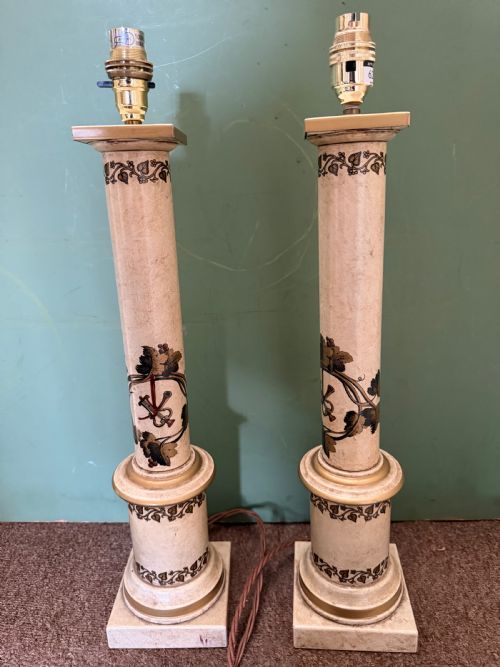


Brass Buffet Lamps
Brass buffet lamps bring stature and warm illumination to a sideboard, spanning nineteenth century columns and twentieth century French designs.
Brass Buffet Lamps
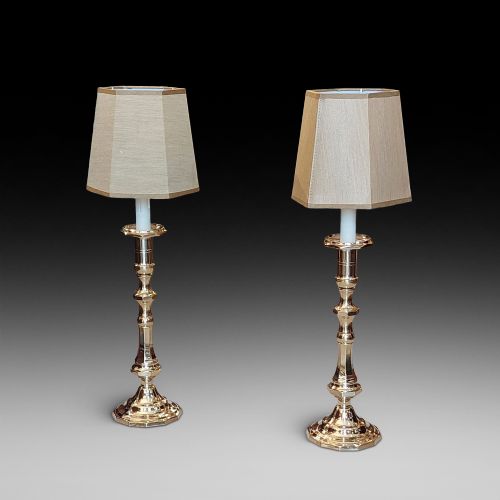
Brass buffet lamps are tall task and ambient lighting pieces designed to sit on sideboards, chests, and console tables. When you search for brass buffet lamps, you find a selection dominated by nineteenth-century column forms, Victorian candlesticks converted for electricity, and early twentieth-century continental styles.
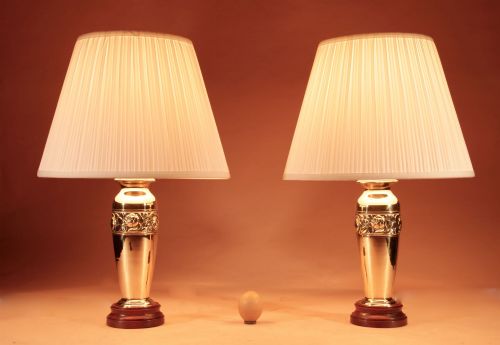
The objects appearing here stretch from the Georgian and Victorian eras through the Art Deco period. Many started life as candlesticks, church lights, or vases before conversion into table lamps, bringing substantial weight and height to a room.
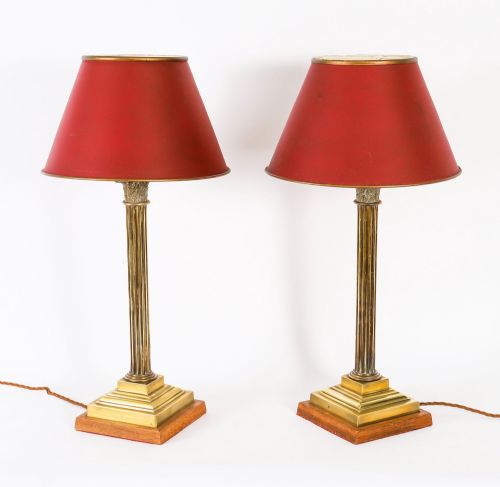
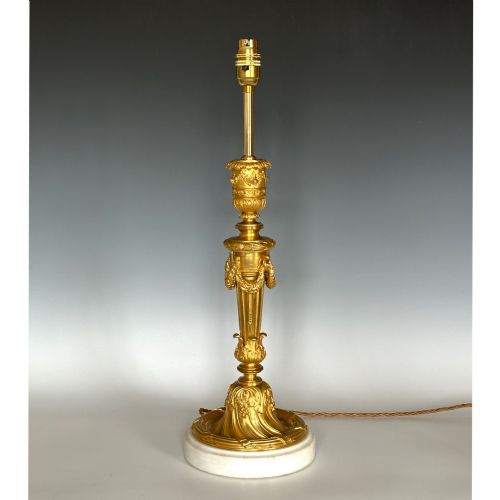
French influence runs strongly through these selections, alongside classical Revival motifs. You meet Neoclassical columns, Louis XV ormolu, and Empire style fixtures that pair gleaming metal with marble, glass, or hand-painted porcelain.
What varies in quality
The distinction between ordinary and exceptional pieces lies in the crispness of the casting and the depth of the metalwork. Sharply rendered acanthus leaves on a Corinthian capital or finely chased details on ormolu mounts signal superior workshop execution.
Weight and material honesty separate the better examples from lighter alternatives. Solid brass and heavy bronze structures retain a balance and presence that lesser hollow stampings cannot match.
Several heavy church candlesticks have swapped holy incense for reading light, happily moonlighting as towering table lamps.
The Brass Buffet Lamps Glossary
- Ormolu
- Gilded bronze, where a finely ground gold-mercury amalgam is applied to cast bronze and heated. This technique creates a rich, matte golden surface seen on French Empire and Louis-style pieces.
- Repoussé
- A metalworking technique where the artisan hammers the metal from the reverse side to form a raised design in relief. It gives brass surfaces a tactile, handmade texture.
- Corinthian column
- A classical architectural order featuring an ornate capital decorated with carved acanthus leaves. Many nineteenth-century lamps adopt this column form for formal vertical presence.
- Toleware
- Enamelled or lacquered sheet metal, often painted in black or decorative colours. It appears on French column lamps and Empire style shades.
- Sevres
- A historic French porcelain manufactory known for soft-paste and hard-paste ceramic bodies. Vases from this tradition frequently form the colourful bodies of continental lamps.
Brass Buffet Lamps: Frequently Asked Questions
What is a buffet lamp?
A buffet lamp is a tall, slender table lamp traditionally sized for sideboards, buffets, and servers. Their height allows light to cast over serving dishes and decorative objects without taking up excessive surface area.
These pieces often derive from converted candlesticks or slender column designs, providing focused vertical illumination in dining rooms and living spaces.
How do I identify French Empire styles?
French Empire style lighting relies heavily on classical antiquity, military motifs, and robust bronze or ormolu construction. Look for rich patinas, symmetrical column shapes, and neoclassical ornamentation.
Many incorporate dark patinated bronze bodies contrasted against bright gilt mounts, reflecting early nineteenth-century continental tastes.
Are these lamps converted antiques?
Many period lighting fixtures began as oil lamps, candlesticks, or decorative vases before receiving electrical wiring. This conversion process is standard practice for older metalware.
Conversions allow historical craftsmanship, such as nineteenth-century Corinthian columns and church candlesticks, to function safely in modern interiors.
How do I clean antique brass?
Antique brass responds best to gentle dusting with a soft cloth to preserve its age and patina. Avoid harsh chemical polishes that strip away historical character.
If the metal requires deeper cleaning, a mild soap solution and careful drying will maintain the surface without damaging the underlying bronze or gilt layers.