
Glass Column Lamps
Glass column lamps combine classical architectural shafts with reflective bodies to throw a bright light across a room.
Glass Column Lamps
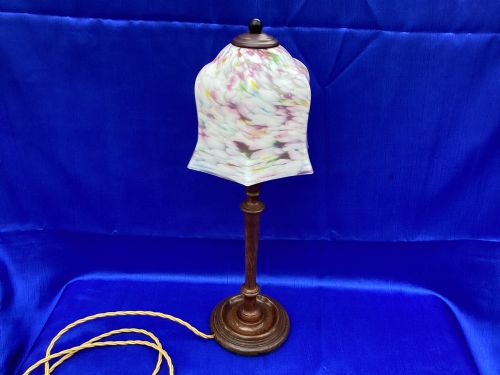
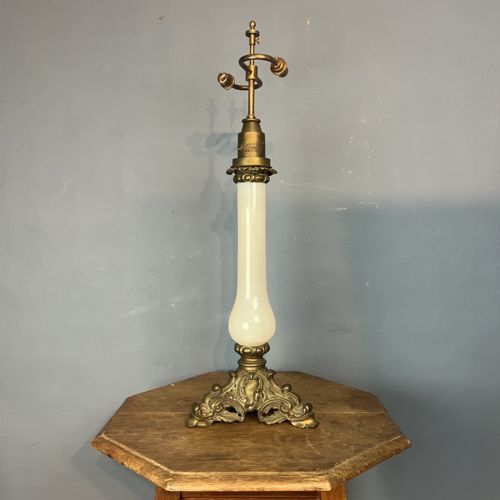
Glass column lamps are lighting fixtures built around a vertical shaft, combining materials like brass, bronze, and marble with transparent, opaline, or coloured glass sections. When collectors search for glass column lamps, they find specimens spanning the Victorian, Edwardian, and Art Deco periods, alongside pieces from the nineteenth and early twentieth centuries.
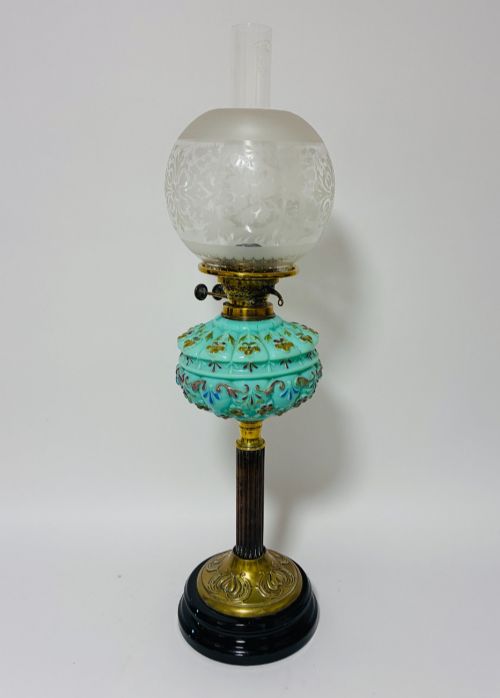
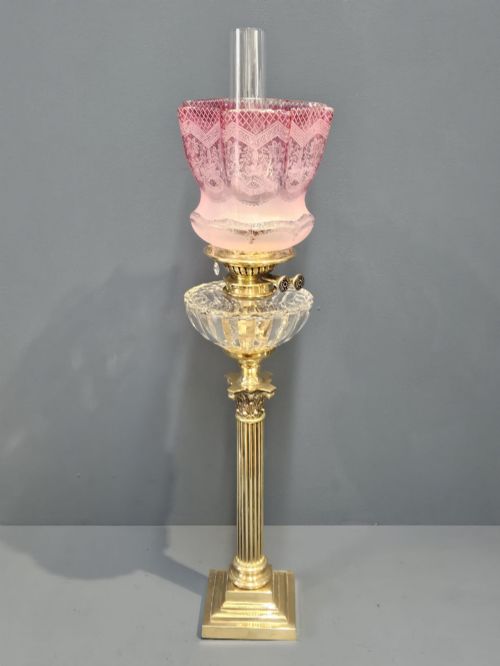
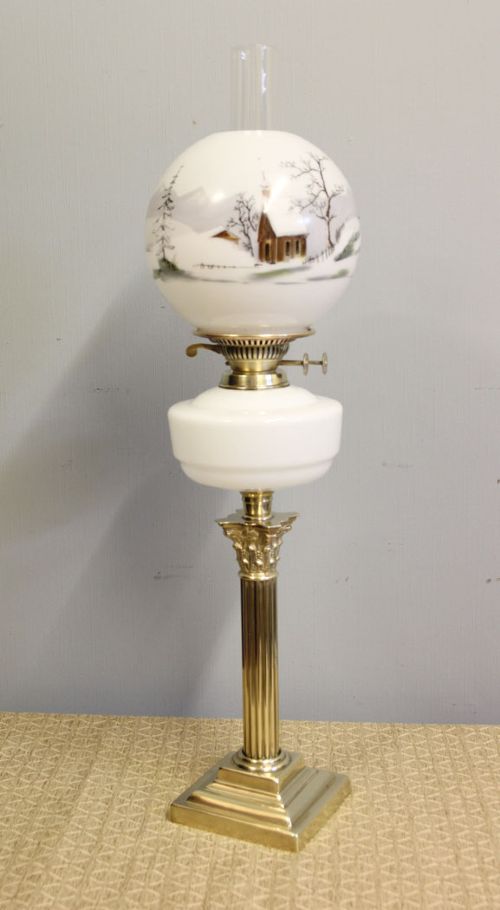
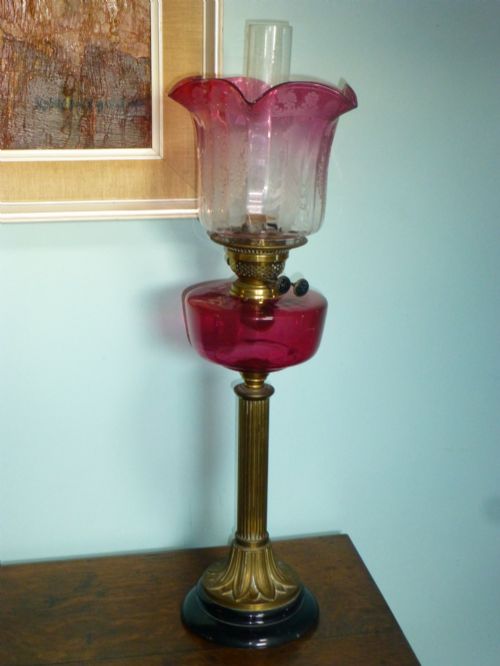
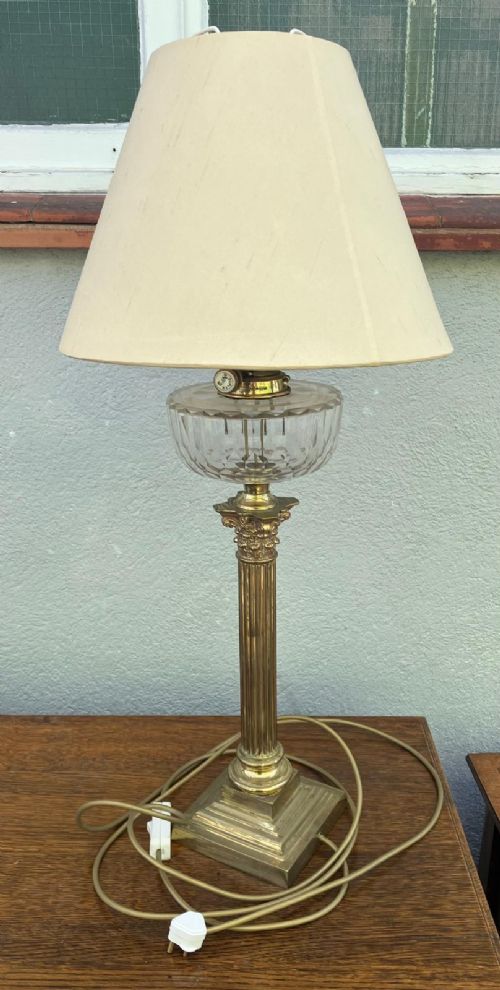
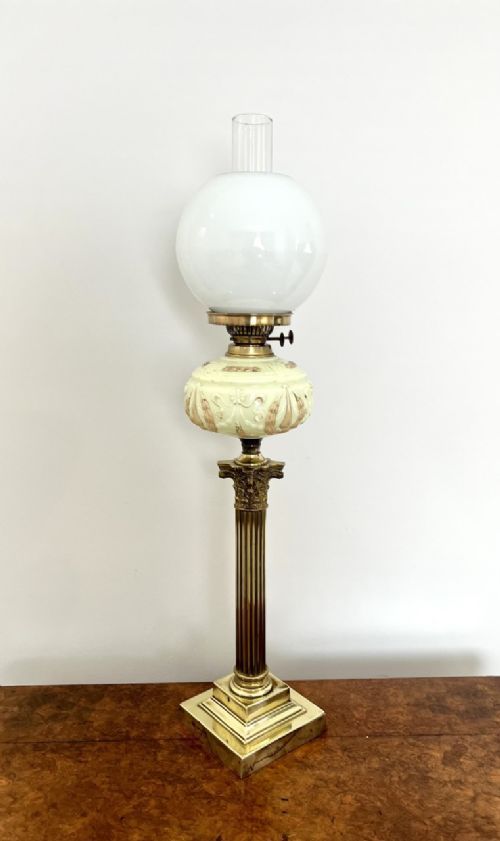
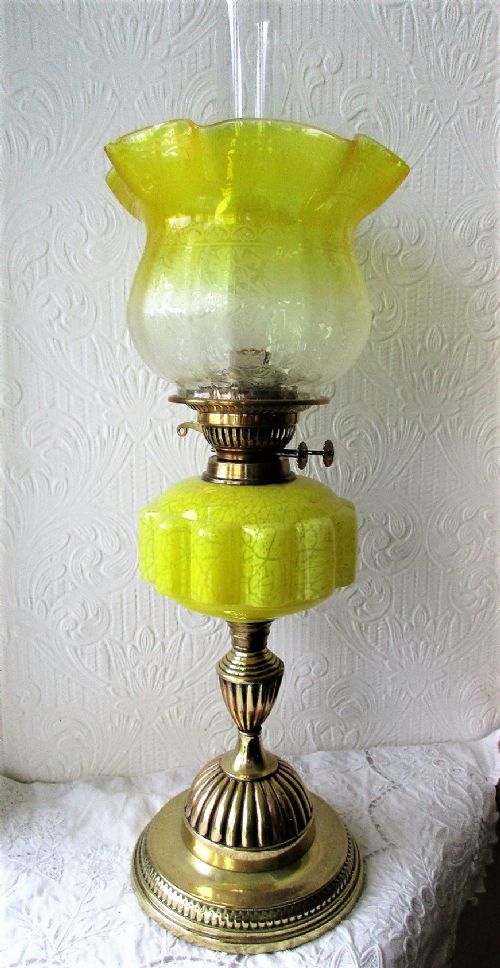
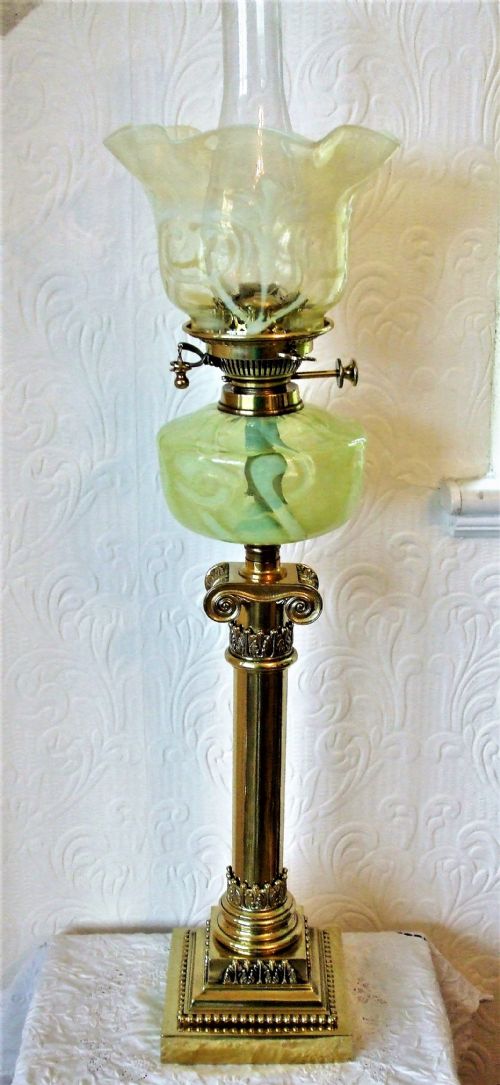
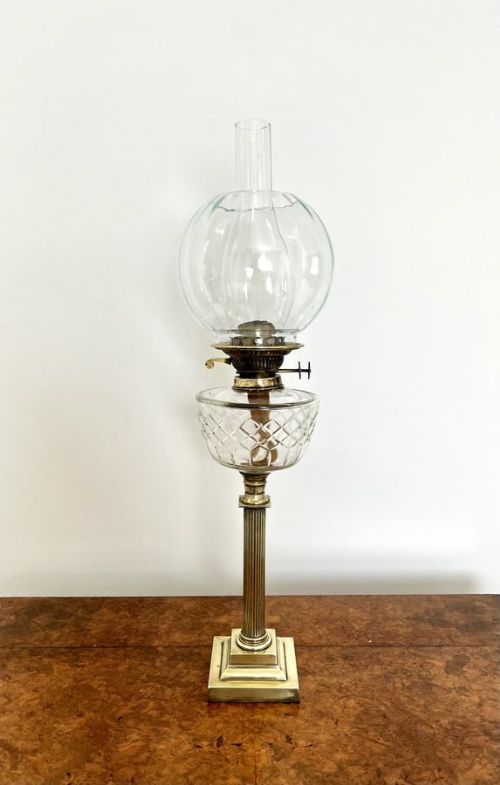
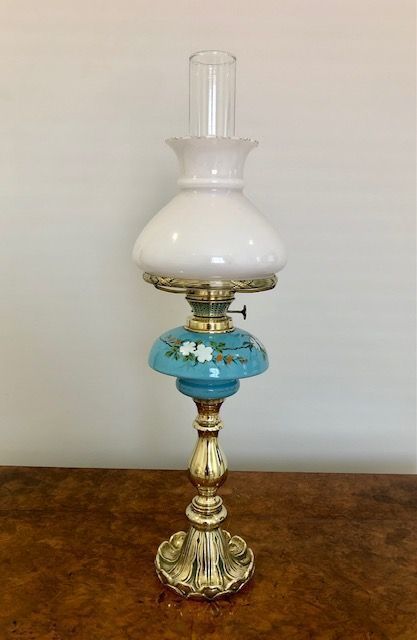
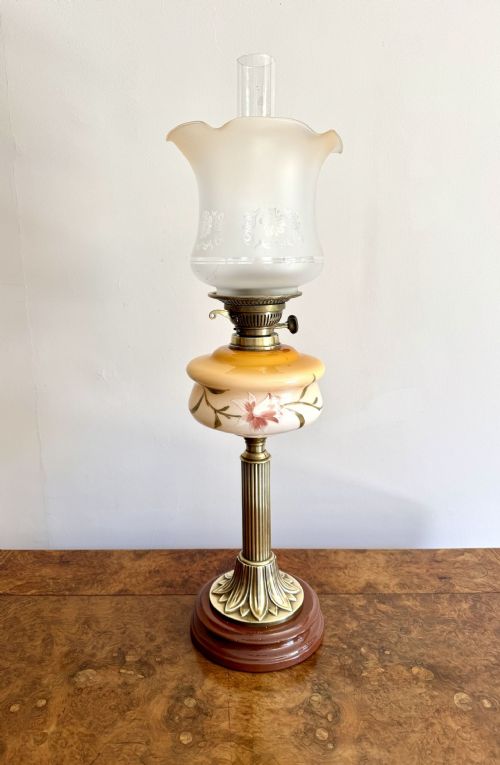
The most common examples on this page are Victorian oil lamps and table lamps, often featuring Corinthian capitals and brass columns paired with cranberry, opaline, or etched glass fonts and shades. These dual-purpose objects originated as functional domestic illumination sources before later conversion to electricity.
How they were made
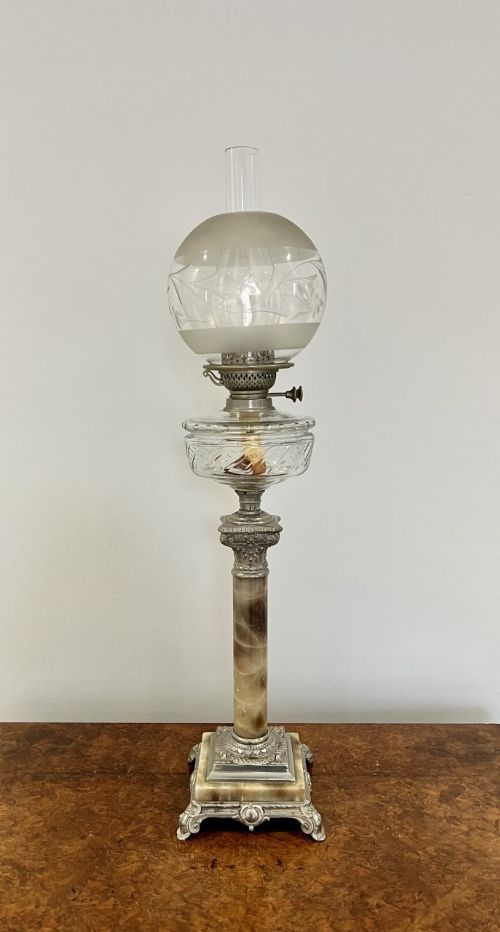
Makers constructed these pieces using cast brass and bronze for structural columns and bases, frequently incorporating marble or ceramic sub-bases for stability. Glass components were blown, moulded, or cut, utilising opaline, cranberry, and clear crystal glass for fonts and shades.
Metal parts received decorative casting, chasing, or gilt plating, while glass shades often displayed etched floral or winter scene patterns. Patents held by makers such as Hinks dictated mechanical burner assemblies fitted securely to the glass and metal bodies.
The inventory records pieces incorporating marble bases alongside cast ormolu, silver plate, and ceramic elements across the nineteenth and twentieth centuries.
What varies in quality
Quality rests in the crispness of the metal casting and the weight of the glass used in the column and font. Sharply rendered acanthus leaves on a Corinthian capital and thick, heavy cut or opaline glass indicate superior workshop production.
Proportion and matching components dictate overall merit, particularly in matched pairs where the height of the glass columns and the depth of the metal patination align harmoniously.
Hinks of Birmingham·Goldsmiths and Silversmiths Company·Joseph Hinks
The Glass Column Lamps Glossary
- Corinthian Column
- An architectural shaft topped with an ornate capital decorated in acanthus leaves. This classical form frequently inspired the metal and glass shafts of nineteenth-century lamps.
- Duplex Burner
- A twin-wick mechanical burner system designed to burn paraffin efficiently. It allowed greater illumination output in nineteenth-century domestic lighting.
- Opaline Glass
- An opaque white or softly tinted glass popular in Victorian and Edwardian lighting. It softens glare while providing a smooth, porcelain-like appearance.
- Font
- The oil reservoir section of a lamp, positioned directly above the column. These were often formed from coloured, cut, or opaline glass.
- Ormolu
- Finely ground high-carat gold cast and chased upon bronze. It provides a bright, durable metallic finish on high-status nineteenth-century bases.
Glass Column Lamps: Frequently Asked Questions
Were these originally oil lamps?
Many examples began life as paraffin-burning oil lamps featuring duplex burners and glass fonts. Over time, decorators and owners converted them to electricity for modern domestic use.
Original burners and fittings are frequently retained by collectors, even when the wiring has been updated to meet contemporary safety standards.
How do I date a glass column lamp?
Dating relies on examining the manufacturing techniques visible in the brass casting, the style of the glass font, and any patent stamps or maker signatures on the burner mechanism.
Victorian pieces often display classical Corinthian brass work, whilst early twentieth-century examples shift towards cleaner Edwardian lines and Art Deco geometric forms.
Can I find matching pairs?
Matched pairs appear periodically across nineteenth and twentieth-century stock, particularly among French opaline pieces and gilt-brass table lamps.
Pairs were typically designed for placement on large sideboards, mantelpieces, or designated occasional tables within grand Victorian and Edwardian interiors.
What shades originally accompanied them?
Period lighting often paired glass columns with cranberry glass, etched tulip designs, or opaline glass shades. These were selected to match or contrast with the colour of the glass font below.
Shades experienced high rates of breakage over generations, meaning many surviving examples now feature replacement globes from the same era.