


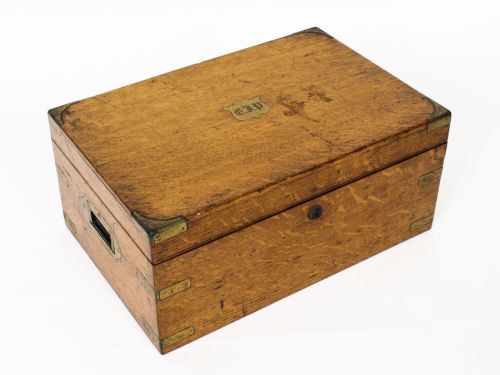


Brass Bound Oak Box
A brass bound oak box is a sturdy receptacle designed for travel or secure storage, offering a robust combination of timber and metal reinforcement.
Brass Bound Oak Box
The search for a brass bound oak box reveals items spanning the Georgian, Victorian, and Edwardian periods, reflecting a long tradition of utilitarian storage.
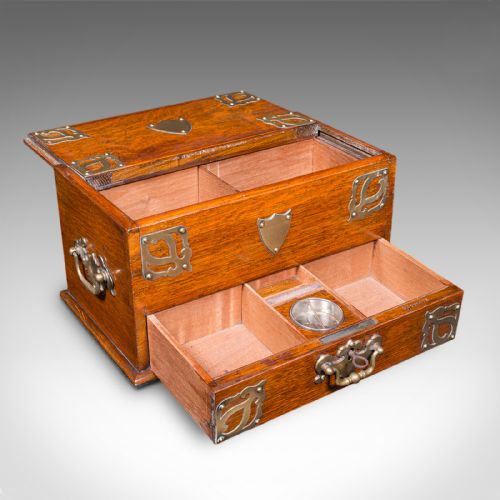
Buyers frequently encounter campaign chests, travelling trunks, writing slopes, and smokers boxes within this category, often linked to military or domestic service.
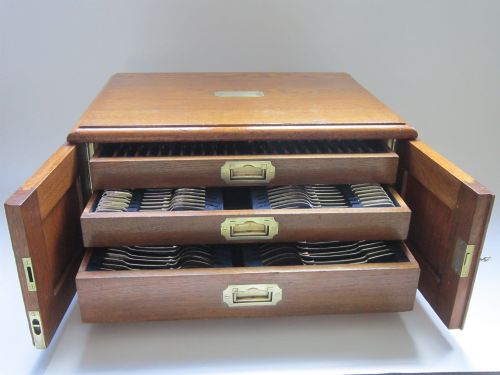
Origins range from large country house silver chests down to smaller desk accessories like cigar humidors and deed boxes.
Materials and construction
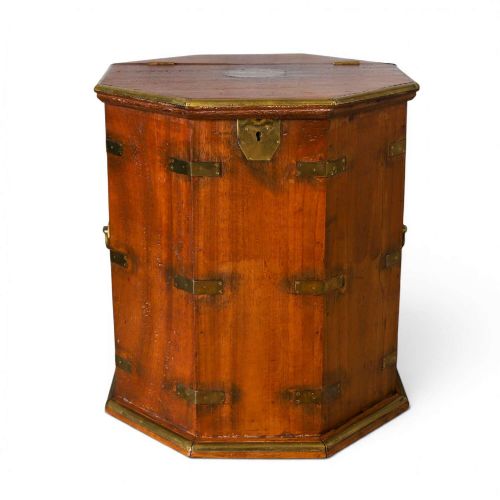
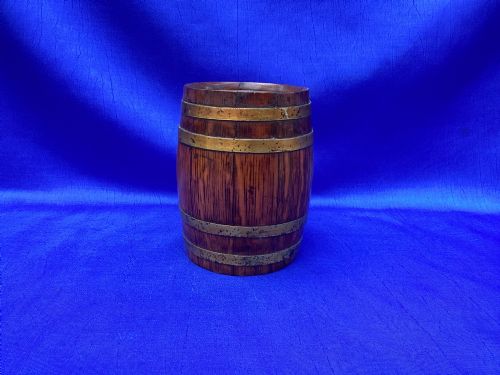
Pieces combine solid oak or pollard oak with brass banding, corners, and mounts to withstand heavy travel and daily use.
Interiors often incorporate secondary materials such as leather, velvet, iron, and sterling silver fittings, alongside fitted compartments for specific contents like cutlery, guns, or writing equipment.
Assessing quality and craftsmanship
Quality rests on the weight of the timber, the precision of the brass corners, and the presence of original locks, keys, and inscriptions.
Fine examples show meticulous dovetail joinery, well-integrated flush brass handles, and undamaged interior linings that remain functional after decades of handling.
The Brass Bound Oak Box Glossary
- Campaign
- Describing portable furniture made for military officers on the move, typically featuring recessed brass handles and reinforced corners.
- Writing slope
- A desk box with an angled, hinged lid that opens to reveal a slanted writing surface and pigeonholes for stationery.
- Pollard oak
- Timber taken from trees that have been pollarded, producing a decorative, highly figured grain pattern prized for fine cabinet work.
- Humidor
- A specialised box designed to store cigars at a controlled humidity, frequently lined with specific woods.
Brass Bound Oak Box: Frequently Asked Questions
What were these boxes originally used for?
These boxes served various transport and storage needs, from carrying officers' uniforms and silver on military campaigns to holding household documents, cigars, or cutlery.
Larger versions functioned as travelling trunks for country house owners, while smaller editions sat on desks for daily correspondence.
How do I date a Victorian piece?
Dating relies on construction methods, lock types, and stylistic cues recorded in the specific period evidence.
Victorian items often display machine-sawn timber elements alongside hand-finished brass work, distinguishing them from earlier Georgian predecessors.
Can I use them for modern storage?
Their sturdy construction makes them practical for storing documents, keepsakes, or coffee table integration.
Internal compartments require care regarding modern items, but the outer shells remain durable storage solutions.
What is the difference between a trunk and a slope?
A trunk is a large, deep chest built for heavy transport and bulk storage of clothing or silver.
A writing slope is a compact desktop box specifically built with an inclined surface for writing letters.