


Brass Base Oil Lamp
A brass base oil lamp brings a warm, heavy gleam to a room, rooted firmly in nineteenth-century utility and decorative craft.
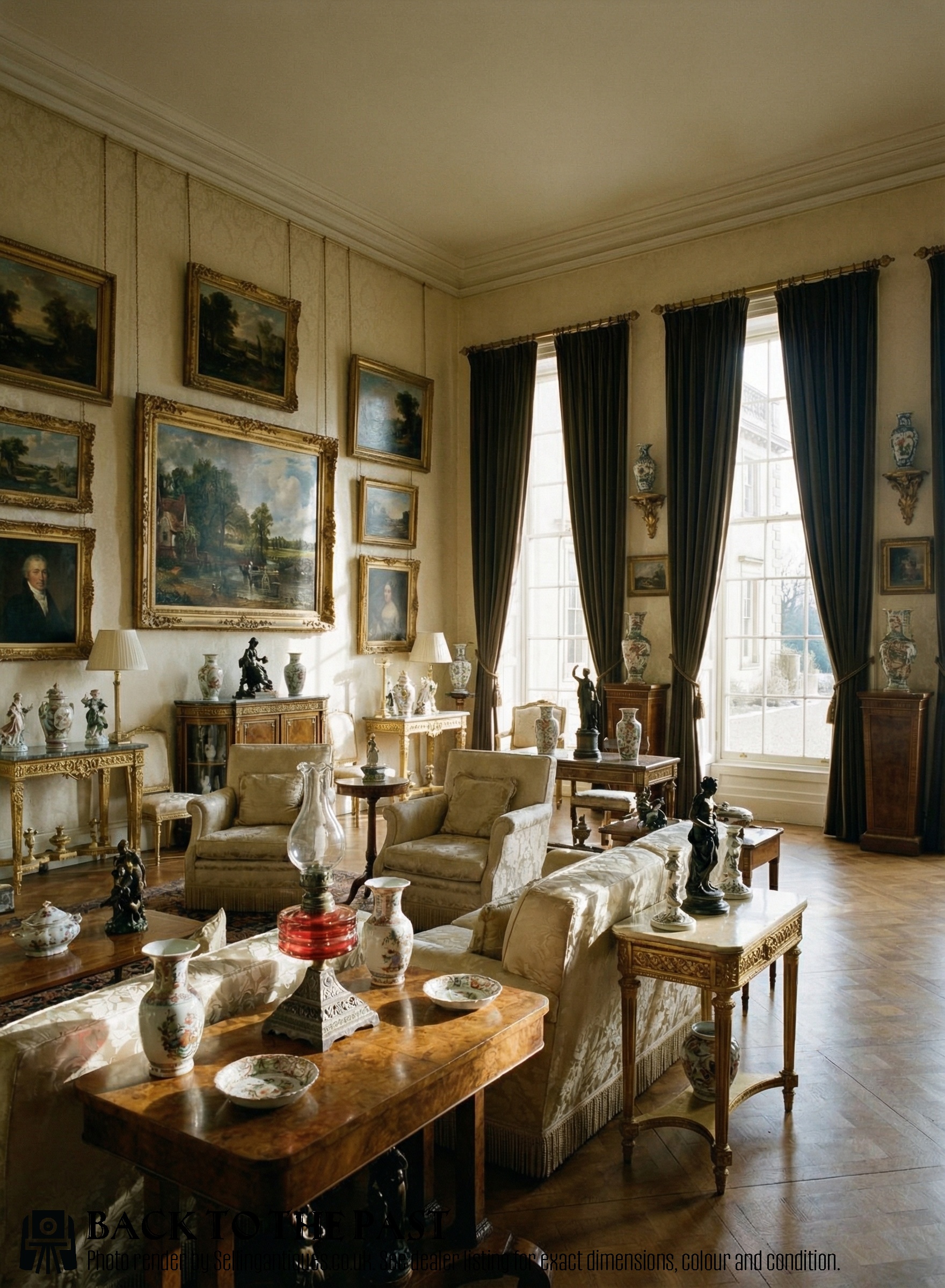
Brass Base Oil Lamp
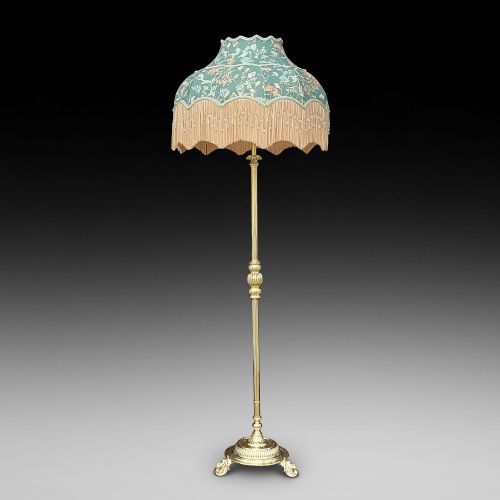
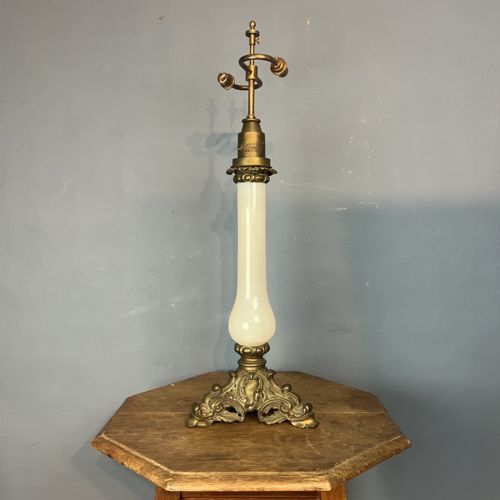
A brass base oil lamp is a domestic lighting fixture designed around a metal foundation, frequently paired with glass or ceramic elements. When you search for a brass base oil lamp, you encounter table models, floor stands, and column standards dating primarily from the Victorian era through the early twentieth century.
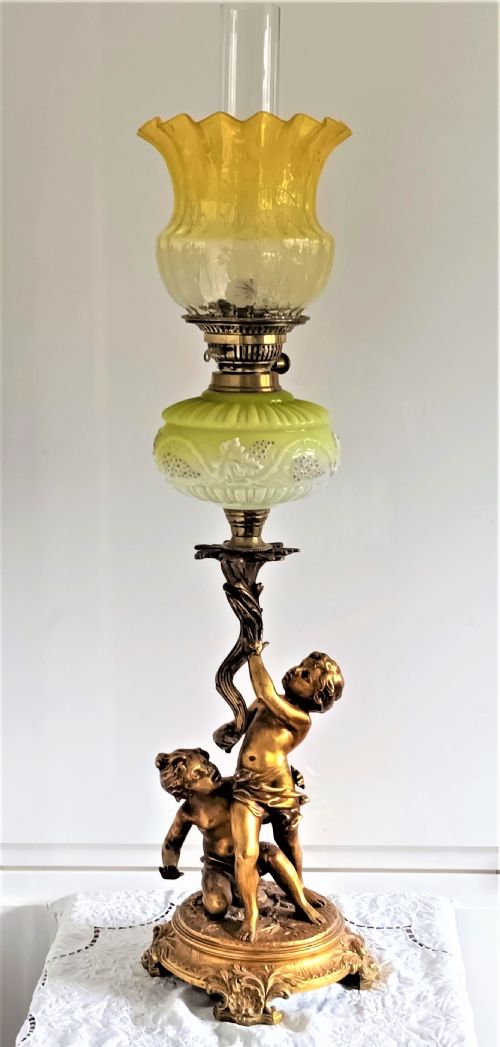
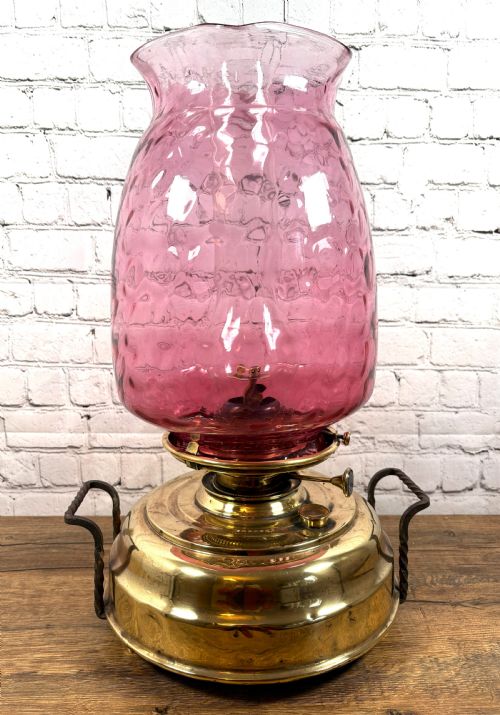
The prevailing examples on this page date from the nineteenth century, including pieces featuring opaline, cranberry, and milk glass reservoirs. Makers combined heavy cast brass with decorative elements in styles spanning Neoclassical revival, Art Nouveau, and Rococo details.
Many of these lamps survive in altered states, having been converted to electricity during the twentieth century for modern household use. Others retain their original burners and fonts, representing the period when petroleum and paraffin illuminated the British home.
How they were made
Foundry workers cast the brass bases and columns using sand-casting techniques, often turning finer details on a lathe to achieve crisp reeding and fluting. Ormolu, bronze, and silver-plated finishes were applied to elevate the status of the metalwork.
Glass reservoirs and shades were mouth-blown, sometimes utilising layered opaline or striking cranberry glass, and occasionally decorated with enamel or gilt painting. Ceramic and porcelain components were thrown or moulded, then fired and glazed before being mounted to the metal stems.
Listings feature brass combined with cranberry glass, milk glass, opaline glass, ceramic, and cast iron across the Victorian and Edwardian periods.
What varies in quality
The weight and casting definition of the brass set the baseline, with superior examples displaying sharp detailing on Corinthian capitals, cast filigree, and heavy gauge columns. Poorer specimens rely on thin stampings and superficial chasing that lack structural substance.
The pairing of materials dictates the upper tier of the range, particularly where hand-blown cranberry or opaline glass fonts meet heavy brass and bronze bases. Maker attribution through stamps on the burner mechanism or collar further separates standard commercial stock from high-workshop production.
Joseph Hinks·Messenger and Co·Mc Gary
The Brass Base Oil Lamp Glossary
- Reservoir
- The container that held the lamp oil, usually fashioned from glass, ceramic, or brass. It sits directly atop the metal base or column.
- Peg lamp
- A small oil lamp featuring a protruding metal or glass peg at the base designed to drop straight into the socket of a candlestick or holder.
- Column lamp
- A lighting standard modelled on classical architectural orders such as Corinthian or Doric, frequently executed in polished brass.
- Opaline glass
- An opaque or semi-translucent glass, often tinted in shades of pink, white, or blue, popular for Victorian lamp fonts and shades.
- Burner
- The mechanical assembly screwed to the top of the oil reservoir that regulated the wick and flame.
Brass Base Oil Lamp: Frequently Asked Questions
Are these lamps still safe to burn oil in?
Most surviving examples have been converted to electricity to suit contemporary living standards and safety regulations. Burning oil in a historic lamp requires careful inspection of the original burner and wick mechanism.
Buyers intending to use them with oil should consult a specialist to ensure the font and seals remain sound. Many collectors prefer to enjoy them either as wired table lamps or as decorative decorative objects.
How do I date a Victorian brass lamp?
Dating relies on stylistic clues, manufacturer stamps, and the materials used in the construction of the base and reservoir. Victorian pieces often exhibit Gothic, Rococo, or Neoclassical revival motifs.
Later Edwardian and Art Nouveau examples introduce flowing organic lines or simpler column forms. Patents stamped onto the metal collar provide the most precise chronological markers.
What is a peg lamp?
A peg lamp is a compact oil lamp designed with a solid lower stem that fits directly into an existing candlestick or wall sconce. This clever design allowed households to repurpose existing metalware for illumination.
They appear frequently in nineteenth-century settings paired with glass or ceramic reservoirs.
How should I clean brass and glass parts?
Brass components benefit from gentle dusting and occasional cleaning with a mild, non-abrasive metal polish to maintain their warmth. Avoid harsh commercial dips that strip away the aged patina collected over the decades.
Glass shades and reservoirs wash safely in warm soapy water, provided any gilt or enamelled decoration is avoided.