


Brass Apothecary Mortar
A brass apothecary mortar is a heavy functional vessel used for crushing ingredients, prized today for its tactile weight and domestic history.
Brass Apothecary Mortar
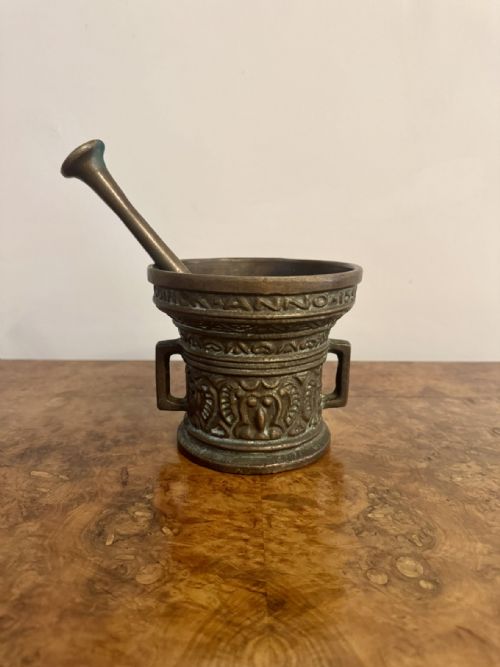
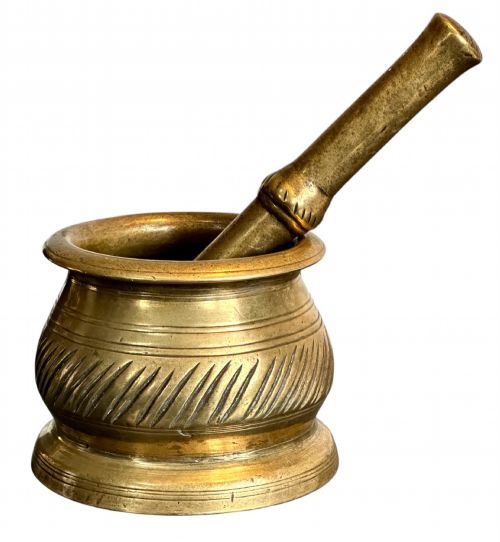
A brass apothecary mortar represents a robust class of utilitarian metalware designed for grinding medicinal substances and culinary herbs. The selection spans domestic kitchen tools to trade signs, with examples reaching back through the seventeenth century to the Victorian era. Buyers encounter pieces styled in Georgian, Gothic Revival, and Renaissance traditions alongside English and Dutch origins.
The dominant forms on this page include paired sets of mortars with matching pestles, occasionally accompanied by trade signs shaped in the likeness of the grinding tools. Dating runs from the seventeen hundreds through to eighteen sixty, capturing a substantial span of utilitarian metal manufacture. Most surviving items display the dark patination accumulated from centuries of handling and compounding.
Proportion and wear
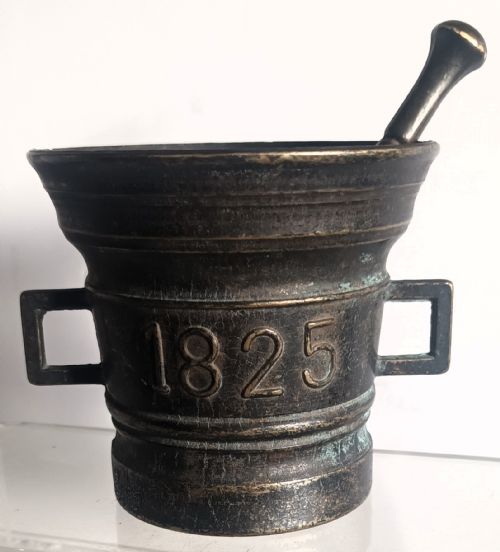
Superior examples of a brass apothecary mortar exhibit heavy casting with crisp, unblemished relief decoration and balanced wall thickness. Finer pieces retain their original matching pestle, whereas lesser specimens are paired with replacement pestles or lack them entirely. The clarity of cast motifs, such as Tudor roses or date bands, separates ordinary utilitarian kitchenware from finely wrought workshop production.
The degree of surface wear tells a story of active use versus careful preservation, with top-tier specimens maintaining sharp rims and stable bases. Irregular casting flaws and heavy corrosion diminish the tactile appeal, while smooth patination enhances it. The presence of documented origins, such as early Dutch or English Georgian workshops, elevates the standing of individual vessels.
The Brass Apothecary Mortar Glossary
- Mortar
- The heavy bowl in which substances are crushed or ground. It provides a stable, thick-walled base designed to absorb the repeated impact of a pestle.
- Pestle
- The club-shaped handheld tool used for pounding and grinding materials against the interior of the mortar. Matching period pestles complete the functional set.
- Bell metal
- A hard alloy consisting chiefly of copper and tin, frequently utilised for casting vessels that required resonant durability and strength. It yields a bright tone when struck.
- Tudor rose
- The traditional floral heraldic badge of England, frequently cast in relief around the exterior waist of seventeenth-century vessels as an ornamental motif.
- Trade sign
- A large sculptural representation hung outside a chemist or apothecary shop to advertise the profession to passers-by. These objects were often fashioned from metal or wood in the exact form of a pestle and mortar.
Brass Apothecary Mortar: Frequently Asked Questions
How were apothecary mortars used historically?
Apothecaries and domestic cooks utilised these vessels to pulverise dried herbs, roots, and minerals into fine powders for medicines and recipes.
The heavy weight of the metal allowed the user to apply substantial downward force with the pestle without the bowl sliding across the workbench.
How do I date a brass mortar?
Dating relies on stylistic clues, including the presence of Tudor rose motifs, flared rims, and specific cast profile shapes that shifted from seventeenth-century forms to Victorian designs.
Makers occasionally inscribed dates directly onto the metal surface, providing a fixed point of origin for comparison.
Are the pestles original to the mortars?
Many surviving sets include their original matching pestle, fashioned from the same alloy and bearing comparable wear patterns.
Because pestles were easily misplaced or broken through heavy use, some assembled pairs combine a later pestle with an earlier bowl.
How do I clean an antique mortar?
Maintenance requires only a soft cloth to remove dust, preserving the dark, accumulated patination that confirms the age of the metal.
Harsh chemical polishes should be avoided, as they strip away the historic surface character valued by collectors.