


Brass and Slate Clock
These heavy brass and slate clock designs bring architectural presence and mechanical reliability to a room.
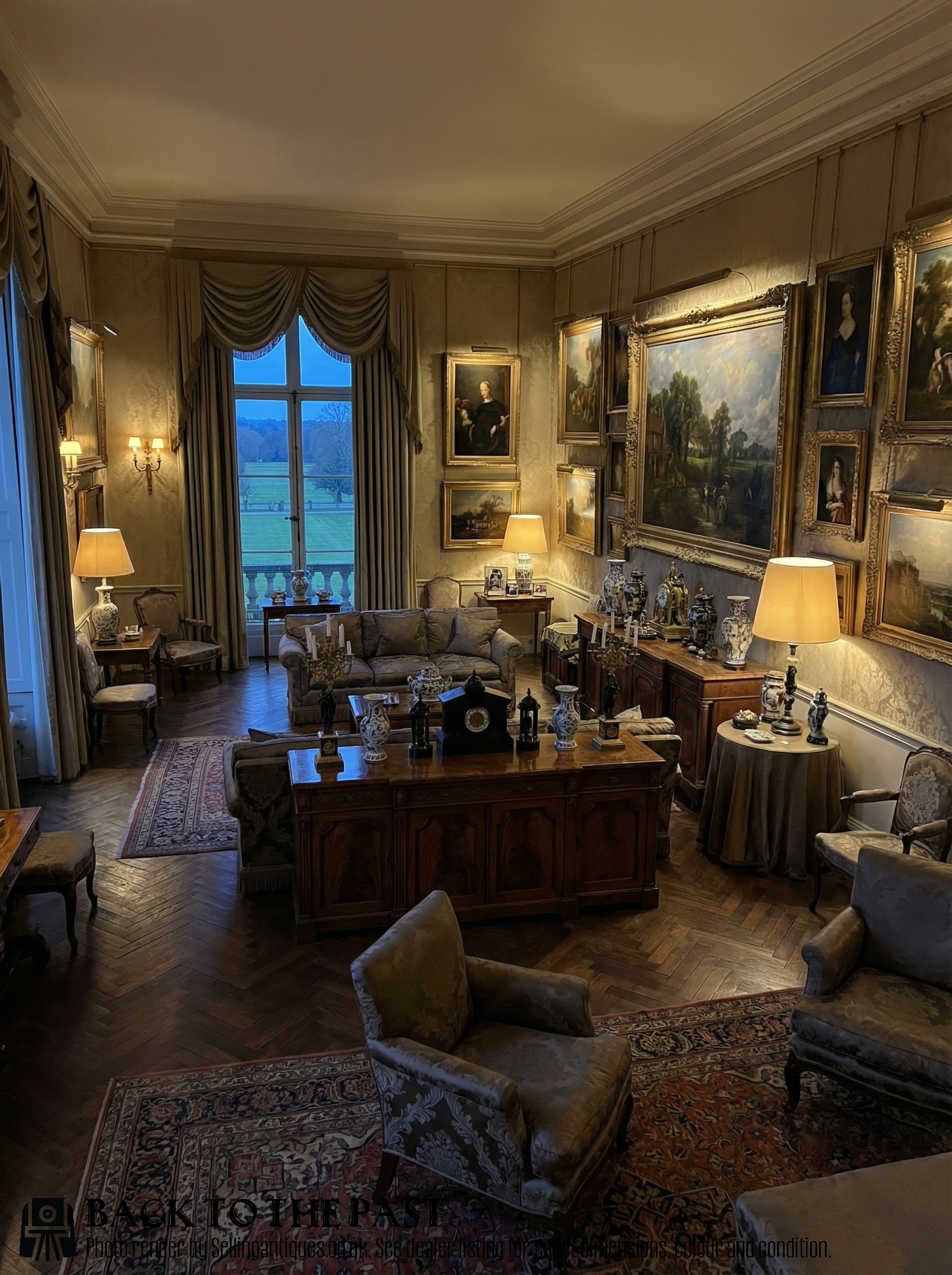
Brass and Slate Clock
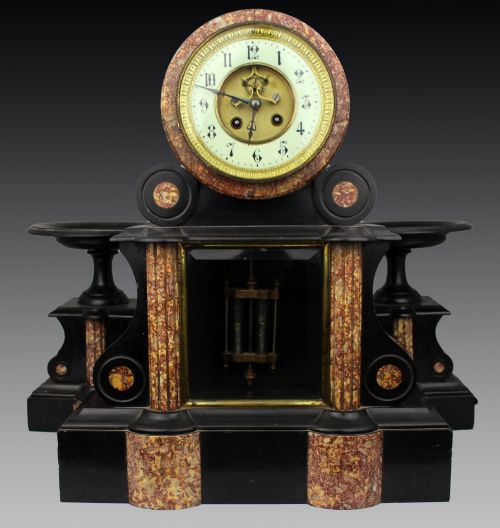
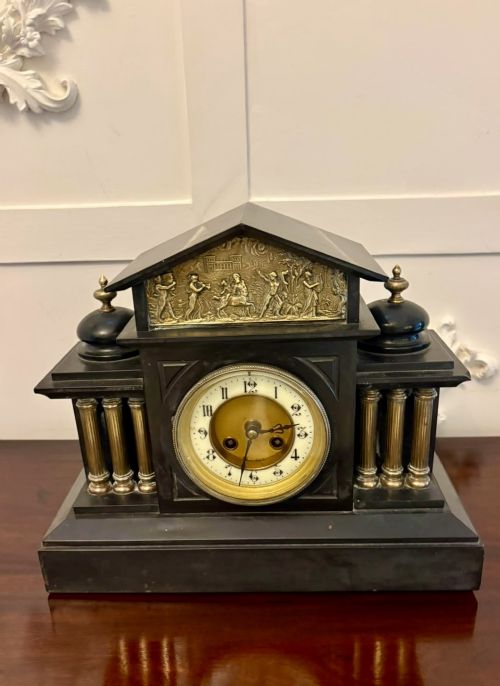
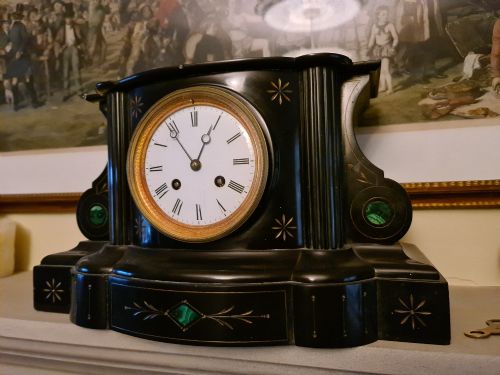
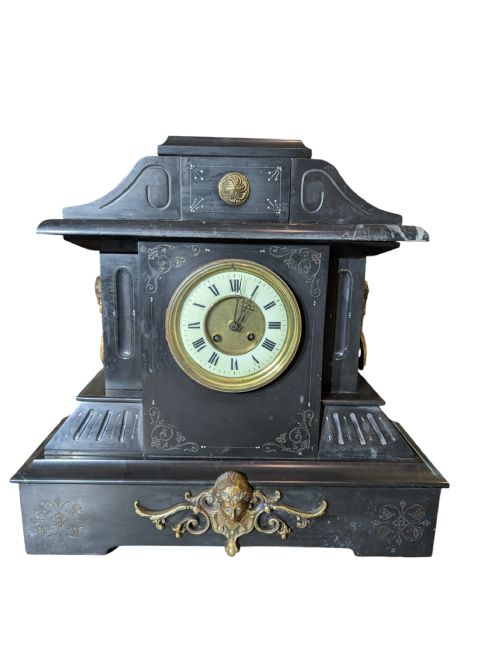
When searching for a brass and slate clock, you examine substantial nineteenth-century timepieces constructed from heavy stone bases paired with metallic dials, bezels, and cast ornamentation. The pieces on this page are predominantly Victorian mantel clocks and garniture sets originating from French and English workshops during the mid to late nineteenth century.
The prevailing form is the architectural mantel clock, frequently utilising black slate or marble combined with gilt brass mounts, columns, and dial surrounds. You will also encounter drumhead clocks, perpetual calendar models, and Egyptian Revival designs that draw on classical architectural motifs.
These weighty items were built to anchor the mantelpiece of a grand Victorian parlour or study, offering both visual solidity and an eight-day mechanical movement. Most examples span the decades between eighteen fifty and eighteen ninety, reflecting the industrial and classical revival tastes of the period.
How they were made
The primary structural body of these clocks relies on dense black slate or marble, shaped into architectural facades, columns, and plinths using heavy masonry saws and lathes. Workshops then polished the stone to a deep, uniform black or faux marble finish, occasionally inlaying contrasting coloured marbles into the geometric friezes.
Brass and bronze components were cast, chased, and fire-gilt or polished to create contrasting bezels, dial plates, lion mounts, and architectural capitals. Enamel dials with delicate painted numerals were fitted behind bevelled glass doors, housing mechanical movements driven by springs or heavy pendulums.
Listings feature black slate, marble, and ebonised wood structures paired with cast brass mounts and enamel dials.
What varies in quality
The distinction between standard production pieces and superior examples rests on the crispness of the cast brass mounts and the depth of the stone architecture. Master makers employed heavier gauges of brass and deeper relief work on Egyptian Revival or classical motifs, whereas lesser pieces relied on simpler, stamped bezels.
The sophistication of the internal movement also separates the tiers, with high-end examples featuring signed eight-day movements, complicated calendars, or chain fusee systems. The quality of the marble inlay and the precision of the stone mitres further indicate the skill of the original workshop.
Japy Frères·Philippes Paris·Sacre·Baby and Jannings·D. Munsey of Cambridge·Barraud & Lund London·Pinchon, Fils, Paris
The Brass and Slate Clock Glossary
- Slate
- A fine-grained metamorphic rock used as the solid architectural body for Victorian mantel clocks. It takes a smooth, dark polish that mimics black marble.
- Garniture set
- A decorative grouping consisting of a central clock flanked by matching ornamental side pieces such as urns or vases. These sets were designed to sit symmetrically on a mantelpiece.
- Fusee movement
- A conical pulley mechanism connected to a chain or cord that equalises the driving force of the mainspring as it unwinds. It ensures more accurate timekeeping throughout the week.
- Dial bezel
- The metal ring that holds the glass face protecting the clock dial. In these pieces, it is typically cast from polished or gilt brass.
- Drumhead clock
- A timepiece featuring a circular clock case mounted on a rectangular stone or marble plinth. The shape resembles a sideways drum resting on a base.
Brass and Slate Clock: Frequently Asked Questions
How do I wind an eight day clock?
You insert the winding key into the small holes on the enamel dial and turn it gently until you feel resistance. Take care not to over-wind the mainspring.
Most nineteenth-century movements require attention once a week to maintain accurate timekeeping. Ensure the clock rests on a completely level surface before starting the pendulum.
How do I clean a slate clock case?
Dust the stone regularly with a soft, dry cloth to prevent particles from settling into the carved recesses and brass mounts. Avoid using harsh chemical solvents or water on the black slate surface.
If the stone appears dry, a very light application of neutral mineral oil can restore its deep lustre. Buff the brass components gently with a dry microfiber cloth without touching the enamel dial.
Where should I place a heavy marble clock?
Choose a sturdy mantelpiece, sideboard, or heavy piece of furniture capable of supporting considerable weight. Slate and marble clocks are exceptionally heavy and require a stable, level foundation.
Keep the clock away from direct sunlight, open windows, and damp exterior walls to protect the delicate internal brass and paper or enamel dial faces.
How do I date a Victorian slate clock?
Examine the overall architectural style, looking for clues such as Egyptian Revival motifs or classical Neoclassical details popular in the mid to late nineteenth century. Maker signatures on the movement backplate or dial often provide a precise workshop origin.
Stylistic shifts between mid-century simplicity and later ornate garnitures help narrow the decade of production. Documentation or signatures from makers like Japy Frères assist in establishing a tighter timeline.