


Brass and Copper Coal Scuttle
A brass and copper coal scuttle brings warmth and utility to a hearth, combining sturdy metalwork with practical fireside storage.
Brass and Copper Coal Scuttle
A brass and copper coal scuttle is a functional fireside container designed to hold solid fuel close to the grate. When you search for this phrase, you encounter vessels intended for everyday domestic service alongside decorative receptacles suited for alternative uses like planters.
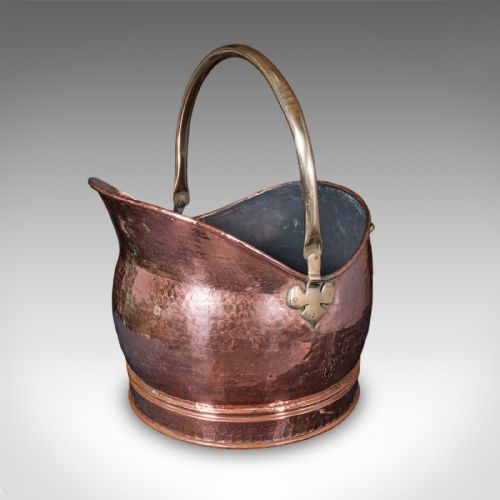
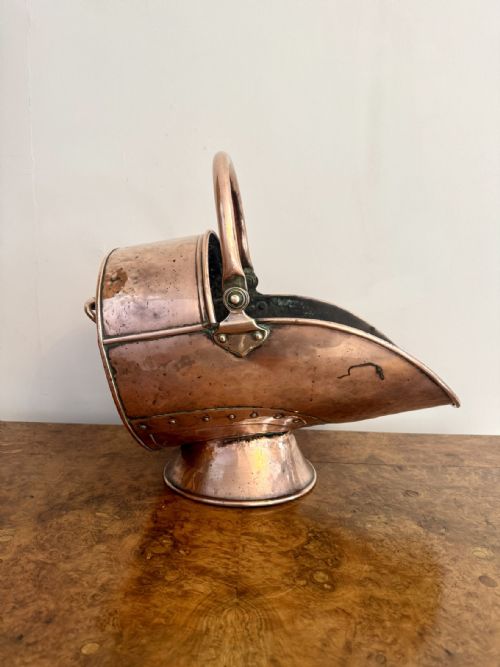
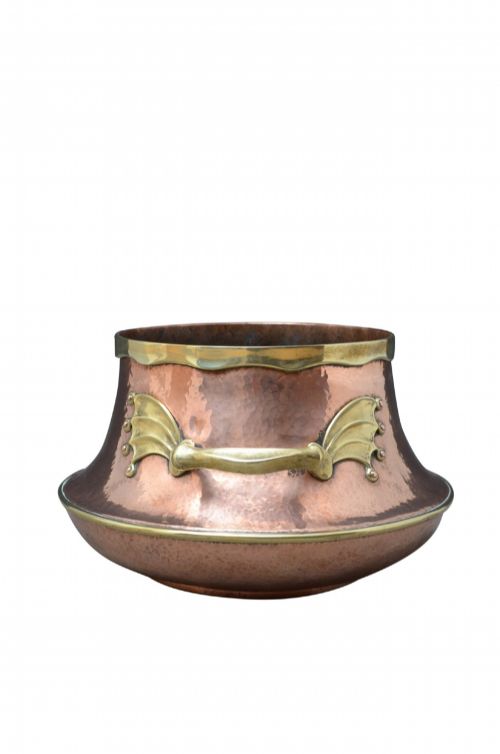
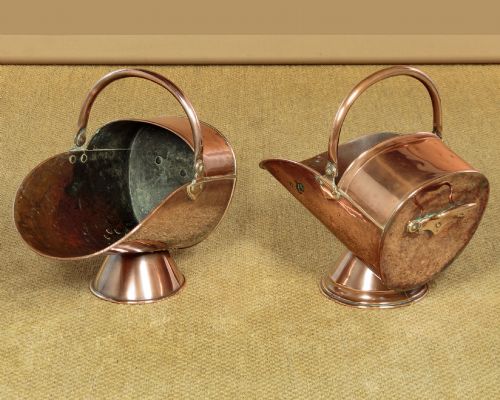
The pieces on this page span several periods, from Georgian and Victorian eras through to Edwardian, Art Deco, and Arts and Crafts movements. The Victorian helmet scuttle emerges as the most frequent form, often paired with contrasting metal bands and swing handles.
Materials and Technique
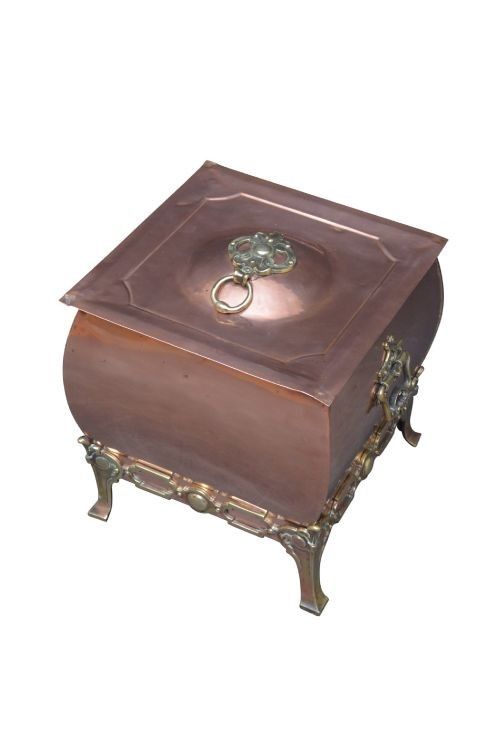
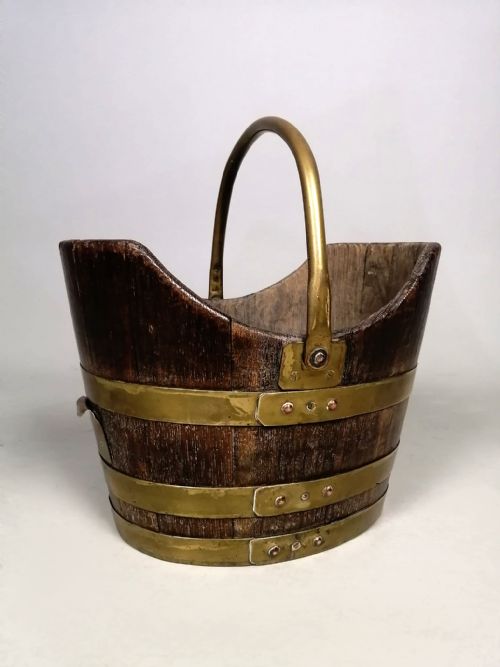
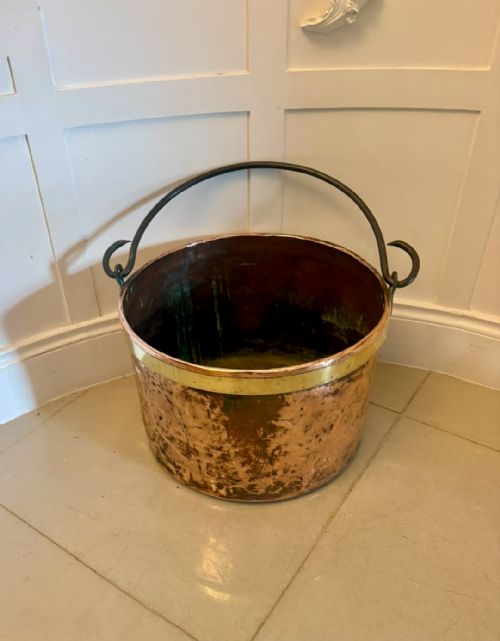
These items rely on combinations of copper and brass, frequently accented with iron, wrought iron, wood, oak, tin, or zinc components. Metal sheets are shaped, riveted, and joined to form deep buckets, bins, and helmet profiles.
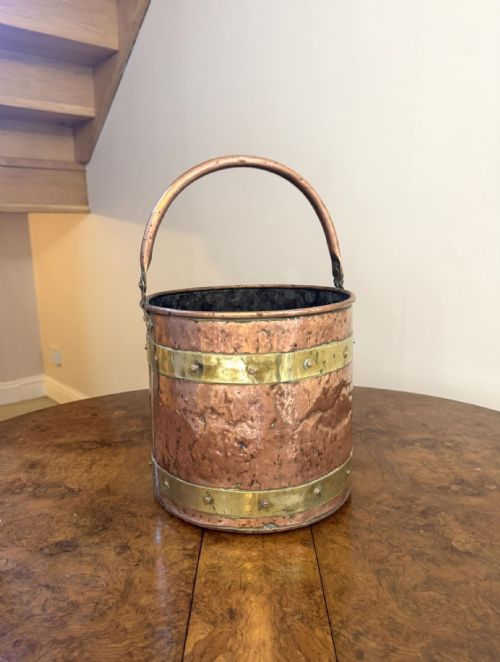
Surface finishes include hand-beaten hammering, embossed detailing, and hand finishing. Rivets secure structural seams while contrasting brass handles, feet, and bands reinforce the softer copper bodies.
Materials recorded across the inventory include copper, brass, oak, wrought iron, tin, and zinc.
Build and Detail
Construction heaviness separates robust examples from lighter items, with thicker gauge metals and solid riveting indicating durable domestic output. Handles and attachments demonstrate the standard of assembly, ranging from simple rolled edges to substantial cast brass mounts.
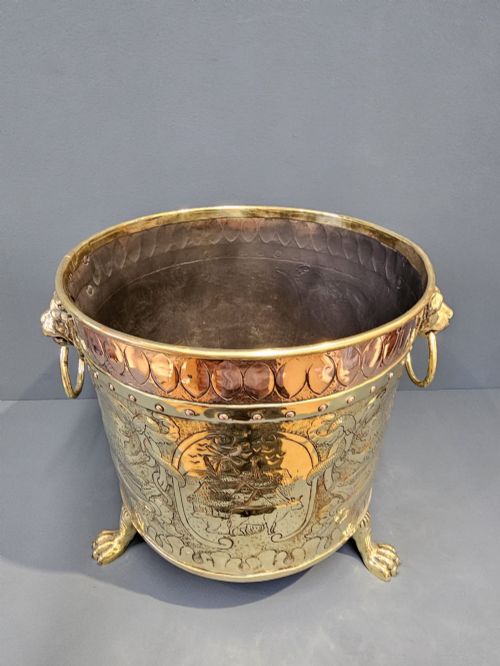
Decorative ambition further distinguishes the range, moving from plain utilitarian bins to pieces featuring intricate embossing, hand-beaten surfaces, and disciplined proportions. The integration of contrasting brass bands upon copper bodies demands precise alignment and careful fitting.
The Brass and Copper Coal Scuttle Glossary
- Helmet scuttle
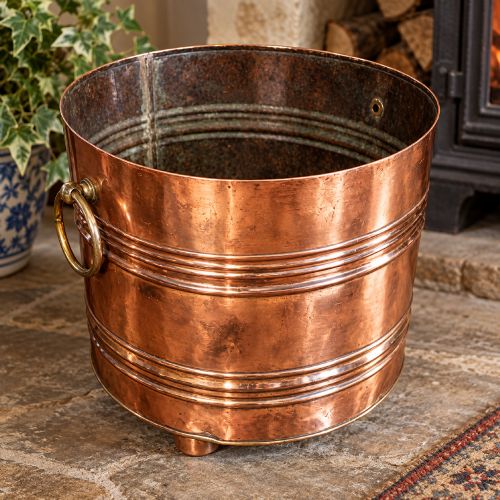
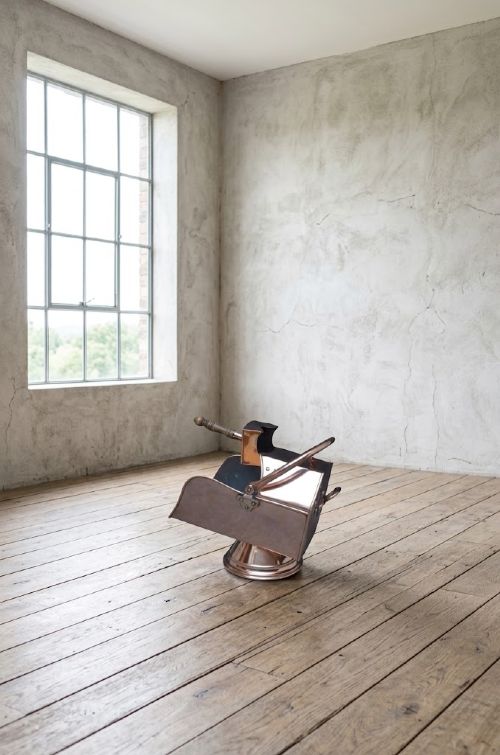
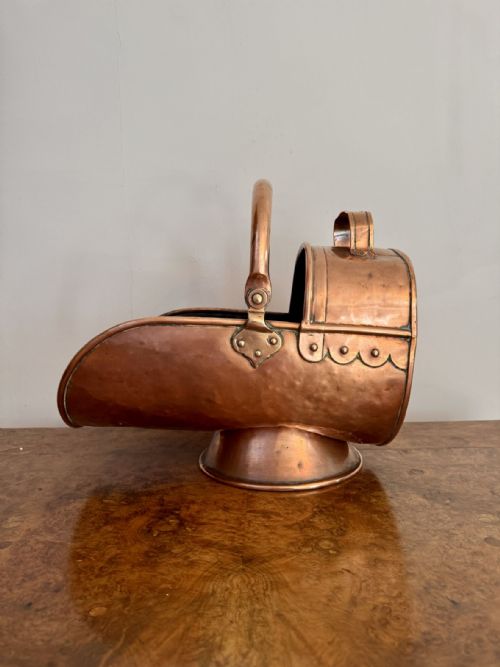
- A fireside bucket featuring a flared rim that resembles a classical helmet, designed for pouring fuel cleanly. This shape dominates Victorian production.
- Dinanderie
- The traditional craft of working objects from brass, copper, and bronze. It appears on decorative vessels and containers from various periods.
- Log bin
- A capacious floor-standing vessel utilised for storing firewood rather than smaller coal pieces. These items often share construction methods with coal buckets.
- Embossed
- Raised ornamentation pressed or hammered into the surface of the metal sheet from the reverse side. This technique adds texture to Victorian designs.
Brass and Copper Coal Scuttle: Frequently Asked Questions
How do I clean a brass and copper coal scuttle?
Maintenance depends on whether you prefer a bright polished shine or an aged dark patina. Gentle washing with warm soapy water removes soot and dust safely.
Avoid harsh abrasive compounds that strip historical character from the metal surfaces. Many collectors choose to preserve the natural darkening accumulated over decades of fireside use.
Are these scuttles still usable for real fires?
Most antique metal buckets remain structurally robust enough to hold logs or coal beside a modern fireplace. Their original construction in heavy-gauge copper and brass ensures everyday durability.
Check internal seams and bases for integrity before loading heavy fuel loads. Lining older vessels with a modern insert protects the antique metal from moisture and direct abrasion.
What is the difference between a scuttle and a log bin?
A coal scuttle typically incorporates a tilted opening or a spout designed for pouring granular fuel directly into a grate. They frequently feature pivoting handles for lifting and tilting.
Log bins are usually straighter, open-topped cylinders or oval vessels built to accommodate larger pieces of firewood. Both forms utilise overlapping copper and brass construction.
How can I tell a Victorian scuttle from a Georgian one?
Georgian examples often display simpler, heavier brass banding and restrained lines dating back toward the eighteenth century. They rely on hand-beaten construction and robust wrought iron elements.
Victorian pieces frequently embrace the helmet profile, decorative embossing, and brighter contrasting brass mounts. Late nineteenth-century examples introduce Arts and Crafts or aesthetic movement sensibilities.