



Copper Fireplace Hearth Storage
These copper fireplace hearth storage pieces are sturdy metal vessels designed to hold logs and coal beside a fire.
Copper Fireplace Hearth Storage
When you search for copper fireplace hearth storage, you are looking at utilitarian vessels made to hold fuel by the hearth. The examples available here span from the Georgian period through the Victorian era into the twentieth century, taking the form of log bins, coal scuttles, and buckets.
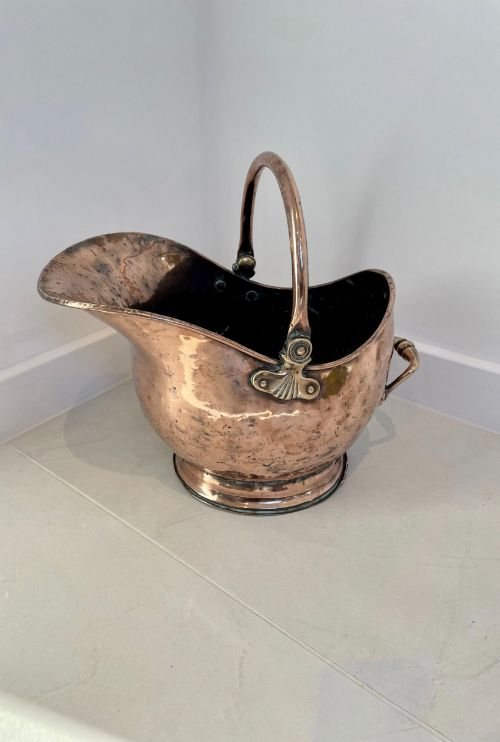
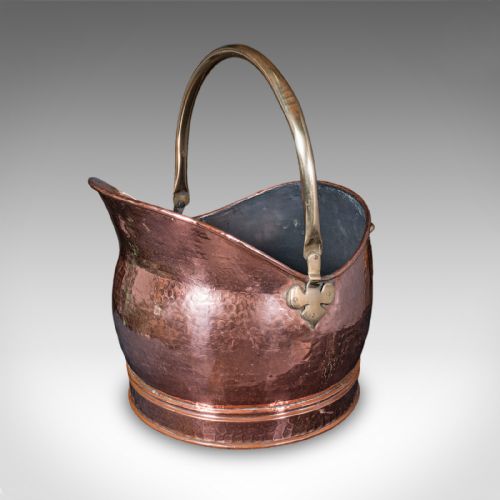
You are most likely to meet Victorian and nineteenth-century pieces shaped as robust bins or helmets, often combined with brass handles and fittings. Some forms double as garden planters, showing the dual purpose these durable metal containers served over time.
The materials recorded across these items rely heavily on hammered copper, supported by brass accents, iron bodies, and occasional galvanised steel or tin linings. Stylistically, the selection moves from plain Georgian utility through ornate Victorian work to the simpler lines of the Arts and Crafts movement.
Materials and construction
The makers of these items worked primarily in sheet copper, shaping the metal by hand and finishing the surfaces to display subtle hammer marks. Brass was frequently utilised for handles, paw feet, and decorative bands to provide a strong contrast against the warm copper body.
Iron and wrought iron components appear in the internal frames, swing handles, and stabilizing rims, ensuring the vessels could bear the heavy weight of coal and logs. Later twentieth-century examples incorporate plated finishes and simpler jointing techniques while retaining the characteristic metal construction.
Copper Fireplace Hearth Storage Retail Price Guide 2026
Typical asking prices for copper fireplace hearth storage among the pieces listed under this phrase on Sellingantiques today, from the lower quarter to the upper quarter. They describe what is for sale here now, not the wider market.
Listings feature periods spanning from the Georgian era through Victorian times up to the 1930s.
Evaluating quality and craftsmanship
The distinction between a standard vessel and a finer example lies in the weight of the metal gauge and the integrity of the construction. Superior pieces show careful hand-finishing, securely riveted seams, and well-balanced brass handles that withstand regular lifting.
Decorative detailing also separates the range, where crisply executed repoussé motifs or integrated galleon designs demonstrate a higher level of artisan skill. Simpler utilitarian boxes rely purely on robust proportions and honest patination rather than surface ornament.
The Copper Fireplace Hearth Storage Glossary
- Repoussé
- A metalworking technique where the material is hammered from the reverse side to form a raised design on the front. This method was widely used during the Arts and Crafts period to decorate coal buckets and bins.
- Coal scuttle
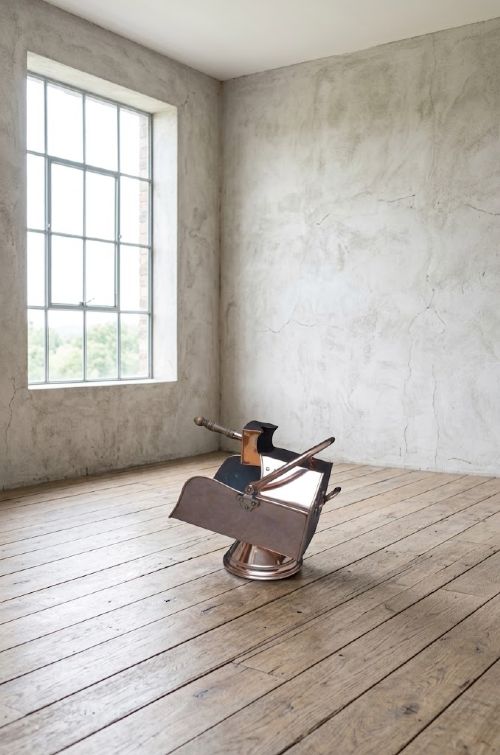
- A container specifically shaped for carrying coal to a fireplace, often featuring a funnel mouth or a hinged lid and a swing handle. They frequently appear alongside wider log bins in nineteenth-century hearth furnishings.
- Log bin
- A large cylindrical or oval vessel designed to hold firewood neatly beside a hearth. These items are commonly fashioned from heavy copper with brass feet and drop handles.
- Patina
- The surface sheen and coloration developed by copper and brass over decades of exposure to air and handling. Collectors value a deep, undisturbed patina as evidence of genuine age.
Copper Fireplace Hearth Storage: Frequently Asked Questions
What is copper fireplace hearth storage?
These pieces are functional metal containers built to hold coal, kindling, and logs beside a fireplace. They range from deep cylindrical bins to handled buckets and helmet-shaped scuttles.
Most examples are made from sheet copper combined with brass fittings and iron handles. They served a purely practical purpose in homes before central heating became common.
How were these metal bins used?
Households used these vessels to store solid fuel close to the fire for daily replenishment. Coal scuttles allowed clean transport from a cellar or coal hole directly to the grate.
Larger log bins stood permanently by the hearth to keep firewood tidy. Their sturdy metal construction prevented dirt and debris from spilling onto the floorboards.
How do I clean a copper bin?
Most owners prefer to leave the aged surface untouched because the dark oxidation and warm tones tell the story of the piece. Regular dusting with a soft cloth is usually sufficient to keep the metal clean.
If you prefer a brighter look, a mild metal polish can be applied cautiously to the brass and copper. Avoid harsh abrasives that might damage the original hand-finished surface.
How do I date an old coal bucket?
Dating relies on observing construction methods, material combinations, and stylistic clues like hand-hammering or decorative motifs. Georgian and early nineteenth-century pieces tend to show heavier gauge metal and simpler, utilitarian proportions.
Later Victorian and Arts and Crafts examples often feature more elaborate surface decoration and riveted joints. Comparing the handle attachments and foot designs helps place an item within its specific era.
Can I use these for logs today?
These bins remain fully functional for holding firewood beside a modern hearth. Their solid metal construction handles the weight and rough texture of logs without difficulty.
Many people also repurpose them as umbrella stands or indoor plant holders. Their decorative appearance suits contemporary living spaces just as well as traditional period rooms.