

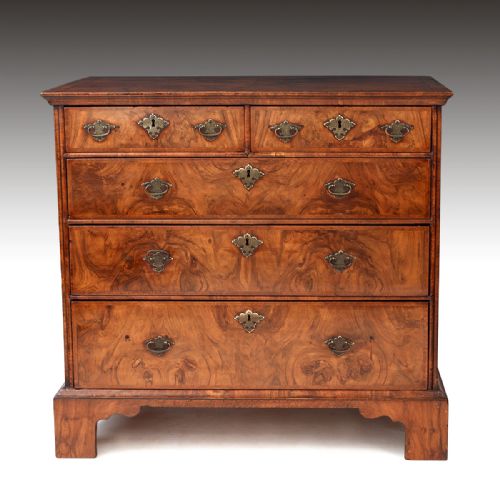
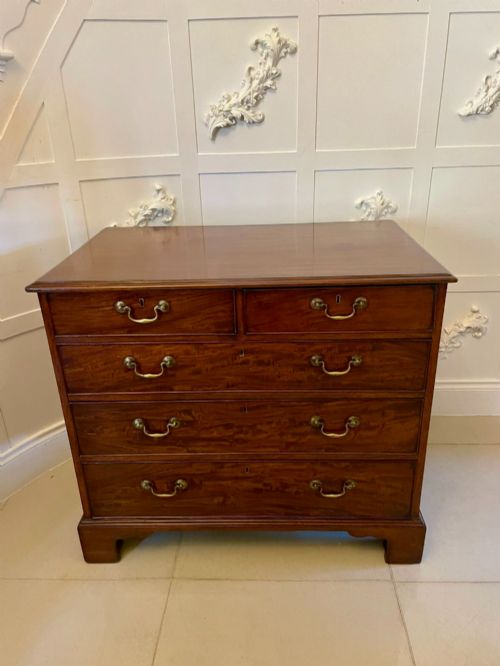
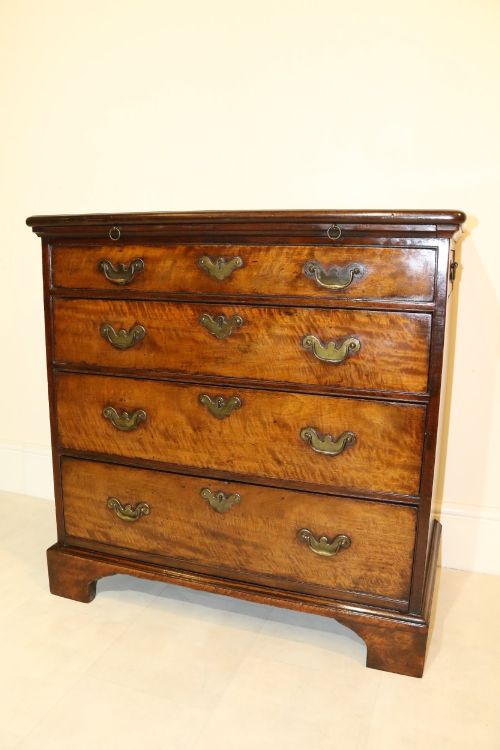
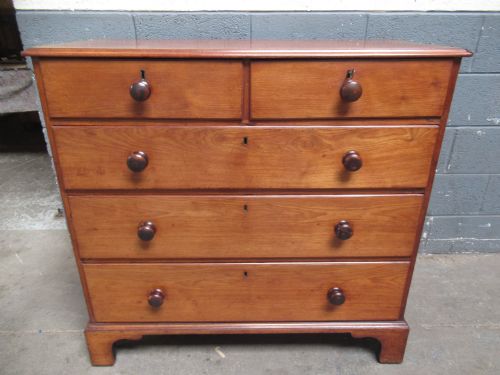
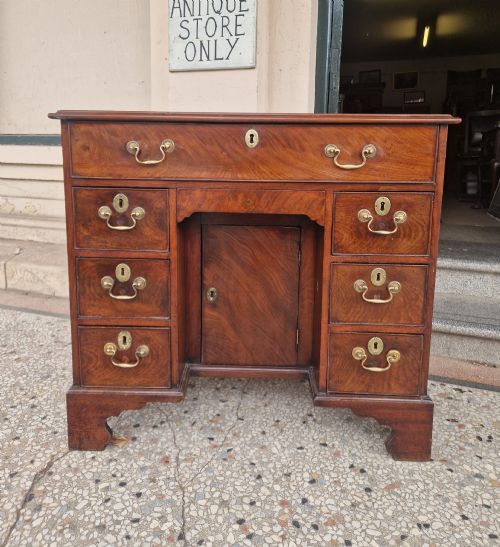
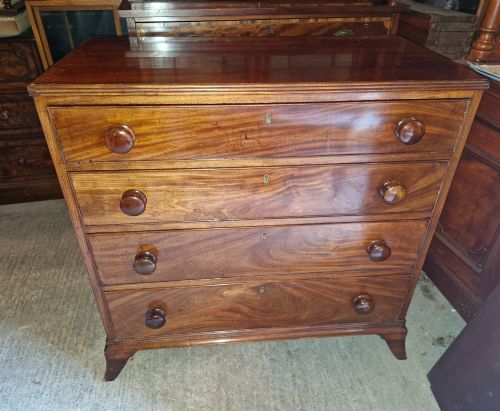
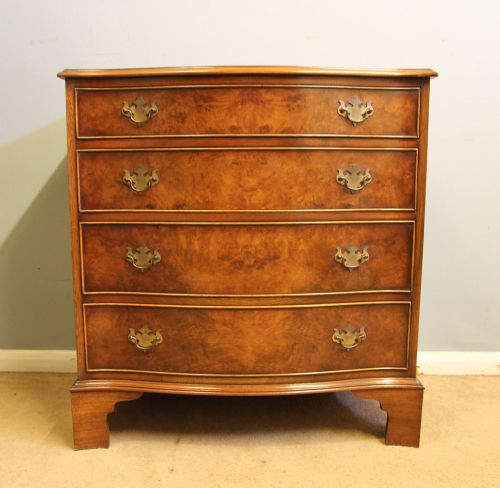

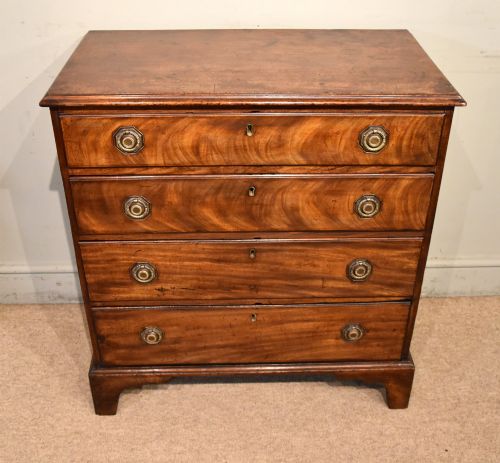
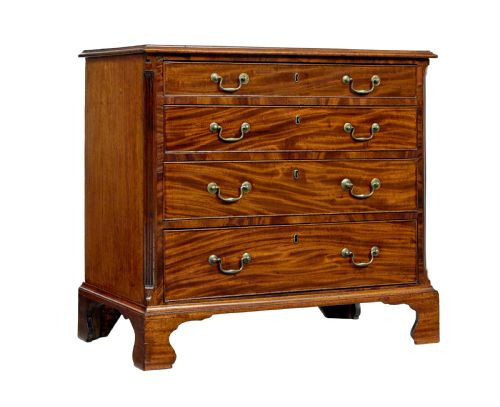
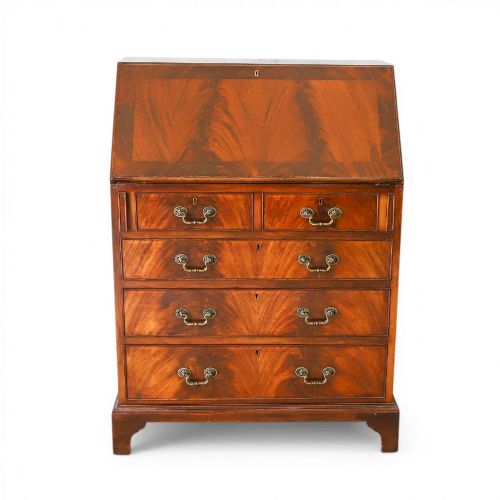
Bracket Foot Bureau
A bracket foot bureau brings practical writing space and classic storage together, standing on neat, angular feet that suit traditional interiors.
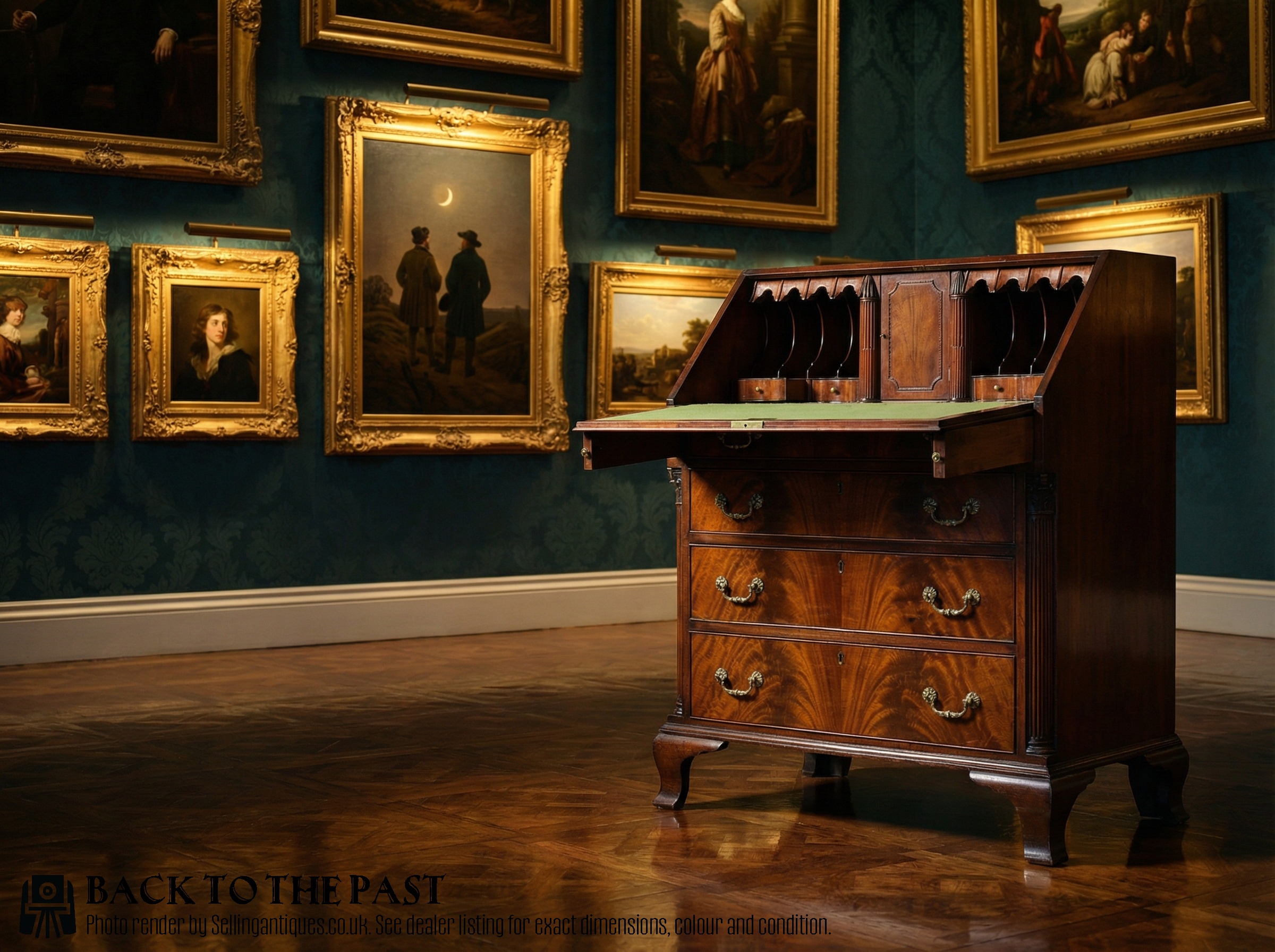
Bracket Foot Bureau
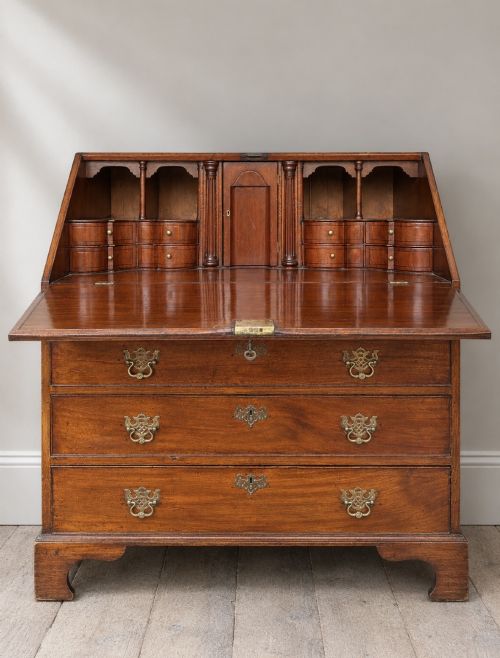
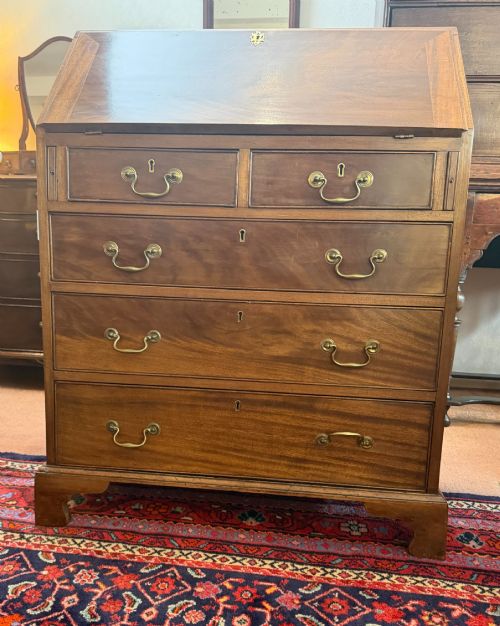
When searching for a bracket foot bureau, you find items designed for writing and storage that date primarily from the eighteenth and nineteenth centuries. These pieces combine fitted desk interiors with sturdy wooden construction.
The versions most common on this page are mahogany and walnut examples from the Georgian period, often featuring drop-front writing slopes and multiple drawers.
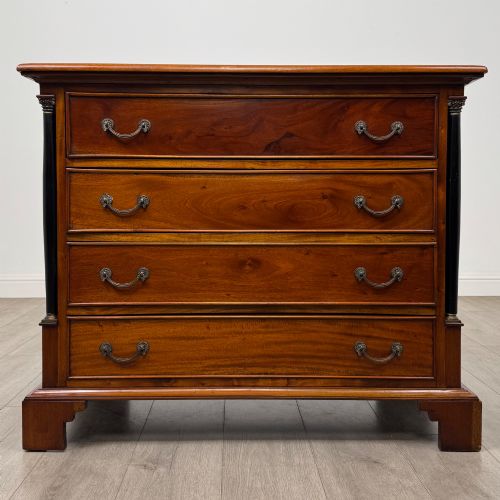
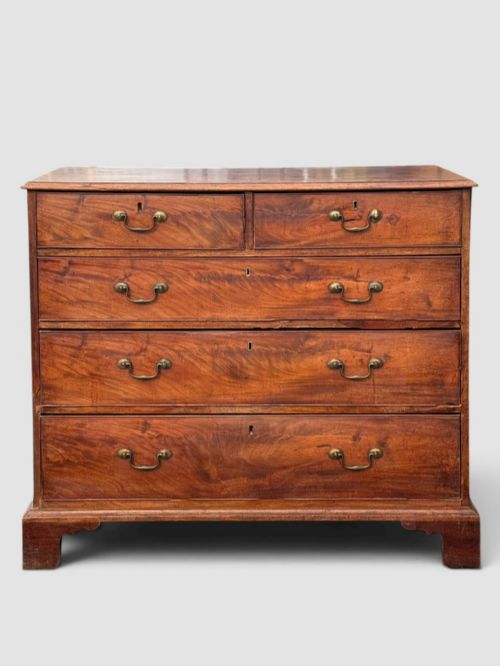
Alongside dedicated bureaux, listings include related forms such as kneehole desks and chests of drawers sharing the same period styling.
Materials and construction methods
Cabinet makers relied heavily on mahogany and walnut, frequently selecting figured veneers like burr or flame walnut for visible surfaces. Oak often served as a secondary timber for drawer linings and internal dividers.
Metal hardware such as brass handles and escutcheons complemented the dark timber tones, whilst subtle details like boxwood stringing or bone inlay appeared on specific revival and period items.
Materials documented across the catalogue include mahogany, walnut, oak, brass, bone and ebonised wood.
Distinctions in quality and execution
Superior examples separate themselves through the choice of timber figures, such as curl mahogany or burr walnut, matched carefully across the fall-front or drawer drawers. Lesser pieces utilise plain, uniform boards with less visual depth.
The intricacy of the internal compartments defines the upper tier of bureaux. Finer pieces offer elaborate pigeonholes, hidden compartments and small drawers, whereas simpler items keep the interior plain.
The Bracket Foot Bureau Glossary
- Bracket foot
- A simple, stable foot shape formed by two pieces of timber mitred at the corner, lifting the cabinet slightly off the floor. This style appears frequently on Georgian chests and bureaux.
- Bureau
- A desk featuring a hinged sloping flap that opens to reveal a fitted interior of small drawers and pigeonholes. These items combine writing surfaces with drawer storage.
- Kneehole desk
- A compact desk or writing table featuring a central recess for the user's legs, flanked by pedestals of small drawers. Examples from the walnut and mahogany eras are common.
- Brushing slide
- A pull-out shelf located above the top drawers, traditionally used for folding clothes or writing brief notes without opening the main desk flap.
Bracket Foot Bureau: Frequently Asked Questions
What is a bracket foot bureau?
A bracket foot bureau is a traditional writing desk featuring a sloping fall-front that conceals internal compartments, supported by architectural corner feet.
These pieces emerged strongly during the Georgian era and combine functional workspace with enclosed drawer storage.
How do I identify a Georgian bureau?
Georgian bureaux typically display dense mahogany or walnut timbers, hand-cut dovetails on the drawers, and classical brass pull handles.
The internal arrangement usually contains small pigeonholes and secret compartments characteristic of eighteenth-century woodworking.
What woods were used for these desks?
Cabinet makers predominantly utilised mahogany and walnut, frequently incorporating figured veneers like burr walnut or curl mahogany on the exterior surfaces.
Secondary timbers like oak commonly appear inside the drawer construction and carcass frames for structural stability.
Where should I place a bureau in my home?
A bureau fits well in a living room, study or hallway, functioning both as an occasional writing desk and a decorative chest of drawers.
The drop-front closes to conceal paperwork, keeping the room tidy when the workspace is not in use.