


Compact Oak Bureau
A compact oak bureau offers a practical writing surface and tidy storage, combining solid timber with clever interior compartments.
Compact Oak Bureau
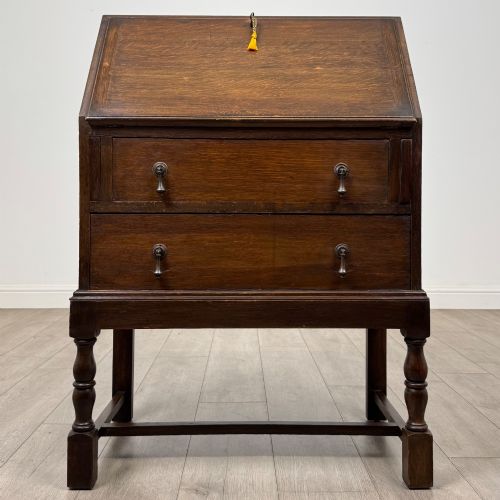
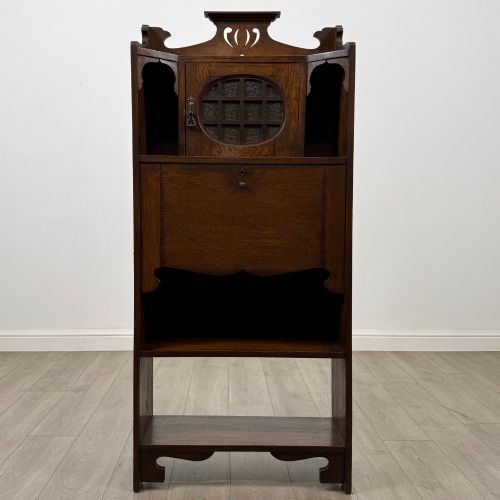
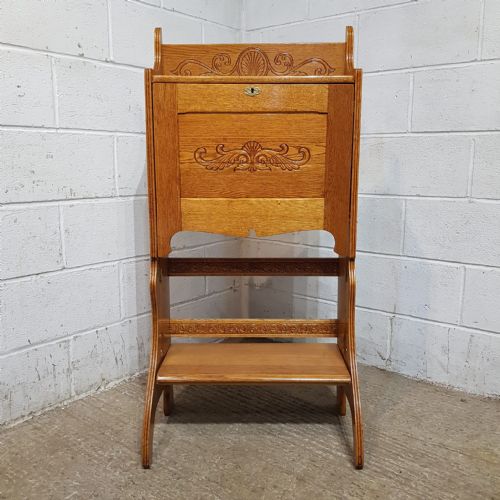
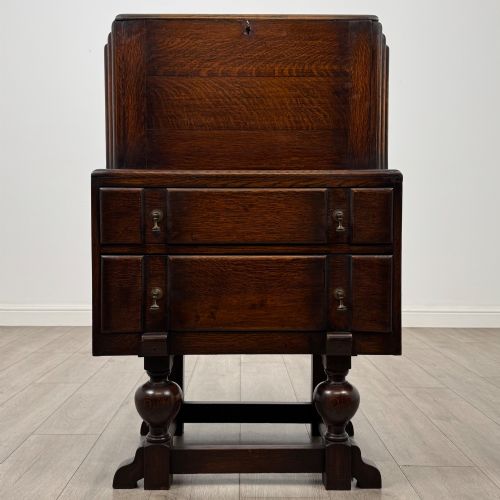
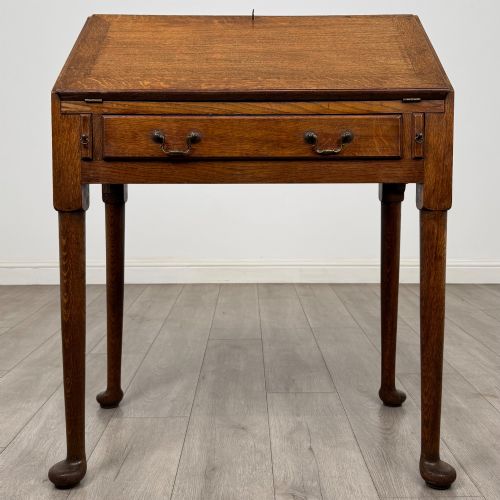
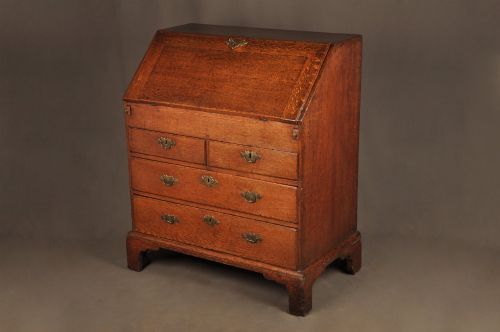
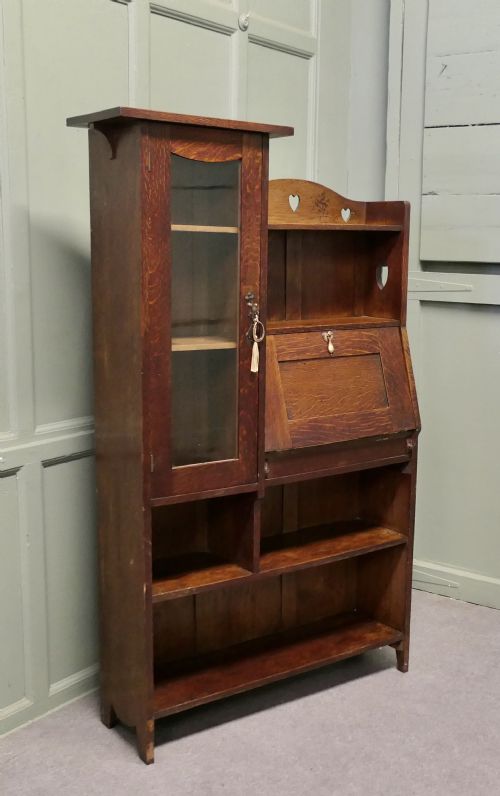
A compact oak bureau provides a dedicated writing space with a fall front that conceals pigeonholes and small drawers. These pieces range from early provincial examples to later Edwardian and Arts and Crafts interpretations.
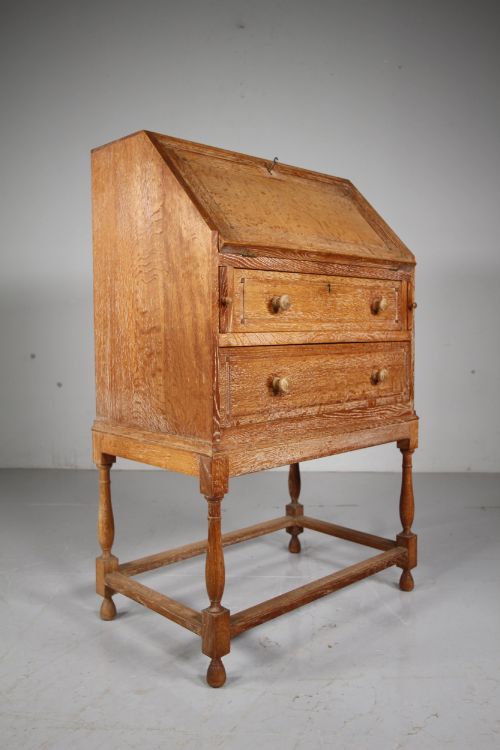
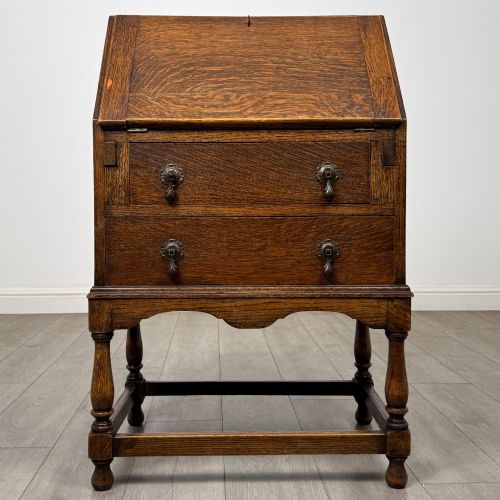
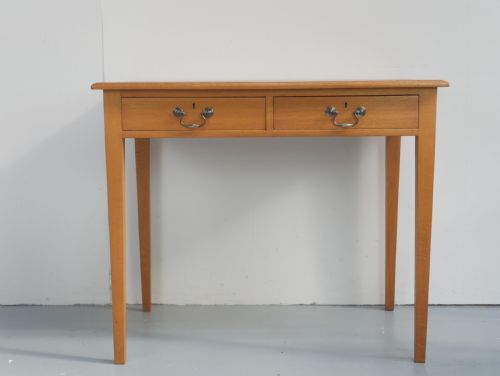
The version most commonly met on this page is the Edwardian or 1920s writing bureau, often standing on slender legs with fitted drawers beneath the writing flap.
Originating as practical furniture for home administration, these smaller desks suit modern rooms where floor space is limited yet traditional timber grain is desired.
Materials and Construction
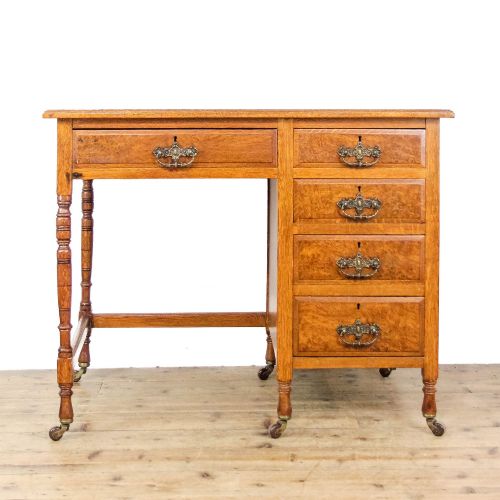
Makers utilised solid oak, golden oak, and occasionally pollard oak veneers to construct these bureaus, pairing the dense timber with brass handles, hinges, and occasional leather writing inserts.
Joinery techniques combined traditional dovetailed drawer construction with panelled fall fronts, ensuring the writing surface remained stable under daily use.
Interior fitments incorporated small drawers, pigeonholes, and secret compartments assembled from secondary timbers, demonstrating meticulous cabinet work on a modest scale.
Some bureaus conceal tiny secret drawers behind pigeonholes, designed for letters best kept away from prying eyes.
Assessing Quality and Execution
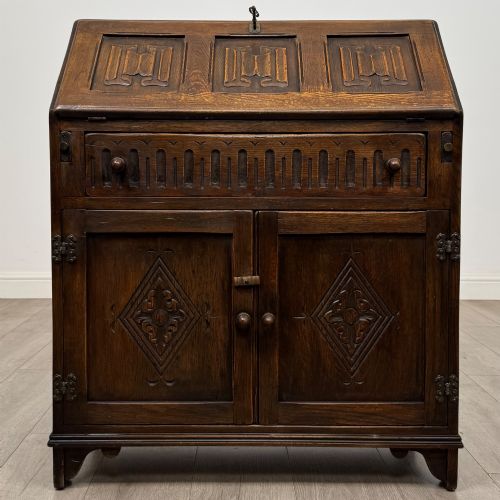
The distinction between standard production and superior craftsmanship rests in the selection of figured timber, such as golden or burr oak, and the crispness of any carved detailing like Green Man motifs or linenfold panels.
Original brass hardware, working locks with keys, and intact interior fittings elevate an example far above one with replaced components or altered secondary woods.
Heals of London·Bryn Mawr·Jenners·Harris Lebus·Liberty and Co
The Compact Oak Bureau Glossary
- Bureau
- A writing desk featuring a sloping hinged lid or fall front that opens to reveal fitted interior compartments and drawers.
- Fall Front
- The hinged sloping panel on a bureau that drops down to form the writing surface.
- Pigeonhole
- A small, open compartment inside a desk used for sorting letters and papers.
- Pollard Oak
- Oak timber taken from trees pollarded, producing a richly figured, mottled grain pattern.
- Linenfold
- A style of wood carving resembling folded vertical strips of cloth, frequently seen on Edwardian panels.
Compact Oak Bureau: Frequently Asked Questions
What is a compact oak bureau?
A compact oak bureau is a small writing desk with a hinged sloping front that covers interior pigeonholes and small drawers. Below the writing flap, several storage drawers typically provide space for household paperwork.
These pieces were designed for domestic administration in homes where floor space was at a premium. Their diminutive proportions make them versatile additions to modern studies and living rooms.
How do I date an oak bureau?
Dating relies on examining construction methods, timber selection, and hardware styles. Early pieces from the seventeenth and eighteenth centuries often feature hand-cut dovetails and pegged frames, while Edwardian examples display machine-sawn elements and lighter golden oak.
Secondary woods inside the drawers and the style of the brass handles also offer strong clues to the period of manufacture. Makers' labels, when present, provide a precise attribution.
How were these desks used originally?
They served as private writing stations for corresponding, managing household accounts, and storing personal documents. The fall front provided a clean wooden surface for writing when lowered.
When closed, the desk kept letters and inkwells hidden from view, maintaining a tidy appearance in parlour or bedroom settings.
Where should I place a bureau?
These pieces fit well in home offices, alcoves, or quiet corners of living areas where traditional wooden furniture complements the interior. Ensure there is sufficient clearance in front of the desk for a chair when the writing flap is open.
Keep them away from direct heat sources and strong sunlight to protect the oak grain and any leather writing inserts from drying out.